
Deep cleaning a rental property is the process of removing hidden grime, allergens, and biological buildup that standard maintenance cleaning never reaches, and it is the single most effective step California landlords can take to protect their investment between tenants. Routine cleaning maintains general tidiness, while deep cleaning targets contamination invisible to the naked eye, including allergens and bacteria buildup that directly affect tenant health and satisfaction. The industry term for this service is “turnover deep cleaning,” and it covers everything from oven interiors and grout lines to window tracks and odor treatment. For California landlords operating under strict habitability laws, skipping this step is not just a quality issue. It is a legal and financial risk.
Why deep clean a rental property between tenants?
The core reason to deep clean a rental property is protection. Protection of your asset, your legal standing, and your next tenant relationship. A deep clean restores a property’s “best feel,” removing hidden buildup that tenants may not consciously notice but absolutely feel, which directly impacts their satisfaction and renewal likelihood. Sam Bhandari, General Manager at Premium Clean, frames it this way: a property that smells clean and looks pristine signals care, and tenants respond to that signal with longer leases and fewer complaints.
The benefits of deep cleaning rentals go well beyond aesthetics. Here is what California landlords gain from a proper turnover deep clean:
- Legal protection: Professional cleaning documentation serves as strong evidence in California deposit disputes and supports legal compliance with habitability standards. Receipts and photo records justify security deposit deductions and defend against tenant claims.
- Longer appliance and surface life: Grease buildup inside ovens accelerates heating element failure. Soap scum left on grout leads to mold. A thorough clean between tenants extends the life of appliances, tile, and carpets, reducing capital expenditure over time.
- Faster re-leasing: A property that looks and smells move-in ready photographs better, shows better, and rents faster. Vacancy days cost California landlords real money, and a deep clean shortens that window.
- Fewer maintenance requests: Skipping deep cleaning leads to tenant complaints about odors and unseen grime within 30 days, increasing maintenance requests and reducing lease renewals. That 30-day window is when first impressions harden into long-term opinions.
Pro Tip: Always request a written cleaning report with before-and-after photos from your cleaning service. This documentation is your first line of defense in any California small claims dispute over security deposits.
How does deep cleaning differ from standard maintenance cleaning?

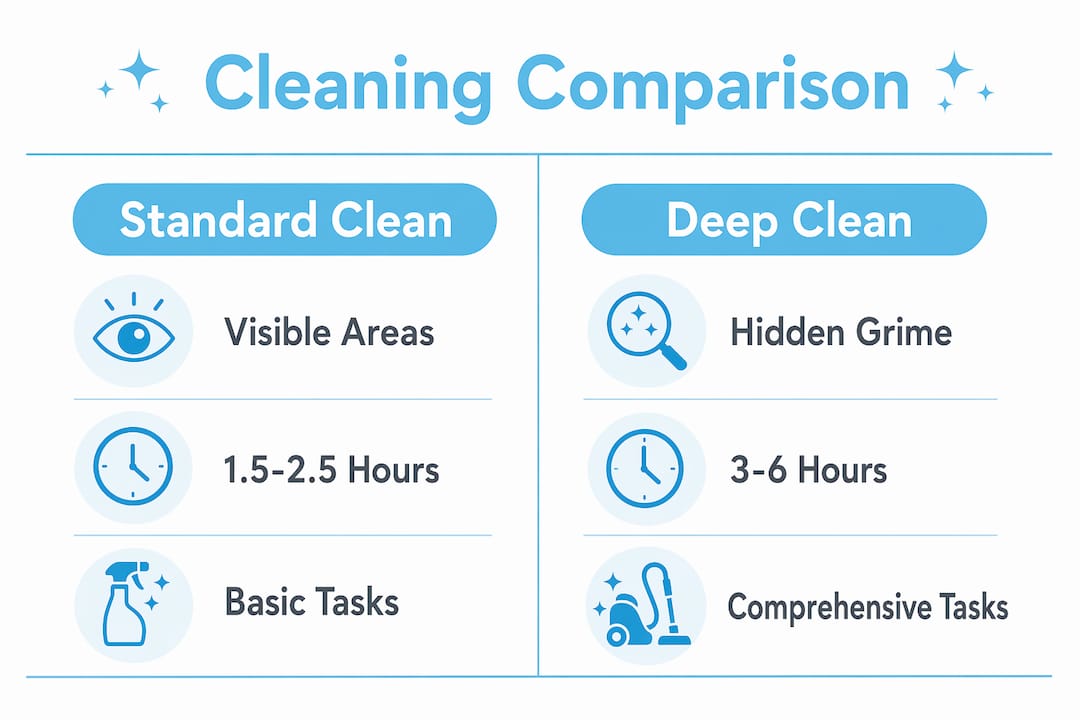
The difference between deep cleaning and standard cleaning is scope, time, and target. Standard cleaning covers visible surfaces: countertops, floors, bathroom fixtures, and mirrors. Deep cleaning addresses every area a tenant or casual cleaner would skip, including behind and beneath appliances, inside oven cavities, grout lines, window tracks, baseboards, range hood filters, and HVAC vents.
| Feature | Standard cleaning | Turnover deep cleaning |
|---|---|---|
| Time required | 1.5 to 2.5 hours | 3 to 6 hours |
| Appliance interiors | No | Yes (oven, fridge, microwave) |
| Grout and tile scrubbing | No | Yes |
| Odor treatment | No | Yes |
| Window tracks and baseboards | No | Yes |
| Deposit dispute documentation | Rarely | Standard practice |
| Typical cost (2-bed, California) | $100 to $150 | $250 to $375 |
Professional turnover deep cleaning typically requires 3 to 6 hours per unit, compared to 1.5 to 2.5 hours for standard cleaning. That time difference reflects the labor intensity of degreasing oven glass, scrubbing grout, and treating odors at the source rather than masking them. Deep cleaning costs for a two-bedroom unit range from $250 to $375 at flat rate in California markets, with condition premiums and add-ons like carpet steam cleaning increasing the total. That investment is modest compared to the cost of a single deposit dispute or a week of vacancy.
Sequencing matters as much as scope. Proper sequencing of inspection, repair, then cleaning is the standard for effective turnover management and legal defensibility. Cleaning before the move-out inspection removes evidence. Cleaning after repairs prevents re-soiling surfaces that were just restored.
Pro Tip: Schedule carpet cleaning as the final step in your turnover sequence. Carpets need 6 to 12 hours of drying time, and foot traffic from repair crews will undo the work if they walk through before it dries.
What areas and tasks should a rental deep clean cover?
Landlords often focus cleaning effort on visible areas and miss the high-leverage zones that actually drive deposit disputes. Cleaning key leverage zones like oven glass, bathroom grout, and range hood filters prevents the most common tenant complaints and protects security deposits. A thorough rental turnover checklist should cover every one of the following areas without exception.
Kitchen:
- Interior oven degreasing, including glass door and racks
- Refrigerator interior and coil cleaning, including drip tray
- Microwave interior and exterior, including vent filters
- Dishwasher interior, door gasket, and spray arms
- Range hood filters and fan housing
- Cabinet interiors, drawer tracks, and hardware
Bathrooms:
- Grout scrubbing and mold treatment on tile and caulk lines
- Toilet base, tank interior, and seat hardware
- Exhaust fan covers and vent cleaning
- Shower door tracks and glass descaling
Throughout the unit:
- Baseboards, door frames, and light switch plates
- Window sills, tracks, and screen frames
- Ceiling fan blades and light fixture covers
- Post-tenancy grime buildup in corners, behind furniture positions, and under appliances
- Odor treatment for pet, smoke, or moisture issues using enzyme-based products, not air fresheners
Maintenance checks to run in parallel:
- Replace HVAC filters and test smoke and CO detectors
- Inspect caulking around tubs, sinks, and windows
- Rekey locks before new tenant move-in
- Touch up paint on scuffed walls and baseboards
Deep cleaning includes focused tasks such as oven interior degreasing, grout scrubbing, window track cleaning, and odor treatment as standard components of a professional turnover service. If your cleaning vendor does not cover all of these areas, you are paying for a standard clean and calling it something else.
When should landlords schedule deep cleaning for California rentals?
The timing of a rental deep clean is as important as the cleaning itself. The correct sequence is: tenant moves out, you conduct the move-out inspection, you complete any repairs, and then you schedule the deep clean. Booking cleaning immediately after the move-out inspection preserves the baseline documentation needed for deposit adjudication. Cleaning first erases the evidence you need to justify any deductions.
Here is the recommended turnover timeline for California landlords:
- Day 1: Conduct move-out inspection with the tenant present when possible. Document all damage and cleanliness issues with photos and written notes.
- Day 2 to 3: Complete any repairs, patch work, or replacements that require access to the unit before cleaning.
- Day 3 to 4: Schedule and complete the turnover deep clean. Request a written report and photos from the cleaning team.
- Day 4 to 5: Allow drying time for carpets and freshly cleaned surfaces. Conduct your pre-listing walkthrough.
- Day 5 to 7: List the property, conduct showings, and begin the new tenant screening process.
Beyond tenant transitions, California landlords managing long-term tenants benefit from scheduling a professional deep clean every 12 months. This prevents the kind of accumulated grime buildup that becomes a major expense at move-out and keeps the property in a condition that supports rent increases at renewal.
Pro Tip: Build the cost of a turnover deep clean into your vacancy budget as a fixed line item. Treating it as optional leads to deferred decisions and rushed surface cleans that create problems within the first month of a new tenancy.
How to select and work with professional deep cleaning services
Choosing the right cleaning vendor for your rental turnover is a business decision, not a convenience choice. Verified and insured professional cleaners reduce risk and improve accountability for landlords managing turnovers in California. Services that use platforms like Escrow Shield add payment protection and identity verification, which matters when you are granting access to a vacant property.
When vetting a professional cleaning service for your rental, prioritize these factors:
- Scope of work in writing: Require a detailed checklist before the job starts. If the vendor cannot provide one, they are not operating at a professional level.
- Insurance and bonding: Verify general liability coverage. Accidents happen in vacant units, and you need to know who is responsible.
- Post-clean documentation: Require timestamped before-and-after photos for every job. This is your deposit dispute evidence.
- Pricing transparency: Understand whether you are paying a flat rate or hourly, and what triggers condition premiums. A unit with pet odors or heavy grease buildup will cost more, and that should be disclosed upfront.
- Volume agreements: If you manage multiple units, negotiate a standing rate with a single vendor. Consistency in quality and pricing is worth more than saving $20 per job by switching providers.
The services offered by Neatandtidypros cover the full range of rental turnover needs, from standard maintenance cleans to full deep cleaning and move-in/move-out packages, with documentation practices built into the process.
Key takeaways
Deep cleaning a rental property between tenants is the most cost-effective way California landlords can protect their asset, comply with habitability law, and reduce deposit disputes.
| Point | Details |
|---|---|
| Deep clean vs. standard clean | Deep cleaning takes 3 to 6 hours and covers appliance interiors, grout, and odor treatment that standard cleans skip entirely. |
| Legal and financial protection | Cleaning documentation with photos is the strongest evidence in California security deposit disputes. |
| High-leverage cleaning zones | Oven glass, bathroom grout, and range hood filters are the areas most likely to trigger tenant complaints and deposit deductions. |
| Correct sequencing | Always inspect and repair before cleaning to preserve move-out evidence and avoid re-soiling restored surfaces. |
| Professional vendor standards | Require written scope, insurance, and post-clean photo reports from every cleaning vendor you hire. |
What I’ve learned about deep cleaning rentals in California
After years of working with California landlords and property managers through Neatandtidypros, I have seen the same mistake repeated more than any other: landlords treat the turnover clean as a formality rather than a strategic step. They book the cheapest available option, skip the documentation, and then spend three times the cost of a proper deep clean fighting a deposit dispute in small claims court.
The landlords who protect their properties most effectively treat the deep clean as the first impression their next tenant will ever have of them. A unit that smells clean, has grout lines that are actually white, and has an oven that does not smoke on first use tells a new tenant that the landlord is serious. That perception reduces complaints, increases on-time rent payments, and extends tenancies.
One thing most articles get wrong is the emphasis on cost. The $250 to $375 for a professional deep clean on a two-bedroom unit is not an expense. It is insurance. It protects against deposit disputes, habitability complaints, and the kind of early maintenance requests that signal a tenant who is already looking for their next place. The landlords I have seen skip this step consistently spend more money, not less, over a 12-month period.
My honest advice: stop treating the turnover clean as a line item to cut when timelines get tight. It is the one step in your turnover process that pays for itself every single time.
— Neat
Ready to protect your rental investment?
California landlords who want a turnover deep clean done right, with full documentation and verified professionals, can rely on Neatandtidypros to handle the entire process. From move-in/move-out cleaning to full rental deep cleaning services, every job includes a detailed scope of work, before-and-after photo documentation, and insured professionals who understand the standards California landlords need to meet.

Whether you manage a single unit or a multi-property portfolio, Neatandtidypros delivers the consistency and accountability that protects your deposits, your property condition, and your tenant relationships. Book your next turnover clean and take the guesswork out of your vacancy process.
FAQ
What does a rental property deep clean include?
A rental deep clean covers appliance interiors, grout scrubbing, window tracks, baseboards, odor treatment, and all areas a standard clean skips. It typically takes 3 to 6 hours per unit and produces documentation suitable for deposit dispute evidence.
How much does a deep clean cost for a rental in California?
Deep cleaning a two-bedroom rental in California costs between $250 and $375 at flat rate, with condition premiums for pet odors, heavy grease, or carpet steam cleaning adding to the total.
When should I schedule a deep clean during tenant turnover?
Schedule the deep clean after the move-out inspection and any repairs are complete, but before the new tenant walkthrough. Cleaning before the inspection removes the documentation you need to justify security deposit deductions.
Is deep cleaning required by California law?
California habitability law requires landlords to deliver rental units in a clean and sanitary condition. While the law does not specify “deep cleaning” by name, failure to meet cleanliness standards exposes landlords to habitability complaints and deposit dispute liability.
How often should landlords deep clean a rental property?
Deep clean at every tenant transition without exception. For long-term tenancies, schedule a professional deep clean every 12 months to prevent accumulated buildup that becomes a major expense at move-out.