New home cleaning is the structured, top-to-bottom process of removing construction dust, chemical residues, allergens, and contaminants from a freshly acquired property before occupancy. The industry term for this process is “move-in deep cleaning,” and it goes far beyond cosmetic tidying. For California homeowners and renters, what is new home cleaning matters more than most realize: local wildfire smoke, construction particulates, and year-round allergens make a thorough initial clean a direct investment in your family’s health. The core tools for this job include HEPA-filter vacuums, MERV 13+ HVAC filters, and EPA-recommended source control strategies.
What is new home cleaning and why does it matter?
New home cleaning is defined as a systematic, pre-occupancy cleaning process that addresses every surface, fixture, and air pathway in a property. It differs from routine house cleaning because the contaminants present in a newly built or recently vacated home are different in type and concentration. Construction adhesives, drywall dust, paint fumes, and VOCs (volatile organic compounds) settle into surfaces, vents, and corners that a standard wipe-down will never reach.
The EPA frames source control as the most effective first step in managing indoor air quality, meaning you remove the pollutant at its origin before it spreads. In a new home, that means vacuuming and wiping every surface before you ever switch on the HVAC system. Skipping this step forces your air handler to redistribute settled dust and allergens through every room via the ductwork.
For California residents specifically, this process carries added urgency. Wildfire smoke infiltration, high pollen counts, and the state’s dense new construction activity all contribute to elevated indoor pollutant loads. A move-in clean that ignores these factors leaves you breathing air that is measurably worse than what you left behind.
What essential steps make up new home cleaning?
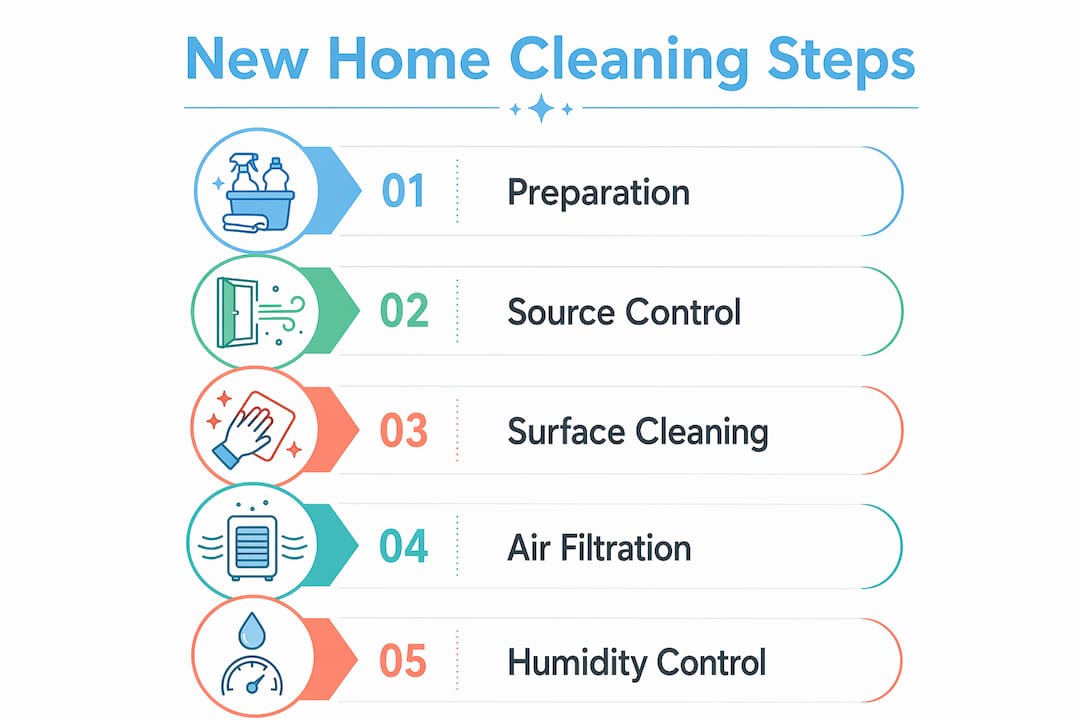
A well-executed new home cleaning follows a deliberate sequence. Skipping steps or working out of order forces you to re-clean surfaces that collect fallout from work done above them.
- Gather all supplies before you start. Preparing all tools first prevents mid-clean supply runs that allow dust to resettle on surfaces you already cleaned. Your supply list should include a HEPA vacuum, microfiber cloths, an all-purpose cleaner, a bathroom disinfectant, a degreaser for kitchen surfaces, a mop, and fresh HVAC filters rated MERV 13 or higher.
- Start at the top of each room. Dust ceiling fans, light fixtures, crown molding, and shelving before touching lower surfaces. Gravity does the work of moving debris downward, so cleaning high first and low last is the only logical sequence.
- Clean kitchen and bathrooms first. These rooms carry the highest concentration of bacteria, chemical residues, and construction grime. Scrub inside cabinets and drawers before placing any items inside them. Disinfect countertops, sinks, and toilet seats. Replace toilet seats entirely if the home was previously occupied.
- Vacuum all surfaces with a HEPA-filter vacuum. Vacuuming before running HVAC removes settled particles at the source rather than pushing them into circulation. Pay close attention to vents, baseboards, and window tracks where construction dust accumulates.
- Wipe down all hard surfaces with a damp microfiber cloth. Dry dusting moves particles into the air. Damp wiping captures them.
- Replace HVAC filters and run ventilation. Install fresh MERV 13+ filters before turning on the system. Open windows where possible to flush residual airborne particles out of the space.
- Disinfect, then mop floors last. Floors collect everything that falls during the cleaning process. Mopping last means you are cleaning a floor that has already received all the fallout from the steps above.
Pro Tip: Label a single tote or caddy with every supply you need before entering the property. Professional organizers confirm that stopping mid-clean to buy supplies not only costs time but allows freshly disturbed dust to resettle, doubling your workload.
How to improve and maintain indoor air quality during and after cleaning
Indoor air quality during a new home clean is not a secondary concern. The EPA’s three-part framework for addressing it is source control, ventilation, and filtration, applied in that order.
- Source control means removing or neutralizing pollutants before they enter the air. In practice, this is your HEPA vacuum pass, your surface wipe-down, and the removal of construction debris and packaging materials.
- Ventilation means actively moving outdoor air through the space to dilute indoor pollutants. Open windows and doors while cleaning, and run exhaust fans in kitchens and bathrooms.
- Filtration means capturing airborne particles that source control and ventilation did not eliminate. This is where your HVAC filter rating and portable air cleaners come in.
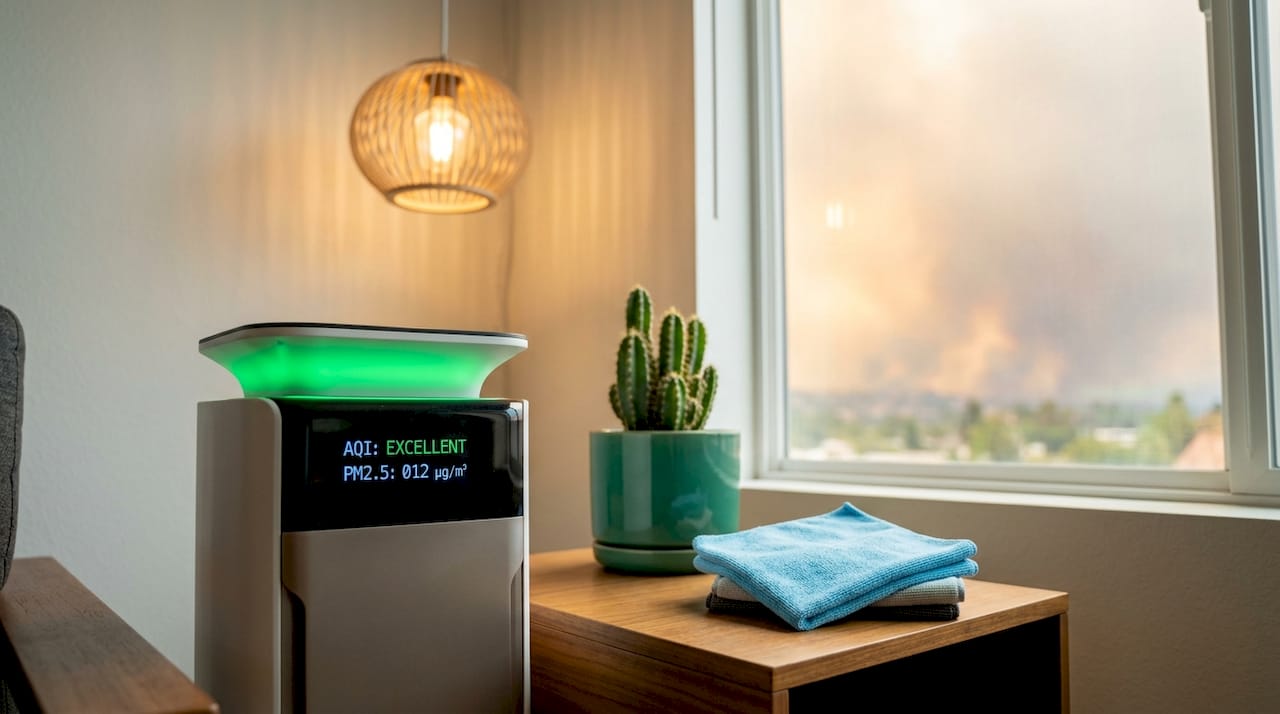
For California homeowners, MERV 13+ filters are the recommended minimum during wildfire smoke periods, which now affect most of the state for several months each year. The EPA advises running portable air cleaners at high fan speeds during smoke events as a supplement to upgraded HVAC filtration. A practical guide to residential air filtration confirms that higher-efficiency filters make a measurable difference in particle counts, particularly in smaller living spaces.
Humidity control is the fourth variable that most cleaning guides omit. The EPA’s integrated air quality approach includes humidity regulation as a direct tool for mold prevention. In California’s coastal regions, indoor humidity above 60% creates conditions for mold growth within 24 to 48 hours. A basic hygrometer costs under $15 and gives you real-time data to act on.
| Air quality strategy | When to apply it | Tool needed |
|---|---|---|
| Source control | Before running HVAC | HEPA vacuum, microfiber cloths |
| Ventilation | During and after cleaning | Open windows, exhaust fans |
| Filtration | After source control | MERV 13+ filter, portable air cleaner |
| Humidity monitoring | Ongoing post-move-in | Hygrometer |
Pro Tip: Run a portable air cleaner in the room you are actively cleaning, not just after you finish. This captures airborne particles you disturb during the process and reduces the total particle load before you even switch on the HVAC.
What are common overlooked hazards in new home cleaning?
The most dangerous overlooked task in any new home cleaning checklist is dryer vent maintenance. Dryers cause 92% of washer-and-dryer home fires, and the leading cause is failure to clean lint from the vent system. This statistic means that a clogged dryer vent is not a minor inconvenience but a documented fire hazard that kills people every year. Inspect and clean the vent line before using the dryer for the first time in any new home.
Beyond the dryer, several other hazards appear consistently in new construction and recently vacated properties:
- HVAC vents and ductwork. Construction dust accumulates inside duct openings during the build process. Vacuum vent covers and the first few inches of ductwork before installing new filters.
- Adhesive residues. Builders use tape, adhesives, and protective films on windows, floors, and appliances. These residues attract dirt and can damage surfaces if left in place. Use a plastic scraper and a residue remover like Goo Gone on affected areas.
- Window tracks and door frames. These collect fine construction debris that standard cleaning misses. A narrow vacuum attachment or a cotton swab with all-purpose cleaner clears them effectively.
- Under and behind appliances. Refrigerators, stoves, and dishwashers are rarely moved during standard cleaning. Debris and moisture underneath these units create conditions for mold and pest activity.
Replacing toilet seats in a previously occupied home is a hygiene standard that most people skip. The cost is under $30 per unit and the health benefit is straightforward. Similarly, replacing refrigerator water filters and checking under-sink plumbing connections for leaks are tasks that belong on every move-in cleaning checklist but rarely appear on one.
How do professional services support new home cleaning?
Professional cleaning services address the gap between what a thorough DIY effort can achieve and what specialized equipment and training can deliver. Professional deep cleaning uses commercial-grade HEPA vacuums, steam cleaners, and hospital-grade disinfectants that are not available in standard retail formats.
The specific advantages of hiring professionals for a new home clean include:
- Construction dust removal at scale. Post-construction cleaning requires equipment capable of capturing fine silica and drywall dust that standard vacuums recirculate. Neatandtidypros uses tools rated for construction site cleanup that capture particles a consumer vacuum misses.
- Systematic room-by-room documentation. Professional teams work from a structured checklist, which means nothing is skipped because of fatigue or distraction.
- Faster turnaround. A team of trained cleaners completes in three to four hours what a solo homeowner takes a full day to accomplish. This matters when you are coordinating a move-in timeline with movers, utility activations, and work schedules.
- Integrated air quality preparation. Professionals can replace HVAC filters, clean vent covers, and advise on portable air cleaner placement as part of the service, giving you a move-in-ready home with measurably better air quality.
For renters in California, move-in/out cleaning services also create a documented baseline condition for the property, which protects your security deposit at the end of the lease. This is a practical financial benefit that most renters overlook when deciding whether to hire help.
Key takeaways
New home cleaning is a structured, pre-occupancy process that combines surface cleaning, air quality management, and safety checks to create a genuinely healthy living environment from day one.
| Point | Details |
|---|---|
| Source control comes first | Vacuum and wipe all surfaces before running the HVAC to prevent dust redistribution. |
| MERV 13+ filters are the California standard | Upgrade HVAC filters before first use, especially during wildfire smoke season. |
| Dryer vent cleaning is a safety task | Dryers cause 92% of washer-and-dryer fires; inspect the vent before first use. |
| Humidity monitoring prevents mold | Keep indoor humidity below 60% and use a hygrometer to track it after move-in. |
| Professional services close the gap | Commercial equipment and trained teams deliver results that DIY cleaning cannot match at scale. |
What I’ve learned cleaning California homes from the inside out
After working in California homes across the Bay Area, Los Angeles, and Sacramento, the pattern I see most often is homeowners who clean surfaces thoroughly but ignore the air. They scrub countertops, mop floors, and feel done. Then they switch on the HVAC and undo half the work in twenty minutes by pushing settled construction dust through every room.
The sequence matters more than the effort. Source control before ventilation before filtration is not a suggestion from a government website. It is the difference between a home that smells clean and a home that actually is clean at the particle level. I have seen brand-new construction in San Jose with drywall dust so fine it was invisible on surfaces but showed up clearly on a white microfiber cloth after a single wipe.
The dryer vent issue is the one I push hardest on every client. People treat it as a maintenance task they will get to eventually. The fire risk data says otherwise. In a new home, you do not know the history of that vent line. Clean it before you run a single load.
Supply preparation is the other thing that separates a clean that holds from one that has to be redone. Stopping mid-clean to buy a mop head or a bottle of disinfectant is not just inconvenient. It gives disturbed particles time to resettle. Prepare your full supply kit before you enter the property, and work through it without stopping.
— Neat
Let Neatandtidypros handle your new home cleaning
Moving into a new home in California is stressful enough without adding a full-day cleaning project to your list. Neatandtidypros offers move-in and move-out cleaning, post-construction cleanup, and deep cleaning services designed specifically for the demands of new and transitional properties.
Our teams arrive with commercial-grade HEPA equipment, hospital-grade disinfectants, and a room-by-room checklist that covers every surface, vent, and fixture. We replace HVAC filters, clean dryer vents, and remove construction residues so you move into a home that is clean at every level. View our full cleaning service options and schedule your appointment today. Your first night in a new home should feel fresh, not like a project you still have to finish.
FAQ
What is new home cleaning exactly?
New home cleaning is a pre-occupancy deep clean that removes construction dust, allergens, chemical residues, and contaminants from every surface and air pathway in a property. It is more thorough than routine cleaning and typically includes HVAC filter replacement and vent cleaning.
Should you clean a new house before moving in?
Yes. New construction homes contain drywall dust, adhesive residues, and VOCs that settle on all surfaces during the build process. Cleaning before move-in removes these contaminants before you introduce furniture, bedding, and personal items that would absorb them.
What supplies do you need for new home cleaning?
The core supply list includes a HEPA-filter vacuum, microfiber cloths, an all-purpose cleaner, a bathroom disinfectant, a kitchen degreaser, a mop, and MERV 13+ HVAC filters. A portable air cleaner and a hygrometer are strong additions for California homes.
How is deep cleaning different from basic cleaning?
House deep cleaning addresses surfaces and areas that routine cleaning skips, including inside cabinets, behind appliances, vent covers, baseboards, and grout lines. Basic cleaning maintains an already-clean space; deep cleaning resets it to a sanitary baseline.
How often should you clean dryer vents in a new home?
Clean dryer vents every three months under regular use, or at minimum once per year for low-use dryers. In a new home, inspect and clean the vent before the first use regardless of how recently the home was built.