
Construction site cleaning is the specialized, multi-phase process of removing debris, construction dust, adhesive residues, and hazardous materials from a job site to make it safe, compliant, and ready for occupancy or continued work. Known in the industry as post-construction cleaning, this process goes far beyond standard janitorial work. It requires HEPA-filter vacuums, industrial floor scrubbers, microfiber cloths, and trained crews who understand sequencing. For California property owners, builders, and contractors, getting this process right means meeting OSHA standards, passing inspections, and handing over a finished space that reflects the quality of the build itself.
What is construction site cleaning and why does it matter?
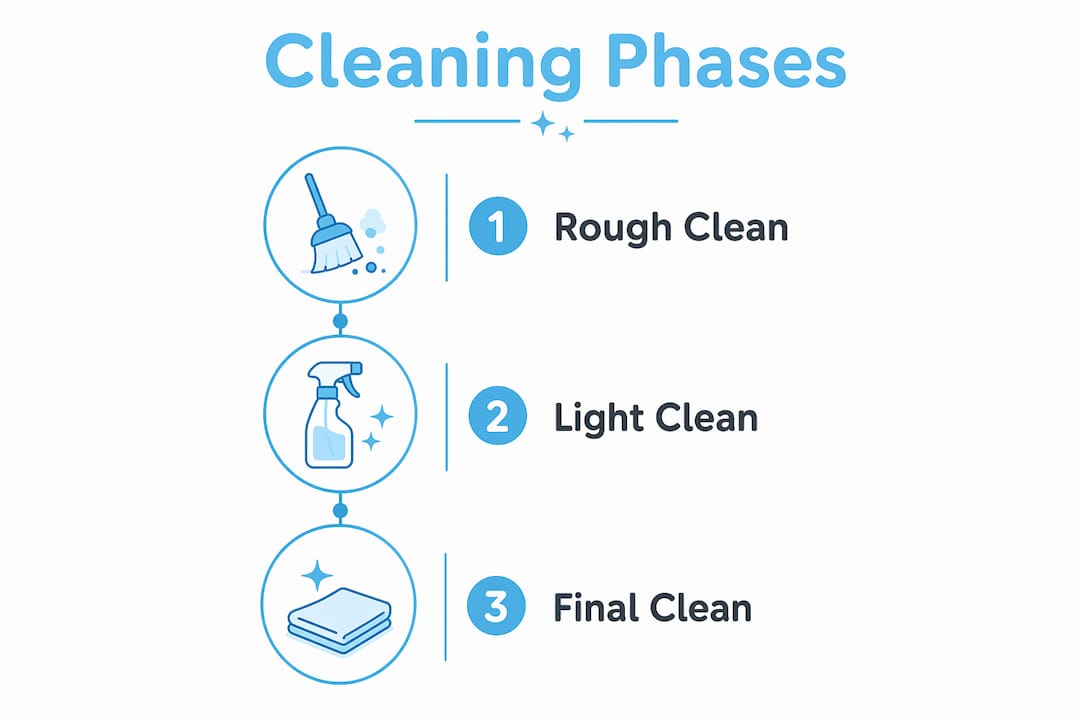
Construction site cleaning is a structured, three-phase cleaning discipline applied during and after building or renovation projects. The three phases are rough cleaning, light cleaning, and final cleaning. Each phase targets a different type of residue and occurs at a specific point in the construction timeline.
The process matters because construction generates a category of debris and dust that standard cleaning methods cannot handle. Drywall dust, for example, is ultrafine and resettles repeatedly if not captured with a HEPA-filter vacuum. Adhesive haze from flooring installation bonds to surfaces within hours. Paint splatters on glass harden into a scraping job if left too long. These are not problems a mop and bucket solve.
For California job sites specifically, the stakes are higher. The state enforces both federal OSHA standards and California Division of Occupational Safety and Health (Cal/OSHA) regulations, which set strict requirements for clean walking-working surfaces on active construction sites. A site that skips structured cleaning is not just dirty. It is a liability.
Pro Tip: Schedule your first rough clean before any finish materials like flooring or cabinetry arrive on site. Debris and drywall dust trapped under new finishes cause callbacks that cost far more than the cleaning itself.
What are the main stages of construction site cleaning?
The three-stage cleaning sequence is the backbone of every professional post-construction cleaning program. Skipping or compressing stages forces rework because dust resettles and residues harden between trades.
-
Rough cleaning. This phase happens after major structural and mechanical trades finish their work but before finish materials are installed. The goal is removing large debris: scrap lumber, drywall offcuts, packaging materials, loose fasteners, and heavy dust accumulation. Rough cleaning creates a safe, clear workspace for finish trades like flooring, painting, and cabinetry installation.
-
Light cleaning. Once finishes are in place, light cleaning targets the fine dust and surface grime those trades leave behind. This includes wiping down surfaces, cleaning window frames, removing construction film from fixtures, and addressing grout haze on tile. Light cleaning is where the site starts to look like a finished space rather than an active job site.
-
Final cleaning. This is the most detail-intensive phase. A thorough final clean includes polishing fixtures, removing all remaining dust from vents and window tracks, cleaning cabinet interiors, and finishing floors to a presentation-ready standard. The site must pass visual and tactile inspection before occupancy or handover.
Sequencing these phases around construction milestones prevents one trade’s mess from contaminating another’s finished work. A painting crew that moves into a space still coated in drywall dust will embed that dust into the paint. A flooring installer working over debris risks scratching the subfloor. The cleaning sequence is not optional. It is project management.
Pro Tip: Coordinate each cleaning phase with your project schedule at the start of the job, not the end. Build rough, light, and final cleaning into your milestone calendar the same way you schedule inspections.
How does construction site cleaning improve safety and compliance on California job sites?
OSHA’s housekeeping standard requires employers to keep all walking-working surfaces clean, orderly, and free of hazards throughout the life of a project, not just at the end. This means construction site cleaning is an ongoing operational requirement, not a one-time event before handover.
The most common hazards that structured cleaning eliminates include:
- Slip and trip hazards. Loose boards, scrap materials, and spilled adhesives on walking surfaces cause falls, the leading category of construction fatalities in the United States.
- Airborne dust exposure. Drywall dust and silica particles from cutting concrete or masonry are respiratory hazards. HEPA vacuuming during and after work reduces airborne particle counts significantly.
- Sharp object injuries. Loose fasteners, wire offcuts, and broken tile fragments left on floors cause puncture wounds and lacerations.
- Fire risk. Accumulated sawdust, paper packaging, and solvent-soaked rags are ignition hazards on active sites.
“OSHA mandates that employers promptly clean debris, spills, and keep floors free of hazards such as sharp objects and loose boards during construction.” — J. J. Keller Compliance Network
Daily debris removal reduces injuries and work stoppages that delay project timelines. In California, a single recordable injury on a job site can trigger a Cal/OSHA inspection that halts work for days. The cost of that delay dwarfs the cost of daily cleanup. Treating site hygiene as a continuous practice rather than a final-phase task is the single most effective way to protect both workers and project schedules.
What specialized techniques and equipment are used in construction site cleaning?
Standard janitorial methods fail on construction sites because construction residues behave differently from household dirt. The table below shows the contrast between general cleaning and professional construction cleaning.
| Task | General cleaning approach | Construction cleaning approach |
|---|---|---|
| Dust removal | Standard vacuum or dry mop | Industrial HEPA-filter vacuum with repeated passes |
| Floor cleaning | Mop with general cleaner | Industrial scrubber with surface-specific solution |
| Glass cleaning | Glass cleaner and paper towel | Razor scraper for paint, then streak-free solution |
| Adhesive residue | General degreaser | Specialized adhesive remover with dwell time |
| Vents and tracks | Wipe with cloth | Detail brush, vacuum, and compressed air |
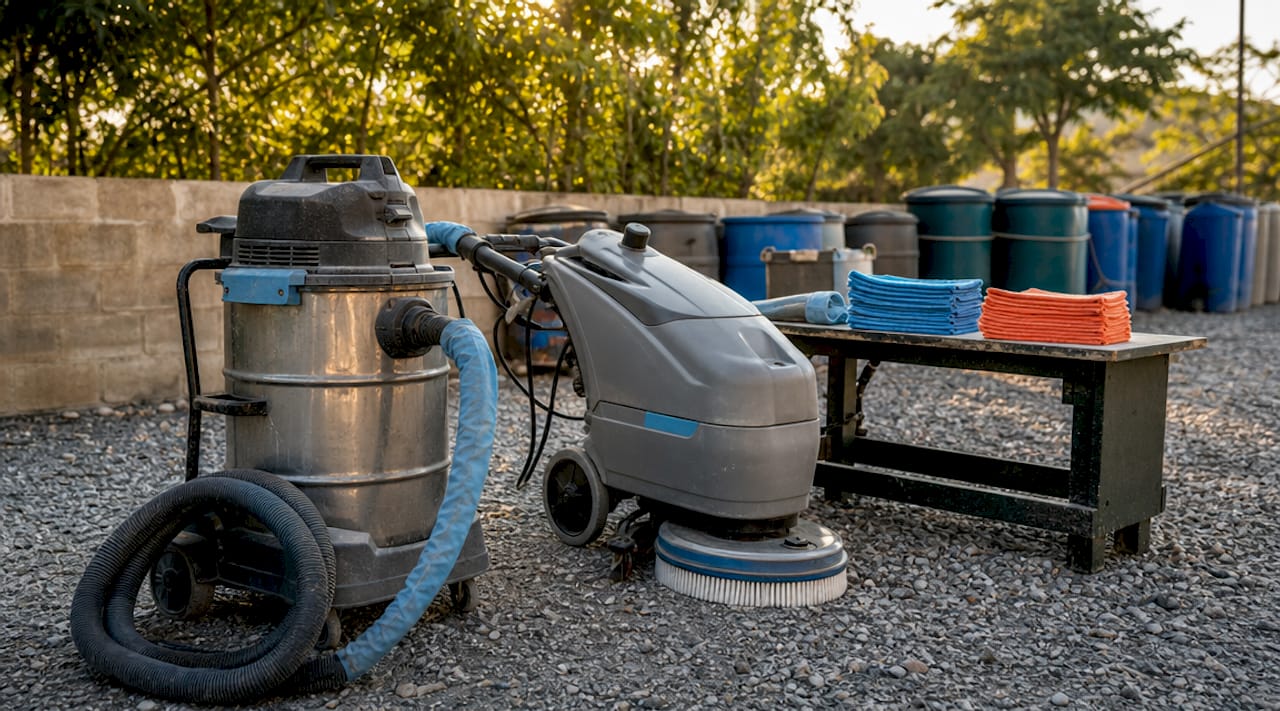
Professional cleaning crews use HEPA vacuums, industrial floor scrubbers, and microfiber cloths specifically because construction dust and residues demand tools engineered for the task. A standard shop vac recirculates fine drywall dust back into the air. A HEPA-filter unit captures particles down to 0.3 microns, preventing resettlement on cleaned surfaces.
The top-to-bottom cleaning sequence is non-negotiable. Cleaning floors before ceilings and walls means dust from upper surfaces falls onto already-cleaned floors, requiring the entire floor to be redone. Professional crews clean top-down and validate results by running a smooth-soled shoe across the floor or dragging a finger along baseboards. If grit is present, the surface is not clean.
Stubborn residues like adhesive haze, grout film, and paint splatter require specialized chemicals and tools with appropriate dwell times. Applying the wrong product to a polished concrete floor or a natural stone tile can cause permanent damage. Surface-specific knowledge is what separates a trained construction cleaning crew from a general cleaning service.
Pro Tip: Always test adhesive removers and chemical cleaners on an inconspicuous area first. California’s newer construction projects frequently use specialty flooring materials that react unpredictably to standard solvents.
How to plan and maintain an effective site cleanup process throughout a project
Effective construction site maintenance requires cleaning to be built into the project plan from day one, not treated as a final task. Here is how builders and contractors in California structure it in practice:
-
Assign daily cleanup responsibility. Each trade crew should be responsible for removing their own debris at the end of every shift. Packaging, offcuts, and loose fasteners should never be left overnight. This is both an OSHA requirement and a practical way to prevent hazards from compounding.
-
Schedule formal cleaning phases at milestones. Rough cleaning before finishes, light cleaning after finishes, and final cleaning before inspection. Put these dates in the project schedule and treat them as hard deadlines, not flexible tasks.
-
Segregate debris by type. Construction debris removal is more efficient when materials are separated at the source. Wood, drywall, metal, and hazardous materials each have different disposal requirements in California. Understanding the types of construction debris removal available helps site managers plan disposal logistics without last-minute scrambling.
-
Coordinate between trades and cleaning crews. The cleaning team needs to know when each trade finishes so they can schedule their phase. A flooring crew that finishes two days early without notifying the cleaning coordinator creates a gap that delays the next trade.
-
Plan for same-day debris pickup when volume spikes. Large demo days or framing completions generate debris volumes that overwhelm standard disposal plans. Knowing how to coordinate same-day debris pickup keeps the site clear without interrupting the work schedule.
-
Use a site cleaning checklist for final inspection readiness. A checklist covering dust-free vents, polished fixtures and residue-free floors, clean cabinet interiors, and streak-free glass catches problem areas before the inspector does. Hidden dust in window channels and tracks is a common callback trigger that a checklist prevents.
The builders who run the cleanest sites in California are not the ones who spend the most on final cleaning. They are the ones who treat daily cleanup as a non-negotiable part of site operations and schedule formal cleaning phases with the same discipline they apply to framing or electrical inspections.
Key takeaways
Construction site cleaning is a structured, three-phase process that protects worker safety, satisfies OSHA compliance requirements, and delivers a finished space that passes inspection and reflects the quality of the build.
| Point | Details |
|---|---|
| Three-phase structure | Rough, light, and final cleaning each target different residues at specific construction milestones. |
| OSHA compliance is ongoing | Housekeeping requirements apply throughout the project, not just at final handover. |
| Specialized equipment required | HEPA vacuums, industrial scrubbers, and surface-specific chemicals are necessary for construction residues. |
| Sequencing prevents rework | Top-to-bottom cleaning and phase coordination stops dust resettlement and residue hardening. |
| Daily cleanup reduces cost | Assigning debris removal to each trade daily lowers final cleaning time and prevents hazard accumulation. |
Why I think construction cleaning is the most underestimated phase of any California build
After working with dozens of California job sites through Neatandtidypros, the pattern I see most often is this: a builder spends months managing subcontractors, inspections, and material delays with precision, then treats cleaning as something to knock out in a day before the client walkthrough. That decision costs more than the cleaning itself.
The sites that generate callbacks almost always have one thing in common. Dust in the HVAC vents that gets blown through the system the first time the heat runs. Adhesive haze on tile that the homeowner notices the moment sunlight hits the floor. Paint on window glass that was never scraped. These are not minor cosmetic issues. They are signals to the client that the finish quality did not match the price they paid.
What I have found is that structured cleaning, done in phases with the right equipment and sequence, actually shortens the overall project timeline. When rough cleaning happens before finishes arrive, finish trades work faster and cleaner. When light cleaning follows each trade, the final clean takes a fraction of the time. The sites that skip phases do not save time. They spend it twice.
Construction cleaning is not a service you add at the end. It is a quality control system you run throughout the project.
— Neat
Professional construction cleaning services for California job sites
Neatandtidypros provides professional construction cleaning for California property owners, builders, and contractors who need all three phases handled by a trained crew with the right equipment.

Every job uses industrial HEPA-filter vacuums, surface-specific cleaning solutions, and a top-to-bottom sequence that prevents rework. Whether you need rough cleaning before finishes go in, light cleaning after trades wrap up, or a final clean that passes inspection on the first walkthrough, Neatandtidypros delivers a site that is safe, compliant, and move-in ready. Explore the full range of cleaning services available for residential and commercial construction projects across California.
FAQ
What is construction site cleaning?
Construction site cleaning is the multi-phase process of removing debris, dust, adhesive residues, and construction materials from a job site to make it safe and ready for occupancy. It includes rough, light, and final cleaning stages, each aligned with specific construction milestones.
How is post-construction cleaning different from regular cleaning?
Post-construction cleaning requires industrial HEPA vacuums, specialized chemical removers, and surface-specific techniques that standard janitorial methods cannot replicate. Construction dust, adhesive haze, and paint splatter behave differently from household dirt and demand professional-grade tools and sequencing.
What does OSHA require for construction site cleanliness?
OSHA requires employers to keep all walking-working surfaces clean, orderly, and free of hazards including sharp objects, spills, and loose debris throughout the entire project. This applies to active construction sites, not just the final cleanup phase.
How many phases does a construction site cleaning checklist cover?
A complete site cleaning checklist covers three phases: rough cleaning for large debris removal, light cleaning for surface grime and fine dust after finishes are installed, and final cleaning for inspection-ready polishing of fixtures, floors, vents, and glass.
When should I hire a professional construction cleaning crew in California?
Hire a professional crew before finish materials arrive for rough cleaning, immediately after each trade completes work for light cleaning, and at least two to three days before your final inspection for the detailed final clean. This timeline prevents rework and gives the crew time to address hidden areas like window tracks and HVAC vents.