
Cleaning service frequency is defined as the regular interval at which professional cleaning tasks are scheduled to maintain hygiene, reduce allergens, and keep a home in good condition. For homeowners and renters in Orange County, California, choosing the right schedule directly affects your health, your budget, and the long-term condition of your home. The CDC recommends cleaning with soap and water as the primary hygiene activity before any disinfecting, and frequency matters as much as technique. Factors like household size, pets, allergies, and lifestyle all shape how often you should schedule service.
What is cleaning service frequency and why does it matter?
Cleaning service frequency is the standard industry term for how often a professional cleaning visit is scheduled, whether weekly, biweekly, or monthly. Getting this interval right is not just a comfort decision. High-touch surfaces like doorknobs, light switches, and countertops accumulate germs quickly, and the risk of spreading illness rises with every day those surfaces go untouched. A consistent schedule keeps contamination from building up to levels that are harder and more expensive to address.
The role of cleaning frequency goes beyond appearances. Research confirms that cleaning frequency matters most to sustain hygiene, more so than the strength of the products used. A home cleaned regularly with basic soap and water stays healthier than one cleaned infrequently with stronger disinfectants. That insight should anchor every scheduling decision you make.

What household factors determine optimal cleaning frequency?
The right cleaning interval depends on who lives in your home and how they use it. No single schedule fits every Orange County household.
Household traffic and occupancy set the baseline. A single occupant in a one-bedroom apartment generates far less dirt, dust, and germ exposure than a family of five sharing a three-bedroom home. More people means more surfaces touched, more food prepared, and more outdoor contaminants tracked inside.
Pets raise the cleaning demand significantly. Dogs and cats shed fur and dander continuously. Pet dander is one of the most common indoor allergens, and it settles into carpets, upholstery, and air vents within days of a cleaning visit.
Allergy sufferers and immune-compromised residents need more frequent service. Dust mites, mold spores, and pollen from Orange County’s warm, dry climate collect quickly on surfaces and in soft furnishings. Weekly cleaning is the standard recommendation for households where anyone has asthma, seasonal allergies, or a weakened immune system.
Lifestyle factors also shift the math. If you entertain guests regularly, work from home, or have young children who spend time on the floor, your home accumulates contaminants faster than average. Orange County’s outdoor lifestyle, with beach visits, hiking, and open windows, also means more outdoor debris enters the home.
- Households with pets, children, or allergy sufferers: weekly cleaning recommended
- Single occupants or low-traffic homes: monthly service often sufficient
- Frequent entertainers or work-from-home residents: biweekly or weekly
- Residents with health conditions: weekly at minimum, with deep cleaning quarterly
Pro Tip: If you are unsure where to start, track how quickly visible dust and grime return after a cleaning visit. If surfaces look dirty within five days, weekly service is the right call.
Common cleaning schedules and what they include
Choosing a cleaning timetable means understanding what each frequency actually delivers in terms of tasks completed and hygiene maintained.
Weekly cleaning
Weekly service suits larger families, households with pets, and anyone who entertains often. At this interval, weekly cleaning keeps allergen levels consistently low and prevents bacterial buildup from reaching problematic levels. Tasks typically covered include vacuuming, mopping, bathroom sanitizing, kitchen surface wiping, and trash removal. The basic cleaning tasks included in a standard visit address the surfaces and areas that accumulate the most contamination between visits.
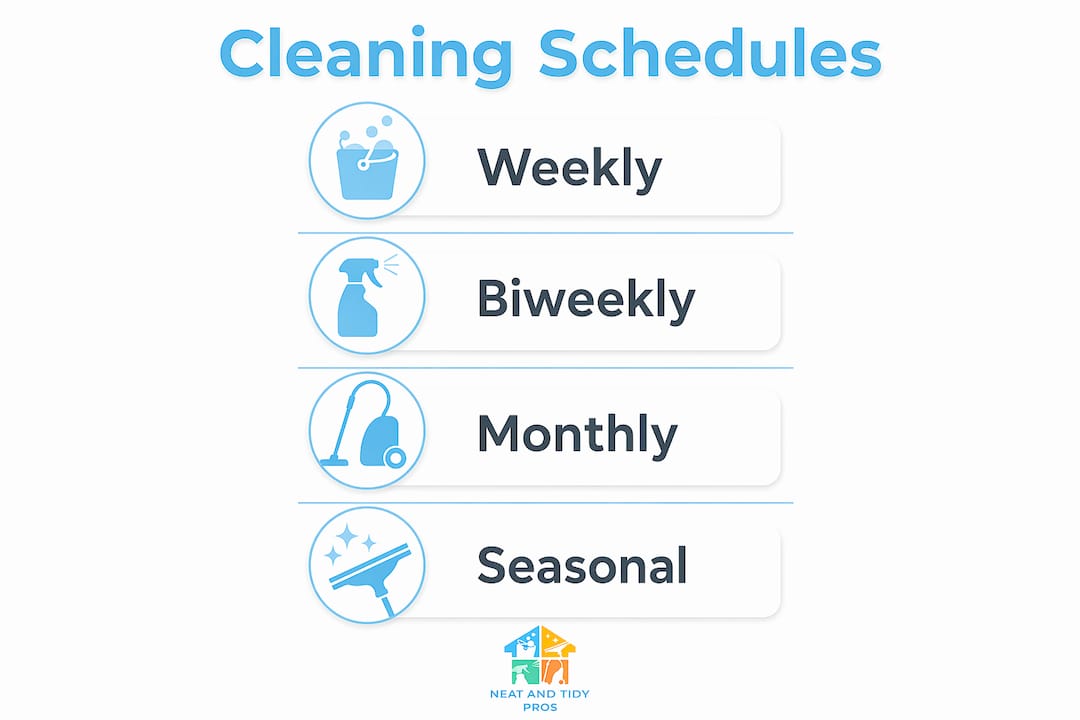
Biweekly cleaning
Biweekly service is the most popular choice for busy Orange County households. It balances hygiene with cost, giving most homes enough time between visits without letting dirt and allergens build to uncomfortable levels. Biweekly visits cover the same core tasks as weekly service but may require slightly more time per visit since more accumulation occurs between appointments.
Monthly cleaning
Monthly service works best for single occupants, low-traffic homes, or budget-conscious renters. The trade-off is real: a longer interval means more allergen and germ buildup between visits. Monthly cleaning is best paired with consistent daily tidying by the homeowner to fill the gaps.
Seasonal deep cleaning
Seasonal deep cleaning targets areas that regular visits do not cover, including baseboards, inside appliances, window tracks, and grout lines. Neatandtidypros recommends scheduling a deep clean at least twice a year, with additional sessions before or after major events, moves, or renovations.
| Schedule | Best for | Core tasks covered | Hygiene level |
|---|---|---|---|
| Weekly | Families, pets, allergy sufferers | Full surface clean, bathrooms, kitchen, floors | Highest |
| Biweekly | Busy households, couples | Full surface clean, bathrooms, kitchen, floors | High |
| Monthly | Single occupants, low-traffic homes | Full surface clean, bathrooms, kitchen, floors | Moderate |
| Seasonal deep | All households, as a supplement | Deep areas, appliances, baseboards, grout | Resets baseline |
Pro Tip: Schedule your first professional visit as a deep clean, then maintain with regular service. Starting from a clean baseline makes every subsequent visit faster and more effective.
How cleaning frequency affects cost and budget planning
Cleaning service frequency directly shapes your monthly spend, and understanding the relationship helps you plan without sacrificing hygiene.
Weekly services cost more per month in total but less per individual visit. Monthly services cost less overall but more per visit, since the cleaner spends more time addressing accumulated dirt. This pricing structure means that committing to a regular schedule is almost always more cost-effective than booking one-off cleanings.
- Weekly cleaning: approximately $400–$700 per month
- Monthly cleaning: approximately $150–$280 per month
- Biweekly cleaning: falls between these two ranges
More frequent cleaning also prevents the kind of buildup that leads to costly repairs. Grout that is never cleaned stains permanently. Mold that goes unaddressed spreads to drywall. Carpet that accumulates pet dander and debris wears out faster. Regular cleaning is a form of home maintenance, not just a comfort service.
Budget planning works best when you match frequency to your actual household needs rather than defaulting to the cheapest option. A family of four with two dogs in Irvine or Anaheim will spend more on monthly cleanings in the long run because each visit takes longer and the home never reaches a stable hygiene baseline.
Communicating with your provider matters. Ask Neatandtidypros about package pricing for recurring visits. Providers typically offer lower per-visit rates for clients who commit to a regular schedule, which rewards consistency and makes budgeting predictable.
What does research say about ideal cleaning frequencies for health?
The science on cleaning frequency is clear and worth knowing before you set your schedule.
A twice-a-week cleaning and disinfection cycle reduces infection risk by norovirus by up to 91.5%. The greatest bacterial accumulation occurs after just 3 days without cleaning. Cleaning every 3 days significantly lowers contamination levels across all surface types.
That finding from a 2024 study published in Open Forum Infectious Diseases is striking. It means that even a biweekly schedule leaves a meaningful window of elevated contamination risk. For households with young children or elderly residents, twice-weekly or weekly cleaning is not a luxury. It is a health decision.
The CDC draws a clear line between cleaning and disinfecting. Cleaning removes germs and dirt from surfaces using soap and water. Disinfecting kills remaining pathogens with chemical agents. Both steps matter, but cleaning must come first because dirt and organic matter block disinfectants from working. Frequency determines how often that full two-step process resets the contamination clock.
Effective disinfection also requires correct contact time and product dilution, not just application. A rushed monthly clean that skips proper contact time delivers far less protection than a thorough weekly clean done correctly.
Pro Tip: During cold and flu season, or after a household member has been sick, increase your cleaning frequency temporarily. The CDC specifically recommends more frequent cleaning when illness is present in the home.
Key Takeaways
Cleaning service frequency is the single most important variable in maintaining a healthy, well-maintained home, and matching your schedule to your household’s actual needs delivers the best results for both hygiene and cost.
| Point | Details |
|---|---|
| Frequency drives health outcomes | Twice-weekly cleaning cuts norovirus infection risk by up to 91.5%, per published research. |
| Household factors set the baseline | Pets, children, allergies, and lifestyle determine whether weekly or monthly service is appropriate. |
| More visits cost less per visit | Weekly service has a lower cost per visit than monthly, making regular schedules more efficient. |
| Deep cleaning supplements regular service | Schedule a deep clean at least twice a year to address areas regular visits do not cover. |
| Cleaning before disinfecting is non-negotiable | Soap and water must remove dirt first; disinfectants cannot work effectively on unclean surfaces. |
What I have learned about cleaning schedules in Orange County homes
Orange County homes present a specific challenge that most generic cleaning guides miss entirely. The climate here is warm and dry for most of the year, which means windows stay open longer, outdoor allergens enter the home more freely, and dust accumulates faster than in cooler, more sealed environments. A biweekly schedule that works perfectly in a Seattle apartment may leave an Irvine home feeling dusty and stale within a week.
The most common mistake I see homeowners make is choosing a frequency based on budget alone, without accounting for what that choice actually costs them downstream. A family that opts for monthly service to save money often ends up paying more per visit because each appointment takes longer. They also deal with more visible dirt, higher allergen levels, and the occasional need for an emergency deep clean after guests or illness. The math rarely works out in their favor.
My honest recommendation for most Orange County households is to start with biweekly service and adjust from there. If you have pets or young children, move to weekly. If you live alone and keep a tidy home, monthly may be enough. The key is treating frequency as a living decision, not a one-time choice. Reassess every six months as your household changes.
What I find most compelling about the research is that cleaning frequency outperforms product strength as a predictor of hygiene. You do not need expensive disinfectants if you clean consistently. That is a liberating and practical insight for anyone trying to balance a real budget with real health needs.
— Neat
Neatandtidypros cleaning schedules built for your home
Neatandtidypros serves homeowners and renters across Orange County with cleaning packages designed around real household needs, not one-size-fits-all pricing. Whether you need weekly service for a busy family home in Anaheim or a monthly refresh for a studio apartment in Irvine, the team builds a schedule that fits your life and your budget.
Every new client starts with a consultation to assess household size, traffic, and any specific health or lifestyle factors. From there, Neatandtidypros recommends the right interval and service type, from standard recurring visits to a full Orange County deep clean to reset your home’s baseline. Flexible scheduling and transparent pricing make it straightforward to stay consistent without surprises on your bill. Contact Neatandtidypros to get a custom plan matched to your home.
FAQ
What is cleaning service frequency?
Cleaning service frequency is the scheduled interval at which professional cleaning visits occur, typically weekly, biweekly, or monthly. The right frequency depends on household size, pets, health needs, and budget.
How is cleaning frequency determined for my home?
Frequency is determined by factors including the number of occupants, presence of pets or allergy sufferers, lifestyle habits, and how quickly surfaces visibly accumulate dirt between visits.
How does cleaning frequency affect cost?
More frequent visits lower the cost per individual visit but raise the total monthly spend. Weekly service typically costs $400–$700 per month, while monthly service runs $150–$280 per month.
How often should I schedule a deep cleaning?
Neatandtidypros recommends a deep cleaning at least twice a year for most homes, in addition to regular maintenance visits. Homes with pets, children, or recent renovations may benefit from quarterly deep cleans.
Does cleaning frequency really affect health?
Research published in Open Forum Infectious Diseases shows that twice-weekly cleaning reduces norovirus infection risk by up to 91.5%. The CDC also confirms that frequency is a key factor in controlling pathogen and allergen levels at home.