
Deep cleaning is defined as a thorough, room-by-room cleaning process that goes well beyond routine tidying to address built-up grime, hidden surfaces, and high-touch areas throughout a home. How deep cleaning is timed depends on three core factors: home size, clutter level, and the cleaning methods you use. A studio apartment may take 3–5 hours, while a four-bedroom home can require 12–16 hours or more. California homeowners and renters who understand these variables can schedule sessions realistically, avoid mid-clean burnout, and get genuinely clean results every time.
How deep cleaning is timed by home size
The single biggest driver of deep cleaning duration is square footage. A larger home simply has more surfaces, more rooms, and more hidden corners that need attention.
The American Cleaning Institute recommends that homeowners deep clean quarterly, with high-use areas potentially needing monthly attention. That frequency guidance only works if you know how long each session will realistically take.
Here are the standard time estimates professionals use when planning a full deep cleaning session:
| Home size | Estimated time |
|---|---|
| Studio or one-bedroom | 3–5 hours |
| Two-bedroom home | 5–8 hours |
| Three-bedroom home | 8–12 hours |
| Four-bedroom home or larger | 12–16+ hours |
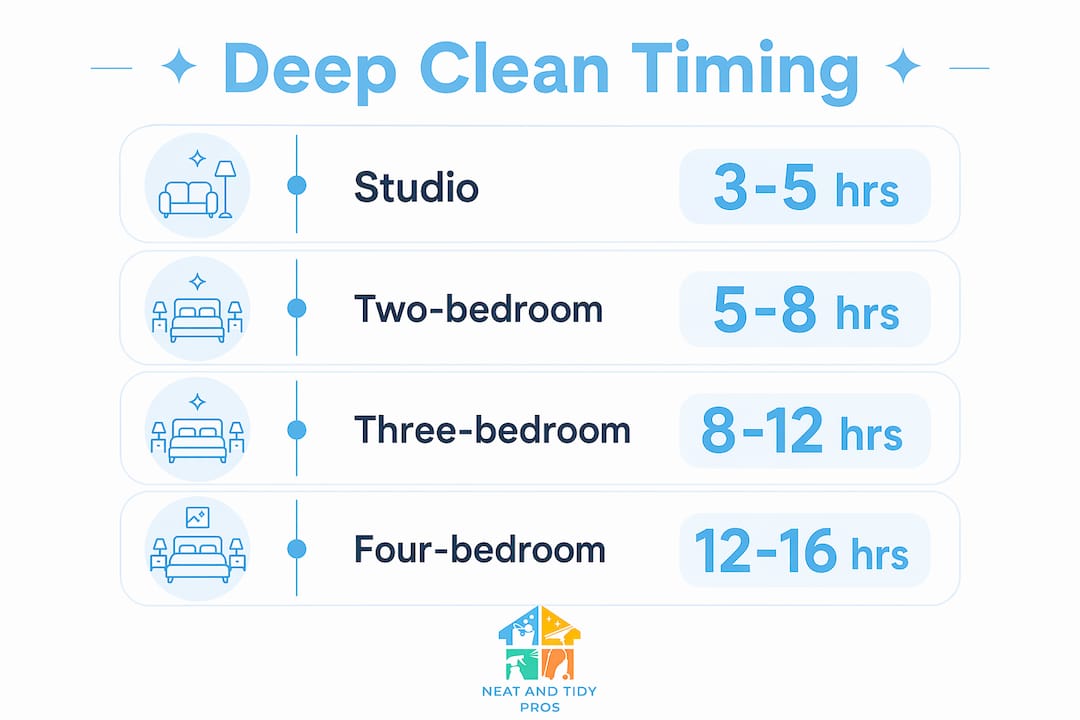
These ranges assume the home is in average condition. A heavily cluttered space or a home that has not been deep cleaned in over six months will push toward the higher end of each range. Layout also matters. An open-floor-plan two-bedroom takes less time than a two-bedroom with multiple hallways, a finished basement, and a separate laundry room.
Splitting a large deep clean across two days is a practical solution for most California households. Tackling bedrooms and common areas on day one, then kitchens, bathrooms, and detail work on day two, keeps quality high and prevents fatigue from cutting corners.
Does clutter really slow down a deep clean?
Clutter is one of the most underestimated time thieves in any deep cleaning schedule. Cleaning professionals consistently report that clutter blocks surfaces, forcing cleaners to stop, relocate items, and often re-clean areas that got dirty again during the shuffle.
Decluttering before you clean is not optional. It is the preparation step that determines whether your session runs on time or drags two hours past your estimate.
Here is a focused pre-clean decluttering checklist:
- Remove all items from countertops in kitchens and bathrooms before you touch a single cleaner.
- Clear floors of shoes, bags, toys, and laundry so vacuuming and mopping can proceed without interruption.
- Pull items off shelves you plan to dust, and group them in a single spot to return later.
- Empty trash cans in every room before starting so you are not carrying waste through a freshly cleaned space.
- Set aside anything that belongs in another room and return it after cleaning, not during.
Pro Tip: Spend 20–30 minutes decluttering the night before your deep clean. Walking into a cleared space the next morning cuts your total cleaning time and keeps your focus on surfaces, not sorting.
A decluttered home creates visual clearance that lets you move through rooms faster and with more confidence. You spend your energy cleaning, not deciding where things go.
What strategies make deep cleaning faster and more efficient?
Professional cleaners do not just clean harder. They clean in a specific order that eliminates rework and uses chemistry to do part of the labor. These strategies apply directly to how you plan and time your sessions.
-
Apply cleaners first, clean later. Spray oven cleaner, bathroom tile cleaner, and EPA-approved disinfectants at the very start of each room. Dwell time for cleaners lets the chemical action break down grease and grime while you work elsewhere. You return to scrub a surface that is already half-done.
-
Clean from top to bottom, always. Dust falls downward, so ceiling fans, light fixtures, and upper shelves come first. Floors and baseboards come last. Mopping before dusting means you mop twice. That is wasted time.
-
Prioritize kitchens and bathrooms. A kitchen deep clean alone takes 2–3 hours due to grease buildup, appliance interiors, and cabinet surfaces. Bathrooms follow closely. Tackling these rooms first, while your energy is highest, produces the best results.
-
Group tasks by tool, not by room. Carry your vacuum through every room before switching to mopping. Use your microfiber cloths for all dusting across the home before switching to scrubbing. Reducing tool transitions saves more time than most homeowners realize.
-
Build in short breaks. A 10-minute break every 90 minutes prevents the fatigue that causes missed spots and re-cleaning. Scheduled breaks are part of a professional deep cleaning checklist, not a sign of slowing down.
Pro Tip: Set a timer when you apply any cleaning product. A 10-minute dwell time on bathroom grout or stovetop grime cuts your scrubbing effort by half. Use that time to dust or wipe down an adjacent area.
Hidden tasks that extend your deep cleaning time
Most homeowners underestimate their deep cleaning schedule because they forget the tasks that are invisible until you look for them. These are the jobs that separate a real deep clean from a thorough regular clean.
Hidden deep cleaning tasks like cleaning behind appliances, inside ovens, and sanitizing grout add substantial time that most people do not account for when planning.
The most common time-extending tasks include:
- Behind and under appliances. Pulling out the refrigerator, stove, and washing machine reveals grease, dust, and debris that accumulates for months. Each appliance adds 15–30 minutes to your session.
- Oven and microwave interiors. These require pre-treatment and dwell time before scrubbing. Budget at least 30–45 minutes for the oven alone.
- Grout lines in kitchens and bathrooms. Grout scrubbing is slow, physical work. A standard bathroom floor can take 20–40 minutes of focused effort.
- Window tracks and door frames. Dust and grime pack into window tracks and collect on door frames. A toothbrush or narrow brush is required, and the work is detail-oriented.
- Air vents and ceiling fan blades. These are high-dust zones that most regular cleaning routines skip entirely. Each vent takes 5–10 minutes to clean properly.
- Sanitizing high-touch surfaces. Light switches, door handles, remote controls, and cabinet pulls carry the most bacteria in any home. Sanitizing them goes beyond visible dirt and adds meaningful time to the session.
Understanding these tasks before you start is what makes a deep cleaning checklist worth building. Without one, these jobs get skipped or discovered mid-session, throwing off your entire schedule.
How often should you schedule a deep clean?
Most American households deep clean between one and four times per year, with professionals recommending a quarterly schedule as the standard. That frequency keeps buildup manageable and prevents any single session from becoming an all-day project.
California homes face specific conditions that can shift that schedule. Coastal homes accumulate salt residue on windows and surfaces. Homes near wildfire zones deal with smoke and ash infiltration. High-humidity bathrooms in Southern California develop mildew faster than average. These factors push high-use areas toward monthly deep cleaning rather than quarterly.
Daily and weekly maintenance habits are the most effective way to extend the time between deep cleans. Wiping down kitchen surfaces after cooking, removing trash regularly, and controlling clutter each week means your next deep clean starts from a much cleaner baseline. The session takes less time, costs less if you hire professionals, and produces better results.
The best time for deep cleaning is typically spring and fall. Spring cleaning addresses winter buildup, while a fall session prepares the home for months of indoor living. Scheduling around these natural transitions keeps your deep cleaning frequency consistent without requiring you to track it closely.
Key Takeaways
Deep cleaning is timed primarily by home size, clutter level, and the order in which tasks are completed, with preparation and technique cutting total session time significantly.
| Point | Details |
|---|---|
| Home size drives duration | Studios take 3–5 hours; four-bedroom homes require 12–16+ hours. |
| Declutter before you clean | Clearing surfaces and floors before starting prevents delays and re-cleaning. |
| Apply cleaners early | Dwell time reduces scrubbing effort and shortens active cleaning time. |
| Clean top to bottom | Starting at ceiling level prevents dust from dirtying already-cleaned floors. |
| Schedule quarterly deep cleans | Professionals recommend four sessions per year, with high-use areas cleaned monthly. |
What I’ve learned about timing a deep clean the right way
The biggest mistake I see homeowners make is treating a deep clean like a regular cleaning session with extra steps. It is not. A deep clean is a planned event, and the planning is where most of the time savings happen.
The homeowners who finish on schedule are the ones who decluttered the night before, applied their cleaners before they started scrubbing, and worked from the top of each room down to the floor. The ones who run three hours over schedule are the ones who started cleaning without a plan and discovered the oven, the grout, and the space behind the refrigerator mid-session.
One thing I tell every homeowner: your deep cleaning schedule should reflect your actual life, not an ideal version of it. If you have pets, young children, or a high-traffic kitchen, quarterly is the minimum. If your home stays relatively tidy and you maintain it weekly, twice a year may be enough. The goal is a schedule you actually keep, not one that sounds thorough on paper.
— Neat
Neatandtidypros handles the timing so you do not have to
Knowing how long a deep clean takes is useful. Having a professional team handle it on a schedule that fits your life is better.

Neatandtidypros provides residential deep cleaning services across California, with teams trained in the top-to-bottom method, dwell-time application, and full-room detail work that most homeowners skip. Every session follows a structured deep cleaning checklist that covers kitchens, bathrooms, appliances, grout, vents, and high-touch surfaces. Whether you need a one-time seasonal clean or a recurring quarterly schedule, Neatandtidypros builds the timing around your home’s size and condition. Reach out to get a session scheduled that actually fits your calendar.
FAQ
How long does a deep clean take for a two-bedroom home?
A two-bedroom home typically requires 5–8 hours for a full deep clean. Clutter and the condition of high-use areas like kitchens and bathrooms can push that toward the higher end.
How often should California homeowners deep clean?
Professionals recommend deep cleaning quarterly, or four times per year. California homes near the coast or in high-humidity areas may need more frequent attention in bathrooms and kitchens.
What is the fastest way to deep clean a home?
The fastest method is to apply cleaners first, let them dwell, then clean from top to bottom. This eliminates rework and lets chemistry reduce your scrubbing time.
Does decluttering really affect how long a deep clean takes?
Yes. Clutter blocks surfaces and forces cleaners to stop and relocate items, which adds significant time. Decluttering the night before a deep clean is one of the highest-impact preparation steps.
What tasks are most often missed during a deep clean?
Cleaning behind appliances, scrubbing grout, clearing window tracks, and sanitizing high-touch surfaces are the tasks most commonly skipped. Each one adds time but also defines the difference between a real deep clean and a surface-level session.