
Move-in cleaning is defined as the deep sanitization of an empty residence before any furniture or belongings are brought inside, giving you a hygienic foundation from day one. This process goes well beyond wiping counters. It covers interior cabinet surfaces, grout lines, HVAC filters, baseboards, and every high-touch point a previous occupant left behind. Whether you are a first-time homeowner or a renter taking over a new apartment, a thorough move in cleaning new home session protects your health, preserves your belongings, and sets the tone for how clean your space will stay long-term. The industry term for this process is “pre-occupancy deep cleaning,” and the distinction from a standard clean matters.
What does move-in cleaning include for a new home?
Move-in cleaning is sanitization-grade work, focused on interior surfaces and high-touch points rather than just visible dirt. That distinction separates it from a basic wipe-down and explains why it takes significantly more time and effort than routine weekly cleaning.
The kitchen demands the most attention. Inside every cabinet and drawer must be wiped down and disinfected before you line them with cabinet liners and store your dishes. Appliances need interior cleaning too: the oven, refrigerator, and microwave all carry residue from prior use. Countertops, backsplashes, and the sink basin round out the kitchen checklist.
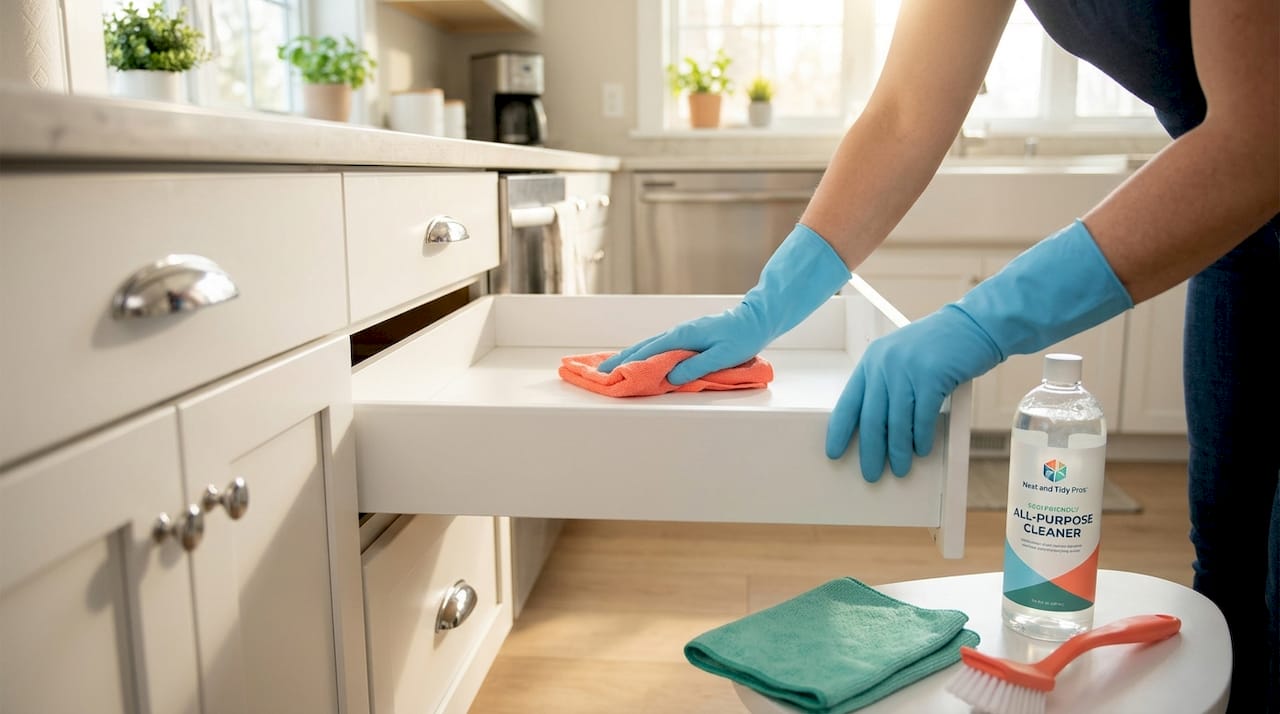
Bathrooms follow the same logic. Grout lines, toilet bases, under-sink cabinets, shower tracks, and faucet handles are the spots most likely to harbor bacteria from previous occupants. Disinfecting these areas before your towels and toiletries arrive prevents cross-contamination from the start.
Beyond kitchens and bathrooms, a complete move-in cleaning rental checklist covers:
- All windowsills and window tracks (dust and mold accumulate in tracks)
- Baseboards and door frames throughout every room
- Closet interiors, shelving, and closet floors
- Light switches, outlet covers, and door handles
- Ceiling fans, vent covers, and air return grilles
- Garage floors and laundry room surfaces if applicable
Pro Tip: Replace the HVAC air filter on day one. HVAC filter replacement costs between $10 and $25 and immediately improves the air quality circulating through your new home, especially after construction dust or prior occupant allergens.
When is the best time to perform move-in cleaning?
Timing is the single factor that determines how thorough your cleaning can be. Cleaning before unpacking is the non-negotiable rule, ideally the day before move-in or the morning of, before the first box crosses the threshold.
The reason is simple: an empty home gives you unrestricted access to every surface. You can scrub the back corners of every cabinet, mop under where the refrigerator will sit, and clean baseboards without moving furniture. Once boxes and furniture fill the rooms, those surfaces become inaccessible for months or years.
Unpacking before cleaning leads directly to neglected hard-to-reach areas, making post-move deep cleaning far more difficult. Homeowners who rush to unpack first consistently report that kitchens, bathrooms, and baseboards get skipped entirely because the clutter makes them feel overwhelming.
Here is a practical timing framework based on home size:
- Studio or one-bedroom apartment: Block a minimum of 4 to 6 hours on an empty space before any furniture arrives.
- Two to three-bedroom home: Plan for 6 to 8 hours, or split across two people to finish in half the time.
- Four-plus bedroom home: Budget a full day or hire professionals to cover the scope without cutting corners.
- Rental unit with prior tenants: Add at least 2 extra hours for bathroom grout, kitchen appliance interiors, and closet sanitization.
- New construction home: Still requires cleaning. Construction dust settles into every vent, cabinet, and surface and needs removal before you move in.
Pro Tip: Schedule your cleaning crew or your own cleaning session 24 hours before the moving truck arrives. This gap gives surfaces time to dry completely and lets any disinfectant products do their full work before your belongings make contact.
What supplies do you need for effective move-in cleaning?
Packing a separate cleaning kit for move-in day is one of the most practical decisions you can make. If your cleaning supplies are buried in a moving box labeled “miscellaneous,” you will waste the first hour of your cleaning window just finding them.
Your kit should be packed in a clearly labeled bag or bin and loaded into your personal vehicle rather than the moving truck. The goal is immediate access the moment you walk through the door.
| Supply | Purpose |
|---|---|
| Disinfectant spray and wipes | High-touch surfaces, countertops, cabinet interiors |
| Microfiber cloths (at least 10) | Streak-free wiping on glass, appliances, and shelving |
| Vacuum with HEPA filter | Captures fine dust, allergens, and debris from floors and vents |
| Mop and bucket | Hard floor final pass after vacuuming |
| Rubber gloves | Chemical protection during bathroom and kitchen scrubbing |
| Grout brush or old toothbrush | Bathroom tile grout and faucet base detail cleaning |
| Replacement HVAC filter | Air quality improvement from the first hour |
| Cabinet liners (optional) | Protect shelving after cleaning for long-term hygiene |
A vacuum with a HEPA filter is worth calling out specifically. Standard vacuums recirculate fine particles back into the air. A HEPA-equipped model traps them, which matters especially in homes where prior occupants had pets or where recent construction occurred.
Avoid mixing bleach-based products with ammonia-based cleaners on the same surface. This combination produces toxic fumes in enclosed spaces like bathrooms and closets. Read product labels before you start, and ventilate rooms by opening windows whenever possible.
Should you hire professionals or clean the new home yourself?
The honest answer depends on three factors: your available time, the condition of the property, and whether prior occupants had pets or smoked indoors. Professional move-in cleaning services provide specialized equipment and access to critical sanitization before your belongings arrive, which is the clearest argument for hiring out.
| Factor | DIY | Professional service |
|---|---|---|
| Cost | Low (supplies only) | Moderate to higher upfront cost |
| Time required | 4 to 8+ hours of your time | 2 to 4 hours with a trained crew |
| Equipment quality | Consumer-grade tools | Commercial vacuums, steam cleaners |
| Thoroughness | Depends on your effort | Consistent, checklist-driven results |
| Best for | Budget-conscious, smaller spaces | Busy schedules, larger homes, prior pet or smoke exposure |
Hiring professionals makes the most sense when you are managing a long-distance move, when the property has visible signs of heavy prior use, or when you have allergies and need certified sanitization rather than a best-effort clean. A professional crew working from a structured move-in cleaning checklist will cover areas most DIY cleaners miss, including refrigerator coil areas, inside dishwasher filters, and behind toilet bases.
DIY cleaning works well for newer properties, smaller apartments, and situations where you have a full day available and enjoy the process. The cost savings are real, and you get complete control over which products touch your surfaces.
Bundling moving and cleaning services reduces coordination stress and ensures timely cleaning. Some moving companies now offer combined packages that schedule the cleaning crew to arrive before the movers, eliminating the timing guesswork entirely.
Step-by-step move-in cleaning process before unpacking
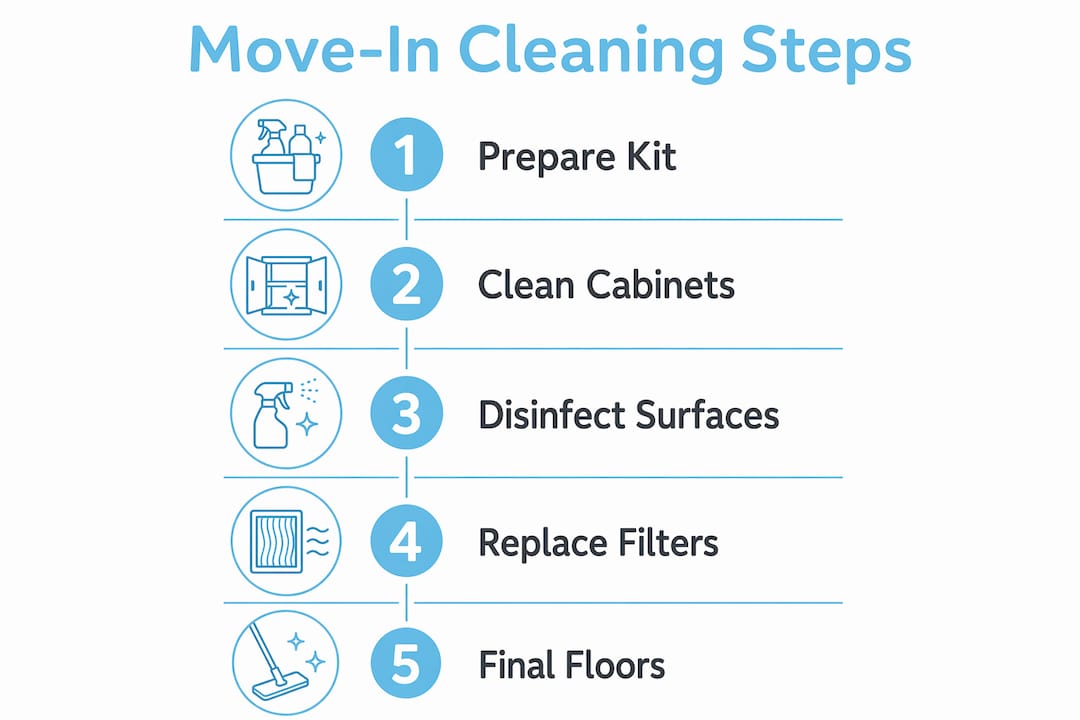
A recommended move-in cleaning workflow starts with the HVAC filter and ends with floors, working from top to bottom in every room. This sequence prevents you from cleaning a surface twice because dust or debris fell from above.
- Replace the HVAC air filter first. This takes five minutes and immediately starts circulating cleaner air through the home while you work.
- Clean the kitchen top to bottom. Start with upper cabinet interiors, then lower cabinets and drawers, then appliance interiors (oven, refrigerator, microwave), then countertops and backsplash, then the sink. Floors come last.
- Move to each bathroom. Clean in this order: mirror and medicine cabinet, toilet (tank, bowl, base), shower or tub, sink and faucet, cabinet interiors, then floor.
- Address living areas and bedrooms. Wipe ceiling fan blades, clean windowsills and tracks, dust baseboards, wipe light switches and outlets, then vacuum and mop floors last.
- Finish with closets and storage spaces. Wipe shelving, vacuum floors, and install cabinet liners if using them.
- Do a final walkthrough. Check every room for missed spots before the moving truck arrives.
Pro Tip: If you are cleaning with a partner, split the home by zone rather than by task. One person owns the kitchen and bathrooms while the other handles bedrooms and living areas. This prevents you from working in the same space and slowing each other down.
Floors are always last in every room, without exception. Cleaning floors before you finish the walls and surfaces above them means you will need to clean them again. This single rule saves 30 to 45 minutes on a full-home clean.
Key takeaways
Move-in cleaning performed before unpacking, using a room-by-room top-to-bottom sequence, is the most effective way to achieve a genuinely sanitized new home.
| Point | Details |
|---|---|
| Clean before unpacking | The empty-home window gives you unrestricted access to every surface and cabinet interior. |
| Replace HVAC filter first | A $10 to $25 filter replacement improves air quality from the first hour in your new home. |
| Pack a separate cleaning kit | Keep supplies in your personal vehicle so they are accessible before the moving truck unloads. |
| Floors always go last | Cleaning floors before finishing walls and surfaces above forces you to redo the work. |
| Hire pros for complex situations | Prior pets, smoke exposure, or large homes justify professional service for consistent results. |
What I have learned from hundreds of move-in cleans
The empty-home window is the most underused advantage in the entire moving process. Most people treat it as a brief gap between handing over keys and unloading boxes. At Neatandtidypros, we treat it as the only real opportunity to clean a home the way it deserves to be cleaned.
The mistake I see most often is not skipping cleaning entirely. It is starting to unpack before the cleaning is done. One box leads to another, and suddenly the kitchen cabinets never got wiped out, the bathroom grout never got scrubbed, and the baseboards are buried behind furniture for the next three years. The mess does not disappear. It just becomes invisible.
The tasks that matter most for long-term cleanliness are also the least glamorous: inside cabinet corners, window tracks, and the area behind where the toilet will sit. Nobody photographs those spots. But they are where bacteria, mold spores, and allergens from prior occupants actually live.
My honest recommendation is this: if you have the time and energy, do it yourself with a proper checklist and the right supplies. If you are managing a long-distance move, a tight timeline, or a property with visible signs of heavy prior use, book a professional deep cleaning service before your moving truck arrives. The cost is far lower than the stress of trying to deep clean around furniture you just spent a day carrying up three flights of stairs.
— Neat
Let Neatandtidypros handle your move-in clean
Moving is already one of the most demanding transitions you will face. Neatandtidypros takes the cleaning entirely off your plate so you can focus on the move itself.
Our move-in and move-out cleaning service covers every area on this checklist: kitchen cabinet interiors, bathroom grout, appliance cleaning, baseboards, windowsills, HVAC vent covers, and all high-touch surfaces throughout the home. Every job is performed by background-checked professionals using commercial-grade equipment. We work around your moving schedule and can coordinate directly with your moving company to clean before the first box arrives. Book early to lock in your preferred date. Explore all available cleaning service options and find the right fit for your new home.
FAQ
What is a move-in cleaning checklist?
A move-in cleaning checklist is a room-by-room list of surfaces and tasks to complete before unpacking, covering cabinet interiors, appliances, bathrooms, baseboards, and HVAC filters. It keeps the cleaning process organized and prevents missed areas.
How long does move-in cleaning take?
A one-bedroom apartment requires a minimum of 4 to 6 hours when cleaned empty. Larger homes of three or more bedrooms typically need a full day or a two-person crew to complete the work thoroughly.
Does move-in cleaning include appliances?
Yes. A thorough move-in clean covers the interior of the oven, refrigerator, and microwave, as well as the dishwasher filter and any other built-in appliances left by the prior occupant or included with the property.
Is move-in cleaning necessary for a brand-new home?
New construction homes still require pre-occupancy cleaning. Construction dust settles into vents, cabinets, and window tracks during the build process and needs removal before you move in your belongings.
When should I book a professional move-in cleaning service?
Book at least one week before your move-in date to secure your preferred time slot. Schedule the cleaning crew to arrive 24 hours before the moving truck so surfaces are dry and ready before your belongings arrive.