Professional cleaning tools are specialized equipment and supplies designed to remove soil, bacteria, and debris from surfaces across residential, commercial, healthcare, and industrial settings. Understanding the full range of professional cleaning tools types explained here will help you select the right equipment for every job, whether you manage a single home or a multi-facility operation. The category spans microfiber systems, floor scrubbers, industrial vacuums, steam cleaners, and manual hand tools. Each type serves a distinct function, and matching the tool to the surface and environment is what separates effective cleaning from merely going through the motions.
1. Essential hand tools every professional cleaner needs
Hand tools form the foundation of any professional cleaning kit. They handle detail work, surface prep, and spot cleaning that machines cannot reach or justify for smaller tasks.
The core hand tool list includes:
- Microfiber cloths and mop heads: Microfiber removes about 95% of microbes from surfaces compared to 68% with traditional cotton mops. That gap matters enormously in residential kitchens and commercial restrooms alike.
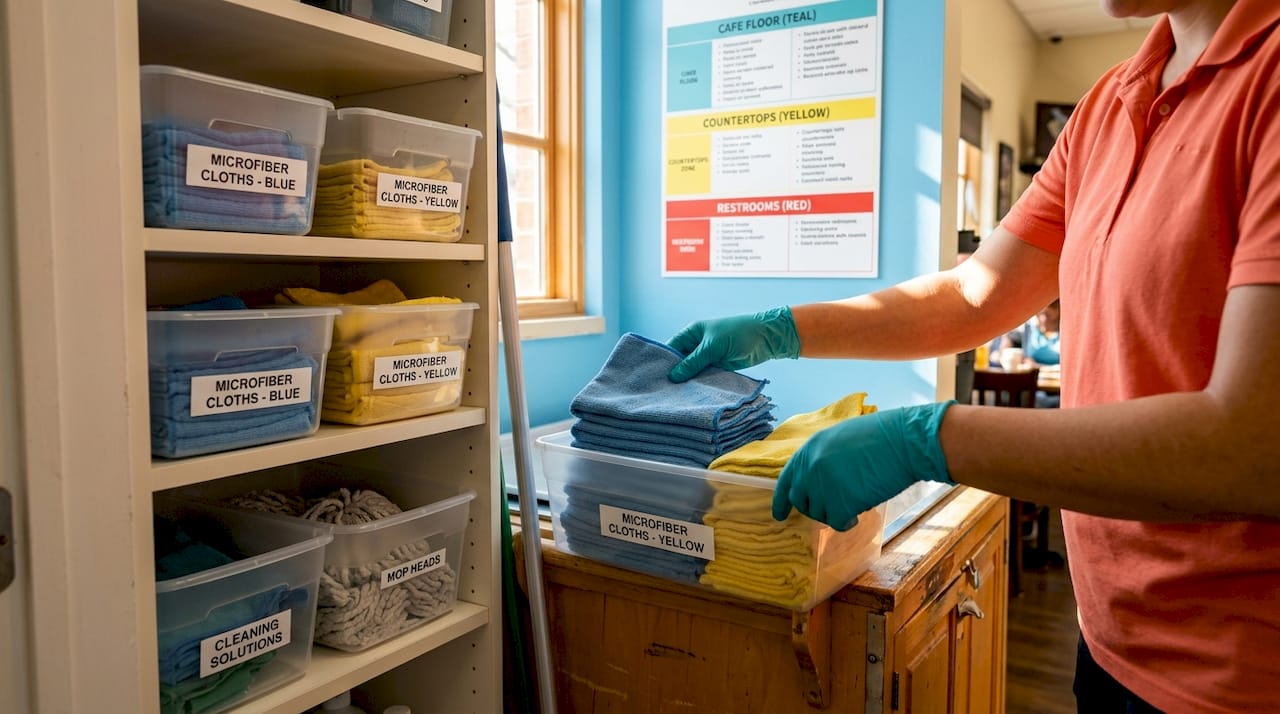
- Color-coded cloths: Assigning specific colors to specific zones (red for restrooms, blue for general surfaces, green for food areas) prevents cross-contamination without adding cost.
- Scrub brushes, grout brushes, and detail brushes: Stiff-bristle grout brushes reach tile joints that flat mops skip entirely. Detail brushes clear vents, baseboards, and fixture edges.
- Spray bottles with labeled solutions: Unlabeled bottles are a liability. Every bottle should carry the product name, dilution ratio, and surface compatibility.
- Extendable dusters: Tools like the Swiffer duster with a long handle are recommended by professional cleaners for high shelves, ceiling fans, and light fixtures. They also reduce shoulder and back strain on extended jobs.
- Squeegees and hand scrapers: Rubber squeegees clear water from glass and tile without streaking. Metal hand scrapers remove adhesive residue, paint overspray, and dried grime from hard surfaces.
- Handheld vacuums with attachments: Cordless handheld units with crevice and brush attachments handle upholstery, stairs, and vehicle interiors faster than dragging a full-size machine.
Pro Tip: Color-code your microfiber system from day one. Retrofitting a color-coding protocol after you have already built habits is far harder than starting with it. Buy cloths in four colors and assign zones before your first job.
2. How floor cleaning machines differ by type and use
Floor machines represent the largest investment in any professional cleaning operation, and choosing the wrong type costs time and money on every shift.
Walk-behind scrubber dryers clean hard floors by scrubbing and drying in one pass, eliminating the separate mopping and drying steps. They suit retail stores, school hallways, and light commercial spaces up to roughly 15,000 square feet per shift.
Ride-on and self-propelled scrubbers cover large areas with less operator fatigue. The choice between walk-behind, self-propelled, and ride-on models depends on floor size, cleaning frequency, and operator ergonomics. Warehouses, airports, and large manufacturing floors benefit most from ride-on units.
Industrial vacuum cleaners remove fine dust and dry debris that scrubbers leave behind. They pair with scrubber dryers rather than replacing them.
Floor sweepers handle dry contaminant removal before wet cleaning begins. Wet/dry vacuums manage spills and liquid debris in commercial or industrial environments where standard vacuums would be damaged.
| Machine type | Best for | Floor size | Key advantage |
|---|---|---|---|
| Walk-behind scrubber dryer | Retail, schools, offices | Up to 15,000 sq ft | One-pass clean and dry |
| Ride-on scrubber | Warehouses, airports | 15,000+ sq ft | Speed and operator comfort |
| Industrial vacuum | Factories, construction sites | Any | Fine dust and debris removal |
| Floor sweeper | Dry debris pre-cleaning | Any | Fast dry contaminant pickup |
| Wet/dry vacuum | Spill response, general commercial | Any | Handles liquids and solids |
Pro Tip: Large facilities should evaluate scrubber selection based on throughput and floor layout, not just cleaning chemistry. A machine that fits the aisle width and turn radius of your specific space will outperform a technically superior model that operators avoid because it is awkward to maneuver.
3. Specialized tools for sensitive and high-hygiene environments
Certain cleaning contexts demand tools that go beyond standard equipment. Healthcare facilities, food processing plants, and post-construction sites each require a specific approach to hygiene and surface safety.
Key specialized tools include:
- Healthcare-grade microfiber systems: Hospitals use color-coded microfiber cloths and mop heads to prevent cross-contamination, with strict laundering procedures to maintain effectiveness. A used cloth that re-enters a clean zone without laundering defeats the entire system.
- Powered scrub brushes: Powered scrub brushes can halve grout cleaning time and reduce physical effort, protecting knees and wrists on tile-heavy jobs like bathrooms and commercial kitchens.
- Extendable dusters for hard-to-reach areas: High-ceiling environments like warehouses and hotel lobbies require telescoping dusters that extend to 20 feet or more without requiring ladders for routine maintenance.
- Steam cleaners: Commercial steam cleaners sanitize surfaces without chemical residue, making them ideal for food prep areas, medical offices, and spaces where chemical sensitivity is a concern.
- Pressure washers: Cold and hot water pressure washers handle exterior surfaces, loading docks, parking structures, and post-construction debris. Hot water units cut through grease and oil that cold water cannot shift.
Microfiber’s infection prevention benefits depend entirely on strict laundering and workflow protocols. A microfiber cloth used incorrectly spreads contamination just as effectively as a cotton rag. The tool is only as good as the system around it.
4. Cleaning tools for professionals: residential vs. commercial needs
The right toolkit shifts significantly depending on whether you are cleaning a three-bedroom home or a 50,000-square-foot office building. Different cleaning contexts require tailored equipment durability, sanitation focus, and tool workflows for optimal performance.
Here is how to think through selection by context:
-
Residential cleaning: Prioritize lightweight, versatile tools. A quality microfiber mop system, a cordless vacuum, a caddy of labeled spray bottles, and a set of color-coded cloths cover 90% of residential jobs. A basic cleaning starter kit typically costs $200 to $500.
-
Commercial office cleaning: Add a walk-behind scrubber or auto-scrubber for hard floors, a backpack vacuum for speed on carpeted areas, and a janitor cart for supply organization. Commercial setups rise to $1,000 to $2,500 for a full starter kit.
-
Healthcare and institutional cleaning: Require dedicated microfiber systems with documented laundering logs, color-coded zones, EPA-registered disinfectants, and personal protective equipment (PPE) including gloves, eye protection, and gowns for high-risk areas.
-
Industrial and post-construction cleaning: Demand heavy-duty wet/dry vacuums, pressure washers, industrial floor sweepers, and safety equipment including respirators and steel-toed footwear. Post-construction cleaning involves debris, dust, and chemical residues that standard residential tools cannot handle safely.
-
Move-in and move-out cleaning: Combine deep-cleaning tools (powered scrub brushes, steam cleaners, detail brushes) with standard residential equipment. The goal is a thorough reset of every surface, including appliance interiors, grout lines, and window tracks.
-
Airbnb and short-term rental cleaning: Speed and consistency matter most. Standardized kits with pre-measured chemical packets, color-coded cloths, and a reliable vacuum reduce turnover time without sacrificing hygiene.
-
Budget vs. premium equipment: Entry-level tools from brands like O-Cedar and Rubbermaid Commercial work well for residential and light commercial use. Tennant, Nilfisk, and Karcher equipment suits high-frequency commercial and industrial applications where durability justifies the higher upfront cost.
Key takeaways
Professional cleaning tools fall into distinct categories, and matching each tool type to the right environment is the single most important factor in cleaning efficiency and hygiene outcomes.
| Point | Details |
|---|---|
| Microfiber outperforms cotton | Microfiber removes 95% of microbes vs. 68% for cotton, but only with proper laundering protocols. |
| Machine selection depends on floor size | Walk-behind scrubbers suit spaces under 15,000 sq ft; ride-on models cover larger facilities faster. |
| Color-coding prevents cross-contamination | Assigning cloth colors by zone is a low-cost protocol that protects clients and reduces liability. |
| Starter kit costs vary by job type | Residential kits run $200 to $500; commercial setups typically require $1,000 to $2,500. |
| Specialized tools match specialized environments | Healthcare, industrial, and post-construction jobs each require tools beyond a standard residential kit. |
What 15 years of cleaning jobs taught me about tool selection
The most common mistake I see from new cleaning operators is buying tools based on what looks professional rather than what the job actually requires. A gleaming ride-on scrubber in a 1,200-square-foot office is a waste of capital. A cotton mop in a hospital restroom is a hygiene failure waiting to happen.
The operators who build lasting businesses treat their microfiber system as a workflow, not a product purchase. That means documented laundering schedules, replacement cycles tracked by use count, and color-coding enforced from the first hire. The infection prevention benefits of microfiber disappear the moment a technician grabs the wrong cloth because the system was not enforced.
My second observation is about machine investment timing. Buy the manual tools first and master them. Add machines when the volume justifies the cost and the maintenance burden. A walk-behind scrubber that sits idle three days a week because jobs are not scheduled efficiently is a liability, not an asset.
Finally, tailor every kit to the client. A move-in/out cleaning job needs powered scrub brushes, steam cleaners, and detail tools that a weekly maintenance visit never touches. Carrying everything on every job wastes time and wears out equipment faster. Build job-specific kits and restock them after each use.
— Neat
See professional cleaning in action with Neatandtidypros
Neatandtidypros brings the right equipment to every job, from microfiber systems and walk-behind scrubbers for commercial cleaning to steam cleaners and powered brushes for deep cleaning services. Every technician is trained on color-coded protocols, proper chemical handling, and surface-specific tool selection. Whether you need a one-time post-construction clean or recurring office maintenance, Neatandtidypros matches the toolkit to the task. Explore the full range of professional cleaning services and find the right fit for your space.
FAQ
What tools are in a basic professional cleaning kit?
A core professional cleaning kit includes microfiber cloths, a mop system, scrub brushes, a vacuum cleaner, and labeled spray bottles. Starter kits for residential cleaning typically cost $200 to $500.
Why do professionals use microfiber instead of cotton mops?
Microfiber removes approximately 95% of microbes from surfaces compared to 68% for traditional cotton mops. The performance advantage holds only when microfiber is laundered correctly and used within a color-coded zone system.
How do I choose between a walk-behind and ride-on floor scrubber?
Walk-behind scrubbers suit facilities under roughly 15,000 square feet; ride-on models reduce operator fatigue and increase throughput in larger spaces. Floor layout, aisle width, and cleaning frequency all factor into the decision.
What cleaning tools are required for healthcare environments?
Healthcare cleaning requires color-coded microfiber systems with documented laundering logs, EPA-registered disinfectants, PPE including gloves and eye protection, and strict zone-based workflows to prevent cross-contamination.
Are powered scrub brushes worth the cost for professional cleaners?
Powered scrub brushes can cut grout cleaning time in half and reduce physical strain on tiled surfaces. For any cleaning business handling bathrooms, commercial kitchens, or tiled common areas regularly, the ergonomic and time savings justify the investment quickly.
One Response