
Deep cleaning is defined as a thorough, intensive cleaning process that targets hidden grime, biofilm, and buildup that routine maintenance misses entirely. For homeowners and renters in Orange County, California, recognizing the signs your home needs deep cleaning is the difference between a healthy living space and one quietly working against your comfort and wellbeing. Orange County’s warm, dry climate drives dust and allergen accumulation faster than many residents expect. Neatandtidypros works with local households daily and sees the same overlooked warning signs repeat across Irvine, Anaheim, and Newport Beach homes.
1. Visible dust on baseboards, vents, and ceiling fans
Dust on baseboards, ceiling fan blades, and air vents is the clearest indicator that regular cleaning has fallen short. Dust buildup in hard-to-reach places like vents and baseboards goes unseen during weekly cleanings. That invisibility is exactly what makes it dangerous. Over time, that layer thickens and becomes a reservoir for allergens, bacteria, and mold spores that circulate every time your HVAC system runs.
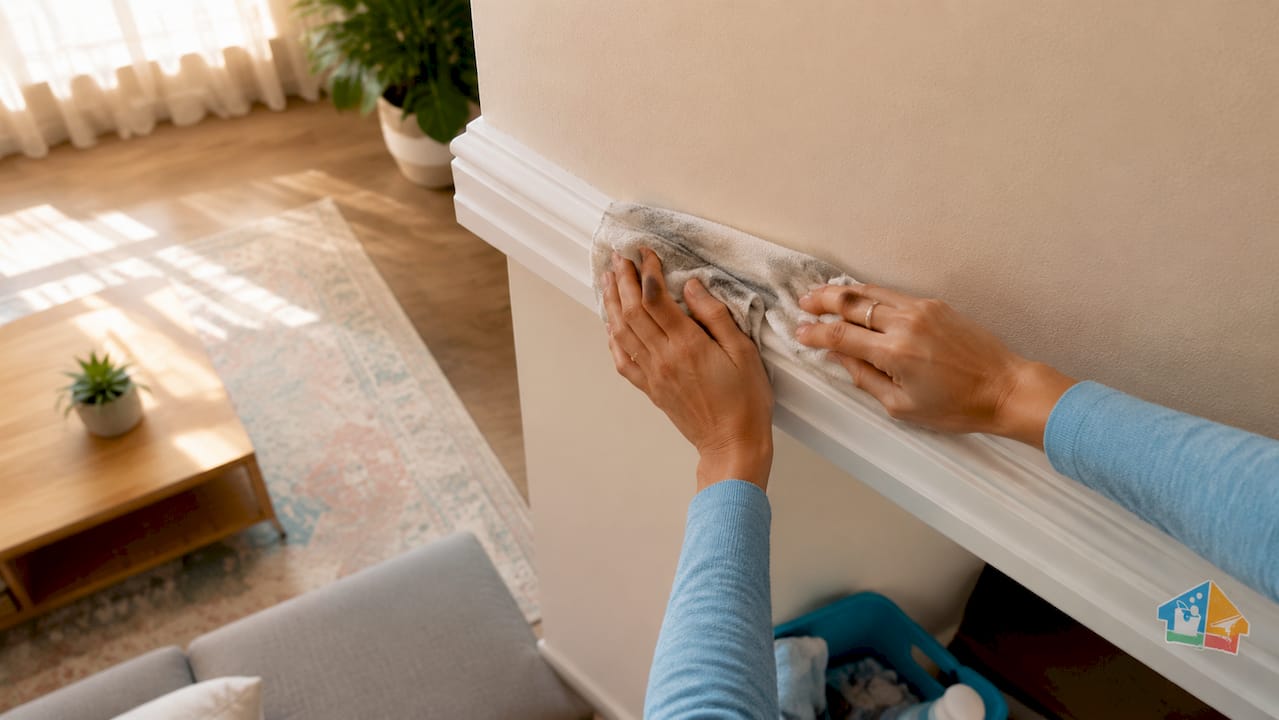
Run a white cloth along your baseboard or fan blade right now. A gray or brown smear means buildup has been accumulating for weeks, possibly months. Ceiling fans in Orange County homes run almost year-round, which accelerates the rate at which dust cakes onto blades.
Pro Tip: Check your return air vent grilles. If the grille looks gray or fuzzy, your ducts are pulling dirty air through a filter that can no longer keep up.
2. Sticky kitchen cabinets and greasy surfaces
Sticky cabinet fronts near the stove are a sign of grease and biofilm buildup that standard cleaning products cannot remove. Biofilm is a thin layer of bacteria and organic matter that bonds to surfaces over time. It forms faster in kitchens where cooking happens daily, especially with high-heat methods like stir-frying or grilling indoors.
A quick test: press your fingertip against a cabinet door near the range. Tackiness means grease has polymerized onto the surface. That residue attracts more dust and bacteria with every passing week. Wiping it with a damp cloth spreads the film rather than removing it.
3. Discolored grout in bathrooms and kitchens
Grout that has shifted from white or beige to gray, brown, or black signals mold and mildew colonization. Biofilm on porous grout surfaces requires physical extraction and thermal treatment because surface sprays alone do not eliminate the fungi or bacteria embedded in the material. Orange County’s bathroom humidity, even in drier inland areas, creates ideal conditions for this growth.
Discolored grout is not just an appearance problem. Mold spores released from grout lines contribute directly to indoor air quality issues. A professional deep cleaning service uses steam and specialized tools to extract biofilm rather than simply bleaching the surface.
4. Persistent odors that don’t go away after cleaning
Musty or stale smells that linger after you clean are a reliable sign that grime has taken hold somewhere you are not reaching. Persistent odors come from dirty carpets, air vents, or hidden mold in places regular cleaning overlooks. Spraying an air freshener masks the symptom without addressing the source.
Common odor sources in Orange County homes include carpet fibers that trap pet dander and moisture, bathroom exhaust fans clogged with dust, and refrigerator drip pans that rarely get cleaned. If a room smells stale the moment you walk in, that smell is telling you something specific. Track it to its source before it worsens.
5. Indoor allergy symptoms that improve when you leave home
Sneezing, itchy eyes, and nasal congestion that ease up when you step outside point directly to indoor air quality problems. Allergy symptoms triggered by indoor contaminants improve when leaving the home, which confirms that the accumulation is inside, not outside. Dust mites, pet dander, and mold spores are the most common culprits.
This pattern is one of the most underrecognized clues your home needs cleaning. Many residents assume their symptoms are seasonal or pollen-related. If your symptoms follow you indoors but ease outdoors, your home’s air quality is the issue. A thorough cleaning of upholstered furniture, carpets, and HVAC components addresses the root cause.
6. You can’t remember the last time you deep cleaned
Not being able to recall your last deep clean is itself a sign. Most homes benefit from a whole-home deep clean every 3–6 months, with kitchens and bathrooms needing extra attention due to grease and moisture buildup. If that timeline has passed without a thorough session, buildup is almost certainly present.
Homes with pets, children, or frequent cooking need deep cleaning closer to the three-month mark. Homes with lower traffic can stretch to six months. Orange County’s year-round outdoor activity means more foot traffic and more tracked-in debris than homes in colder climates where residents stay indoors more.
Pro Tip: Set a calendar reminder every quarter labeled “deep clean check.” Even if you do not schedule a full session, the reminder prompts you to assess whether one is overdue.
7. Life changes that reset your cleaning needs
Certain events reset your home’s cleaning baseline entirely. Moving into a new home, adopting a pet, having a baby, or hosting extended guests all introduce new sources of grime and allergens. Separating deep cleaning from regular upkeep with a seasonal schedule keeps routines manageable and the home healthier.
A home cleaning checklist tied to life events prevents buildup from compounding. For example, after a pet joins the household, dander accumulates in carpet fibers, upholstery, and HVAC filters within weeks. Waiting for the annual deep clean is too long. Neatandtidypros recommends reassessing your cleaning schedule any time a major household change occurs.
- New pet in the home: increase deep cleaning frequency to every 2–3 months.
- New baby or toddler: prioritize floors, upholstery, and nursery surfaces.
- Post-renovation: construction dust penetrates every surface and requires a dedicated post-construction clean.
- Before hosting guests: a pre-event deep clean protects both comfort and health.
- After illness: sanitizing high-touch surfaces and laundering soft furnishings reduces reinfection risk.
8. Hard-to-reach and hidden areas showing grime
Behind appliances, inside cabinet interiors, and bathroom corners are the zones most likely to harbor serious buildup. Areas behind appliances, inside cabinets, and bathroom corners accumulate grime and biofilms resistant to surface sprays, requiring physical extraction. The refrigerator coils, the space behind the washing machine, and the underside of the range hood are prime examples.
These zones are invisible during daily life, which is why they get skipped. Mold in a bathroom corner, grease behind the stove, and dust under the sofa all grow undisturbed for months. Checking these spots quarterly gives you an honest picture of your home’s actual cleanliness. A full room deep clean by professionals covers every one of these areas systematically.
- Behind the refrigerator and stove
- Under beds and large furniture
- Inside kitchen cabinet interiors and drawer tracks
- Bathroom corners, caulk lines, and exhaust fans
- Light fixtures, fan blades, and window tracks
9. Deep cleaning vs. routine cleaning: what the difference looks like
Deep cleaning targets what routine cleaning skips. Professional cleaners use a top-to-bottom, left-to-right sequence during deep cleaning to avoid re-contaminating cleaned areas. That method is fundamentally different from a quick weekly wipe-down.
| Task | Routine Cleaning | Deep Cleaning |
|---|---|---|
| Floors | Sweep and mop | Scrub grout, clean under furniture |
| Kitchen | Wipe counters, clean stovetop | Degrease cabinets, clean behind appliances |
| Bathroom | Wipe surfaces, clean toilet | Scrub grout, descale fixtures, clean exhaust fan |
| Upholstery | Vacuum cushions | Shampoo fabric, treat stains |
| Air vents | Not typically addressed | Remove and wash vent covers, vacuum ducts |
Deep cleaning targets hidden buildup and biofilms that require specialized techniques beyond weekly maintenance. Routine cleaning maintains a surface appearance. Deep cleaning restores the actual condition of your home.
Key takeaways
Recognizing the signs your home needs deep cleaning early prevents buildup from compounding into health risks, structural damage, and costly remediation.
| Point | Details |
|---|---|
| Visible dust and grease are clear signals | Dusty vents, sticky cabinets, and discolored grout all indicate buildup that routine cleaning cannot fix. |
| Indoor allergy symptoms point inward | Symptoms that ease outdoors confirm the problem is inside your home’s air and surfaces. |
| Deep clean every 3–6 months | Most homes need a full deep clean quarterly to biannually, depending on pets, children, and cooking frequency. |
| Hidden zones accumulate the most grime | Behind appliances, under furniture, and inside cabinets harbor biofilms that require physical extraction. |
| Life changes reset your cleaning schedule | New pets, renovations, and guests all require reassessing how often you deep clean. |
What I’ve learned from cleaning Orange County homes
Most homeowners underestimate how fast buildup happens in Southern California. The dry, dusty air that blows in from the inland valleys coats surfaces faster than in more humid climates. Residents often assume their homes are clean because they look clean. Appearance and actual cleanliness are two different things.
The biggest mistake I see is treating deep cleaning as a reactive task. People call us after they notice a smell, after someone in the household develops persistent allergy symptoms, or after a guest comments on the state of the grout. By that point, the buildup has been compounding for months. A proactive schedule, tied to seasons or life events, prevents that cycle entirely.
The other misconception is that cleaning more often replaces deep cleaning. It does not. Wiping the same surfaces weekly with the same products maintains a surface layer of cleanliness. It does not address what is behind the refrigerator, inside the vent covers, or embedded in the grout. Separating maintenance from deep cleaning with a distinct seasonal schedule is the approach cleaning professionals and household management experts consistently recommend.
For Orange County renters specifically, a deep clean before move-out protects your security deposit and your rental history. For homeowners, it protects the value and livability of your property. Either way, the cost of prevention is always lower than the cost of remediation.
— Neat
Professional deep cleaning for Orange County homes
Orange County homes face specific challenges: year-round dust, high outdoor activity, and coastal humidity in areas like Huntington Beach and Dana Point. Neatandtidypros provides residential deep cleaning services designed for exactly these conditions, covering every room from kitchen grease buildup to bathroom grout and hidden allergen zones.

Whether you are a homeowner in Irvine, a renter in Anaheim, or preparing a property for new tenants, Neatandtidypros brings the tools, techniques, and local knowledge to restore your home’s actual cleanliness. Explore the full range of deep cleaning options tailored to Orange County residents and schedule a service that fits your timeline.
FAQ
How often should you deep clean your home?
Most homes need a full deep clean every 3–6 months. Homes with pets, children, or frequent cooking benefit from cleaning closer to the three-month mark.
What are the clearest signs of a dirty home that needs deep cleaning?
Visible dust on vents and baseboards, sticky kitchen surfaces, discolored grout, and persistent odors are the most reliable indicators that deep cleaning is overdue.
Can regular cleaning replace deep cleaning?
Routine cleaning maintains surface appearance but does not address biofilm, grease buildup behind appliances, or allergens embedded in carpets and upholstery. Deep cleaning is a separate, more intensive process.
Why do indoor allergies signal the need for a deep clean?
Allergy symptoms like sneezing and itchy eyes that ease when you leave home confirm that dust, dander, or mold has accumulated indoors at levels a regular cleaning routine cannot reduce.
What areas get missed most during routine cleaning?
Behind appliances, inside cabinet interiors, bathroom corners, air vent covers, and under large furniture are the zones most commonly skipped and most likely to harbor serious grime and biofilm buildup.