Eco-friendly cleaning is the practice of using products and methods that protect human health and the environment without sacrificing cleaning performance. Also called green cleaning, this approach relies on safer ingredient formulations, science-based certifications like the EPA Safer Choice label and EU Ecolabel, and sustainable habits that reduce chemical waste, lower indoor air pollution, and cut greenhouse gas emissions. For families with children, pets, or anyone with allergies, the shift to green cleaning is one of the most direct changes you can make to improve your home environment. This guide breaks down exactly what qualifies as eco-friendly, what the research says about its effectiveness, and how to apply it room by room.
What is eco friendly cleaning and what makes a product qualify?
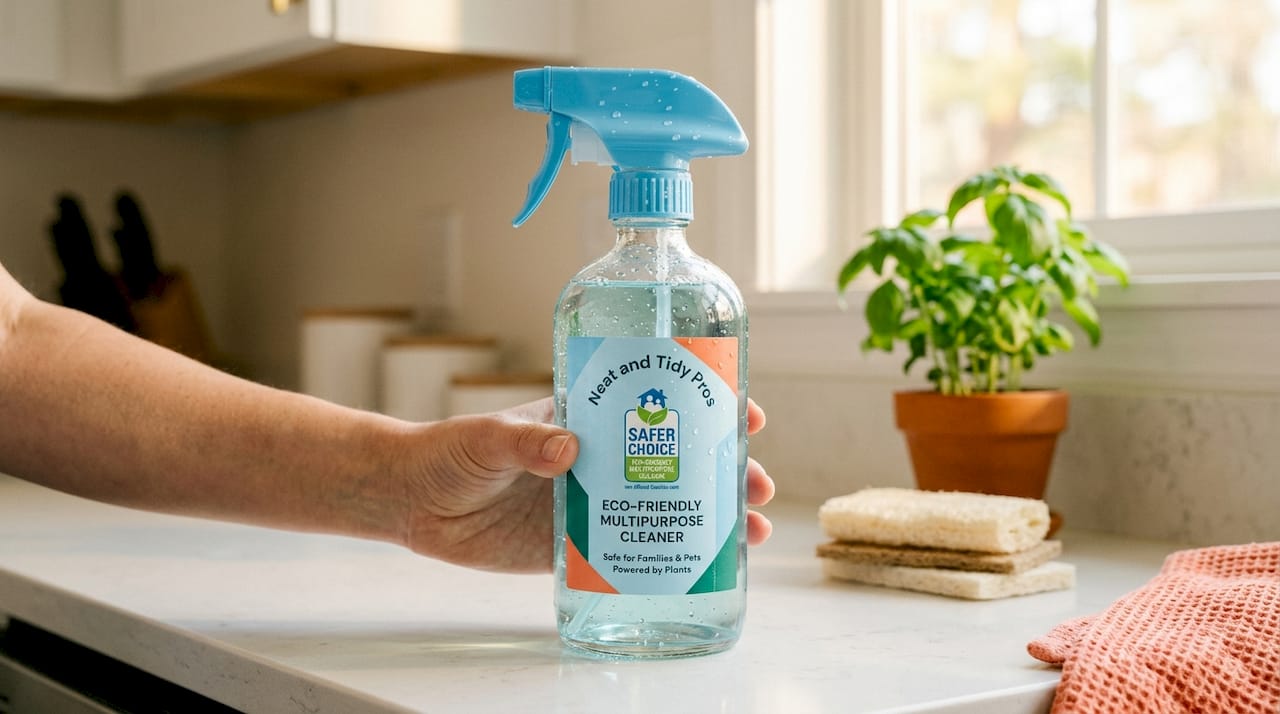
Eco-friendly cleaning, or green cleaning, is defined by three criteria: safer ingredients, verified environmental performance, and third-party certification. A product labeled “natural” or “plant-based” does not automatically qualify. The most reliable way to identify a genuinely green cleaning product is to look for certifications that evaluate the full picture, not just the marketing copy on the front label.
The EPA Safer Choice label evaluates every ingredient for human health and environmental safety, and it requires performance testing to confirm the product cleans as well as conventional alternatives. This matters because it removes the assumption that choosing safer means accepting weaker results. Products carrying this label have passed ingredient-level reviews covering toxicity, aquatic safety, and biodegradability.
The EU Ecolabel takes a lifecycle approach, assessing environmental impact from raw material sourcing through manufacturing, distribution, and disposal. It is an ISO Type I ecolabel, meaning it meets the highest standard for third-party environmental certification. The most meaningful green claims rely on lifecycle-focused criteria rather than just marketing natural ingredients, because environmental damage happens at every stage of a product’s life, not only when you spray it on your counter.
Common safer ingredients found in certified green cleaning products include:
- Baking soda (sodium bicarbonate): Mild abrasive and odor neutralizer, effective on surfaces and drains
- White distilled vinegar: Acid-based, cuts through mineral deposits and soap scum
- Castile soap: Plant-oil-based surfactant, effective on grease and general grime
- Hydrogen peroxide (3%): Disinfects without chlorine byproducts
- Citric acid: Tackles hard water stains and limescale without harsh fumes
Pro Tip: When shopping for green cleaning products, skip “unscented” as your safety signal. Programs like EPA Safer Choice provide more reliable safety guarantees than “natural” or “unscented” claims, because they evaluate fragrance and ingredient risks at a scientific level.
Greenwashing is real, and it costs you money while delivering false confidence. A product with a green leaf logo and the word “botanical” on the label has no verified standard behind it. Stick to EPA Safer Choice, EU Ecolabel, or Green Seal certified products when you want proof, not promises.
What are the health and environmental benefits of green cleaning?
The benefits of green cleaning extend well beyond avoiding a harsh smell. Reduced exposure to toxic chemicals is the most immediate gain, particularly for households with young children, pets, or members who have asthma or allergies. Many conventional cleaning products contain volatile organic compounds, or VOCs, that off-gas into your home’s air long after you finish cleaning.
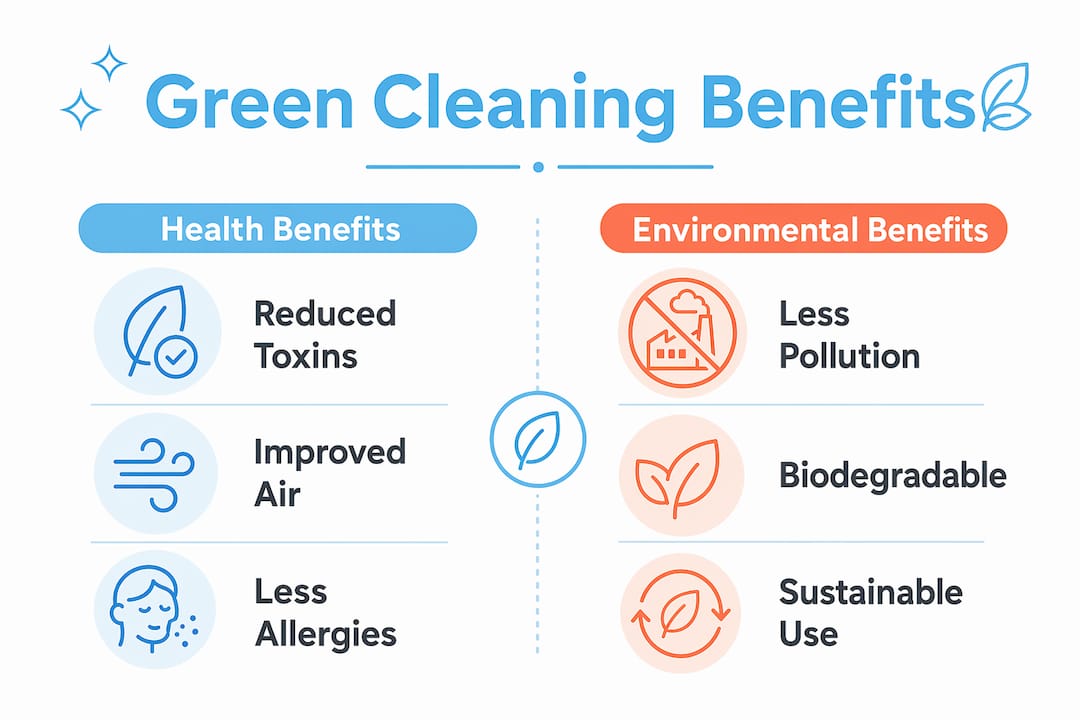
Indoor air quality risks from VOCs are well-documented by the EPA, which notes that indoor air can be significantly worse than outdoor air in homes that use conventional cleaning products regularly. Switching to certified green products directly lowers the VOC load in your home. This is not a marginal benefit. Families that clean frequently, meaning several times per week, accumulate meaningful chemical exposure over months and years.
The environmental case is equally strong. A 2025 MDPI study found that green cleaning protocols reduced greenhouse gas emissions by over 50% in healthcare settings while maintaining microbiological hygiene quality. Specifically, researchers reported a 53.3% decrease in global warming potential and fewer microbial contaminations compared to traditional cleaning. If those results hold in controlled professional environments, the implications for residential use are significant.
Key benefits documented across research include:
- Lower VOC exposure indoors, reducing asthma and allergy triggers
- Biodegradable formulas that do not persist in waterways or harm aquatic life
- Reduced packaging waste when concentrated or refillable formats are used
- Safer for children and pets who have more skin contact with cleaned surfaces
- Lower carbon footprint from production through disposal
“Real-world green cleaning protocols demonstrate environmental benefits with no compromise on hygienic cleanliness.” — MDPI, 2025
For families managing indoor air quality concerns, the combination of certified products and proper ventilation creates a measurably healthier home. The health gains compound over time, which is why starting with even one or two product swaps makes a real difference.
How to clean eco friendly: practical methods for everyday use
Knowing how to clean eco friendly is as much about technique as it is about products. The most effective approach treats green cleaning as a chemistry-matching problem: pair the right cleaning agent to the specific type of soil or stain, and you use less product while getting better results.
Here is how that matching works in practice:
- Mineral deposits and limescale (faucets, showerheads, kettles): Use an acid-based cleaner like white vinegar or citric acid solution. Acids dissolve calcium and magnesium buildup without scrubbing.
- Grease and cooking residue (stovetops, range hoods, pots): Use an alkali-based cleaner like castile soap or baking soda paste. Alkalis break down fatty acids through saponification.
- Protein and starch stains (food spills, pet accidents, blood): Use an enzyme-based cleaner. Enzymes digest organic matter at the molecular level, which is why they outperform generic sprays on these stains.
- General surface cleaning (counters, tables, door handles): A diluted castile soap solution or a certified multi-surface green spray handles most daily tasks.
- Odor control (trash cans, refrigerators, drains): Baking soda absorbs odors rather than masking them with fragrance.
Sustainable tools matter as much as the products you choose. Swedish dishcloths replace hundreds of paper towels and are compostable at end of life. Reusable microfiber rags clean effectively with less product because of their fiber structure. Loofahs and old toothbrushes handle scrubbing tasks without disposable scrubbers. These swaps reduce both waste and cost over time.
Pro Tip: Even lower-toxicity cleaning products require ventilation during use. Opening windows and running a fan while you clean limits indoor air exposure from any airborne compounds, including those from plant-based formulas.
Simplifying your supply cabinet is itself a sustainable practice. Most homes need five products at most: a multi-surface spray, a bathroom cleaner, a degreaser, a floor cleaner, and a disinfectant for high-touch surfaces. Fewer products mean less plastic, less chemical load, and less money spent.
Eco-friendly vs. traditional cleaning: effectiveness, cost, and trade-offs
The most common objection to green cleaning is that it does not work as well. The evidence says otherwise, with some nuance. The 2025 MDPI study comparing green and traditional cleaning in healthcare settings found that green protocols matched or exceeded traditional hygiene standards while cutting greenhouse gas emissions by more than half. Healthcare settings have strict microbial standards, so this comparison carries real weight.
| Factor | Eco-friendly cleaning | Traditional cleaning |
|---|---|---|
| Ingredient safety | Certified, ingredient-level review | Often contains VOCs, surfactants, and synthetic fragrances |
| Environmental impact | Biodegradable, lower carbon footprint | Higher GWP, aquatic toxicity concerns |
| Cleaning performance | Matches conventional for most tasks | Strong on tough stains, faster on heavy grease |
| Cost over time | Lower with concentrates and DIY options | Higher due to single-use formats and variety of products |
| Indoor air quality | Lower VOC output | Higher VOC risk with frequent use |
The honest trade-off is time and effort on extreme stains. Gentler formulations sometimes require longer dwell time or more physical scrubbing on heavily soiled surfaces. For post-construction dust, deep grease buildup, or mold remediation, a targeted certified product is a better choice than a DIY vinegar spray. The solution is not to avoid green cleaning but to use the right tool for the job.
Cost savings are real when you switch to concentrates and reduce the number of products you buy. A single bottle of concentrated castile soap diluted correctly replaces multiple specialty cleaners. Refillable formats from brands like Blueland and Grove Collaborative cut packaging costs further.
Pro Tip: For stubborn stains, let your eco-friendly cleaner sit for 5 to 10 minutes before wiping. Dwell time does the chemical work so you do not have to scrub harder or reach for a harsher product.
EPA Safer Choice certified products include required performance testing, so you are not guessing about efficacy. The certification removes the safety-versus-performance trade-off entirely for everyday cleaning tasks.
Key takeaways
Eco-friendly cleaning matches certified safer products to specific soil types, uses sustainable tools, and relies on ventilation to deliver effective, low-impact cleaning that protects both your family’s health and the environment.
| Point | Details |
|---|---|
| Certification is the baseline | Look for EPA Safer Choice or EU Ecolabel to verify safety and performance claims. |
| Match chemistry to the task | Use acids for mineral deposits, alkalis for grease, and enzymes for protein stains to clean effectively with less product. |
| Ventilation is non-negotiable | Open windows during any cleaning session, even with certified green products, to protect indoor air quality. |
| Green cleaning performs | A 2025 MDPI study confirmed green protocols match traditional hygiene standards while cutting emissions by over 50%. |
| Simplify to reduce waste | Five core products cover most household needs and reduce plastic, chemical load, and spending. |
What I’ve learned from cleaning homes the green way
Most people approach eco-friendly cleaning as an all-or-nothing decision, and that framing stops them before they start. What I have found, after years of working in residential and commercial spaces with Neatandtidypros, is that the transition works best when you treat it as a series of small, deliberate swaps rather than a complete cabinet overhaul on day one.
The chemistry-matching insight changed how I think about this entirely. Before I understood that vinegar is an acid and grease needs an alkali, I was using the wrong products on the wrong surfaces and concluding that green cleaning did not work. Once the pairing clicked, results improved immediately. Most cleaning failures are not product failures. They are chemistry mismatches.
The ventilation piece is underrated. I have seen families switch to certified green products and still experience headaches or lingering odors because they clean in closed rooms. Even plant-based formulas release compounds into the air. Cracking a window is not optional. It is part of the method.
My honest recommendation is to start with your bathroom. Swap your conventional toilet cleaner and surface spray for EPA Safer Choice certified alternatives, add a reusable cloth, and open the window. That one room gives you a controlled test with immediate, visible results. From there, the rest of the house follows naturally. The goal is not perfection. It is a cleaner home that does not cost you or the planet more than necessary.
— Neat
Let Neatandtidypros handle the green cleaning for you
If switching products and learning new methods feels like one more task on an already full list, Neatandtidypros makes it simple. Our professional cleaning services use eco-friendly products and sustainable practices across every service we offer, from routine basic cleaning to thorough move-in and move-out cleaning for families in transition.
Every Neatandtidypros team member is trained to match the right cleaning chemistry to each surface and soil type, which means better results with fewer products and no harsh chemical residue left behind. Whether you need a one-time deep clean or ongoing service, we bring the certified products, the sustainable tools, and the expertise so you do not have to. Book your first green clean today and see the difference a trained team makes.
FAQ
What is the difference between green cleaning and eco-friendly cleaning?
Green cleaning and eco-friendly cleaning refer to the same practice: using products and methods that reduce environmental impact and protect human health. Both terms describe cleaning that prioritizes certified safer ingredients, biodegradability, and lower VOC output over conventional chemical formulations.
Are eco-friendly cleaning products as effective as traditional ones?
Yes, for most household tasks. A 2025 MDPI study confirmed that green cleaning protocols match or exceed traditional hygiene standards, including in healthcare settings with strict microbial requirements. Certified products like those carrying the EPA Safer Choice label must pass performance testing before receiving the label.
What natural cleaning products work best at home?
White vinegar handles mineral deposits and soap scum, baking soda neutralizes odors and acts as a mild abrasive, and castile soap cuts grease on most surfaces. For protein-based stains like pet accidents or food spills, an enzyme-based cleaner outperforms all three.
Is ventilation necessary when using eco-friendly cleaners?
Yes. The EPA advises ventilation during any cleaning activity because even lower-toxicity products can release airborne compounds indoors. Opening windows and running a fan during and after cleaning protects indoor air quality regardless of the product’s certification level.
How do I avoid greenwashing when buying cleaning products?
Ignore front-label claims like “natural,” “botanical,” or “plant-based” without certification backing. Look specifically for EPA Safer Choice, EU Ecolabel, or Green Seal certification, which require ingredient-level safety reviews and verified performance testing rather than self-reported marketing claims.
One Response