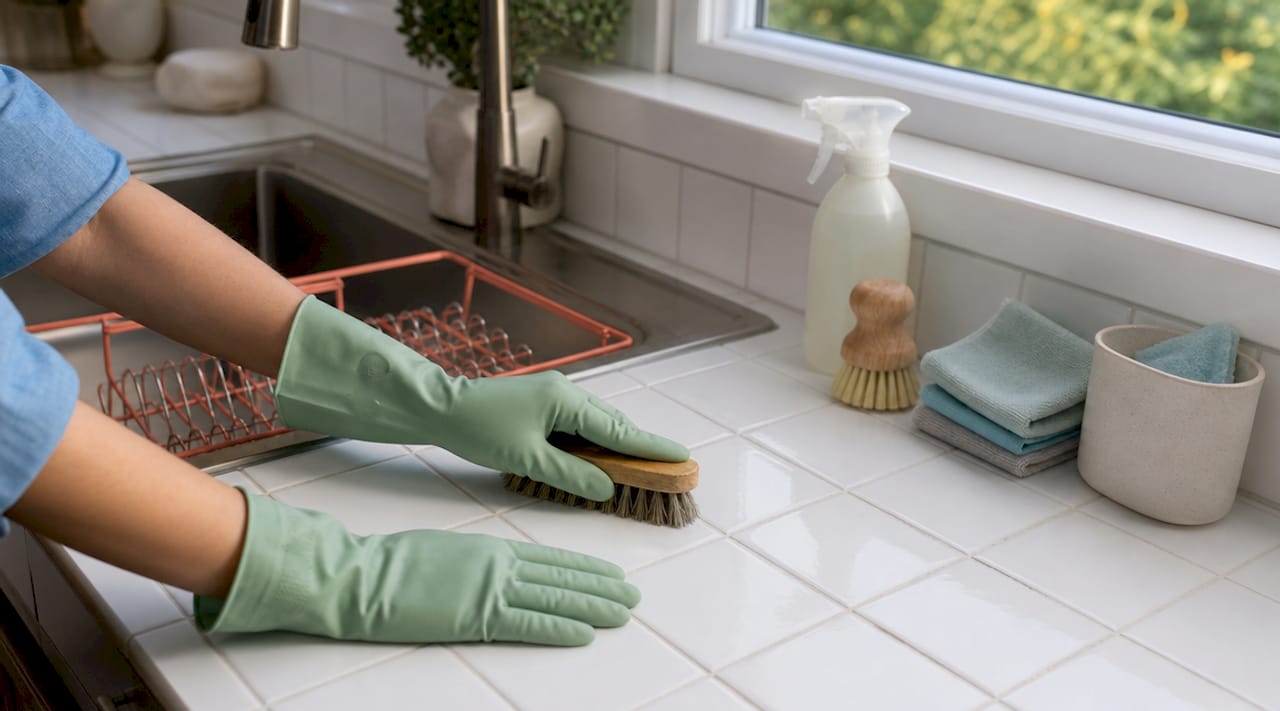
Deep cleaning is defined as a thorough, top-to-bottom reset of your home that targets dirt, grime, and allergens in areas routine cleaning never reaches. Where a weekly tidy covers visible surfaces, a deep clean goes after the inside of your oven, the grout between bathroom tiles, ceiling fan blades, and the dust packed into window tracks. The EPA-registered disinfectants used in professional sessions only work after physical cleaning removes the organic matter that shields bacteria. Most households benefit from scheduling this process once or twice a year, though tenants preparing to move and homeowners expecting guests often need it sooner. Done right, deep cleaning protects surfaces, improves indoor air quality, and reduces pest risks in ways no routine sweep can match.
What is deep cleaning vs. regular house cleaning?
Deep cleaning and regular cleaning share the same goal but operate at completely different levels of intensity. Routine cleaning handles the visible: wiping counters, vacuuming floors, scrubbing the toilet bowl. Deep cleaning handles the invisible: the grease film behind your stove, the mold forming in window tracks, the allergens trapped in upholstery fibers.
Here is a direct comparison of what each covers:
| Task | Regular cleaning | Deep cleaning |
|---|---|---|
| Kitchen counters | Wiped down | Degreased and sanitized |
| Oven | Exterior wiped | Interior scrubbed, racks removed |
| Bathroom tiles | Surface cleaned | Grout scrubbed, mildew treated |
| Baseboards | Dusted occasionally | Washed and detailed |
| Ceiling fans | Rarely touched | Blades wiped, motor housing cleaned |
| Window tracks | Ignored | Vacuumed and scrubbed |
| Upholstery | Vacuumed | Spot treated and deep vacuumed |
The neglected areas professionals target include baseboards, light fixtures, vents, door tops, and grout lines. These spots accumulate grime over months and become breeding grounds for bacteria and allergens if left untreated.
There is also a critical distinction between cleaning, sanitizing, and disinfecting. Cleaning removes dirt first, and that step must happen before any sanitizer or disinfectant can work. Sanitizing reduces pathogens to safe levels. Disinfecting eliminates them more completely, which is why it is reserved for high-touch surfaces or post-illness situations. Skipping the cleaning step first is one of the most common mistakes homeowners make, and it renders even the strongest disinfectant far less effective.
For most households, deep cleaning is recommended once or twice a year. If your routine housekeeping is consistent, you can stretch that to once annually. Homes with pets, young children, or allergy sufferers benefit from more frequent sessions.
Which areas does a whole-house deep cleaning cover?
A whole-house deep clean follows a specific workflow to avoid re-soiling surfaces you have already cleaned. The best practice starts with decluttering, then moves top-to-bottom through each room so dust and debris fall onto floors cleaned last. Here is a practical room-by-room sequence:
- Declutter every room first. Remove items from counters, shelves, and floors before any cleaning begins. This prevents you from cleaning around clutter and missing surfaces underneath.
- Start with the kitchen. Clean inside the oven, microwave, and refrigerator. Degrease the range hood filter, wipe cabinet fronts, and scrub the sink basin. Pull the refrigerator out and vacuum the coils.
- Move to bathrooms. Scrub grout lines with a stiff brush, treat mildew on caulk, descale the showerhead, and clean behind the toilet. Wipe down exhaust fans and light fixtures.
- Address bedrooms and living areas. Vacuum under and behind furniture, clean ceiling fan blades, wipe baseboards, and treat upholstery. Wash curtains or wipe blinds slat by slat.
- Tackle high-airflow zones last. Clean vents, window tracks, and door frames. These areas collect the most dust and directly affect air quality throughout the home.
- Finish with floors. Vacuum thoroughly before mopping hard floors. This sequence prevents dragging debris across a wet surface.
The tools that make this work include microfiber cloths, a stiff grout brush, a vacuum with a HEPA filter, a steam cleaner for tile and grout, and EPA-registered cleaning products appropriate for each surface. You can find a detailed breakdown of what professionals use in this cleaning tools guide.
Pro Tip: Batch similar tasks across rooms rather than completing one room fully before moving to the next. For example, clean all ceiling fans in the house before moving to baseboards. This reduces setup time, keeps your focus sharp, and prevents the mental fatigue of switching between different types of tasks repeatedly.
What are the key benefits of deep cleaning your home?
The benefits of deep cleaning extend well beyond a visually cleaner space. The most significant gains are health-related, structural, and practical.
“For allergy and pet dander management, targeting high-dust and airflow-adjacent areas like ceiling fans, vents, and window tracks is more effective than re-cleaning already-clean surfaces repeatedly.” — Martha Stewart Deep Cleaning Checklist
Improved indoor air quality is the most immediate benefit. Dust mites, pet dander, mold spores, and pollen accumulate in ceiling fans, vents, and window tracks. Cleaning these high-airflow zones removes the particles that circulate through your HVAC system and settle back onto surfaces within days of a regular clean. For households with asthma or seasonal allergies, this is not a cosmetic improvement. It is a health intervention.
Surface longevity is the second major benefit. Grease left on kitchen tile grout degrades the grout over time. Soap scum on shower glass etches the surface if left long enough. Grime on hardwood floors acts as an abrasive under foot traffic. A deep clean removes these damaging residues before they cause permanent wear, which saves money on repairs and replacements.
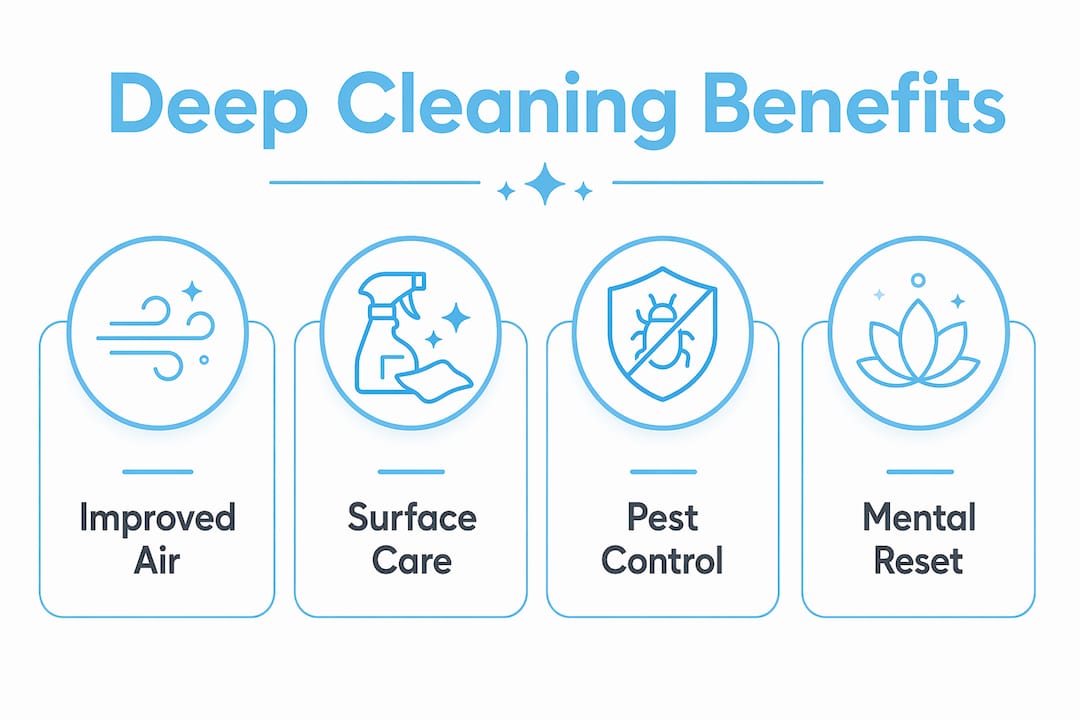
Pest prevention is the third benefit most homeowners overlook. Crumbs under appliances, grease buildup in cabinet corners, and standing moisture in bathroom caulk all attract insects and rodents. Removing these food sources and moisture points during a deep clean is one of the most cost-effective forms of pest control available.
Finally, deep cleaning creates a psychological reset. Research in environmental psychology consistently links cluttered, dirty environments to elevated stress and reduced focus. A thoroughly cleaned home is not just more hygienic. It is genuinely easier to live in.
How to maintain a deep-cleaned home between sessions
The goal after a deep clean is to extend its benefits as long as possible. The right maintenance habits prevent the buildup that makes the next deep clean harder.
Daily habits that protect your investment:
- Wipe kitchen counters and the stovetop after every meal to prevent grease from bonding to surfaces
- Run the bathroom exhaust fan during and after showers to reduce moisture and mold growth
- Spot-clean spills on upholstery and carpet immediately before they set
- Empty trash cans before they overflow to eliminate odor and pest attraction
Weekly habits that slow buildup significantly:
- Vacuum high-traffic areas and under furniture edges where dust collects fastest
- Wipe bathroom surfaces including faucets, mirrors, and the toilet exterior
- Clean the kitchen sink and drain to prevent bacterial growth and odor
- Dust visible surfaces including shelves, TV stands, and window sills
Decluttering is the most underrated maintenance strategy. Every item on a surface is a surface that needs cleaning. Reducing countertop clutter in the kitchen and bathroom cuts your weekly cleaning time and makes the next deep clean far less intensive.
Sanitizing and disinfecting should be reserved for high-touch surfaces: door handles, light switches, faucet handles, and remote controls. Disinfecting every surface every week is unnecessary and can damage finishes over time. Clean first, then disinfect only where germ control is genuinely needed.
Pro Tip: Build a customized cleaning checklist based on your home’s specific conditions. A household with two dogs needs weekly vent cleaning. A single-person apartment may only need monthly attention to those same vents. Tailoring your checklist to your actual lifestyle prevents both under-cleaning and wasted effort.
Key takeaways
Deep cleaning is the only process that removes the hidden grime, allergens, and residues that routine cleaning leaves behind, making it a non-negotiable part of home maintenance for health, surface protection, and pest prevention.
| Point | Details |
|---|---|
| Deep cleaning definition | A top-to-bottom reset targeting dirt in areas routine cleaning misses, like grout, vents, and appliance interiors. |
| Frequency recommendation | Most households need a deep clean once or twice a year, more often with pets or allergy sufferers. |
| Clean before disinfecting | Dirt blocks disinfectants from working; always clean surfaces physically before applying any sanitizer. |
| Health and air quality | Cleaning ceiling fans, vents, and window tracks removes allergens that circulate through your home’s air system. |
| Maintenance extends results | Daily wiping, weekly vacuuming, and smart decluttering slow buildup and make the next deep clean easier. |
Why deep cleaning changed how I think about home maintenance
Most people treat deep cleaning as a chore they dread twice a year. After years of working with homeowners and tenants at Neatandtidypros, I see it differently. A deep clean is the baseline your home returns to, not a punishment for letting things go.
The biggest mistake I see is homeowners disinfecting before cleaning. They spray a product on a greasy stovetop and assume the surface is now safe. It is not. Organic dirt shields microbes from disinfectants completely. The cleaning step is not optional. It is the whole point.
The second mistake is treating deep cleaning as an all-or-nothing event. You do not need to deep clean your entire home in one day. Tackling it one room at a time is just as effective and far more sustainable. I have seen homeowners burn out halfway through and leave the job half done, which is worse than not starting.
For tenants, a deep clean before move-out is one of the best investments you can make toward getting your deposit back. For homeowners, it is the single most effective way to protect the surfaces and systems you have already paid for. The homes that age well are not the ones cleaned most often. They are the ones cleaned most thoroughly.
— Neat
Ready to book a professional deep clean?
If your schedule does not allow for a full whole-house deep clean, Neatandtidypros handles every detail from oven interiors to grout lines. Our team serves both residential and commercial clients with deep cleaning, move-in and move-out cleaning, post-construction cleaning, and Airbnb turnovers.
Every session follows the top-to-bottom workflow described in this guide, using professional-grade tools and EPA-registered products. Whether you need a one-time reset or a recurring schedule, you can explore all available cleaning services and book directly online. Tenants preparing for a move will also find our move-in and move-out cleaning service especially useful for deposit protection.
FAQ
What is the deep cleaning definition in simple terms?
Deep cleaning is a thorough cleaning process that targets dirt, grime, and allergens in areas routine cleaning skips, including inside appliances, grout lines, baseboards, and vents. It goes beyond surface-level tidying to reset your home at a foundational level.
How often should you deep clean your house?
Most households benefit from a deep clean once or twice a year, often aligned with spring cleaning. Homes with pets, young children, or allergy sufferers may need more frequent sessions.
What is the difference between cleaning and deep cleaning?
Regular cleaning maintains visible surfaces on a weekly basis. Deep cleaning addresses neglected zones like ceiling fans, window tracks, oven interiors, and upholstery that accumulate grime over months.
Does deep cleaning include disinfecting?
Deep cleaning includes cleaning as the first step, which is required before disinfecting can work. Disinfecting is then applied to high-touch surfaces using EPA-registered products with the correct contact time.
What does a whole-house deep cleaning checklist include?
A whole-house deep cleaning checklist covers every room with tasks like scrubbing grout, cleaning inside appliances, wiping baseboards, vacuuming under furniture, cleaning ceiling fans, and treating window tracks and vents.
One Response