
A residential deep clean is a top-to-bottom, room-by-room cleaning process that targets every surface, fixture, and hidden area a standard cleaning routine never touches. Where regular cleaning handles visible surfaces, a professional deep clean reaches inside appliances, behind furniture, along baseboards, and into grout lines. For homeowners and renters in Orange County, where coastal humidity and year-round indoor living create specific buildup patterns, understanding what a residential deep clean actually covers is the first step toward a genuinely clean home.
What does a residential deep clean include?
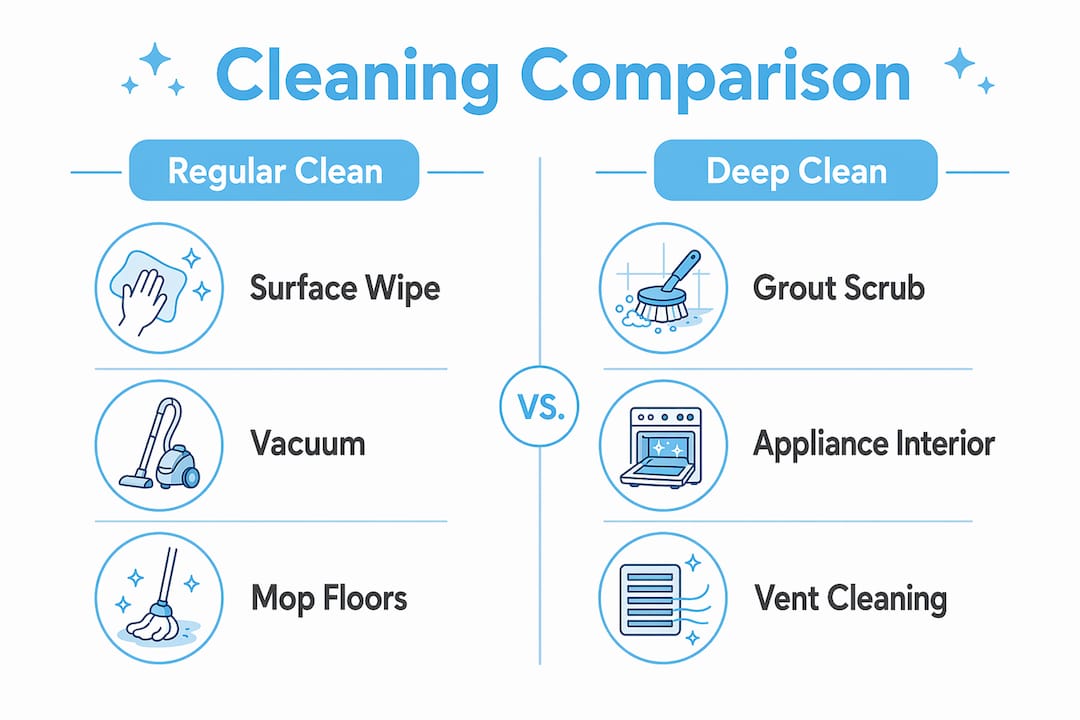
A residential deep clean covers every area of a home at a level of intensity that routine cleaning skips. The industry term for this service is “deep cleaning” or “detail cleaning,” and it differs from maintenance cleaning in both scope and time investment. Where a regular clean might wipe down counters and vacuum floors, a deep clean scrubs tile grout, cleans inside the oven and refrigerator, wipes down cabinet fronts, and removes buildup from fixtures and vents.
Kitchen
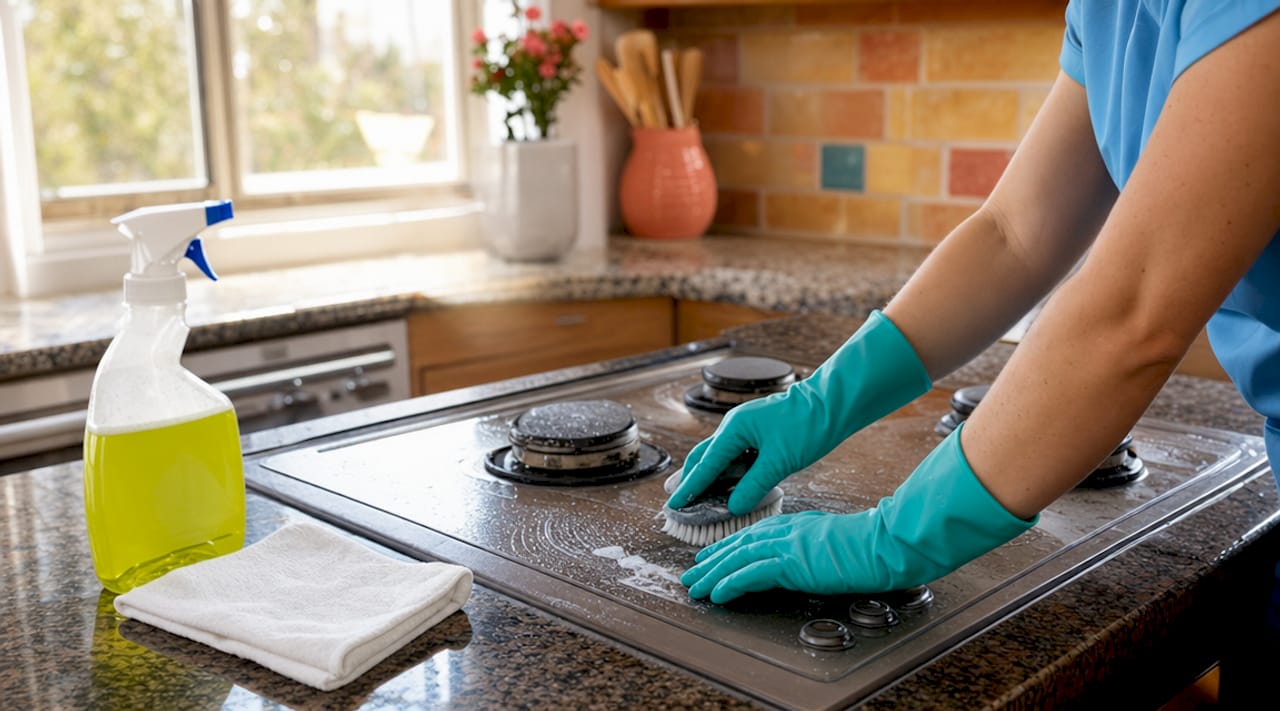
The kitchen receives the most intensive attention during a deep clean. Tasks include degreasing the stovetop and hood vent, cleaning inside the oven and microwave, wiping down all cabinet exteriors, scrubbing the sink and faucet, and pulling out the refrigerator to clean behind it. Professional deep cleaning tasks also include detailed scrubbing of tile and grout, cleaning baseboards, and sanitizing high-touch areas like drawer pulls and light switches.
Bathrooms
Bathrooms get a full scrub of tile grout, toilet bases, behind the toilet, shower doors, caulk lines, and exhaust fans. Mineral deposits from Orange County’s hard water make this room particularly demanding. A deep clean removes that chalky buildup from showerheads and faucets that regular cleaning leaves behind.
Living areas and bedrooms
These rooms involve cleaning ceiling fans, light fixtures, window sills, blinds, baseboards, and upholstery. Mattresses get vacuumed. Air vents get wiped. Furniture gets moved to clean underneath. The deep cleaning checklist from Martha Stewart confirms this room-by-room approach as the standard for thoroughness.
Here is a direct comparison of what separates a deep clean from a regular clean:
| Area | Regular clean | Deep clean |
|---|---|---|
| Kitchen appliances | Wipe exterior surfaces | Clean inside oven, fridge, microwave |
| Bathrooms | Scrub toilet and sink | Scrub grout, descale fixtures, clean exhaust fan |
| Floors | Vacuum and mop | Move furniture, clean baseboards and corners |
| Bedrooms | Dust surfaces, make bed | Vacuum mattress, clean vents, wipe blinds |
| Living areas | Dust and vacuum | Clean upholstery, ceiling fans, window tracks |
Pro Tip: Always ask your cleaning provider for a written deep cleaning checklist before the appointment. This prevents misunderstandings about scope and gives you a clear record of what was completed.
How often should you deep clean your home?
Deep cleaning is recommended every three to six months for most households, often aligning with seasonal changes. That frequency is a starting point, not a fixed rule. A household with two adults and no pets operates very differently from one with three kids, two dogs, and frequent guests.
Experts emphasize that deep cleaning frequency should be individualized based on household occupancy, pets, and lifestyle rather than rigid schedules. This matters in Orange County specifically because the region’s mild climate means windows stay open longer, bringing in more dust and pollen. Homes near the coast also face salt air, which accelerates grime buildup on surfaces and fixtures.
Several trigger events make a deep clean the right call regardless of your regular schedule:
- After an illness. Bacteria and viruses linger on high-touch surfaces for days. A deep clean after a household illness reduces the risk of reinfection.
- Before or after hosting guests. Heavy foot traffic accelerates buildup in kitchens, bathrooms, and living areas.
- Moving in or out. A move-in or move-out clean is one of the most common triggers for deep cleaning services in Orange County rental markets.
- After a renovation. Construction dust penetrates every surface and vent. Post-renovation deep cleaning is a separate category of intensive work.
- Seasonal reset. Many homeowners treat deep cleaning as a series of periodic tasks triggered by quarterly routines rather than a single whole-house event.
The practical takeaway: if your home has pets, children, or high foot traffic, schedule a deep clean every three months. For quieter households, twice a year is sufficient.
What are the real benefits of deep cleaning your home?
The benefits of deep cleaning extend well beyond a visually cleaner space. Routine deep cleaning improves indoor air quality by removing allergens like dust mites, pet dander, and mold spores from hidden areas. This directly affects respiratory health, particularly for anyone in the household with asthma or allergies. Orange County’s dry Santa Ana wind season stirs up particulate matter, and homes that skip deep cleaning accumulate that debris in vents, upholstery, and carpet fibers.
Regular deep cleaning also prevents mold and mildew in moisture-prone areas like bathrooms and under sinks. Mold growth in these areas is not just a health hazard. It damages grout, caulk, and cabinetry, leading to costly repairs. Catching it early through consistent deep cleaning protects the structure of your home.
“A clean home is not just about appearances. It’s about creating an environment where your family can breathe easier, sleep better, and live healthier.” This principle holds especially true in Southern California, where allergen seasons are year-round rather than limited to spring.
Beyond health, deep cleaning extends the life of appliances and fixtures by removing grease, grime, and mineral deposits that impair function. A refrigerator coil caked in dust runs less efficiently and fails sooner. A showerhead blocked with mineral buildup delivers less water pressure and corrodes faster. The cost of a professional deep clean is measurably lower than early appliance replacement.
The mental health benefit is real too. Studies consistently link cluttered, dirty environments to elevated cortisol levels and reduced focus. A thoroughly cleaned home resets that baseline.
How to prepare your home for a deep clean
Preparation determines how effective a deep clean actually is. The key mistake homeowners make is attempting deep cleaning without first decluttering, which limits access and reduces thoroughness. A cleaner who has to move stacks of mail, toys, and clothing before reaching a surface spends time organizing rather than cleaning.
Follow this sequence before a professional team or your own deep cleaning session begins:
- Clear all surfaces. Remove items from countertops, shelves, and tables. This gives cleaners full access to wipe, scrub, and sanitize every inch.
- Declutter room by room. Donate, discard, or relocate items that do not belong in each space. A home design checklist can help you organize each room systematically before the cleaning begins.
- Move small furniture if possible. Chairs, side tables, and ottomans should be shifted to allow floor cleaning underneath.
- Secure pets and children. Professional cleaners use strong cleaning agents in some areas. Keep pets and small children out of rooms being cleaned.
- Communicate priorities. If you have specific concerns, such as a bathroom with heavy mold or a kitchen with grease buildup, tell your cleaning team before they start. This lets them allocate time where it matters most.
Pro Tip: Schedule your deep clean for a day when you can be out of the home for three to five hours. This gives the cleaning team uninterrupted access and lets surfaces dry properly before you return.
Preparing surfaces and decluttering before deep cleaning significantly improves effectiveness and reduces total cleaning time. Professional teams from Neatandtidypros, for example, work top-to-bottom through each room. Starting from ceiling fans and high surfaces down to floors reduces duplicated effort and increases efficiency. This top-to-bottom sequence is a best practice endorsed by professional cleaning experts because dust and debris fall downward as you work, meaning you only clean each surface once.
Key takeaways
A residential deep clean is the most thorough cleaning a home can receive, covering areas that regular maintenance misses and delivering measurable benefits for health, comfort, and home longevity.
| Point | Details |
|---|---|
| Deep clean vs. regular clean | A deep clean targets grout, appliance interiors, vents, and baseboards that routine cleaning never reaches. |
| Recommended frequency | Most households benefit from a deep clean every three to six months, adjusted for pets, children, and local climate. |
| Health benefits | Deep cleaning removes allergens, prevents mold, and improves indoor air quality for respiratory health. |
| Home longevity | Removing grease and mineral deposits extends the life of appliances and fixtures, reducing replacement costs. |
| Preparation matters | Decluttering and clearing surfaces before a deep clean directly improves thoroughness and reduces cleaning time. |
What I’ve learned from watching homes get deep cleaned
After working with hundreds of homeowners and renters across Orange County, the pattern I see most often is this: people wait too long. They schedule a deep clean when the home feels unmanageable rather than as a regular maintenance practice. By that point, the grout has stained, the oven has months of baked-on grease, and the bathroom caulk is already showing mold. The cleaning takes twice as long and costs more than it would have with consistent scheduling.
The second mistake I see is treating a deep clean as a one-time fix. It is not. Think of it the way you think about a car service. You do not wait until the engine fails to change the oil. You schedule it every few months because prevention is cheaper than repair. The same logic applies to your home.
One thing that surprises most clients is how much the preparation step matters. I have seen professional teams spend 40 minutes organizing a kitchen before they could even begin cleaning it. That time comes out of the cleaning budget, not the organizing budget. When you clear surfaces and declutter before the team arrives, you get a deeper clean for the same price.
For renters in Orange County specifically, a deep clean before move-out is one of the most financially smart decisions you can make. Security deposit disputes over cleaning are common in California. A documented professional clean removes that risk entirely.
— Neat
Get a professional deep clean from Neatandtidypros
If you are ready to move beyond surface-level cleaning, Neatandtidypros offers professional deep cleaning services built specifically for Orange County homes. The team covers every room at the level of detail this article describes: appliance interiors, grout, baseboards, vents, and all the spots that standard cleaning skips.

Whether you need a one-time seasonal reset, a move-in or move-out clean, or a recurring deep clean on a quarterly schedule, Neatandtidypros has a service that fits. You can review the full range of cleaning services on the website and book directly. Orange County homeowners and renters trust Neatandtidypros because the work is thorough, the team is reliable, and the results are visible from the first visit.
FAQ
What is the difference between a deep clean and a regular clean?
A regular clean maintains surfaces that are already reasonably clean, covering tasks like vacuuming, mopping, and wiping counters. A deep clean goes further by scrubbing grout, cleaning inside appliances, removing buildup from fixtures, and reaching areas behind and under furniture that routine cleaning skips.
How long does a residential deep clean take?
A typical residential deep clean takes three to six hours depending on the size of the home, the number of occupants, and the current condition of the space. Homes with pets or significant buildup in kitchens and bathrooms generally take longer.
How often should I deep clean my house in Orange County?
Most homes benefit from a deep clean every three to six months. Households with pets, children, or high foot traffic should schedule closer to every three months. Orange County’s climate, including dry Santa Ana winds and coastal humidity, can accelerate dust and mold buildup, making more frequent deep cleans worthwhile.
Can I deep clean my home myself or should I hire a professional?
DIY deep cleaning is possible with the right tools and a structured checklist, but professional services cover more ground in less time and bring equipment like steam cleaners and commercial-grade microfiber cloths that most households do not own. For intensive tasks like grout scrubbing, oven cleaning, and vent wiping, professional residential cleaning services consistently deliver better results.
What should I do before a deep cleaning service arrives?
Clear surfaces and declutter each room before the team arrives. Move small furniture where possible, secure pets, and communicate any priority areas to the cleaning team. This preparation directly improves the thoroughness of the clean and reduces total time on-site.