
Deep cleaning a bathroom from scratch is the process of systematically removing built-up grime, bacteria, mold, and mineral deposits from every surface using targeted products and techniques. Unlike a quick tidy, a true deep clean addresses grout lines, toilet tanks, showerheads, and other germ hotspots that routine cleaning misses. A thorough session takes 45–90 minutes depending on buildup and surface type. That time investment pays off in measurable hygiene gains. Cleaning professionals and the CDC both identify bathrooms as high-risk zones for bacterial and mold growth, making a structured, surface-by-surface approach the only reliable way to get ahead of it. The top-to-bottom, wet-to-dry workflow is the industry standard for preventing re-contamination as you work.
What tools and products do you need to deep clean a bathroom?
The right tools make the difference between a surface wipe-down and a genuine deep clean. Gather everything before you start so you are not hunting for supplies mid-job.
Essential tools
- Microfiber cloths (color-coded by zone to prevent cross-contamination)
- Stiff nylon brush for grout and tile scrubbing
- Toilet brush with a sturdy handle
- Old toothbrush for caulk lines, faucet bases, and tight corners
- Squeegee for glass shower doors
- Bucket for mixing solutions and rinsing
- Rubber gloves and eye protection
Recommended cleaning products
| Surface | Recommended product | Notes |
|---|---|---|
| Toilet bowl | Bathroom-specific disinfectant or bleach gel | Apply under rim; let dwell |
| Grout and tile | Oxygen bleach or alkaline cleaner | Safe for colored grout |
| Showerhead | White distilled vinegar | Soak in a bag overnight |
| Sink and vanity | All-purpose cleaner or baking soda paste | Gentle on most finishes |
| Mirrors and glass | Rubbing alcohol or glass cleaner | Streak-free with microfiber |
| Floors | pH-neutral floor cleaner | Avoid bleach on natural stone |
Never mix bleach with ammonia-based or acid cleaners. Mixing these chemicals produces toxic chloramine gas. Always rinse a surface thoroughly before switching to a different product. Ventilation is non-negotiable: run the exhaust fan or open a window before you apply any chemical, and keep it running until the room is dry.
Pro Tip: Use a separate, distinctly colored microfiber cloth for the toilet area only. Never use that cloth on the sink or countertop. This single habit eliminates the most common source of cross-contamination in home bathrooms.
For guidance on safe cleaning products for families, Neatandtidypros has a dedicated resource covering chemical safety and surface compatibility.
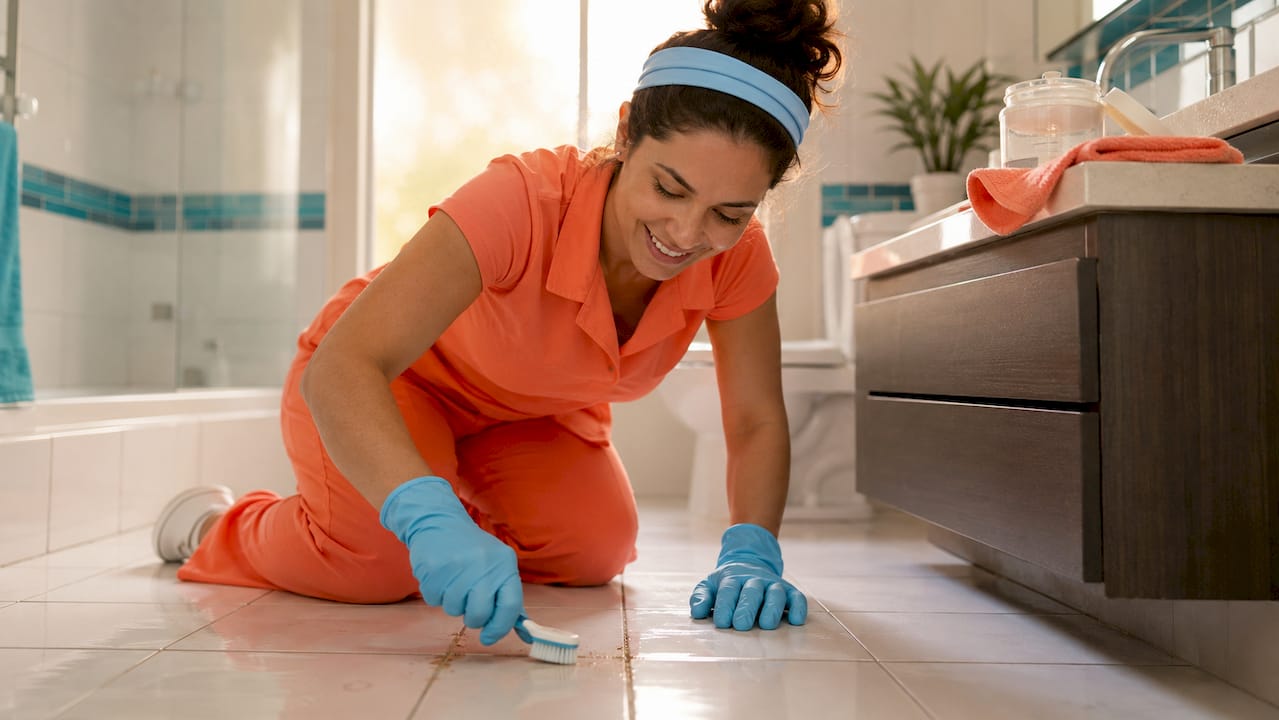
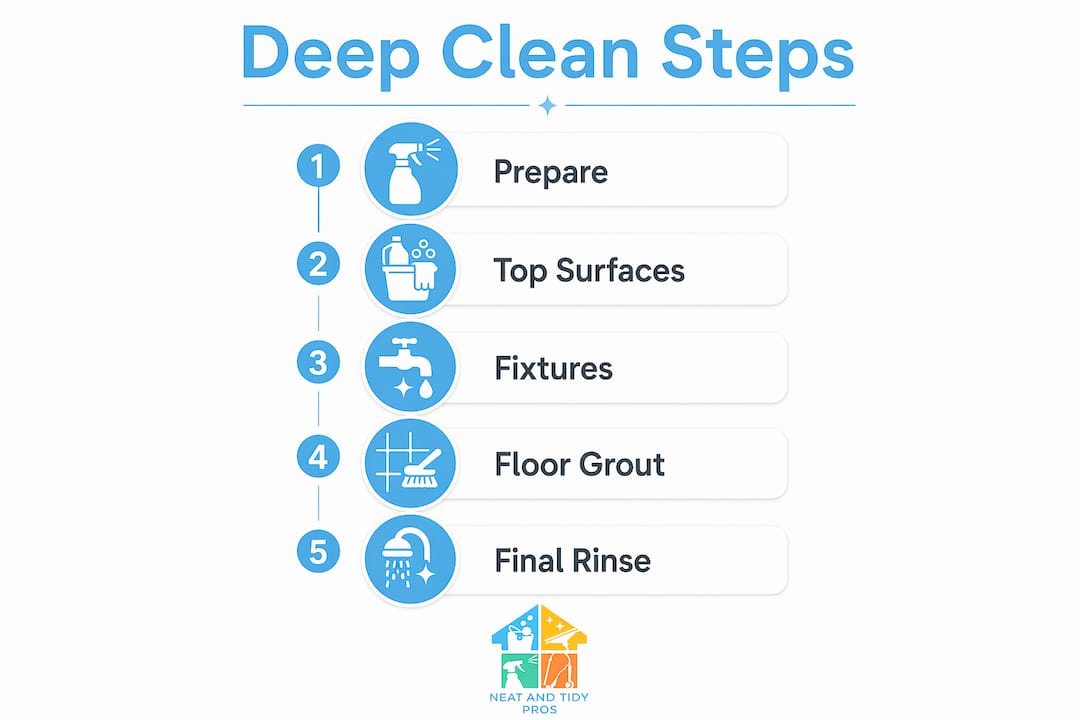
How do you deep clean every bathroom surface step by step?
Follow this sequence exactly. Each step builds on the last, and skipping the order means re-soiling surfaces you already cleaned.
-
Declutter and ventilate. Remove everything from countertops, shelves, and the shower. Open the window or turn on the exhaust fan. This is not optional: ventilation during cleaning significantly reduces chemical fume exposure and prevents mold from resettling on damp surfaces.
-
Ceiling, light fixtures, and exhaust fan. Wipe the ceiling with a dry microfiber cloth to collect dust and cobwebs. Use a damp cloth with an all-purpose cleaner on the exhaust fan cover. A clogged fan cannot move air, which accelerates mold growth.
-
Walls and baseboards. Spray walls with an all-purpose cleaner, working from top to bottom. Pay extra attention to the area around the toilet and behind the door. Wipe baseboards last in this step since dust falls downward.
-
Showerhead soak. Fill a plastic bag with white distilled vinegar and secure it around the showerhead with a rubber band. Let it soak for at least 30 minutes, or overnight for heavy mineral buildup. This dissolves calcium and lime deposits without any scrubbing.
-
Shower walls and bathtub. Spray an alkaline or oxygen bleach cleaner on tile and grout. Let it dwell for at least 10 minutes before scrubbing. That dwell time is what actually breaks down soap scum and kills bacteria. Scrub grout lines with a stiff nylon brush, then rinse thoroughly.
-
Toilet: exterior first, then interior. Wipe the outside of the toilet, including the base, tank lid, handle, and seat hinges, with a disinfectant cloth. Then apply a disinfectant gel under the toilet rim and let it sit while you clean other surfaces. Scrub the bowl last and flush.
-
Toilet tank. Lift the tank lid and inspect the interior. Toilet tanks harbor mineral buildup and mold that continuously re-contaminate the bowl with every flush. Pour one cup of white distilled vinegar into the tank, let it sit for 30 minutes, then flush twice.
-
Sink, faucet, and vanity. Apply baking soda paste or an all-purpose cleaner to the sink basin. Use an old toothbrush around the faucet base and drain. Wipe the vanity surface and inside any drawers you emptied earlier.
-
Mirror. Spray glass cleaner or rubbing alcohol directly onto a microfiber cloth, not the mirror. Wipe in an S-pattern from top to bottom to avoid streaks.
-
Floor. Sweep or vacuum first to collect hair and debris. Mop with a pH-neutral cleaner, working from the far corner toward the door. Let the floor dry completely before replacing rugs or mats.
Pro Tip: For stubborn grout stains, mix oxygen bleach powder with warm water to form a paste. Apply it directly to the grout line, cover with plastic wrap to keep it moist, and leave it for 20–30 minutes before scrubbing. This method works on stains that regular spray cleaners cannot touch.
What mistakes should you avoid when deep cleaning a bathroom?
Most deep cleaning failures come down to a short list of repeatable errors. Recognizing them before you start saves you from re-doing the work.
-
Skipping dwell time. Spraying a surface and wiping it immediately is the most common mistake. Dwell time is the most overlooked step affecting both stain removal and bacterial kill rate. Give disinfectants and descalers at least 10 minutes to work.
-
Using wire brushes on grout. Wire bristles deposit metal particles into grout pores. Those particles rust and create new stains. A stiff nylon brush is the industry-standard tool for grout cleaning.
-
Mixing incompatible cleaners. Bleach combined with ammonia or vinegar creates hazardous fumes. Always rinse a surface completely before applying a second product.
-
Neglecting ventilation. Cleaning in a sealed bathroom concentrates fumes and leaves surfaces damp longer, which feeds mold growth.
-
Overusing disinfectants. Professionals recommend selective disinfectant use on high-germ zones like toilets and sinks. Using strong disinfectants on every surface can damage finishes and increase chemical exposure without adding hygiene benefit.
-
Forgetting overlooked zones. The toilet tank, exhaust fan, door hinges, and the underside of the toilet seat rim are skipped in most cleaning routines. These areas accumulate the most hidden buildup.
“The bathroom surfaces that look clean are rarely the ones that need the most attention. The toilet tank, the grout, and the showerhead are where real contamination lives.”
Pro Tip: Always rinse surfaces thoroughly between switching products. Keep a spray bottle of plain water nearby to flush residue before applying the next cleaner.
How do you keep your bathroom clean between deep cleanings?
A deep clean resets your bathroom to a sanitary baseline. Daily and weekly habits are what keep it there.
Daily habits (under 5 minutes)
- Wipe the sink and faucet with a damp cloth after use
- Squeegee shower doors or walls after every shower
- Run the exhaust fan for at least 15 minutes after bathing
- Hang towels to dry fully rather than leaving them bunched
Weekly tasks (15–20 minutes)
- Wipe high-touch surfaces: toilet handle, faucet handles, light switch, and door knob
- Scrub the toilet bowl and wipe the exterior
- Clean the sink basin and drain
- Sweep or vacuum the floor and spot-mop if needed
Monthly add-ons
- Wash shower curtains and liners in the washing machine
- Clean the exhaust fan cover with a damp cloth
- Inspect caulking around the tub and shower for cracks or mold
- Wipe down cabinet interiors and restock supplies
A simple bathroom cleaning checklist posted inside a cabinet door removes the guesswork from maintenance. Consistent upkeep prevents the mineral deposits, soap scum, and mold that make a full deep clean feel like a major project.
| Frequency | Task | Time needed |
|---|---|---|
| Daily | Wipe sink, squeegee shower, ventilate | Under 5 minutes |
| Weekly | Toilet, sink, floor, high-touch surfaces | 15–20 minutes |
| Monthly | Curtains, fan, caulk inspection, cabinets | 30–45 minutes |
| Quarterly | Full deep clean, all surfaces and fixtures | 45–90 minutes |
For a full picture of which rooms benefit most from professional attention, Neatandtidypros covers the complete room-by-room scope of professional deep cleaning services.
Key Takeaways
A thorough bathroom deep clean requires the right tools, correct product use, strict dwell times, and a top-to-bottom sequence to achieve lasting sanitation.
| Point | Details |
|---|---|
| Follow the correct sequence | Work top-to-bottom and wet-to-dry to avoid re-soiling cleaned surfaces. |
| Respect dwell time | Leave disinfectants and descalers on surfaces for at least 10 minutes before scrubbing. |
| Use nylon, not wire brushes | Wire brushes deposit rust-causing metal particles into grout; nylon bristles are safe and effective. |
| Never mix cleaning chemicals | Bleach combined with ammonia or acid cleaners produces toxic fumes; rinse between products. |
| Maintain between deep cleans | Daily wiping and weekly scrubbing prevent buildup and make quarterly deep cleans far easier. |
What I’ve learned from cleaning hundreds of bathrooms
After cleaning bathrooms professionally across dozens of residential and commercial properties, the pattern is always the same. Homeowners who struggle with recurring mold or stains are almost never using the wrong product. They are skipping dwell time, or they are cleaning in the wrong order, or they are using a wire brush that is quietly destroying their grout.
The toilet tank is the single most underestimated source of bathroom contamination I encounter. People scrub the bowl every week and never open the tank. Mineral deposits and mold inside the tank get flushed into the bowl with every use. Cleaning the tank twice a year with vinegar eliminates a contamination cycle that no amount of bowl scrubbing can fix.
Ventilation is the other non-negotiable. I have seen bathrooms where the exhaust fan has not been cleaned in years. A fan clogged with dust moves almost no air. That means chemical fumes linger longer, surfaces stay damp longer, and mold comes back faster. Cleaning the fan cover takes three minutes and changes the entire dynamic of the room.
My honest advice: commit to the sequence, respect the dwell times, and do not skip the overlooked zones. A bathroom that gets a proper deep clean four times a year, supported by daily and weekly habits, stays genuinely sanitary with minimal effort.
— Neat
Professional bathroom deep cleaning from Neatandtidypros
Some bathrooms need more than a checklist. Heavy mineral buildup, persistent mold, grout that has not been properly cleaned in years, and post-renovation residue all require professional tools and trained technique.

Neatandtidypros provides residential deep cleaning services that cover every surface, fixture, and overlooked zone in your bathroom, including toilet tanks, exhaust fans, grout lines, and caulking. Every job follows a structured, surface-specific process with professional-grade products. If you want your bathroom reset to a genuinely clean baseline, or if you need a thorough clean before moving in or out, view the full list of available cleaning services and book a session that fits your schedule.
FAQ
How long does it take to deep clean a bathroom?
A thorough bathroom deep clean takes between 45 and 90 minutes on average. The time varies based on the level of buildup and the number of surfaces involved.
What is the correct order to clean a bathroom?
Clean from top to bottom and from wet surfaces to dry ones. Start with the ceiling and walls, then move to the shower and tub, toilet, sink, and finish with the floor.
How often should you deep clean a bathroom?
Most cleaning professionals recommend a full deep clean every 3–4 months, supported by weekly maintenance tasks like scrubbing the toilet and wiping high-touch surfaces.
Is it safe to mix vinegar and baking soda for bathroom cleaning?
Vinegar and baking soda can be used separately on different surfaces, but mixing them neutralizes both products and reduces their cleaning power. Never mix bleach with either one.
What areas are most commonly missed during bathroom cleaning?
The toilet tank, exhaust fan, door hinges, faucet bases, and the underside of the toilet seat rim are the most frequently skipped zones. These areas accumulate mineral deposits, mold, and bacteria that undermine the cleanliness of the rest of the bathroom.
One Response