A restaurant bathroom needs a three-tier checklist: hourly or daily tasks, weekly deep-clean items, and monthly maintenance checks, backed by a written inspection log. That log covers toilets, urinals, sinks, mirrors, floors, and restocking, with staff sign-off at every check. Printable and digital templates are standard now because they turn “someone probably cleaned it” into proof that someone did.
TL;DR:
- High-traffic restaurants require hourly restroom checks, full cleanings at opening and closing, and detailed logs to ensure compliance.
- Weekly tasks should include descaling fixtures, cleaning grout lines, flushing floor drains, and inspecting for wear, especially in busy venues.
- Restocking, proper PPE, color-coded cloths, and EPA-registered disinfectants are essential to prevent cross-contamination and guarantee effective cleaning.
- Schedule deep cleaning for grout, tiles, and fixtures based on water hardness and traffic volume, escalating to professional services if issues persist.
- Proper training should emphasize disinfectant dwell time and accurate logging over superficial cleaning, with outside cleaning services recommended for busy or problem-prone restrooms.
Table of Contents
- Restaurant Bathroom Cleaning Checklist: Daily, Weekly, and Monthly Tasks
- What Cleaning Supplies and PPE Does a Restroom Need?
- How Often Should You Check and Log Restroom Cleanliness?
- Deep Cleaning and Fixture Maintenance: When to Escalate
- The Mistakes That Quietly Fail Health Inspections
- Why Neat and Tidy Pros Understands Restaurant Restroom Standards
- What Restaurant Managers Get Wrong About Restroom Cleaning
- Get Restaurant Restrooms Inspection-Ready Without Adding to Your Staff’s Workload
- Sources
Restaurant Bathroom Cleaning Checklist: Daily, Weekly, and Monthly Tasks
Break the work into three tiers and the whole operation gets easier to manage, staff and supervisors both. Hourly or daily tasks keep the room usable during service. Weekly tasks stop grime from setting in. Monthly tasks catch the wear and tear that daily wiping never touches. A structured checklist with an hourly inspection log is the single biggest lever for preventing missed tasks during a busy shift.
Daily and hourly tasks:
- Restock toilet paper, soap, and paper towels or check hand dryers
- Disinfect high-touch points: door handles, faucet handles, stall latches, light switches
- Clean and disinfect toilet bowls and urinals, inside and out
- Wipe down sinks, countertops, and mirrors
- Empty and reline trash bins
- Sweep and mop floors
- Post wet-floor signage during and after mopping
Daily restroom tasks like these are the baseline. Skip any one of them for a few hours during a Friday dinner rush and it shows.
Weekly tasks:
- Descale toilets, urinals, and faucet aerators
- Scrub grout lines by hand or with a grout brush
- Clear and flush floor drains to prevent slow-draining smells
- Clean exhaust fans and vents to keep airflow moving
Monthly tasks:
- Inspect grout and caulk for cracking, staining, or mold and schedule repairs
- Deep-scrub floors with a rotary machine or stiff-bristle deck brush
- Audit supply inventory and reorder before you run low
- Check fixtures (flush valves, dispensers, hand dryers) for wear and have them serviced
High-traffic restaurants should lean toward the weekly end of that grout and drain schedule; a diner with very high customer volume accumulates buildup that a quiet neighborhood café won’t see for a month.
What Cleaning Supplies and PPE Does a Restroom Need?
Stock the right products before you assign the tasks, or the checklist becomes a wish list. A workable restroom cart includes:
- An EPA-registered disinfectant rated for bathroom surfaces
- A neutral floor cleaner safe for tile, vinyl, or sealed concrete
- A dedicated toilet bowl cleaner with descaling power
- Glass cleaner for mirrors
- Microfiber cloths in at least three colors
- Disposable wipes for quick high-touch passes
- A mop and bucket system, ideally with a wringer
- Trash liners sized to your bins
- A restroom-safe deodorizer, not just an air freshener spray
Cleaning removes visible dirt. Sanitizing lowers germ counts to a safe level. Disinfecting kills a broader range of pathogens, but only if you use an EPA-registered product and let it sit wet for its labeled dwell time. Wipe a disinfectant off after five seconds and you’ve basically just cleaned the surface.
Pro Tip: Assign cloth colors by task, one for toilets and urinals, another for sinks and mirrors, a third for floors, and never let them cross over. It’s a two-minute training fix that prevents you from spreading bacteria from a urinal to a sink faucet.
Gloves and eye protection matter too, especially when mixing descalers. A compostable, plastic-free cleaning cloth option is worth a look if you’re trying to cut down on the disposable wipes piling up in your trash bins.
How Often Should You Check and Log Restroom Cleanliness?
Traffic volume decides your check frequency, not the clock on the wall. A restaurant running lunch and dinner rushes with a line out the door needs hourly restroom checks. A slower counter-service spot can usually get by on three checks per shift: opening, mid-shift, and closing.
Example schedules:
- High traffic (200+ covers/day): hourly checks, full clean at open and close
- Moderate traffic (75 to 200 covers/day): every two hours plus open/close
- Low traffic (under 75 covers/day): three checks per shift
The log itself needs specific fields, not a generic “cleaned, yes/no” box. An inspection-ready log should capture:
- Date and time of check
- Staff initials
- Checklist items (toilets, sinks, floors, supplies) with a tickbox
- Notes on any issue found (clog, empty dispenser, broken lock)
- Corrective action taken and by whom
- Supervisor sign-off at the end of each shift
A laminated clipboard mounted just inside the restroom door works fine for most operations. Some managers now snap a photo of the log at closing and text it to themselves as a backup, which costs nothing and settles disputes fast when a health inspector asks for records. A hourly inspection log cuts down on missed tasks precisely because it forces someone to initial next to their name.
Deep Cleaning and Fixture Maintenance: When to Escalate
Floor material dictates method. Tile and sealed vinyl respond well to a pH-neutral cleaner applied with a deck brush, followed by a full rinse and a dry mop pass. Laminate or wood-look flooring near a restroom entrance needs less water, not more, since standing moisture warps the seams.
Deep-clean steps for grout and tile:
- Apply grout cleaner and let it sit for the labeled time
- Agitate with a stiff grout brush, working in sections
- Rinse thoroughly with clean water
- Dry the area and inspect for missed spots
Urinal and drain maintenance:
Mineral scale builds up fast in urinals, especially with hard water. Scrape visible deposits mechanically, then apply a plumbing-safe descaler following the label’s PPE guidance. Flush floor drains weekly with hot water to keep slow-moving traps from turning into odor sources.
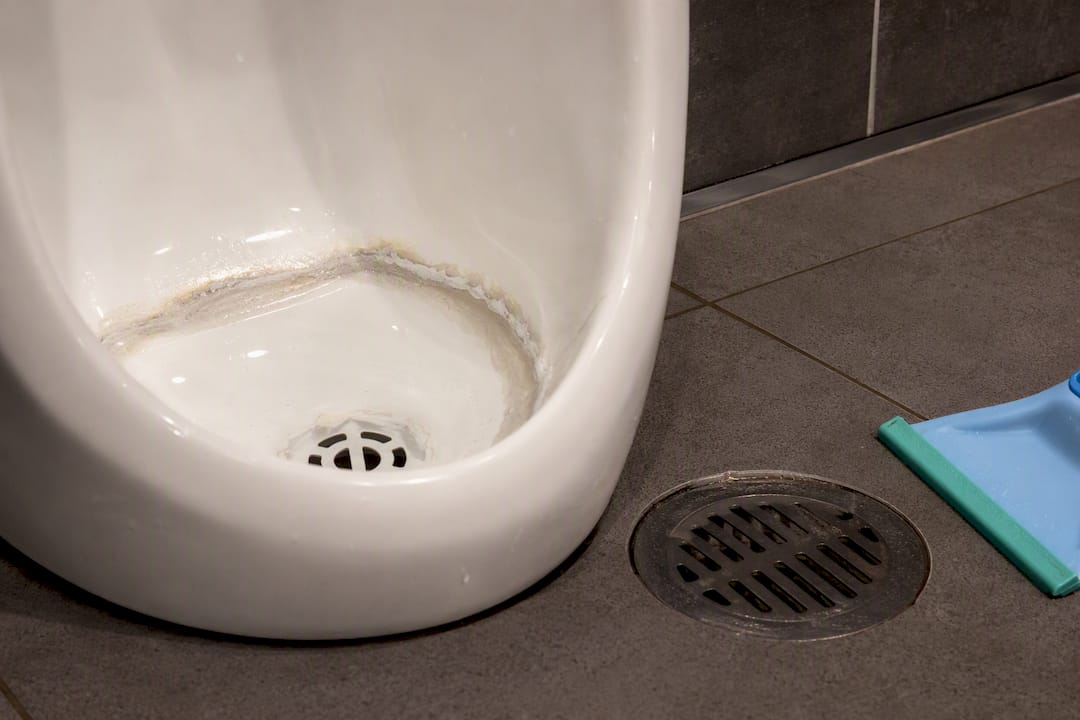
Call in a professional service when you’re seeing recurring clogs despite regular maintenance, a smell that won’t lift after a full deep clean, or fixtures that are visibly failing. Those are code risks, not cosmetic issues, and step-by-step deep-clean guidance can help you decide what’s a staff-level fix versus what needs a technician.
The Mistakes That Quietly Fail Health Inspections
Most restroom failures aren’t dramatic. They’re small habits that compound over weeks.
- Cleaning for looks only: a shiny counter can still carry bacteria if it wasn’t disinfected with proper dwell time
- Wiping disinfectant off too fast: skipping dwell time is one of the most common operator errors on record
- Using one cloth for everything: cross-contamination risk goes up fast without color-coding
- Letting supplies run out mid-shift: stage backup rolls and soap in a cabinet, not just on the fixture
Pro Tip: Rotate your air freshener strategy instead of just spraying more. A ventilated exhaust fan paired with a drain flush usually beats masking odor with fragrance, because it fixes the source instead of covering it up.
Why Neat and Tidy Pros Understands Restaurant Restroom Standards
Neat and Tidy Pros builds cleaning routines for commercial spaces that get inspected, from medical facilities to hotels to restaurants, and restroom compliance shows up in nearly all of them. That experience carries over directly to restaurant restrooms, where the stakes are the same: a health inspector doesn’t care how the room looks, only whether it’s documented and disinfected correctly.
Related resources worth checking:
- A medical office cleaning checklist built to pass inspection
- An office cleaning schedule guide with scheduling logic that adapts well to restroom rotations
- Step-by-step bathroom deep-cleaning instructions
Any checklist here can be adapted: swap the fixture list for your floor plan, adjust check frequency to your covers per day, and print it for a clipboard or load it into a shared tablet.
What Restaurant Managers Get Wrong About Restroom Cleaning
Most restaurants treat the bathroom checklist as a formality, something posted on the wall because a previous health inspector asked for it. That’s backwards. The checklist isn’t the compliance tool. The log is. A checklist tells staff what to do; a signed, timestamped log proves it happened, and that distinction is where most operations quietly fall apart.
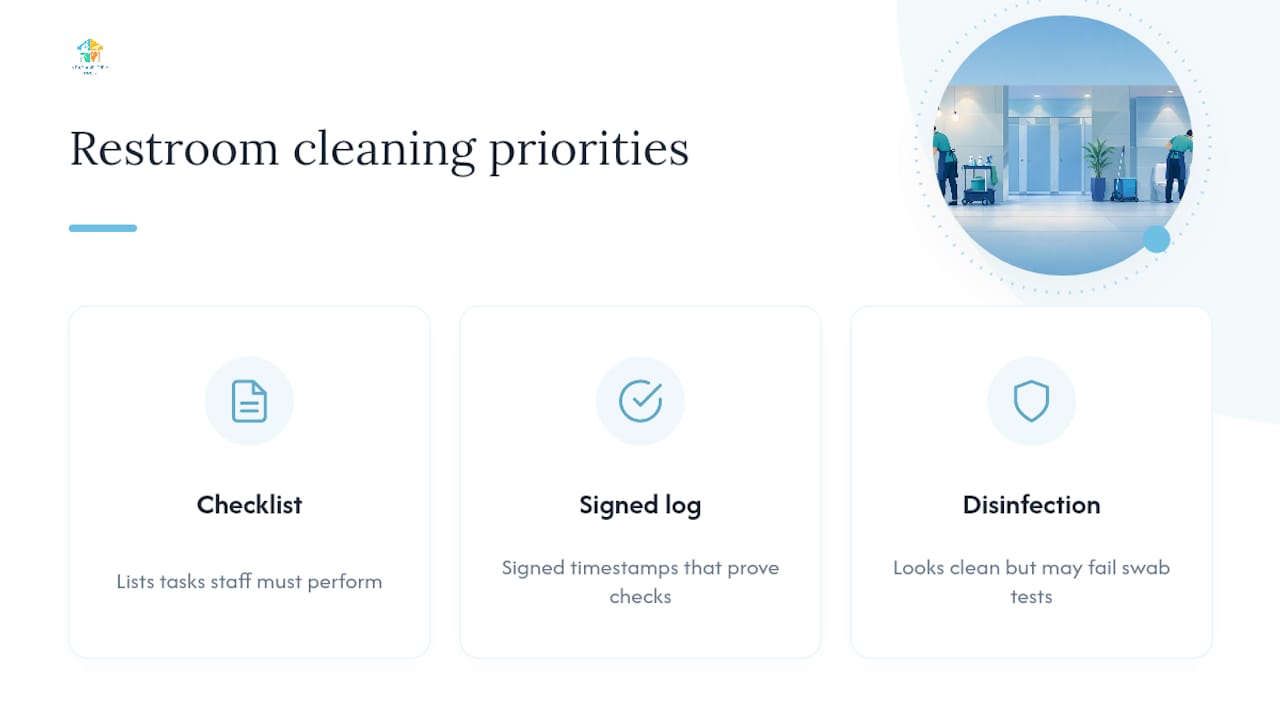
The bigger gap is conflating “clean” with “disinfected.” A bathroom can look spotless and still fail a swab test if nobody respected dwell time on the disinfectant. Train that distinction explicitly, don’t assume new hires know it, and don’t assume veteran staff remember it under pressure during a Saturday night rush.
If you’re setting priorities, start with the log, not the supply closet. Supplies are replaceable. A documented pattern of frequent checks with real sign-offs is what protects you when an inspector or a health department complaint shows up unannounced.
— Neat
Get Restaurant Restrooms Inspection-Ready Without Adding to Your Staff’s Workload
Running a checklist and a log is the right system, but someone still has to execute it consistently, shift after shift, without cutting corners when the dining room is backed up. That’s where a lot of restaurants lose ground: the paperwork looks good, the execution slips.
Neat and Tidy Pros offers commercial cleaning built around exactly this kind of documentation-heavy environment, restrooms included, with the same rigor we bring to medical facilities and hotels. If your team is already stretched thin during peak hours, or you’re seeing recurring odor or clog issues despite following your checklist, that’s the signal to bring in outside help rather than keep patching the same problem weekly. Visit our services page to see what a regular commercial cleaning schedule looks like for a restaurant your size, and request a quote to get your restroom program running on a schedule that doesn’t depend on whoever’s on shift that day.
Sources
- Cleaning, sanitizing, disinfecting: What’s the difference?
- Cleaning checklist (Restrooms)
- Restroom Cleaning Checklist and Log Template | Free Download
- The complete restaurant cleaning checklist (with PDF)
2 Responses