
Basic cleaning is the set of routine household tasks performed regularly to keep living spaces tidy, hygienic, and comfortable. It covers dusting, vacuuming, mopping floors, wiping kitchen and bathroom surfaces, emptying trash, and controlling clutter. The American Cleaning Institute recommends treating home cleaning as an ongoing maintenance cycle, spreading tasks across the week to manage high-traffic areas without burnout. Understanding what does basic cleaning include helps you build a realistic routine, avoid buildup, and reduce how often you need a more intensive clean.
What does basic cleaning include, room by room?
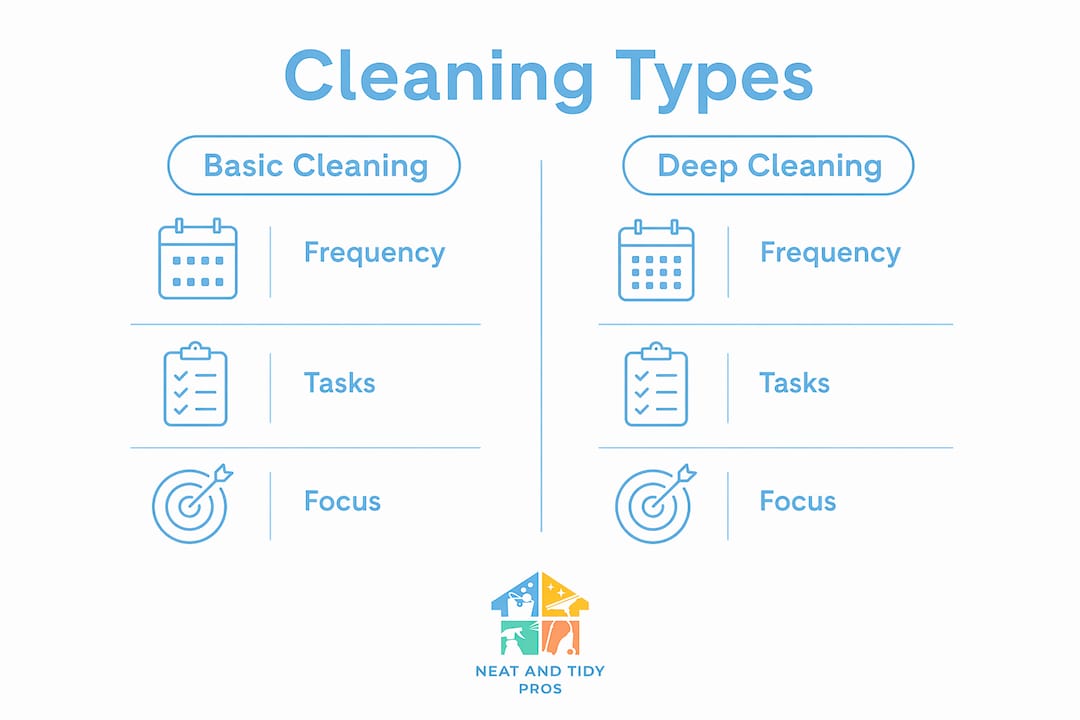
Basic cleaning tasks cover every main living area in your home. The goal is surface-level maintenance performed frequently enough to prevent dirt and bacteria from accumulating. Here is what a standard cleaning checklist looks like, broken down by area.
Kitchen
- Wipe countertops and the stovetop after cooking
- Load or unload the dishwasher and wash any remaining dishes
- Clean the exterior of appliances (microwave door, refrigerator handle, oven front)
- Wipe down the sink and faucet
- Empty the trash and replace the liner
The kitchen is the highest-priority zone in any home. Five high-bacterial-activity zones include dishes, kitchen counters, bathroom sinks, bedding, and clutter control. Keeping these areas clean daily has the greatest impact on how clean your home feels and actually is.
Bathroom
- Scrub the toilet bowl and wipe the seat, tank, and base
- Clean the sink and faucet
- Wipe down the shower or tub walls and the mirror
- Disinfect high-touch surfaces like the flush handle and faucet knobs
- Replace used towels and empty the trash
Living areas and bedrooms
- Dust furniture surfaces, shelves, and light fixtures
- Vacuum carpets and rugs
- Mop hard floors
- Make beds and straighten pillows
- Pick up clutter and return items to their proper places
Pro Tip: Work top to bottom in every room. Dust shelves before you vacuum floors so falling debris gets picked up in the same pass.
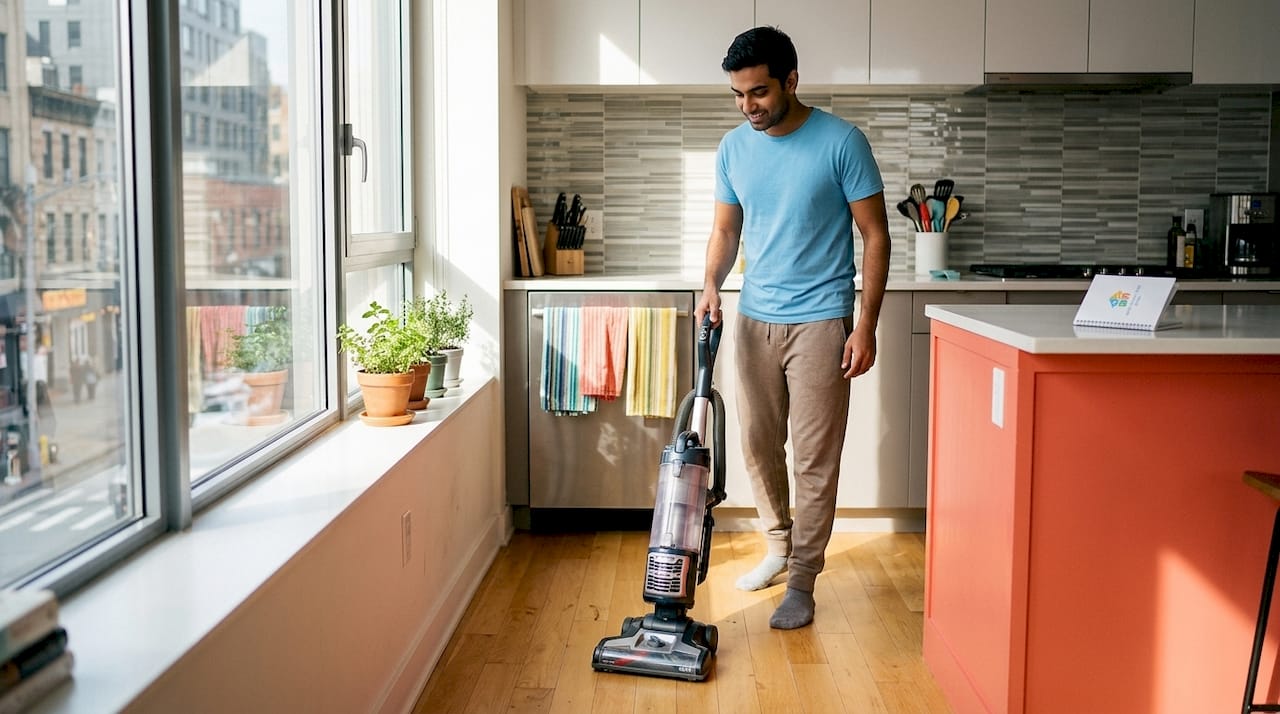
How does basic cleaning differ from deep cleaning?
Basic cleaning focuses on surface-level, frequent tasks. Deep cleaning goes further by targeting areas that routine maintenance misses entirely. Understanding the difference helps you schedule each type correctly and avoid paying for more than you need.
| Category | Basic cleaning | Deep cleaning |
|---|---|---|
| Frequency | Daily to weekly | Monthly to quarterly |
| Floors | Vacuum and mop | Scrub grout lines, clean baseboards |
| Kitchen | Wipe surfaces and appliance exteriors | Clean inside oven, refrigerator, and microwave |
| Bathroom | Scrub toilet, sink, and shower surfaces | Descale showerheads, scrub tile grout |
| Upholstery | Straighten cushions | Vacuum under cushions, spot-treat stains |
| Time required | 30–90 minutes | Several hours |
Deep cleaning tasks go beyond basic cleaning by including grout scrubbing, appliance interiors, and detailed attention to less accessible areas. These tasks are done less frequently and require significantly more time and effort. Most homeowners schedule a deep clean two to four times per year, then rely on basic cleaning to maintain results in between.
Pro Tip: Schedule your first deep clean before starting a regular basic cleaning routine. A clean baseline makes weekly maintenance far faster and easier.
How often should you do basic cleaning tasks?
Frequency is the part most homeowners get wrong. Doing everything at once on a single day creates a long, exhausting session. Spreading tasks across the week makes each session short and manageable.
Daily tasks
- Wash dishes or run the dishwasher
- Wipe kitchen counters and the stovetop
- Wipe the bathroom sink
- Make beds
- Pick up clutter throughout the home
Core daily maintenance tasks like washing dishes, wiping kitchen counters, and sanitizing bathroom sinks can be done in under 30 minutes with consistency. That time investment is small relative to the hygiene benefit it delivers.
Weekly tasks
- Vacuum all carpets and rugs
- Mop hard floors
- Disinfect toilets, showers, and bathroom surfaces
- Dust furniture, shelves, and ceiling fans
- Clean mirrors and glass surfaces
- Empty all trash cans throughout the home
The American Cleaning Institute recommends assigning tasks to specific days to maintain a steady cleaning rhythm. A practical split looks like this: monday for kitchen focus, wednesday for vacuuming and dusting, friday for bathroom disinfecting. This approach prevents any single session from running long.
Monthly tasks
Some tasks fall between basic and deep cleaning on the frequency scale. Cleaning the inside of the microwave, wiping cabinet fronts, and washing throw blankets belong here. They are not daily or weekly jobs, but skipping them for months creates visible buildup.
Statistic callout: Treating cleaning as a maintenance cycle rather than a project encourages sustainable habits and reduces stress. The American Cleaning Institute frames this as the key mindset shift for homeowners who struggle to stay consistent.
Practical tips and tools for effective basic cleaning
The right approach cuts cleaning time without cutting results. These tips apply whether you clean your own home or prepare it for a professional service.
Use a portable cleaning caddy
A portable cleaning caddy holds all your supplies in one place. Portable cleaning caddies reduce preparation time and improve efficiency during routine cleaning tasks. Carrying everything with you from room to room means you never stop to search for a product.
Target high-touch points first
Door handles, light switches, faucet knobs, and remote controls carry the most bacteria per square inch in any home. Targeting high-touch points like door handles and light switches maximizes hygiene impact during basic cleaning. Disinfecting these spots takes less than five minutes and delivers outsized health benefits.
Set a timer per task
Timers prevent the common trap of spending 45 minutes on one bathroom while the rest of the home goes untouched. Assign a fixed time to each area, for example 10 minutes per bathroom and 15 minutes for the kitchen. When the timer ends, move on.
Match products to surfaces
Using the wrong cleaner damages surfaces and wastes time. Granite countertops need a pH-neutral cleaner, not a vinegar-based spray. Stainless steel appliances streak with general-purpose cleaners but shine with dedicated stainless steel wipes. Check the right cleaning tools for each surface before you start.
Pro Tip: Keep a small spray bottle of disinfectant and a microfiber cloth in each bathroom. A 90-second daily wipe-down of the sink and faucet prevents the need for a full scrub most weeks.
- Avoid skipping clutter pickup before you clean surfaces. Cleaning around objects takes longer and misses spots.
- Do not use the same cloth across the kitchen and bathroom. Cross-contamination spreads bacteria rather than removing it.
- Replace sponges weekly. A dirty sponge deposits more bacteria than it removes.
Key Takeaways
Basic cleaning is a set of frequent, surface-level tasks covering kitchens, bathrooms, floors, and living areas that, when done consistently, prevents buildup and eliminates the need for constant deep cleaning.
| Point | Details |
|---|---|
| Core task coverage | Basic cleaning covers dusting, vacuuming, mopping, bathroom disinfecting, kitchen wiping, and clutter control. |
| Daily time investment | Core daily tasks like dishes, counters, and sink wiping take under 30 minutes with a consistent routine. |
| Scheduling by day | Assigning tasks to specific days prevents long sessions and keeps the home consistently clean. |
| Basic vs. deep cleaning | Basic cleaning maintains surfaces; deep cleaning targets grout, appliance interiors, and hard-to-reach areas. |
| High-touch priority | Disinfecting door handles, light switches, and faucets delivers the greatest hygiene return per minute spent. |
What I have learned from years of watching homes get cleaned
The biggest mistake homeowners make is treating basic cleaning as something to catch up on rather than something to stay ahead of. A home that gets a full clean once every two weeks always feels like it needs more work. A home that gets 20 minutes of attention every day stays comfortable with almost no effort.
The second thing I have noticed is that clutter is the enemy of speed. You cannot wipe a counter covered in mail, keys, and random objects. Picking up clutter before you clean is not a separate task. It is the first step of every cleaning session, and skipping it doubles the time everything else takes.
Consistency matters more than perfection. A bathroom wiped down three times a week with a damp cloth and disinfectant spray will stay cleaner than one scrubbed thoroughly once a month. The goal is not a spotless home after a marathon session. The goal is a home that never gets bad enough to need one.
Small habit changes compound fast. Wiping the stovetop after every meal takes 60 seconds. Not doing it means a 10-minute scrub at the end of the week. That math applies to almost every surface in your home.
— Neat
Professional cleaning services that go beyond the basics
Keeping up with basic cleaning tasks is manageable for most homeowners. Life gets busy, schedules shift, and some weeks the routine falls apart. That is exactly where professional support makes a real difference.
Neatandtidypros offers residential and commercial cleaning services covering basic cleaning, deep cleaning, move in and move out cleaning, post-construction cleaning, Airbnb cleaning, and office cleaning. Whether you need a one-time reset or a recurring maintenance schedule, the team handles every task on a standard cleaning checklist and beyond. Booking a professional clean gives your home a reliable baseline so your daily and weekly routines stay fast and effective.
FAQ
What is included in a basic cleaning service?
Basic cleaning services typically include dusting, vacuuming, mopping floors, wiping kitchen and bathroom surfaces, cleaning toilets and sinks, emptying trash, and tidying clutter. High-touch areas like faucets and light switches are also disinfected.
How long does basic cleaning take?
Daily basic cleaning tasks take under 30 minutes with a consistent routine. A full weekly session covering all rooms typically runs 60–90 minutes depending on the size of the home.
How often should basic cleaning be done?
Core tasks like dishes, counter wiping, and sink cleaning are daily jobs. Vacuuming, mopping, and bathroom disinfecting are weekly. The American Cleaning Institute recommends spreading tasks across specific days to keep each session short.
What is the difference between basic and deep cleaning?
Basic cleaning covers surface-level maintenance done daily to weekly. Deep cleaning targets grout, appliance interiors, baseboards, and other areas that routine cleaning does not reach, and is typically scheduled monthly to quarterly.
Can basic cleaning prevent the need for deep cleaning?
Consistent basic cleaning significantly reduces how often deep cleaning is needed. Staying on top of daily and weekly tasks prevents the buildup that makes deep cleaning necessary in the first place.
One Response