
This house deep cleaning checklist covers every room in a normal home, from the fridge coils to the baseboards nobody notices, plus the supplies to buy first and how long each room actually takes. Work top to bottom, one room at a time, and you can knock out a full deep clean in a weekend or spread it across a week without losing track of what’s done.
TL;DR:
- Deep cleaning a house typically takes one to three hours per room, with kitchens and bathrooms requiring more time due to complexity.
- Prior to cleaning, gather supplies like microfiber cloths, a vacuum with attachments, and eco-friendly cleaners, and declutter each room first.
- The kitchen’s deep clean involves cleaning appliances like the fridge, oven, microwave, and dishwasher, with floors cleaned last to prevent recontamination.
- Bathrooms require scrubbing grout lines, descaling showerheads, and disinfecting high-touch surfaces, with mold removal limited to small areas unless professional help is needed.
- Most homes should deep clean once or twice annually, with quarterly sessions recommended for busy households or those with allergies or pets.
Table of Contents
- What Do You Need Before Starting a House Deep Cleaning Checklist?
- How Do You Deep Clean a Kitchen?
- What Should a Bathroom Deep Clean Include?
- How Do You Deep Clean Bedrooms?
- How Do You Deep Clean Living Rooms and Shared Spaces?
- What Belongs on a Laundry and Utility Room Checklist?
- What Do Entryways, Hallways, and the Garage Need?
- What Cleaning Spots Do People Always Miss?
- How Long Does a Deep Clean Take, and How Often Should You Do It?
- What Do Professional Cleaners Do Differently?
- Why We Recommend the Room-by-Room Method
- Ready to Skip the Scrubbing? Book a Deep Clean
- Sources
- FAQ
What Do You Need Before Starting a House Deep Cleaning Checklist?
Grab everything before you start so a mid-task supply run doesn’t kill your momentum. You want microfiber cloths, a vacuum with extension attachments, a stiff-bristled brush, dish soap, white vinegar, baking soda, a multi-purpose cleaner, and protective gear like gloves.
- Microfiber cloths (buy more than you think you need)
- Vacuum with hose and crevice attachments
- Stiff-bristled brush for grout and tile
- Dish soap, white vinegar, baking soda, multi-purpose cleaner
- Rubber gloves and a mask for dusty or moldy areas
- Trash bags and a donation box for decluttering as you go
Open windows or run a fan whenever you mix or spray chemicals, especially vinegar or bleach based products, and spot-test any new cleaner on a hidden patch of fabric or finish first. Declutter each room before you clean it. Pulling stray items off counters and floors first means you’re not cleaning around clutter twice.
Pro Tip: Sort a rough room order the night before (usually kitchen, then bathrooms, then bedrooms, then everything else) so you’re not standing in your hallway deciding where to start.
How Do You Deep Clean a Kitchen?
The kitchen eats the most time in any home deep clean because it has more appliances, grease, and hidden grime than any other room. Angi’s cleaning research lists degreasing cabinet fronts, descaling coffee makers, and cleaning appliance interiors as the intensive tasks that separate a deep clean from a quick wipe down. Work in this order:
- Refrigerator. Pull it away from the wall if you can, vacuum the coils, then empty shelves and wash them with warm soapy water before wiping the interior walls and door seals.
- Oven and stovetop. Run a self-clean cycle or apply an oven cleaner, then scrub burner grates and the stovetop surface once cooled.
- Microwave. Heat a bowl of water with vinegar for three minutes, let the steam loosen splatters, then wipe clean in seconds.
- Dishwasher and disposal. Remove and rinse the filter, run a dishwasher-cleaner cycle to clear odors and buildup, and grind ice cubes with citrus peels in the disposal.
- Coffee maker. Run a brew cycle with equal parts water and vinegar, then two cycles of plain water to rinse.
- Cabinets and pantry. Empty shelves, wipe interiors, check expiration dates, and degrease cabinet fronts near the stove with a grease-cutting spray.
- Floors. Sweep, then mop last so you’re not tracking dust back across a clean floor.
Pro Tip: Skip the fancy degreaser for cabinet fronts near the stove. A few drops of dish soap in warm water cuts baked-on grease as well as most specialty sprays, at a fraction of the cost. For appliance-specific detail, our guide to deep cleaning kitchen appliances walks through oven and fridge techniques step by step.
What Should a Bathroom Deep Clean Include?
Bathrooms hide the most stubborn buildup in the house: mineral deposits, mold spores, and grime in places you can’t see without getting close. Start with grout lines, since dirt sits deepest there. Scrub with a stiff brush and a baking soda paste, then rinse and let dry.
- Descale the showerhead by soaking it in a vinegar bag overnight
- Scrub shower doors and clean out the door tracks, where mildew collects fastest
- Deep-clean the toilet, including the base, hinges, and behind the tank
- Disinfect high-touch points: light switches, door handles, and faucet handles
- Clean the exhaust fan cover, which traps dust and reduces the fan’s ability to pull out moisture
- Launder shower curtains and bath mats on hot, or replace liners that show mildew
Mold in a bathroom under about 10 square feet is usually something you can handle yourself with soap, water, and good ventilation. Anything larger, or mold that keeps returning after cleaning, calls for the kind of remediation steps the CDC outlines for significant mold growth. A homeowner’s guide to preventing bathroom mold covers the ventilation habits that keep it from coming back.
How Do You Deep Clean Bedrooms?
Bedrooms accumulate more dust and allergens than most people realize, mostly because bedding, mattresses, and closets get touched daily but deep-cleaned rarely.
- Wash all bedding, including pillows and mattress protectors, on the hottest safe setting
- Vacuum the mattress on both sides using an upholstery attachment, and rotate it if it’s not a one-sided model
- Vacuum under the bed and behind nightstands, where dust bunnies build up fastest
- Dust headboards, dressers, and nightstand tops, including the undersides of shelves
- Take down and wash or vacuum window coverings, then wipe the baseboards below them
- Declutter closets into keep, donate, and toss piles before you vacuum the closet floor
Closets are the task people skip because they’re overwhelming to open. Set a 15 minute timer per closet and you’ll be surprised how much you can sort before the buzzer goes off.
How Do You Deep Clean Living Rooms and Shared Spaces?
Living areas take the most foot traffic and the most guests, so they deserve more than a surface tidy.
- Vacuum upholstery with a brush attachment, then spot-clean any visible stains with a fabric-safe cleaner
- Steam-clean area rugs if they haven’t been treated in over a year, or send them out for a deeper wash
- Move furniture to vacuum underneath, including couches and entertainment centers
- Dust ceiling fans, light fixtures, and the tops of picture frames and shelves
- Wash windows and wipe down the sills, where dust and dead bugs collect
- Clean electronics with a dry microfiber cloth, never spray cleaner directly onto a screen
These tasks are the ones people skip during a quick weekly tidy, which is exactly why a deep clean needs to catch them.
What Belongs on a Laundry and Utility Room Checklist?
Laundry rooms get ignored because nothing there looks dirty at a glance, but appliance buildup affects both performance and safety.
- Run an empty hot-water cycle with a washer-cleaning tablet or a cup of white vinegar to clear detergent residue and odor.
- Wipe the detergent drawer and door seal or gasket, where mold likes to grow in front-load machines.
- Clean the dryer lint trap by hand, since lint builds a film that a quick brush pass won’t remove.
- Vacuum the dryer vent hose and, if it’s been more than a year, consider having the exterior vent professionally cleared to cut fire risk.
- Wipe down counters and shelves, and organize supplies so they’re easy to grab next time.
What Do Entryways, Hallways, and the Garage Need?
Transitional spaces take the brunt of dirt entering the house, yet they’re often the last thing anyone thinks to clean.
- Wipe down entry doors, hardware, and light switches near the entrance
- Shake out or vacuum mats, then sweep and mop the floor beneath them
- Dust stair rails and spindles, top to bottom
- Declutter the garage, then sweep and scrub the floor with a degreaser for oil stains
- Wipe down shelving and check floor drains for debris
- Clear yard debris from around the foundation and any exterior drains
What Cleaning Spots Do People Always Miss?
Every home has a handful of spots that survive a normal cleaning routine untouched for months, sometimes years.
- Vent covers and return grills, which trap dust and reduce airflow if left dirty
- HVAC filters, worth changing before or right after a deep clean
- Baseboards and door frames, where dust and scuff marks build up unnoticed
- Window tracks and blinds, wiped with a damp cloth or an old toothbrush for the grooves
- Light fixtures and ceiling corners, along with the tops of tall furniture like armoires and bookshelves
A homeowner’s guide to what interior doors need is worth a look if your door frames and trim haven’t been touched since move-in.
How Long Does a Deep Clean Take, and How Often Should You Do It?
A single room usually runs one to three hours depending on clutter and how long it’s been since the last deep clean; kitchens and bathrooms sit at the high end, bedrooms and living rooms at the low end. A full house can be split across a single long weekend or spread over five to seven evenings.
- Plan on a full day for kitchen and bathrooms combined in an average home
- Budget two to three hours per bedroom and living area
- Most households do well with a deep clean once or twice a year, with busier homes benefiting from quarterly sessions
- Add an extra deep clean around big trigger events: moving in or out, hosting guests, or recovering from illness
- Use a printable checklist or an app to batch similar tasks (all the dusting, then all the vacuuming) instead of finishing one room completely before starting the next
If you’re working through this on a set schedule, our spring cleaning checklist built around a six to seven day window breaks the whole process into daily blocks.
What Do Professional Cleaners Do Differently?
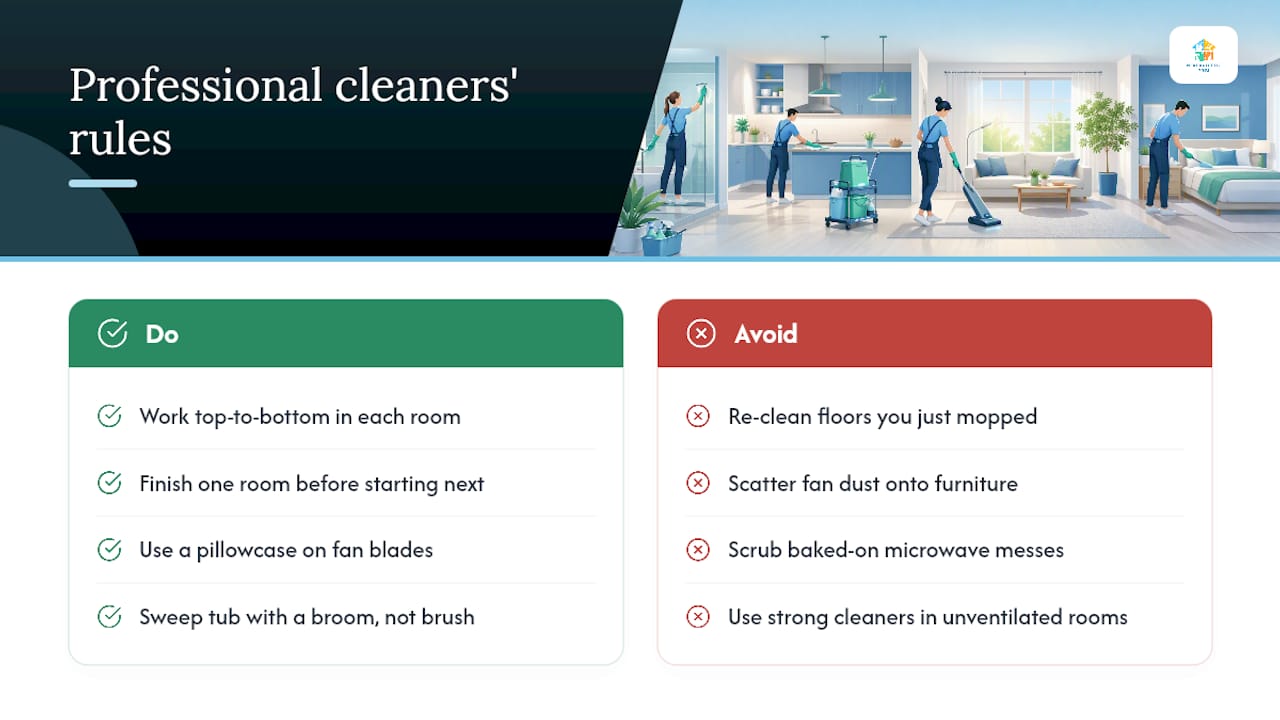
Professionals rely on a simple structure: work top to bottom in every room, and finish one room completely before moving to the next. This avoids re-cleaning a floor you already mopped because you knocked dust down onto it from a shelf. A room-by-room, top-down system is the backbone of nearly every professional cleaning checklist for exactly this reason.
A few field-tested shortcuts save real time. Slide a pillowcase over each ceiling fan blade and pull it back, which traps the dust inside the case instead of dropping it on your furniture. Use a broom instead of a scrub brush on a bathtub. It saves your back and covers more surface per pass. And the microwave vinegar steam trick loosens baked-on splatters in three minutes flat, no scrubbing required.
A pillowcase captures ceiling fan dust instead of scattering it across your room, a broom saves your back scrubbing a tub, and working in one direction around a room means you never clean the same spot twice.
Pro Tip: When choosing cleaning products, lean toward lower-toxicity options and keep windows cracked; the EPA’s indoor air quality guidance notes that many common cleaners release compounds that build up fast in an unventilated room.
Why We Recommend the Room-by-Room Method
The homeowners who finish a deep clean are the ones who commit to one room at a time, top to bottom, instead of bouncing between rooms chasing whatever looks dirtiest. When a home has years of buildup, heavy allergy concerns, or simply more square footage than a weekend allows, calling in professionals stops being a luxury and starts being the practical choice.
— Neat
Ready to Skip the Scrubbing? Book a Deep Clean
Some parts of this checklist take an afternoon. Others, like descaling every showerhead or degreasing a decade of cabinet grease, take real elbow grease and a full day you might not have. Neat and Tidy Pros’ Deep Cleaning service covers everything on this list, from appliance interiors to baseboards, using eco-friendly products and a fully equipped team that follows the same room-by-room method described above.

If your home just needs upkeep between deep cleans, Basic Cleaning covers the recurring work instead. Preparing a property for a tenant or a sale calls for a different scope entirely, and our Move In/Out Clean service is built around that exact turnover timeline. Book online or call to get a quote for your home’s square footage and current condition.
Sources
For safety and mold guidance, see the EPA’s indoor air quality page and CDC mold guidance. Checklist references to include Martha Stewart’s deep cleaning checklist and The Spruce’s room-by-room guide.
- Deep cleaning house: Complete room-by-room guide
- How often should you deep clean a house?
- Indoor air quality (IAQ) | US EPA
- Mold | CDC
FAQ
What Is Usually Included in a Deep House Cleaning?
A deep clean covers intensive tasks a regular cleaning skips: appliance interiors, grout, baseboards, light fixtures, vents, and high-touch surfaces like switches and handles, room by room from top to bottom.
What Is the 5-5-5 Rule for Cleaning?
Definitions of the 5-5-5 rule vary across cleaning communities, and there’s no single agreed-upon standard version, so treat any specific claim about it with caution.
What Should I Include on a Deep Cleaning Checklist?
Cover every room: kitchen appliances, bathroom grout and fixtures, bedroom linens and closets, living room upholstery and windows, laundry appliance maintenance, and overlooked spots like vents and baseboards.
What Does a Full House Deep Clean Include?
It includes every room in the home plus the areas a weekly clean skips: appliance interiors, window tracks, HVAC vents, closets, and high-touch surfaces throughout. Neat and Tidy Pros’ Deep Cleaning service is built to cover this full scope in one visit.
How Often Should I Deep Clean My Whole House?
Most households do well with a deep clean once or twice a year, while busier homes with kids, pets, or allergies benefit from a quarterly schedule, plus extra cleans around moves or guests.