
You can cut your house cleaning time significantly by following a structured, room-by-room system built on two core principles: declutter first, then clean from top to bottom using dry methods before wet ones. The professional housekeeping industry calls this approach “systematic sequencing,” and it is the foundation of every efficient house cleaning routine. A top-to-bottom sequence cuts total cleaning time by up to 25%. That single change, applied consistently, is worth more than any gadget or cleaning hack you will find online. The methods in this guide draw from professional maid service standards and are designed for busy homeowners who want real results in less time.
What are the best ways to speed up house cleaning?
Speed cleaning is a system, not a sprint. Professional maid services consistently stress that having a clear plan beats moving faster. When you finish each task in one room before moving to the next, you eliminate the backtracking that quietly eats up 20 to 30 minutes per session. A standard three-bedroom home takes 90–120 minutes to clean when you follow a four-stage process: declutter, dry clean, wet clean, and floors last. That timeline drops further when you apply the tools and habits below.
What tools and preparations do you need to clean faster?
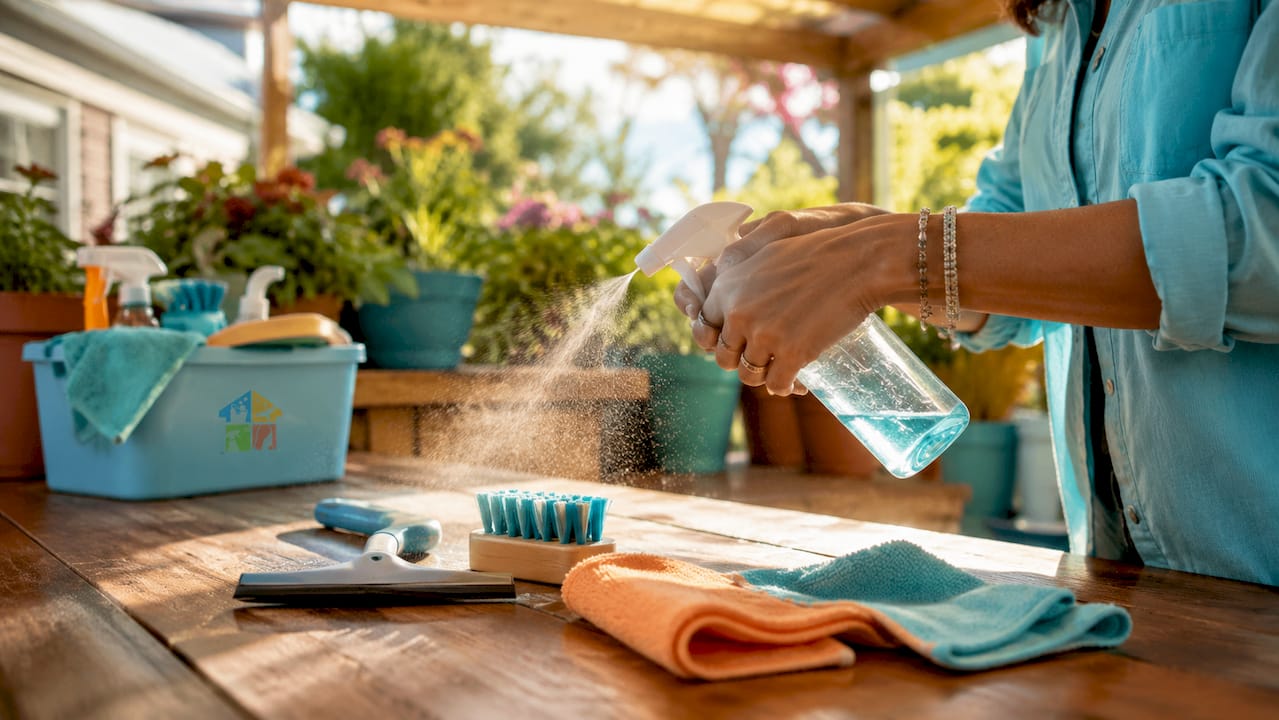
The right setup before you start cleaning saves more time than any technique during the clean itself. Gathering everything you need into one portable caddy means you never stop mid-task to hunt for a spray bottle or cloth.
The core toolkit for fast home cleaning:
- Microfiber cloths (at least 6): They trap dust and bacteria without spreading them, and they work dry or damp.
- Lightweight spray bottles: Decant your cleaners into small bottles you can carry in a belt or caddy.
- A quality vacuum with attachments: Upright models with a hose attachment handle both floors and upholstery without switching machines.
- A squeegee: Streak-free windows and shower glass in one pass, no paper towels needed.
- A cleaning caddy or belt: Keeps every supply within arm’s reach as you move room to room.
Decanting cleaning products into small spray bottles reduces fatigue and eliminates the time lost walking back to a central supply station. Walking back for supplies can add 20–30 minutes to a session. That is time you can reclaim before you even start cleaning.
Pro Tip: Clear all clutter from surfaces before you pick up a single cloth. Decluttering first adds 15–20 minutes if you skip it and try to clean around objects instead.
Check the professional cleaning tools guide from Neatandtidypros for a detailed breakdown of which tools match which surfaces and tasks.
How to use a top-to-bottom, dry-before-wet sequence effectively
This is the single most impactful change most homeowners can make. The logic is simple: gravity pulls dust and debris downward. If you mop the floor first and then dust the shelves, you are cleaning the floor twice.
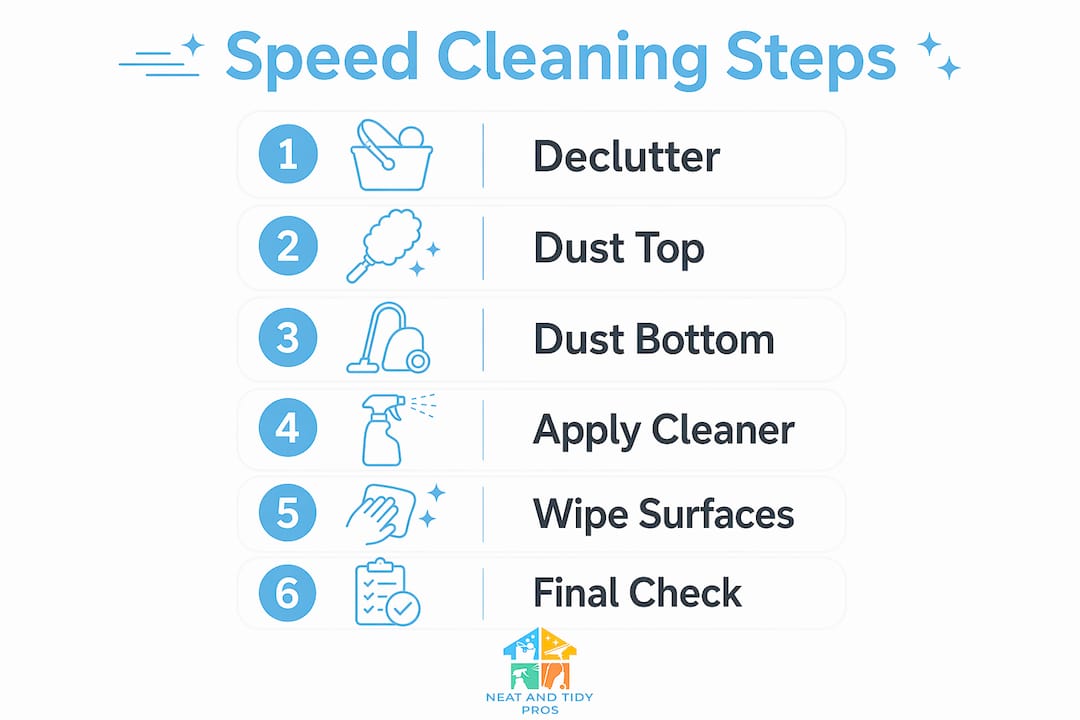
The correct cleaning order for each room:
- Ceiling fans and light fixtures: Dust these first so debris falls to lower surfaces.
- Shelves, artwork, and high surfaces: Wipe or dust from the highest point downward.
- Counters and mid-level furniture: Work across surfaces left to right so you never revisit a spot.
- Appliances and fixtures: Spray cleaning solution and let it sit before wiping.
- Floors last: Vacuum or sweep, then mop, after all dust has settled from above.
Cleaning from dry to wet stops airborne dust from forming muddy smears on surfaces, cutting cleaning effort roughly in half. Spraying before dusting creates a sticky residue that is twice as hard to remove. Always dust, sweep, and vacuum before you introduce any liquid.
Dwell time is the other major time-saver most homeowners ignore. Allowing cleaning products to sit for 5–10 minutes before wiping lets the chemistry do the work. You spray the bathroom sink, move to the toilet, come back, and the sink wipes clean with almost no scrubbing. This approach turns a two-minute scrub into a 30-second wipe.
| Stage | Task | Time saved |
|---|---|---|
| Declutter first | Clear surfaces before cleaning | 15–20 minutes |
| Top-to-bottom order | Dust high, clean low, floors last | Prevents double cleaning |
| Dry before wet | Dust and vacuum before any spraying | Halves surface effort |
| Dwell time | Let products sit 5–10 minutes | Eliminates most scrubbing |
Pro Tip: Spray your bathroom surfaces as soon as you walk in, then leave the room to dust the bedroom next door. Return to wipe the bathroom when the dwell time is up. You clean two rooms in the time it used to take for one.
What daily habits help maintain a clean home and speed up weekly cleaning?
The best way to shorten your weekly clean is to make sure it never becomes a deep clean. Daily maintenance is the difference between a 90-minute weekly session and a three-hour catch-up.
The “Daily 6” routine keeps your home visibly clean in under 30 minutes per day. Individual tasks take 1–2 minutes each, and the cumulative effect prevents buildup that requires serious effort to reverse.
The Daily 6 tasks:
- Wipe kitchen counters after cooking
- Put dishes directly into the dishwasher, not the sink
- Do a quick sweep or Swiffer pass on high-traffic floors
- Wipe the bathroom sink and counter after morning use
- Put away any clutter before bed (one basket per room helps)
- Hang or fold clothes instead of leaving them on chairs
Consistent cleaning shifts your weekly session from catch-up mode to maintenance mode. That shift alone reduces the mental load and the physical effort required each week.
Pro Tip: Set a 15-minute timer each evening and do nothing but tidy. You will be surprised how much ground you cover when the clock is running.
What are the most effective cleaning hacks and prioritization techniques?
Not all rooms are equal. The kitchen and bathroom deliver the most visual impact per minute of cleaning. Start there when time is short.
- Use timed sprints: A 15-minute focused sprint produces 80–90% of the results of a longer session by forcing you to prioritize. Set a timer and work only on high-impact areas.
- Use a reset basket: Place a basket in each main room. Toss misplaced items in during your sprint and sort them later. A quick reset basket creates visual calm without requiring perfect organization.
- Group similar tasks: Wipe all mirrors in the house before moving to counters. Switching between task types wastes mental energy and physical momentum.
- Vacuum in straight rows: Overlapping rows in a grid pattern covers floor space faster than random passes and ensures no strip is missed.
- Use a squeegee on shower glass: One pass after every shower prevents soap scum buildup and eliminates the need for weekly scrubbing.
Pro Tip: Put on a playlist or podcast that runs exactly as long as your target cleaning time. When the music stops, you stop. This creates a natural deadline without watching the clock.
How do you avoid common mistakes that slow down your cleaning routine?
Most homeowners lose time to a handful of predictable errors. Fixing them costs nothing and pays off every single session.
The most common speed-cleaning mistakes:
- Skipping declutter: Cleaning around objects takes three times longer than cleaning clear surfaces. Always clear first.
- Spraying before dusting: Wet dust becomes paste. Dust dry surfaces before any liquid touches them.
- Darting between rooms: Starting five rooms and finishing none creates chaos. Complete one room before moving to the next.
- Ignoring dwell time: Wiping immediately after spraying means you are doing the job the chemistry should do. Wait the full 5–10 minutes.
- Using the wrong cloth for the surface: A rough cloth on a glass surface leaves scratches. Match your microfiber weight to the task.
Perfectionism is one of the biggest hidden time-wasters in cleaning. Aiming for a spotless result on every surface during a maintenance clean leads to over-cleaning low-priority areas while high-impact zones get rushed. A good maintenance clean is thorough on the surfaces people see and touch, not on every corner of every room.
For homes that have grown past the point of maintenance cleaning, a full room deep clean from Neatandtidypros covers every surface systematically, room by room, without the guesswork.
Adjust your routine based on your home’s layout and your household’s habits. A home with pets needs daily floor passes. A home with young children needs daily counter wipes. Build your system around your actual life, not a generic checklist.
Key takeaways
The fastest way to clean your home is to follow a fixed sequence: declutter, dry clean top to bottom, apply products with dwell time, then finish with wet floors.
| Point | Details |
|---|---|
| Sequence is everything | Top-to-bottom, dry-before-wet order prevents double cleaning and cuts time by up to 25%. |
| Prep before you clean | Clearing clutter and loading your caddy before starting saves 15–20 minutes per session. |
| Daily habits reduce weekly effort | The Daily 6 routine keeps cleaning under 30 minutes per day and prevents buildup. |
| Dwell time does the scrubbing | Letting products sit 5–10 minutes eliminates most manual scrubbing effort. |
| Prioritize high-impact rooms | Kitchen and bathroom deliver the most visible results per minute of cleaning time. |
What I have learned from years of watching homes get cleaned
Speed cleaning taught me one thing that no checklist captures: the homeowners who clean fastest are not the ones who move quickest. They are the ones who never have to backtrack.
The biggest time-waster I see is people cleaning reactively. They spot a dirty counter, wipe it, then notice the floor, sweep it, then see the mirror, and suddenly 45 minutes have passed with no room fully done. A system fixes this completely. When you commit to finishing one room before touching the next, your brain stops scanning for problems and starts executing a plan.
Timers changed how I think about cleaning entirely. A 15-minute sprint with a clear goal produces more than an hour of unfocused cleaning. The urgency is real, and it keeps you from over-cleaning low-priority surfaces while neglecting the ones that matter.
The other thing most people underestimate is tool maintenance. A vacuum with a full bag loses suction and takes twice as long to cover the same floor. Microfiber cloths that are not washed regularly start spreading dirt instead of picking it up. Keeping your tools in good condition is as important as using the right technique.
My honest advice: pick one change from this guide and apply it for two weeks before adding another. The homeowners who try to overhaul everything at once usually revert to old habits within a month. The ones who build one habit at a time end up with a system that runs on autopilot.
— Neat
When professional cleaning makes sense for busy homeowners
Even the best personal routine has limits. Seasonal deep cleans, post-renovation cleanup, and move-in or move-out situations require a level of thoroughness that goes beyond a weekly maintenance pass.

Neatandtidypros offers professional cleaning services covering basic cleaning, deep cleaning, move-in and move-out cleaning, post-construction cleaning, Airbnb cleaning, and office cleaning across Orange County. A professional deep clean resets your home to a baseline that makes every future maintenance clean faster and easier. When your schedule gets tight or a big clean is overdue, Neatandtidypros handles the heavy work so your daily routine stays manageable. Visit the residential deep clean guide to see exactly what a professional clean covers and whether it fits your situation.
FAQ
What is the fastest way to clean a house?
The fastest method is to declutter first, then clean each room from top to bottom using dry methods before wet ones. A systematic four-stage process completes a three-bedroom home in 90–120 minutes.
How do I keep my house clean without spending hours on it?
The Daily 6 routine keeps your home visibly clean in under 30 minutes per day by breaking maintenance into 1–2 minute tasks. Consistent daily habits prevent the buildup that turns weekly cleans into multi-hour sessions.
Does cleaning order really make a difference?
Yes. Cleaning top to bottom and dry before wet cuts total cleaning time by up to 25% by preventing dirt from resettling on already-cleaned surfaces.
What is dwell time and why does it matter?
Dwell time is the period you let a cleaning product sit on a surface before wiping. Waiting 5–10 minutes allows the chemistry to break down grime, which eliminates most scrubbing and speeds up the overall clean.
When should I hire a professional cleaner instead of doing it myself?
Hire a professional for deep cleans, post-construction cleanup, or move-in and move-out situations where buildup exceeds what a maintenance routine can handle. Regular professional deep cleans also reset your home so daily upkeep stays quick and manageable.