
Declutter counters and floors, secure your pets and valuables, and leave a short priority note for the team. That’s it. You don’t need to scrub anything before a cleaning crew shows up, since deep-cleaning ahead of time just wastes your morning and hides the exact problem spots you’re paying someone else to fix.
TL;DR:
- Preparing for a cleaning involves a quick 25-minute, five-zone declutter using timers, focusing on surfaces, floors, and securing valuables.
- In each room, clear surfaces, gather clutter, and move items out of cleaning paths, which minimizes the time cleaners spend moving your things.
- Securing pets and locking valuables reduces safety risks and prevents loss or damage, with a short heads-up process saving potential headaches.
- Standard cleaning excludes tasks like dishes, laundry, or inside cabinets unless arranged in advance, so specify additional services beforehand.
- Avoid deep-cleaning yourself before a professional visit, as it hides problem areas and wastes your time; just declutter and secure necessary items.
Table of Contents
- How Do You Prepare for House Cleaners Quickly?
- What to Do in Each Room Before Cleaners Arrive
- How Should You Handle Pets and Valuables Before Cleaners Come?
- What Do Cleaners Typically Not Do, and How Does Prep Affect Cost?
- What Should You Avoid Doing Before Cleaners Arrive?
- How Do Professional Cleaners Prioritize a Job?
- Should You Tell Your Neighbors or Building Management?
- Recurring vs. One-Time Cleanings: What Changes in Your Prep?
- Why short prep beats long prep for most homeowners
- Skip the Prep Entirely with a Professional Cleaning Service
- Sources
- FAQ
How Do You Prepare for House Cleaners Quickly?
You can knock out the whole prep in under 25 minutes using a timer and a simple rule: five zones, five minutes each. This is the 5×5 decluttering method, and it works because it forces you to stop tidying once the clock runs out instead of spiraling into a full reorganization project.
Here’s the sequence that gets a home ready for a cleaning service without wasted motion:
- Set a 25-minute timer (or five separate 5-minute timers) before you start.
- Clear kitchen counters and the dining table of mail, dishes, and appliances you don’t use daily.
- Load the dishwasher or hand-wash anything in the sink, unless your service includes dishes.
- Gather floor clutter, toys, shoes, and stray items into a basket in each room.
- Collect dirty laundry into hampers; set out clean linens only if you’ve booked a sheet change.
- Secure pets in a crate, closed room, or safe yard space.
- Put away medications, jewelry, cash, and important documents.
- Leave a short written list of your top three priority areas near the entry.
This practical pre-visit sequence mirrors what most professional guides recommend, and it covers roughly most of what actually slows a cleaning crew down.
Pro Tip: Do this prep the night before if your mornings are rushed. A five-minute pass with a laundry basket right before bed beats a frantic scramble when the doorbell rings.
What to Do in Each Room Before Cleaners Arrive
Not every room needs the same attention. Some spaces take thirty seconds; others need a bit more thought.
- Kitchen: Clear counters and the table, empty the sink or run the dishwasher, and move small appliances back to their spots.
- Bathrooms: Pick up toiletries from the counter and shower ledge, stack dirty towels by the door, and set out replacement linens only if a change was part of the booking.
- Living areas: Grab remote controls, magazines, and kids’ toys off the floor so the crew has a clear path to vacuum or mop.
- Bedrooms: Pile laundry into one hamper, set aside delicates or dry-clean-only items, and leave closet doors shut unless you’ve asked for closet organizing.
- Entryway: Move shoes, backpacks, and packages out of the walking path, and leave parking or gate-access instructions somewhere visible.
None of this takes more than a few minutes per room if you’ve already run your timer. The goal isn’t a spotless house. It’s a clear one, so the team spends its time cleaning instead of moving your stuff around.
How Should You Handle Pets and Valuables Before Cleaners Come?
Pet prep is a safety issue as much as a convenience one. Even a normally calm dog can bolt through an open door when a stranger walks in with a vacuum, so secure dogs, cats, and other animals in a crate, closed room, or fenced outdoor area before the crew arrives.
- Tell your cleaner about any escape risk, even if your pet is friendly.
- Point out litter boxes, feeding stations, and rooms that should stay closed.
- Lock up jewelry, cash, passports, and financial paperwork.
- Set aside fragile heirlooms or anything you’d hate to see moved by someone unfamiliar with the house.
A significant share of house-cleaning complaints trace back to poor communication about pets or missing items rather than the actual quality of the clean, which is why a two-minute heads-up before the visit saves everyone a headache.
What Do Cleaners Typically Not Do, and How Does Prep Affect Cost?
Most standard visits exclude washing dishes, doing laundry, and cleaning inside cabinets or major appliances unless you’ve arranged it beforehand. Confirm scope before the visit, not during it.
- If you want dishes or laundry handled, ask for it as an add-on when you book.
- Be specific about replacement linens and delicate fabrics so nothing gets treated the wrong way.
- Understand that a clutter-free home lets the crew spend the booked hours actually cleaning instead of picking things up off the floor.
- If mornings are tight, do your prep the night before and keep a 25-minute timer handy for anything left over.
A tidy starting point isn’t about impressing anyone. It’s about getting the full value out of the time you’re paying for.
What Should You Avoid Doing Before Cleaners Arrive?
Some habits actually work against you.
- Don’t deep-clean the house yourself first. It hides the real baseline the cleaner needs to see, and experts specifically advise against pre-cleaning beyond basic decluttering.
- Never leave blood, bodily waste, mold, sharp objects, or hazardous chemicals out. These are safety exclusions for standard visits, and disclosing unusual risks in advance matters.
- Don’t assume the team will move heavy furniture or wash every dish in the sink without a prior agreement.
- Skip vague instructions like “just clean everything.” One short priority list works better than a long, unclear one.
How Do Professional Cleaners Prioritize a Job?
Cleaning crews triage a house the same way a paramedic triages a waiting room: highest impact first. That usually means kitchen counters, bathroom sinks, and living room floors get attention before anything else, because those are the surfaces that make or break how “clean” a home feels.
- Start with high-touch surfaces: counters, sinks, faucets, light switches.
- Move room by room, treating the kitchen, bathrooms, entry, and living room as top priority before bedrooms or closets.
- Add-ons like inside-oven cleaning, laundry folding, or organizing closets cost extra because they eat into time budgeted for the core clean.
- If you’ve booked a sheet change, centralize and label linens so the team doesn’t guess which items are delicates.
Pro Tip: Label anything unusual, a hand-wash-only throw blanket, a stain you already know about, a squeaky cabinet hinge, on a sticky note. It takes ten seconds and saves the crew from guessing.
If you’re dealing with hardwood floors specifically, clearing them fully before a visit also protects the finish. This seller’s guide to floor prep covers decluttering steps that apply just as well to a routine cleaning as to a home sale.
Should You Tell Your Neighbors or Building Management?
If you live in a condo, apartment, or gated community, check whether your building requires advance notice for vendors. Some buildings log every visitor at the front desk or require a parking permit for service vehicles, and skipping that step can mean your cleaner gets turned away at the door.
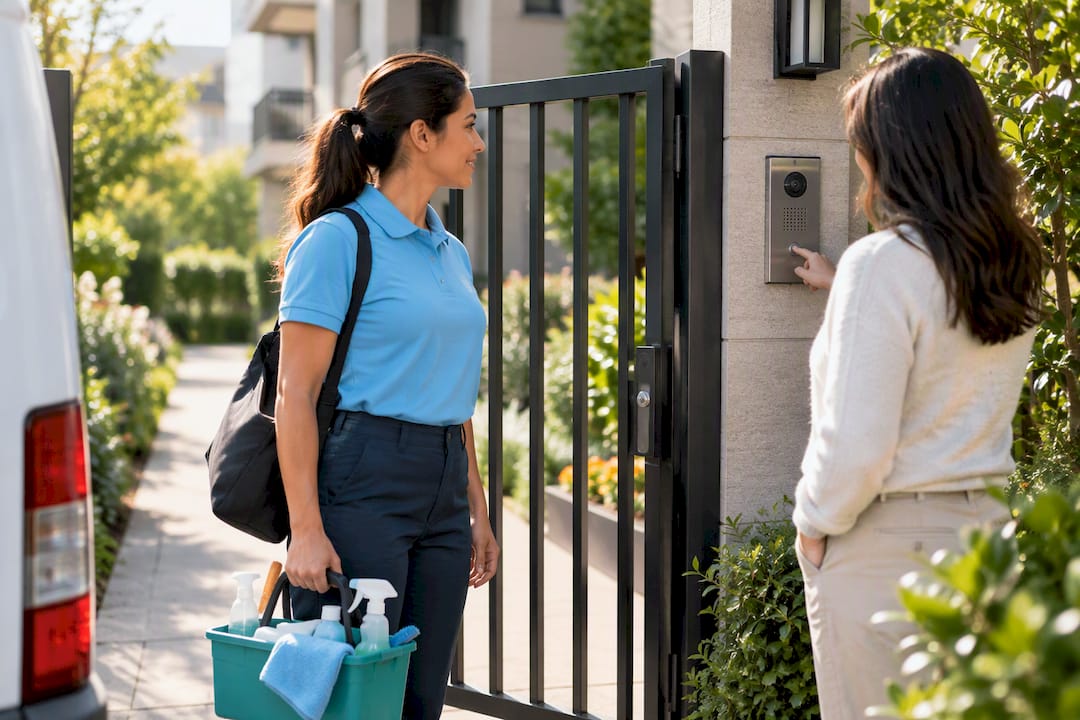
A quick call or email to building management, or a text to a neighbor if you share a driveway or hallway, solves this in under a minute. Mention the day, the approximate time window, and the company name if the building asks for it. In a single-family home with a shared driveway or narrow street, a heads-up to the neighbor next door avoids a parking dispute before it starts.
This step gets skipped constantly, mostly because people forget cleaning crews are, functionally, guests arriving at a scheduled time like any other contractor. Treat it the same way you’d treat a delivery of new furniture or a repair visit: a two-line message ahead of time prevents a wasted trip.
Recurring vs. One-Time Cleanings: What Changes in Your Prep?
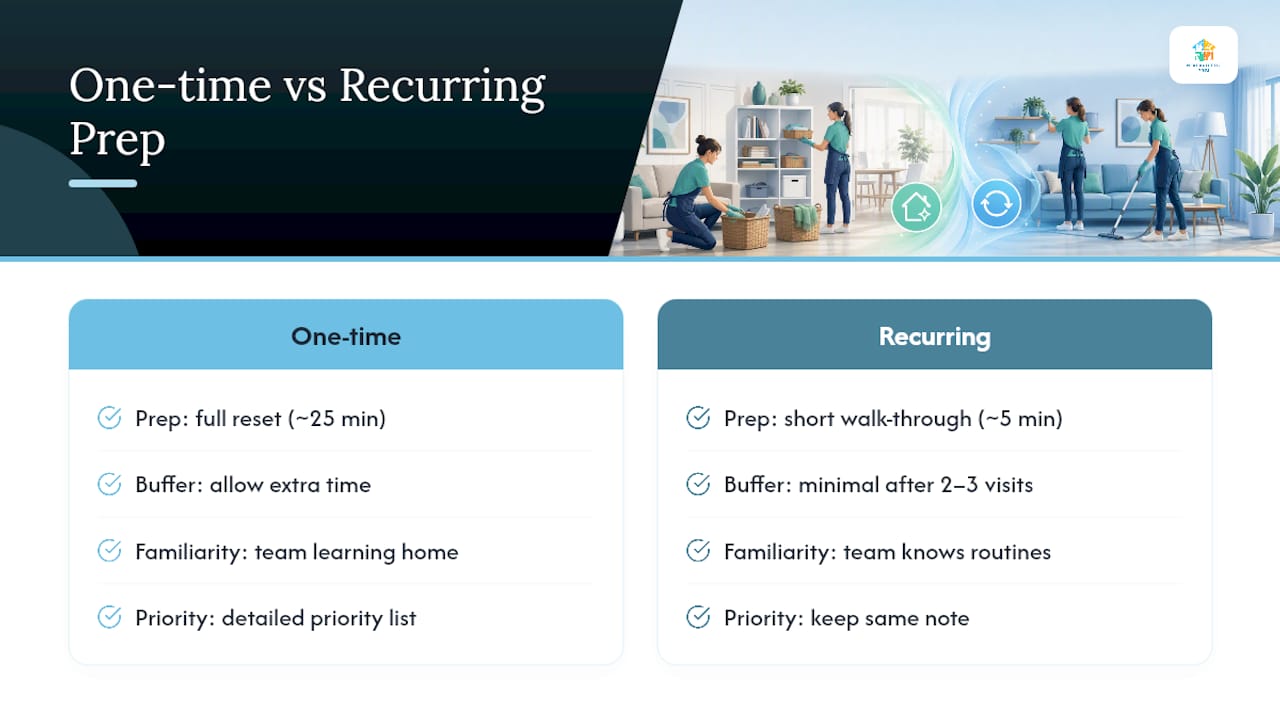
A one-time deep clean and a recurring visit call for different levels of preparation, and the timing question matters too. For a first-time or occasional visit, expect the crew to need more time simply because they’re learning your home’s layout, so give yourself extra buffer and be more detailed with your priority list.
Recurring visits work differently. Once a team has been in your home two or three times, they already know where things go, which surfaces need extra attention, and what your usual clutter looks like. Prep time actually shrinks the longer a relationship runs, sometimes down to a five-minute walk-through instead of a full 25-minute reset.
Decide your schedule based on how fast mess accumulates in your household, not on a generic recommendation. A house with kids, pets, or frequent guests often benefits from biweekly visits, while a smaller household living alone might do fine with once a month. Whichever cadence you pick, keep your priority note consistent between visits. It’s the fastest way to get predictable results instead of a slightly different experience every time.
Why short prep beats long prep for most homeowners
Most homes need the quick reset, not a marathon prep session. Save the extra effort for real transitions, moving out, moving in, or a seasonal deep clean, when a fuller room-by-room checklist actually pays off. Otherwise, clutter doesn’t bother professionals; it’s their job. They’ve seen busier kitchens than yours.
— Neat
Skip the Prep Entirely with a Professional Cleaning Service
Every checklist above assumes you have 25 minutes to spare, but some weeks you genuinely don’t. One cleaning service option is a team that works around your household instead of asking you to reset it first. Basic Cleaning covers the routine counters-sinks-floors rotation for homes that just need a regular reset, while Deep Cleaning handles the buildup in grout, baseboards, and appliance interiors that a standard visit skips.

If you’re between addresses, Move In/Out Clean is built for empty units and turnover timelines, not lived-in clutter. Add-ons such as linen changes or dish work might not be part of a standard visit but can often be requested when booking to clarify cleaning day expectations. It is recommended to contact the cleaning service provider directly to get a written scope of work before your first appointment to understand what is included and any extra costs.
Sources
For more on prepping your space, see Lifehacker’s pre-visit cleaning guide, Southern Living’s cleaner-prep tips, and Reader’s Digest on cleaning safety scope.
- What You Need to Clean Yourself Before the Professional House Cleaners Arrive | Lifehacker
- The 5×5 decluttering method explained | Reader’s Digest
- What is the 80/20 rule house cleaning? | CleaningChecklist
FAQ
What is the 5×5 rule for cleaning?
The 5×5 rule means picking five zones in your home and spending five minutes decluttering each one, for 25 minutes total. It’s a quick decluttering method designed for a fast reset, not a substitute for the actual professional clean.
How much should you tip a house cleaner on a $500 bill?
Tipping norms vary widely and aren’t standardized industry-wide, so there’s no fixed percentage that applies everywhere. Many households tip somewhere in the 15% to 20% range for exceptional service, though a flat cash amount per visit is common too; check with your specific provider on their preference.
What is the 80/20 rule in house cleaning?
The 80/20 rule means focusing on the 20% of tasks, like kitchen counters, bathroom sinks, and living room floors, that create 80% of the visible impact. It’s a prioritization shortcut for when you only have a few minutes to prep before a visit.
Is $20 an hour good pay for house cleaning?
Pay rates depend heavily on region, experience, and whether the cleaner works independently or through a company, so there’s no single number that applies everywhere. Rates vary by market and job scope; for current pricing on professional services, check directly with the provider you’re booking.
Should you clean your house before the cleaners arrive?
You should declutter, not deep-clean. Experts specifically advise against pre-cleaning beyond clearing surfaces and floors, since scrubbing everything yourself hides the actual condition the crew needs to see and wastes time you don’t need to spend.
One Response