Most businesses treat office cleanliness as a visual standard, not a hygiene standard. That gap is where common office cleaning oversights businesses face every day take root. Surfaces look clean but carry biological loads that spread illness, reduce productivity, and create compliance risks. A cleaning checklist for offices built around appearance rather than risk is the single most widespread structural flaw in commercial cleaning programs. The fix starts with knowing exactly which areas get skipped, why standard schedules fail, and how to build a protocol that matches contamination risk to cleaning frequency.
1. High-touch surfaces that get skipped every day
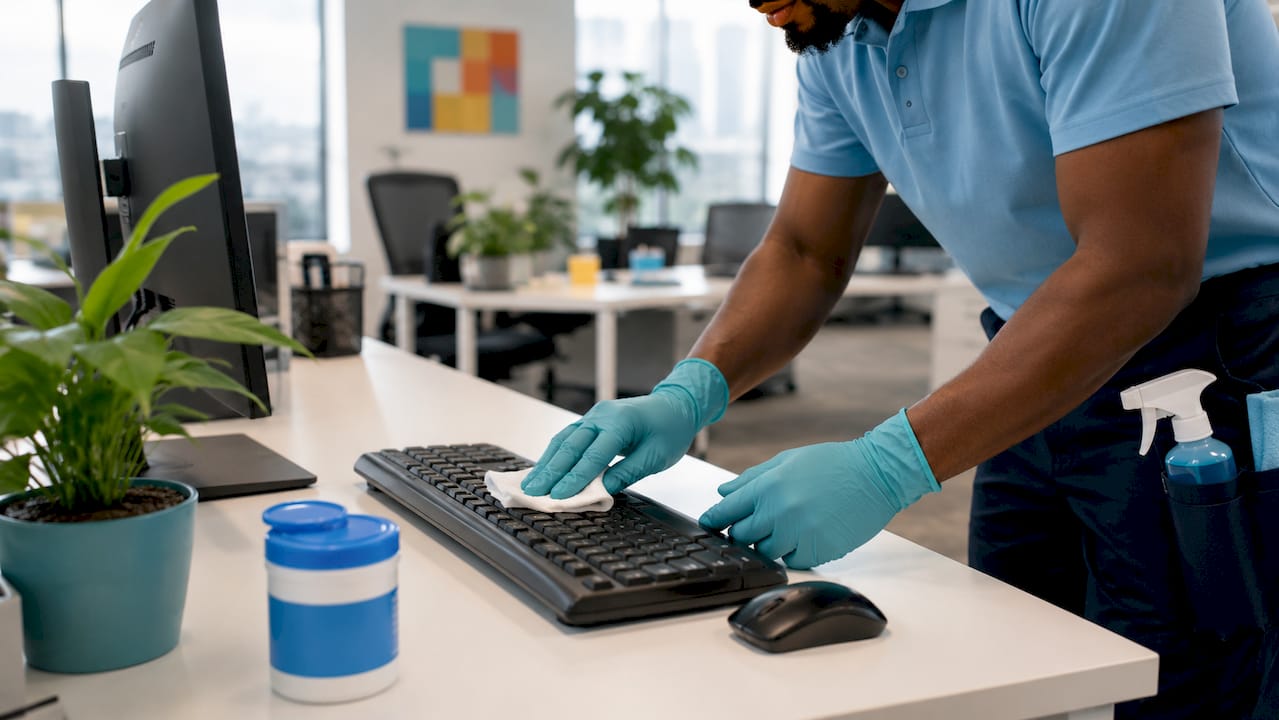
High-touch surfaces like light switches, keyboards, and elevator buttons accumulate biological loads far faster than any other area in an office. That accumulation happens because these surfaces are touched dozens or hundreds of times per day, yet most cleaning schedules treat them the same as a seldom-used storage room wall.
The most commonly neglected high-contact points in a typical office include:
- Light switches and power strips touched by every person entering a room
- Shared keyboards and mice that collect skin cells, oils, and pathogens between users
- Telephone handsets in conference rooms and reception areas
- Elevator buttons and stairwell handrails used by the entire building population
- Door handles and push plates at every entry and exit point
- Printer and copier touchscreens shared across departments
Frequency matters more than appearance for these surfaces. A keyboard that looks clean can carry more bacteria per square inch than a restroom toilet seat, according to occupational health research. Disinfecting these points once a week is not enough for a busy office.
Pro Tip: Use electronics-safe disinfectant wipes rated for shared technology. Spray-based products risk liquid damage to keyboards and screens. Always check that the product is EPA-registered and compatible with the device surface before applying.
Dwell time is the other critical factor. Wiping surfaces immediately after spraying disinfectant cancels the product’s pathogen-killing claims entirely. Most EPA-registered disinfectants require 30 seconds to 4 minutes of wet contact time to work. Train cleaning staff to spray, wait, then wipe.
2. Scheduling mistakes that leave entire zones under-cleaned
Applying one uniform cleaning schedule across an entire office is a major structural flaw in most commercial cleaning programs. Reception desks require more frequent and intensive cleaning than private offices, yet most businesses assign both the same daily routine. That mismatch persists from habit, not from any analysis of actual contamination risk.
A risk-tier framework solves this problem. The table below maps zone types to recommended cleaning frequency and product standards.
| Risk tier | Zone examples | Recommended frequency | Product standard |
|---|---|---|---|
| High | Restrooms, reception, breakrooms | Multiple times daily | EPA-registered hospital-grade disinfectant |
| Medium | Conference rooms, shared workstations | Once or twice daily | EPA-registered disinfectant |
| Low | Private offices, storage rooms | Daily or every other day | General-purpose cleaner with periodic disinfection |
Cleaning a 5,000 sq ft office requires approximately 40–50 minutes for a standard daily routine, adjusted for traffic. That time budget must be distributed by risk tier, not spread evenly across all zones. Spending equal time in a low-traffic storage room and a high-traffic reception area is a direct cause of persistent hygiene gaps.
Batching tasks by type and assigning cleaners to specific zones reduces confusion and increases accountability. Zone assignment also prevents cross-contamination between high-risk and low-risk areas when staff move through the building.
Pro Tip: Review your cleaning schedule quarterly against actual occupancy data. A conference room used daily in Q1 may sit empty in Q2. Schedules built on assumptions rather than current usage waste time and miss real risks.
3. Breakroom and kitchen areas that breed hygiene problems
Food-adjacent areas combine two of the worst conditions for hygiene: high occupancy and organic residue. Handles of refrigerators, microwaves, and coffee stations are critical high-contact points that standard cleaning frequencies consistently overlook. Organic material from food prep accelerates bacterial growth on these surfaces between cleaning cycles.
The most commonly missed spots in office breakrooms include:
- Microwave touchpads and door handles touched before and after food handling
- Refrigerator handles and interior shelving where spills go unnoticed for days
- Coffee machine drip trays and brew buttons used multiple times every hour
- Sink faucet handles touched with unwashed hands throughout the day
- Trash and recycling bin lids that accumulate residue from food packaging
- Cabinet and drawer pulls near food prep surfaces
Standard daily cleaning in breakrooms should include wiping all high-contact points with an EPA-registered disinfectant, not just a general-purpose surface spray. Refrigerator interiors need a weekly deep clean to remove spills before mold develops. Trash bins need disinfecting on the outside, not just liner replacement.
A practical cleaning checklist for offices should list breakroom tasks separately from general office tasks, with higher frequency and specific product requirements. Treating the breakroom as equivalent to a private office in terms of cleaning intensity is one of the most common cleaning errors managers make.
4. Restroom cross-contamination from poor technique
Restroom cleaning technique causes more hygiene failures than restroom cleaning frequency. Cross-contamination in restroom cleaning is common when the same cloth or tool moves from one surface to another without proper sanitation between uses. A mop that cleans the floor near the toilet and then the area near the sink spreads pathogens rather than removing them.
Cleaning sequence is the first line of defense. The correct order moves from cleanest to dirtiest: mirrors and countertops first, then sinks, then toilets, then floors. Reversing that sequence or skipping steps transfers contamination from high-risk surfaces to lower-risk ones.
Disposable cleaning cloths or color-coded microfiber systems prevent tool-based cross-contamination. A red cloth designated for toilets never touches a sink. That simple system eliminates one of the most persistent restroom hygiene errors in commercial settings.
EPA-approved hospital-grade disinfectants are the correct product class for restroom surfaces. General-purpose cleaners do not meet the pathogen-kill requirements for high-risk sanitation zones. Product selection matters as much as technique.
Pro Tip: Schedule restroom cleaning during low-traffic periods, such as early morning or mid-afternoon. Surfaces cleaned while still wet from recent use are harder to disinfect effectively. Dry surfaces allow disinfectants to reach their full dwell time.
5. Documentation gaps that undermine cleaning consistency
A cleaning checklist used only as a reminder produces inconsistent results. Cleaning checklists that function as operational records improve accountability far more than simple task lists. The difference is in what gets recorded: a reminder says “clean restrooms,” while an operational record captures who cleaned them, at what time, and whether quality standards were met.
Effective documentation for office cleaning programs includes:
- Staff name or ID assigned to each task or zone
- Completion timestamp for every cleaning cycle
- Quality score or supervisor sign-off for high-risk zones
- Product used and dwell time confirmed for disinfection tasks
- Incident notes for spills, damage, or areas requiring follow-up
Periodic audits close the loop. A manager who reviews cleaning records weekly can spot patterns, such as restrooms consistently cleaned late in the day or breakroom tasks skipped on Fridays, before those patterns become hygiene incidents. Without records, those patterns stay invisible.
Digital checklists on shared tablets or facility management apps make real-time verification practical. Printed checklists posted in each zone work equally well for smaller teams. The format matters less than the discipline of treating the record as an operational document, not a formality.
An office cubicle cleaning routine that includes documentation requirements for shared workstations gives managers a clear audit trail for the highest-traffic desk areas in an open-plan office.
Key takeaways
Effective office cleanliness requires zone-specific protocols, correct disinfectant technique, and documented accountability rather than uniform schedules based on appearance.
| Point | Details |
|---|---|
| High-touch surfaces need daily disinfection | Keyboards, door handles, and elevator buttons carry the highest biological loads and need disinfecting every day. |
| Risk-tier scheduling prevents hygiene gaps | Assign cleaning frequency by contamination risk, not by habit or uniform daily routines. |
| Dwell time determines disinfectant effectiveness | Allow EPA-registered products to remain wet on surfaces for the full contact time before wiping. |
| Breakrooms require dedicated checklists | Food-adjacent zones need separate, higher-frequency cleaning tasks with specific product requirements. |
| Documentation turns checklists into accountability tools | Records that capture who, when, and quality scores allow managers to audit and correct cleaning performance. |
What I’ve learned from watching offices get this wrong
The most consistent mistake I see is not a dirty floor or an empty soap dispenser. It’s a manager who believes the office is clean because it looks clean. Visual cleanliness and microbiological cleanliness are not the same thing. That gap is where illness clusters start and where productivity quietly erodes.
The businesses that get cleaning right share one habit: they treat their cleaning program as an operational system, not a service they pay for and forget. They review records. They adjust schedules when occupancy changes. They ask whether their cleaning staff know what dwell time means and whether they have the right products for each zone.
Cost pressure is real. I understand the instinct to cut cleaning frequency or consolidate tasks. But the math rarely favors that decision. A single illness cluster that keeps three employees home for two days costs far more than a monthly upgrade to a zone-specific protocol. The ROI on getting cleaning right is not abstract.
The fix is not complicated. Build a risk-tier schedule. Use EPA-registered products correctly. Document everything. Then review the records and adjust. That cycle, repeated consistently, closes the hygiene gaps that a once-over-looks-fine approach never will.
— Neat
Professional office cleaning from Neatandtidypros
Neatandtidypros delivers commercial cleaning services built around zone-specific protocols, documented checklists, and trained staff who understand dwell time and cross-contamination prevention. Every office cleaning program includes task assignment by risk tier, product standards matched to each zone, and supervisor-verified records.
Managers who want to close the hygiene gaps covered in this article can review the full range of cleaning service options at Neatandtidypros, from standard office cleaning to deep cleaning cycles for high-risk zones. The team works with your schedule and occupancy patterns to build a program that matches your actual contamination risk, not a generic template.
FAQ
What are the most neglected office areas in daily cleaning?
High-touch surfaces including shared keyboards, telephone handsets, elevator buttons, and microwave touchpads are the most consistently missed spots. These surfaces accumulate biological loads faster than any other area but rarely appear on standard daily cleaning checklists.
How often should office restrooms be cleaned?
Restrooms in occupied offices should be cleaned and disinfected multiple times daily using EPA-registered hospital-grade products. Frequency should increase during peak occupancy periods such as morning arrival and post-lunch hours.
Why does cleaning sequence matter in restrooms?
Cleaning from cleanest to dirtiest surfaces prevents pathogen transfer between zones. Using the same cloth or mop across multiple surfaces without sanitizing between uses spreads contamination rather than removing it.
What is disinfectant dwell time and why does it matter?
Dwell time is the period a disinfectant must remain wet on a surface to kill pathogens as claimed. Wiping a surface immediately after spraying cancels the product’s effectiveness entirely, which is one of the most common technique errors in office cleaning.
How should managers use cleaning checklists effectively?
Checklists work best as operational records, not reminders. Effective records capture the staff member’s name, completion time, product used, and a quality score for each task, giving managers the data to audit performance and correct gaps before they become hygiene incidents.