
A property management cleaning checklist works when it does two things at once: it lists every task by room, and it tells you when that task happens. Done right, it shortens turnover from the two weeks many managers accept down to a few days with proper sequencing, while giving you photo documentation to back up deposit deductions and answer owner questions before they get asked.
TL;DR:
- Proper sequencing of repairs, painting, and flooring before cleaning can reduce turnover time from weeks to just a few days.
- Deep-cleaning tasks like appliance interiors, grout lines, and carpet care are critical to tenant satisfaction and deposit recovery.
- Coordinating responsibilities between in-house staff, contractor crews, and trades ensures efficient workflow and reduces rework.
- Regular photo documentation at move-in and move-out protects against disputes and provides evidence for deposit deductions.
- Batch similar tasks across multiple units to save time and cost, especially during annual or quarterly deep cleaning and inspections.
Table of Contents
- How to Use This Property Manager Cleaning Checklist
- Room-by-Room Cleaning Checklist for Rental Properties
- Building a Cleaning Schedule for Properties
- Move-In Move-Out Cleaning Checklist and Make-Ready Sequencing
- Cleaning Supplies, PPE, and Basic Safety Rules
- Quality Control: Photo Documentation and Handoff Reporting
- Neat and Tidy Pros’ Checklists in Practice
- What Actually Determines a Fast, Clean Turnover
- Book Turnover and Common-Area Cleaning With Neat and Tidy Pros
- Sources
How to Use This Property Manager Cleaning Checklist
Not every clean is the same job. A recurring clean on an occupied unit or common area touches surfaces and floors. A turnover make-ready clean goes deeper, including appliance interiors, grout lines, and anything a new tenant will notice on day one. Confusing the two wastes labor and creates rework.
Decide who owns which task before you assign anything:
- In-house maintenance staff handle daily and weekly common-area upkeep and quick-turn units.
- Contracted cleaning crews handle full turnovers, deep cleans, and anything requiring specialized equipment.
- Maintenance trades (painters, flooring installers, HVAC techs) get scheduled ahead of the final clean, never after it.
Print the move-in cleaning checklist or a digital version and have whoever performs the work check off items in real time, photographing each room before handing keys back. That habit alone catches most of the disputes that eat into deposit administration later.
Room-by-Room Cleaning Checklist for Rental Properties
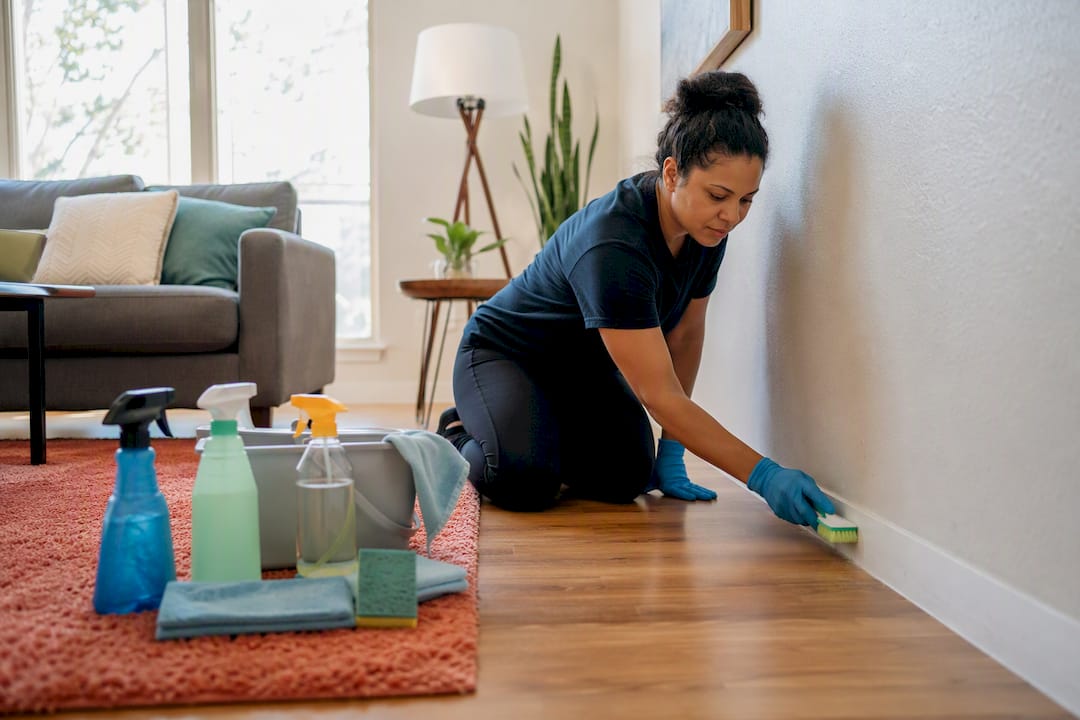
This is the core of any rental property cleaning checklist: the specific tasks that separate a properly cleaned unit from one that just looks tidy at a glance. Turnover cleaning goes deeper than routine service, and it should include appliance interiors and grout attention, sometimes carpet shampooing or replacement, according to landlord turnover guides.
1. Kitchen
- Clean inside and behind the oven, range hood filter, and refrigerator (including coils and drip pans)
- Wipe down cabinet interiors and exteriors, handles, and undersides
- Scrub counters, backsplash, sink, and disposal; run hot water and a disposal cleaner through the drain
- Mop floors and clean baseboards along cabinet toe-kicks
2. Bathrooms
- Scrub grout lines and re-seal if discolored or cracked
- Disinfect fixtures, toilet base and tank, and shower door tracks
- Clean the exhaust fan housing, not just the visible grille
- Polish mirrors and clean drains to clear hair and soap buildup
3. Bedrooms and living areas
- Dust top to bottom: ceiling fans and light fixtures first, baseboards last
- Vacuum upholstery and under furniture, not just open floor
- Launder or replace linens between tenants
- Empty and wipe down closet shelving and rod hardware
4. Entry and common areas
- Clean glass entry doors and lobby windows; a common-area glass maintenance routine keeps multi-unit entries looking presentable between full details
- Sweep and mop hard floors, spot-clean carpet in high-traffic zones
- Disinfect handrails, elevator buttons, and mailroom or package areas
- Empty trash and recycling, and wipe down receptacle lids
5. Laundry and utility rooms
- Clear lint traps and the dryer exhaust duct, not just the trap screen
- Check under washers and water heaters for slow leaks
- Wipe down mechanical panel covers and keep access clear
- Sweep and mop flooring around units
The items that get skipped most often (window tracks, under-appliance areas, exhaust interiors) are exactly the ones tenants notice first and complain about loudest, according to common turnover oversights documented across landlord guides.
Building a Cleaning Schedule for Properties
A checklist without a calendar just becomes a wish list. Break tasks into frequency tiers so nobody re-cleans the same surface twice in one week by accident.
- Nightly/daily: trash removal in common areas, entry glass spot-cleaning, spill response
- Weekly: full common-area floor cleaning, mailroom wipe-down, occupied-unit light service if contracted
- Monthly: deep vacuum of common-area carpets, appliance exterior detailing, light fixture dusting
- Quarterly: grout and tile deep clean, window track detailing, HVAC vent cleaning
- Yearly: carpet shampooing property-wide, exterior window washing, gutter and drain checks
A common-area checklist structured for monthly frequency and aligned with NFPA and OSHA inspection points, as POPProbe’s template demonstrates, also doubles as documentation if an inspector or insurer ever asks what you actually do. Batch similar tasks across units on the same visit (all dryer vents, all common hallways) instead of returning property by property.
Move-In Move-Out Cleaning Checklist and Make-Ready Sequencing
Turnover speed comes down to sequencing, not effort. A make-ready process organized into general maintenance, plumbing, electrical, kitchen, bathrooms, floors, HVAC and safety, and final cleaning, as outlined in the make-ready toolkit, prevents the rework that happens when cleaning starts before repairs finish.
- Pre-move-out: Gather the prior tenant’s move-out date, schedule vendors in advance, and confirm the unit’s condition from the last inspection.
- Inspection and punch list: Walk the unit within 24 hours of move-out, photograph every room, and build a punch list of repairs before anyone touches a mop.
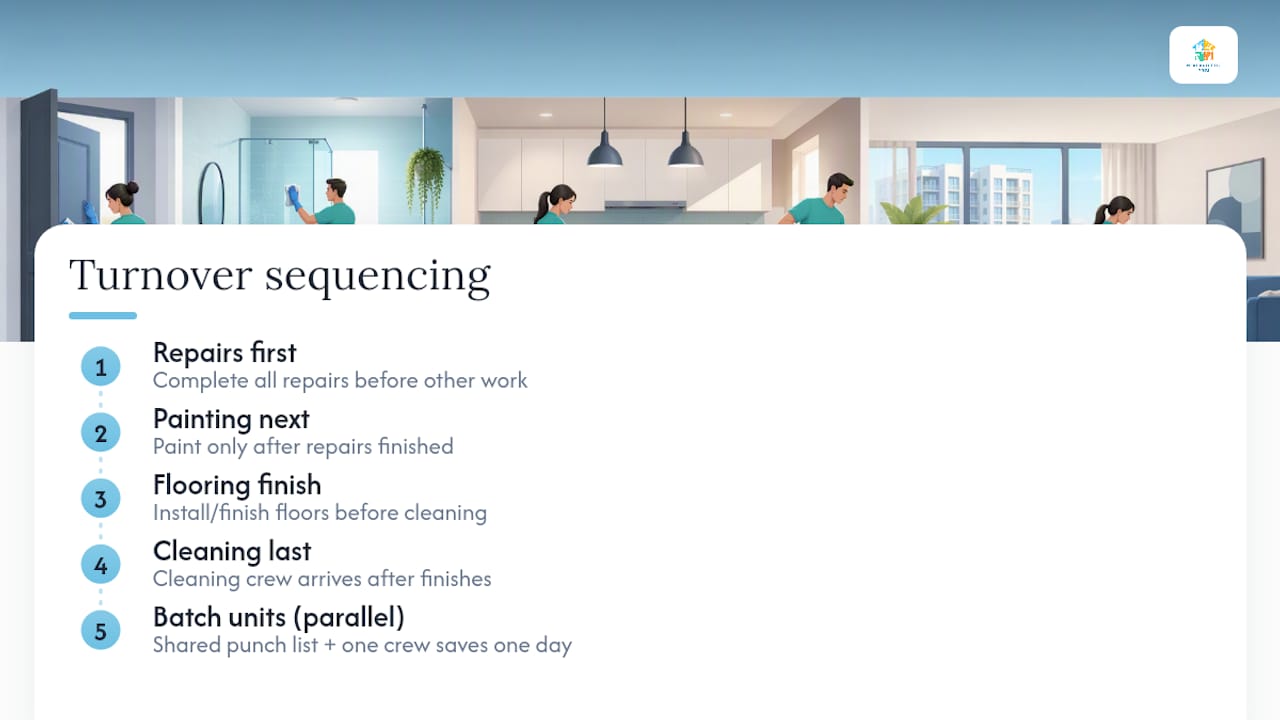
- Execute in order: repairs, then paint, then flooring, then the final deep clean, done last so nothing gets dust or debris back onto clean surfaces.
Sequenced correctly, that process finishes quickly. Sequenced poorly, cleaners show up before painters finish, repairs get discovered mid-clean, and the same crew returns twice, often doubling turnaround time, according to make-ready sequencing data.
Pro Tip: Schedule the final clean as a firm appointment only after the flooring vendor confirms completion in writing. A verbal “almost done” is how five-day turns become ten-day turns.
Cleaning Supplies, PPE, and Basic Safety Rules
Stock durable equipment rather than replacing disposables constantly: commercial vacuums, microfiber cloth systems, flat mops, and EPA-registered disinfectants cover most units. Add grout brushes and a dedicated oven degreaser for turnovers.
- Gloves and eye protection for anyone handling concentrated disinfectants or drain cleaners
- N95 masks when cleaning units with visible mold or after long vacancy
- Proper labeling and storage for chemicals, especially anything mixed on-site
- A documented chemical inventory accessible to every cleaning vendor
Safety callout: OSHA ties routine housekeeping directly to hazard reduction and recommends documented practices to control exposure risk, a standard worth applying to every unit and common area your crews service, per OSHA’s housekeeping guidance.
Quality Control: Photo Documentation and Handoff Reporting
A clean isn’t done until it’s verified. Walk each room with a phone and shoot the same angles every time: wide shot from the doorway, close-ups of appliance interiors, grout lines, and any pre-existing damage.
- Score each room pass or fail against the checklist, not a general impression
- Log corrective actions immediately and re-inspect before closing the work order
- Compile the final handoff package: dated photos, the signed punch list, and vendor invoices
Photo evidence at both move-in and move-out protects deposit accounting and supports deductions for damage beyond ordinary wear, a point emphasized in make-ready documentation guidance. That file becomes your answer to any tenant dispute or owner question, months later, without a single follow-up call.
Neat and Tidy Pros’ Checklists in Practice
Every item above reflects how Neat and Tidy Pros actually runs turnovers, not a theoretical standard. The company’s 47-point Airbnb turnover checklist applies the same room-by-room logic to short-term rental turns, where consistency drives guest reviews and occupancy according to short-term rental cleaning research.
- Move-in and move-out cleaning built around the same punch-list and photo QA process described here
- Deep cleaning for units sitting vacant longer than the standard turn
- Post-construction cleaning for units coming out of renovation, before the final walkthrough
Standardized checklists like these simplify QA for managers overseeing multiple properties at once, a pattern industry research on contractor accountability backs up directly.
What Actually Determines a Fast, Clean Turnover
Most managers overinvest in the cleaning checklist itself and underinvest in the sequencing around it. The list of tasks rarely changes property to property. What separates a three-day turn from a ten-day one is whether repairs, paint, and flooring finish before the cleaning crew ever walks in.
Small operations running one or two properties can usually handle recurring cleaning in-house and save the contracted crew for full turnovers, where deeper equipment and grout work justify the cost. Once you’re managing five or more units, the math flips: a missed sequencing step on even one unit costs more in lost rent than a season of contracted cleaning would.
Consider a 12-unit building where two units turn the same month. Run them in parallel with a shared punch list and one cleaning crew batching both, and you’ll often shave a full day off each turn versus handling them as separate jobs.
— Neat
Book Turnover and Common-Area Cleaning With Neat and Tidy Pros
Running this checklist across five properties is one thing. Running it across fifty, on a deadline, with a crew that shows up on time and documents its own work, is another. Neat and Tidy Pros handles move-in and move-out turnovers, common-area upkeep, and post-construction cleaning for property managers who need the work done right the first time, not re-checked and redone.

Every booking includes the room-by-room scope outlined above, photo documentation for your handoff file, and a turnaround window set before the crew arrives, not estimated afterward. For occupied units and offices, the same standards apply through commercial cleaning services. If your next turnover is on the calendar, book a move-in/move-out cleaning slot now and get the punch list handled before your next tenant’s move-in date.
Sources
- OSHA: Housekeeping and basic safety practices
- Apartment make-ready checklist + toolkit (Lula)
- Property Management Common Area Cleaning checklist (POPProbe)