A working restaurant cleaning checklist breaks tasks into daily, weekly, and monthly rounds across front-of-house, back-of-house, bar, and restrooms, with a named owner and a signature line for each shift. Print one, laminate it, and post it station by station. Some cleaning companies build these station-by-station templates for restaurant clients who want inspection-ready logs without writing the schedule from scratch.
TL;DR:
- Assign a specific owner and initials to each zone and shift to ensure accountability and prevent overlooked cleaning tasks.
- Conduct high-touch surface wipes during service hours, especially for POS terminals and tablets, to reduce cross-contamination risks.
- Follow a strict schedule for deep-cleaning equipment, filters, and grout to prevent equipment failure and meet inspection standards.
- Maintain detailed, signed logs for sanitizer concentration, restroom checks, and maintenance tasks to provide concrete proof during inspections.
- Use color-coded cloths, proper PPE, and separate waste containers for hazardous waste to ensure safety and compliance with biohazard regulations.
Table of Contents
- Front-of-House Checklist: Daily Rounds and Weekly Detail
- Back-of-House Kitchen Checklist: Opening to Closing
- Bar Checklist: Glassware, Ice, and Garnish Stations
- Restroom Cleaning: Hourly Checks That Keep Inspectors Happy
- Supplies, Chemicals, and PPE: Getting the Basics Right
- Turning the Checklist Into a Routine Staff Actually Follow
- Deep-Clean and Equipment Maintenance Schedule
- Inspection Readiness: The Five Violations to Watch
- Hazardous Waste and Biohazard Disposal
- Emergency Spill Response Procedures
- What the Field Actually Shows About Checklist Compliance
- Let a Professional Crew Run Your Cleaning Program
- Where to Verify These Standards
- Sources
Front-of-House Checklist: Daily Rounds and Weekly Detail
Front-of-house cleaning fails for one reason more than any other: nobody assigned a single person to own it. The fix is short task wording, one name per zone, and rounds timed to when the dining room actually fills up rather than a fixed clock.
Daily tasks belong to the opening and closing crew, split cleanly between them:
- Reset and wipe every table and chair between seatings.
- Refill and wipe condiment caddies, menus, and check presenters.
- Sweep and mop dining floors, with extra attention to booth bases and the host stand.
- Clean entry glass, door handles, and host-stand surfaces.
- Wipe down POS terminals, card readers, and shared tablets.
That last item matters more than most managers assume. Research on high-touch surfaces found that a phone can carry significantly more bacteria than a toilet seat, and a POS screen gets touched by every server and every guest paying by card. A wipe-down several times during service rather than only at open and close cuts that cross-contamination risk considerably. A facility manager’s guide to high-touch surfaces recommends exactly this kind of scheduled rotation rather than an end-of-shift catch-up.
Weekly and monthly tasks get batched so they don’t eat into service hours:
- Dust light fixtures, art, and window blinds (weekly).
- Vacuum and spot-treat upholstered booths (weekly).
- Clean HVAC vents and ceiling fans (monthly).
- Wash windows inside and out (monthly, or biweekly for high-traffic storefronts).
- Deep-scrub grout lines and baseboards (monthly).
A printed sample entry might read: “10 AM: wipe host stand and entry glass. Initials: ___.” Short, specific, and easy to sign. That structure matters because interactive checklists that assign tasks by station with time estimates improve compliance far more than a long paragraph of instructions taped to a wall.
Pro Tip: Post the front-of-house checklist at the host stand, not in the back office. Staff who see it every time they clock in a table actually use it.
Back-of-House Kitchen Checklist: Opening to Closing
Kitchen cleaning has to follow the shift, not the clock. Opening, mid-shift, and closing tasks each protect against a different failure: contaminated stock, cross-contact during service, and grease buildup overnight.
Opening checklist:
- Mix fresh sanitizer buckets and test concentration with strips.
- Log walk-in and reach-in temperatures before prep starts.
- Rotate stock using first-in, first-out and discard anything past date.
- Wipe down prep surfaces even if they were cleaned the night before.
- Check that hand-wash stations are stocked with soap and paper towels.
Mid-shift is where most kitchens quietly fail. A cutting board that touched raw chicken needs sanitizing before it touches anything else, every time, not at the next scheduled break. The same goes for a knocked-over sauce pan or a dropped case of produce.
- Sanitize cutting boards and knives immediately after raw-protein contact.
- Swap out sanitizer buckets and side towels every two hours or sooner if visibly soiled.
- Wipe spills the moment they happen, not at the next slow period.
- Re-test sanitizer concentration mid-shift if the kitchen runs a long service window.
Closing checklist:
- Degrease the line, flat-top, and hood filter guards.
- Scrub and sanitize all sinks, including the mop sink.
- Break down and sanitize the dishpit, then run a final rinse cycle.
- Clear floor drains and check for slow-draining spots.
- Empty and sanitize trash cans; replace liners before the room airs out overnight.
Weekly and monthly work covers what daily wiping can’t reach: pulling out equipment to clean underneath, descaling the ice machine, and deep-cleaning the walk-in shelving. Following a documented daily and weekly frequency matrix instead of relying on memory is what actually prevents the skipped tasks that turn into equipment failures.
Pro Tip: If a sanitizer test strip reads below the correct range twice in one shift, stop and remake the solution rather than assuming the next batch will fix itself. Weak sanitizer is invisible until it’s a violation.
Bar Checklist: Glassware, Ice, and Garnish Stations
Bars fail health inspections almost as often as kitchens, usually over ice bins, tap lines, or a garnish station treated like a salad bar without the same rules.
Daily tasks for bartenders and barbacks:
- Wash and sanitize glassware through a three-compartment sink or glasswasher, not a quick rinse.
- Wipe down the speed rail, bottle necks, and pour spouts before close.
- Scoop ice with a dedicated scoop only, never a glass, and sanitize the ice bin daily.
- Wipe tap handles and nozzles; a sticky handle is a contamination point guests notice.
- Sanitize garnish trays and change ice under fruit garnishes at least once per shift.
Weekly and monthly work covers what daily wiping misses: running cleaning solution through beer and cocktail lines, pulling and descaling the ice machine, and wiping down the back-bar coolers’ condenser coils. Garnish stations need the same allergen labeling and cross-contact rules as any cold-prep station in the kitchen. Citrus, cherries, and olives sitting uncovered next to shared tongs are a classic overlooked risk.
Restroom Cleaning: Hourly Checks That Keep Inspectors Happy
Restrooms get more inspector attention per square foot than almost any other zone, because a dirty one signals a dirty kitchen even when that’s not true.
An hourly checklist should cover:
- Check toilets and urinals for visible soil or clogs.
- Wipe sinks, faucets, and counters.
- Restock toilet paper, soap, and paper towels.
- Empty trash and check for overflow.
- Mop up any wet floor and set a caution sign if needed.
- Note lingering odors, which usually mean a drain or vent issue, not a cleaning miss.
Weekly and monthly deep-clean items include grout scrubbing, descaling fixtures with mineral buildup, and clearing slow drains before they back up. Log every plumbing issue the moment staff notice it and escalate anything beyond a plunger fix immediately. A commercial plumbing inspection checklist is a useful reference for knowing which restroom red flags need a professional rather than a mop.
Pro Tip: A signed hourly log posted inside the restroom door does double duty: it keeps staff accountable and gives an inspector something concrete to see instead of asking when it was last cleaned. Neat and Tidy Pros’ restaurant bathroom cleaning checklist includes a printable sign-off field built for exactly this.
Supplies, Chemicals, and PPE: Getting the Basics Right
A restaurant’s cleaning kit should include color-coded microfiber towels, cloths reserved only for food-contact surfaces, a mop-wringer system, and every chemical labeled with contents and dilution ratio.
- Keep dedicated, labeled cloths for food-contact surfaces separate from restroom or floor cloths.
- Test sanitizer concentration with strips at the start of each shift and after remixing.
- Require gloves and eye protection for degreasers, oven cleaners, and anything above standard dilution.
- Store chemicals away from food storage, with the safety data sheet posted or accessible nearby.
Health inspections commonly cite three to five cleaning-related violations per visit, and weak sanitizer concentration is one of the most frequent. A test strip costs pennies; a failed inspection over an unmixed bucket does not.
Turning the Checklist Into a Routine Staff Actually Follow
A checklist only works if one person owns each zone per shift. Split responsibility between the opening cook, the mid-shift server lead, and the closing manager, and name each one on the sheet rather than leaving it generic.
- Assign one owner per zone per shift, never a shared task with no name attached.
- Require initials or a digital confirmation at task completion, not just at the end of the shift.
- Have a manager spot-check two or three zones per shift and initial a verification field.
- Log any incident (spill, equipment issue, missed task) with a time stamp and follow-up note.
Traffic data helps time the rounds. Scheduling touchpoint wipes right before a predicted lunch or dinner rush based on POS and delivery data beats a fixed hourly alarm that might land mid-rush.
| Ownership element | Why it works |
|---|---|
| One owner per zone | Removes the “I thought someone else did it” gap |
| Signed or initialed log | Creates a paper trail for managers and inspectors |
| Manager spot-check | Catches gaps before a guest or inspector does |
| Traffic-based timing | Matches cleaning effort to actual peak demand |
Deep-Clean and Equipment Maintenance Schedule
Grease doesn’t build up overnight, it builds up over the weeks a hood filter goes unwashed. A maintenance cadence prevents both fire risk and inspection failures.
- Wash hood filters weekly; schedule a licensed hood contractor quarterly for full duct cleaning.
- Pull refrigeration units and clean coils and gaskets monthly.
- Descale and sanitize ice machines monthly, more often in hard-water areas.
- Break down and deep-clean fryers weekly, including oil filtration lines.
- Document every professional service visit with the contractor’s name and date for inspection records.
Phasing deep-clean weeks (one week for refrigeration, the next for vents) avoids overloading a single crew, an approach echoed in industry deep-clean scheduling guidance. Neat and Tidy Pros’ guide to deep-cleaning kitchen appliances walks through the appliance-specific steps in more depth.
Inspection Readiness: The Five Violations to Watch
Sanitizer concentration, grease buildup, restroom condition, clogged drains, and disorganized walk-in storage account for most of the repeat citations restaurants see.
- Test and log sanitizer concentration every shift, not just when you remember.
- Keep hood filters and floor drains on a fixed weekly schedule, logged with initials.
- Walk the restroom hourly and keep that log visible.
- Organize the walk-in with raw proteins below and away from ready-to-eat items.
- Present signed logs, SOPs, and sanitizer test records the moment an inspector asks.
Cleaning-related citations remain among the most common violation categories inspectors find, and repeat offenses raise the risk of heavier fines or closure. Exact code language varies by jurisdiction, so check your state’s adoption of the FDA Food Code before finalizing your own SOPs.
Hazardous Waste and Biohazard Disposal
Restaurants generate more regulated waste than most managers realize: used fryer oil, chemical containers, broken glass, and occasionally bodily fluids or bloodborne material from an injury or an ill guest.
Used cooking oil needs to go into a dedicated, sealed collection container picked up by a licensed grease-hauling service, never poured down a drain where it causes blockages and code violations. Empty chemical containers should be rinsed per label instructions and disposed of according to local hazardous-waste rules; some concentrated degreasers and sanitizers count as hazardous waste even once “empty.” Broken glass and sharp metal go into a puncture-resistant container, labeled and kept away from regular trash bins where staff might reach in blind.
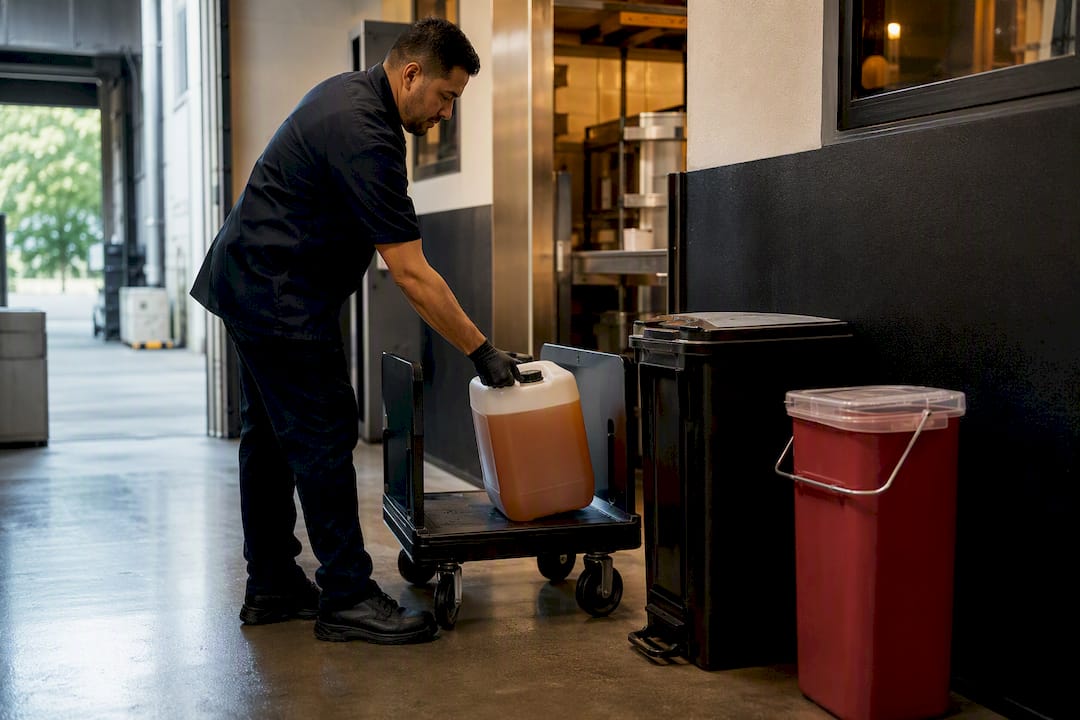
Biohazard material, vomit, blood, or other bodily fluids, requires a different protocol entirely. Staff handling it need gloves and, ideally, a face shield or mask, plus a dedicated cleanup kit with an EPA-registered disinfectant rated for bloodborne pathogens. The contaminated material and any absorbent used to clean it get double-bagged and disposed of separately from regular kitchen trash. The CDC’s guidance for business response to contamination events remains a solid reference point for building out these protocols and training staff on them before an incident happens, not during one.
Emergency Spill Response Procedures
A chemical or bodily-fluid spill needs a response staff can execute without hesitating to check a manual first.
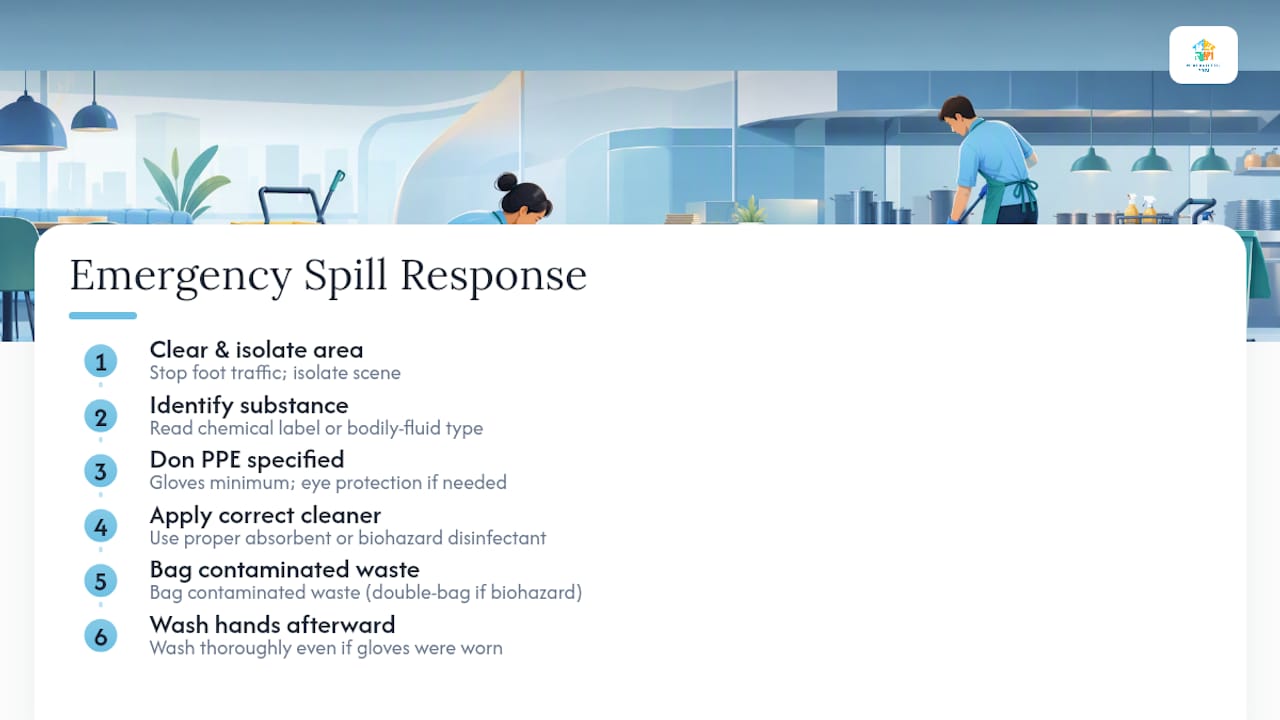
For a hazardous chemical spill, the first move is to clear the area and stop foot traffic, not start wiping. Identify the chemical from its label, put on the PPE that label specifies (gloves at minimum, eye protection for stronger chemistry), and use the correct absorbent, since some chemicals react badly with water or standard cleaning cloths. Ventilate the area if fumes are strong, and never mix an unknown spill with a second cleaning chemical to “help it along.”
For bodily-fluid spills, the same clear-and-isolate step comes first, followed by placing a wet-floor sign immediately since these spills create real slip risk. Staff use the biohazard kit’s disinfectant, let it sit for the label’s specified contact time, then double-bag the waste. Anyone involved should wash hands thoroughly afterward, even with gloves worn throughout.
Every restaurant should have a printed emergency response card at each station listing where the biohazard kit and chemical spill kit are stored, since a five-minute search during an actual incident defeats the purpose of having a kit at all. Training every new hire on this location during onboarding, not just during an annual refresher, is what makes the response fast instead of frantic.
What the Field Actually Shows About Checklist Compliance
Cleaning programs across residential and commercial properties, including restaurants, often show common misses: sanitizer buckets mixed once and never retested, restroom logs signed in advance for the whole shift, and hood filters skipped because contractors handle them quarterly. The fix is rarely a longer checklist. It’s a shorter one, tied to a specific name and a specific time.
— Neat
Let a Professional Crew Run Your Cleaning Program
Building the checklist is one job. Executing it every shift, every week, without a gap is another, and it’s the one that actually determines whether an inspector finds a problem. Recurring commercial cleaning programs for restaurants can include deep-clean tasks, hood scheduling, and equipment maintenance handled by a crew instead of squeezed into a server’s closing shift.
Hiring a professional program makes the most sense once deep-clean tasks start piling up: hood and duct service, walk-in reorganization, or a grease trap that needs more than a mop and a prayer. Our commercial cleaning services cover exactly this kind of recurring restaurant work, scheduled around your service hours instead of around ours. Request a quote and ask about a sample checklist built for your floor plan and your kitchen’s actual equipment list.
Where to Verify These Standards
Cross-check your own SOPs against your state’s adopted version of the FDA Food Code, since exact requirements shift by jurisdiction. The OIG’s report on FDA food-safety inspections is worth a read for understanding what inspectors flag most. For a restroom-specific log template ready to print, Neat and Tidy Pros’ restaurant bathroom cleaning checklist covers the hourly fields discussed above.
Sources
- FDA food-safety inspections of domestic food facilities — OIG (2025)
- State retail and food-service codes and regulations — FDA
- Your cell phone may be 10 times dirtier than a toilet seat — IHPI (University of Michigan)