
Bathroom sanitation matters because it prevents infectious disease, protects human dignity, and delivers measurable economic savings. According to the World Health Organization, unsafe sanitation accounts for 564,000 of the 1.4 million deaths tied to inadequate water, sanitation, and hygiene (WASH) every year. The CDC and organizations like Water For People reinforce the same message: a clean, properly maintained bathroom is one of the most cost-effective health interventions available to any household. Neatandtidypros sees this firsthand with every deep clean and post-construction job.
Here is why bathroom sanitation belongs at the top of your home maintenance list:
- Disease prevention: Dirty bathrooms spread diarrheal illness, cholera, and parasitic infections through fecal-oral transmission and contaminated surfaces.
- Dignity and safety: Access to a clean, private facility reduces social anxiety, supports school attendance, and lowers the risk of assault, especially for women and girls.
- Environmental protection: Improper wastewater disposal contaminates groundwater, harms ecosystems, and fuels antimicrobial resistance.
- Economic return: The WHO estimates roughly US$5.50 in benefits for every US$1 invested in sanitation.
- Household comfort and asset longevity: Routine cleaning prevents mold, fixture damage, and the costly repairs that follow years of neglect.
Table of Contents
- Why does poor bathroom sanitation cause so much disease?
- How sanitation protects dignity, safety, and education
- What are the environmental and economic costs of poor sanitation?
- What is the difference between cleaning and disinfecting a bathroom?
- How to maintain bathroom sanitation at home
- Key Takeaways
- The thing most homeowners get wrong about bathroom hygiene
- Neatandtidypros brings professional sanitation to Orange County and Corona
- Useful sources and further reading
Why does poor bathroom sanitation cause so much disease?
The fecal-oral route is the core problem. When a toilet, sink, or floor surface carries fecal contamination and a person touches it, then touches their mouth or food, pathogens transfer directly. The illnesses that follow range from acute diarrhea and cholera to helminth (intestinal worm) infections and a cluster of neglected tropical diseases (NTDs) that the WHO links directly to inadequate sanitation.
The scale is staggering. Unsafe sanitation causes an estimated 564,000 deaths per year, the majority from diarrheal disease. Children under five bear the heaviest burden globally.
| Metric | Figure | Source |
|---|---|---|
| Annual WASH-related deaths | 1.4 million | WHO |
| Deaths attributable to unsafe sanitation | 564,000 | WHO |
| Reduction in school absenteeism from hand hygiene | 29% | AAP/CDC |
| Economic return per $1 invested in sanitation | ~US$5.50 | WHO |
Research published in PMC confirms that toilet surfaces are persistent sources of contamination, and that targeted sanitation practices, not just a quick wipe-down, are what actually reduce pathogen load. Biofilms under toilet rims can harbor pathogens for weeks, making routine surface cleaning insufficient on its own.
Who is most at risk? Children under five face the highest mortality. Low-income communities with limited access to clean water and sewage infrastructure carry a disproportionate burden. People with disabilities and elderly adults face compounded risk because mobility limitations make thorough personal hygiene harder. Women and girls in informal settlements without private facilities face both health and safety threats every time they need to use a shared or open facility.
How sanitation protects dignity, safety, and education
Sanitation is not just infection control. The absence of a private, functional toilet strips people of basic dignity and creates real physical danger, particularly for women and girls who must use open fields or shared facilities after dark.
Water For People documents how access to safely managed sanitation services reduces preventable waterborne disease and supports community well-being in ways that go well beyond health statistics. Girls who have access to separate, private school latrines attend school at higher rates, particularly during menstruation. That attendance gap, when sanitation is absent, translates directly into lower educational attainment and reduced lifetime earnings.
At the household level, a bathroom with a working lock, adequate lighting, and a clean environment reduces social anxiety and supports the mental health of everyone in the home. Elderly residents and people with disabilities benefit enormously from clean, uncluttered bathroom spaces where fall risk is reduced and surfaces are free of mold and slick residue.
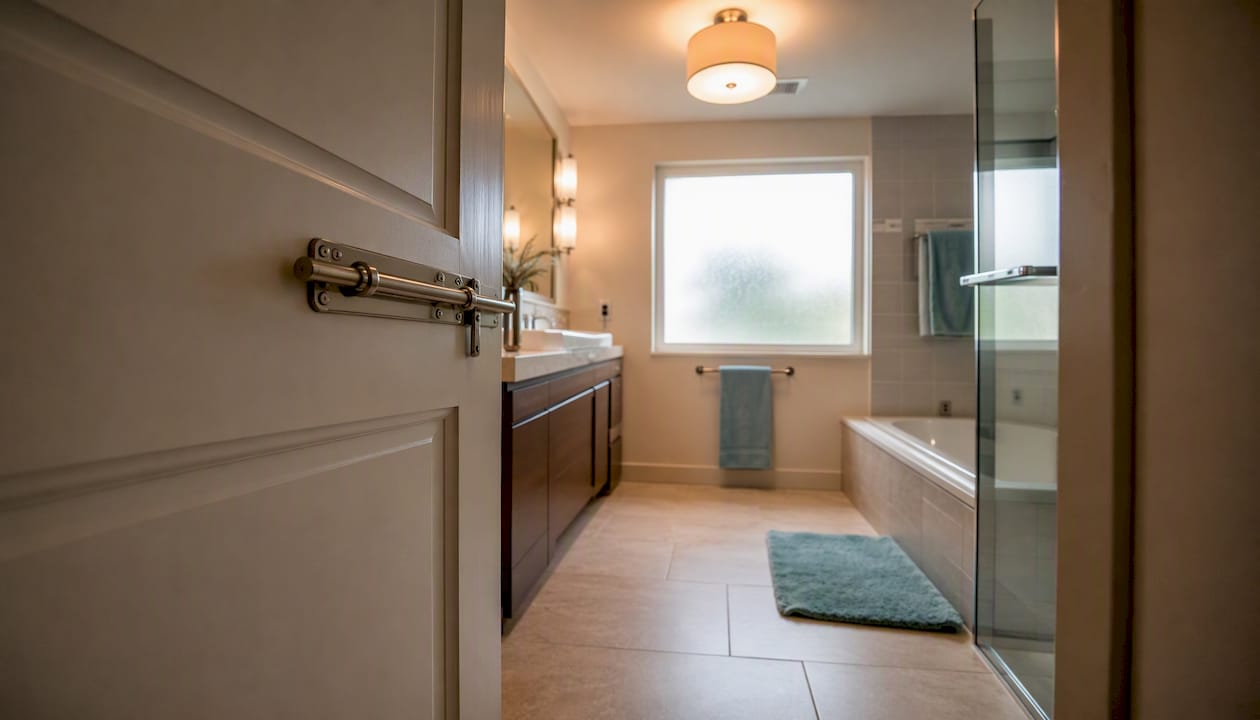
Pro Tip: The lowest-cost privacy and safety upgrade for a shared or semi-public bathroom is a sturdy interior bolt, a motion-sensor light, and a non-slip mat. These three items address the most common safety complaints and cost under $50 combined.
Community programs that combine sanitation infrastructure with education, like those supported by Water For People, consistently outperform infrastructure-only investments. Behavior change, not just hardware, is what sustains sanitation gains over time.
What are the environmental and economic costs of poor sanitation?
Untreated fecal waste does not disappear. It enters groundwater through leaching latrines, contaminates rivers through inadequate sewage systems, and accumulates in soil where it spreads NTDs like schistosomiasis and soil-transmitted helminths. Fecal sludge mismanagement is a particular problem in rapidly urbanizing areas where sewerage infrastructure has not kept pace with population growth.
The economic case for sanitation is one of the strongest in public health. The WHO estimates a return of approximately US$5.50 for every US$1 invested in sanitation, driven by reduced healthcare costs, lower productivity losses from illness, and avoided premature deaths.
Environmental consequences of inadequate sanitation include:
- Groundwater contamination that renders wells and aquifers unsafe for drinking
- Spread of NTDs and antibiotic-resistant organisms through contaminated water and soil
- Ecosystem damage from nutrient overload and pathogen introduction into waterways
- Increased vulnerability to climate shocks, since communities with poor sanitation infrastructure suffer disproportionately during floods and droughts
The economic outcomes of investing in sanitation flip that picture: lower household healthcare spending, fewer sick days, higher school completion rates, and stronger local economies. For U.S. households specifically, the math is straightforward. A bathroom neglected for years will develop mold, corroded fixtures, and grout damage that costs far more to remediate than a consistent cleaning routine would have cost over the same period.
What is the difference between cleaning and disinfecting a bathroom?
These two words get used interchangeably, but they describe different actions with different outcomes. Cleaning removes dirt, grime, and most surface germs using soap or detergent and water. Disinfecting uses stronger chemical agents to kill the microorganisms that remain after cleaning. The CDC is explicit: you must clean first, then disinfect. Skipping the cleaning step means disinfectants work against a layer of organic matter, which sharply reduces their effectiveness.
High-risk bathroom surfaces to clean and disinfect:
- Toilet seat, rim, and exterior base (fecal contamination hotspot)
- Flush handle and toilet lid (high-touch, frequently skipped)
- Faucet handles and sink basin
- Door handle and light switch
- Floor around the toilet base
- Shower/tub faucet handles
For handwashing, the evidence is direct. Consistent hand hygiene reduces school absenteeism from gastrointestinal illness by about 29%. The Cleveland Clinic notes that many people wash their hands incorrectly, missing the backs of hands, between fingers, and under nails. The correct technique: wet hands, apply soap, scrub all surfaces for 20 seconds, rinse thoroughly, and dry with a clean towel.
Pro Tip: Never use the same sponge or cloth on the toilet that you use on the sink or countertop. Dedicated, color-coded tools for each surface zone are the single easiest way to prevent cross-contamination. Research on pathogen persistence in cleaning tools confirms that shared tools transfer contamination even after rinsing. Also, run the exhaust fan or open a window before applying disinfectant spray and keep it running for at least 10 minutes after.
How to maintain bathroom sanitation at home
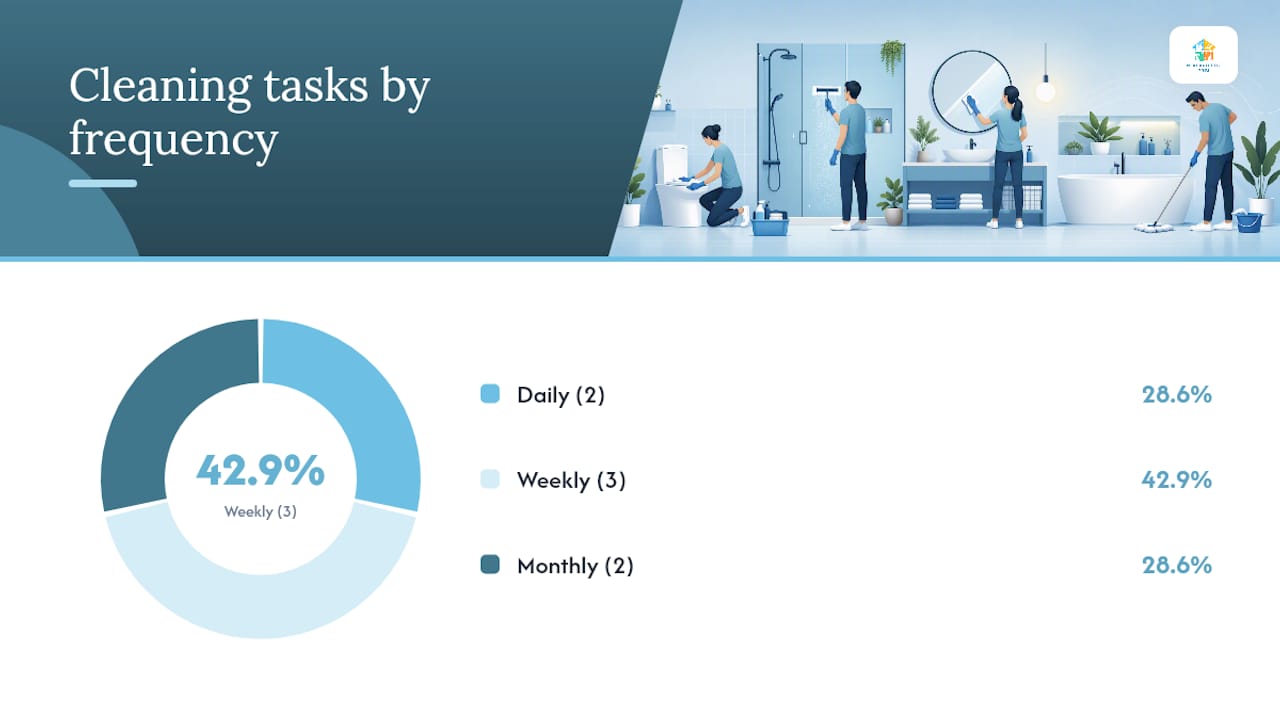
Consistency beats intensity. A bathroom cleaned thoroughly once a month but ignored the rest of the time will still accumulate dangerous pathogen loads between sessions. The goal is a tiered routine that addresses high-risk surfaces daily and reserves deeper work for weekly and monthly intervals.
| Task | Frequency | Why it matters |
|---|---|---|
| Wipe toilet seat and flush handle | Daily | Highest-contact fecal contamination zone |
| Rinse sink basin, wipe faucet handles | Daily | Prevents biofilm buildup and soap scum |
| Clean and disinfect toilet bowl | Weekly | Removes biofilm under rim; reduces pathogen persistence |
| Scrub shower/tub surfaces | Weekly | Prevents mold and mildew in high-moisture zones |
| Mop or disinfect floor | Weekly | Addresses splash contamination around toilet base |
| Clean grout, replace shower liner | Monthly | Mold in grout is a common allergen and pathogen reservoir |
| Check and clean exhaust fan | Monthly | Blocked fans raise humidity and accelerate mold growth |
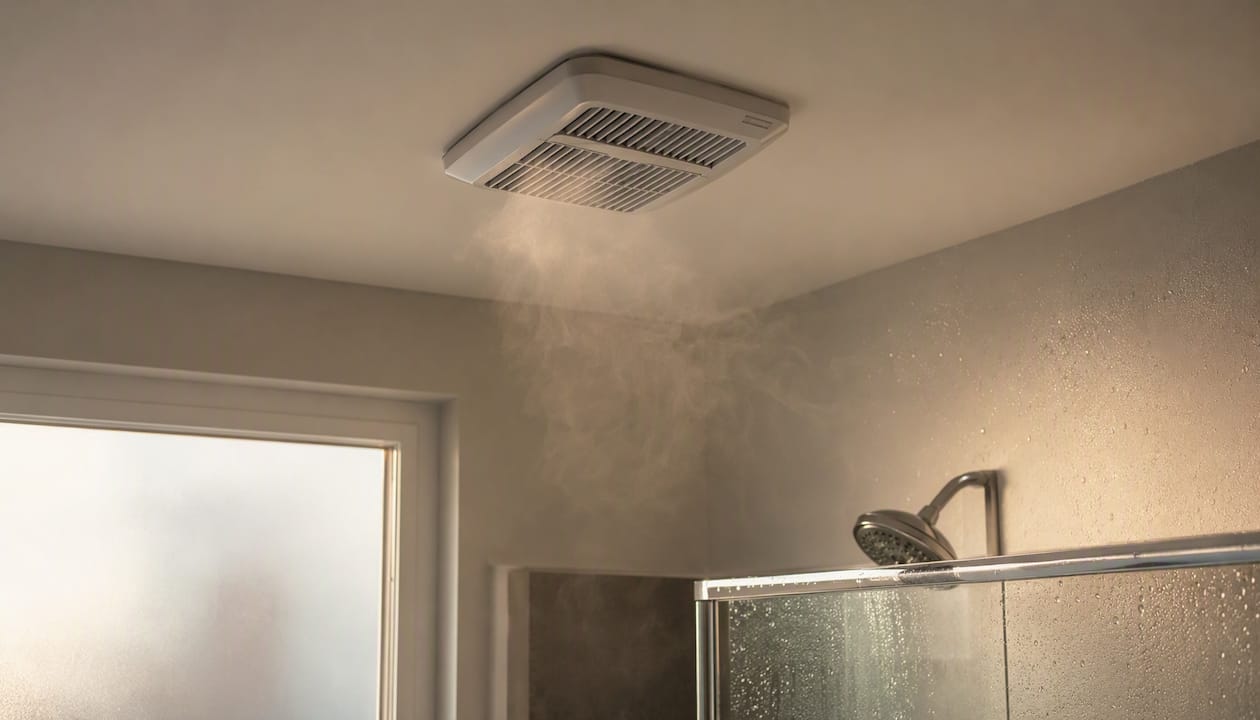
Ventilation is the single most underrated factor in bathroom hygiene. OSF HealthCare recommends running the exhaust fan during and for at least 15 minutes after a shower to control humidity. Humidity above 60% creates conditions where mold and mildew thrive on grout, caulk, and ceiling surfaces. A bathroom that smells musty is already past the prevention stage.
Safe disposal matters too. Never flush wipes labeled “flushable” if your home has older plumbing or a septic system. Medications should go to a DEA-authorized take-back location, not down the toilet, where pharmaceutical compounds enter waterways. Keeping a small lidded trash bin next to the toilet for non-flushable waste prevents the clogs and sewage backups that turn a routine cleaning job into an emergency.
Key Takeaways
Proper bathroom sanitation prevents disease, protects dignity, and delivers economic returns that far outweigh the cost of consistent cleaning and occasional professional intervention.
| Point | Details |
|---|---|
| Disease burden is real | Unsafe sanitation causes 564,000 deaths annually; diarrheal disease is the primary driver. |
| Clean first, then disinfect | CDC guidance requires removing dirt before applying disinfectants for maximum germ kill. |
| Hand hygiene cuts absenteeism | Consistent handwashing reduces school absences from gastrointestinal illness by 29%. |
| Sanitation pays back | WHO estimates roughly US$5.50 returned for every US$1 invested in sanitation. |
| Neatandtidypros handles the hard cases | Deep cleans, post-construction sanitization, and move-in/out cleaning deliver the reset routine maintenance cannot. |
The thing most homeowners get wrong about bathroom hygiene
The conventional wisdom says clean more often. That is not wrong, but it misses the bigger problem: most people clean the wrong surfaces in the wrong order with the wrong tools.
The toilet seat gets scrubbed while the flush handle, the base of the toilet, and the floor directly around it are ignored. The sink gets a quick rinse while the faucet handles, which are touched immediately after using the toilet, stay contaminated. And the same sponge travels from the sink to the toilet to the counter, redistributing pathogens rather than removing them.
What the research actually shows is that surface sequencing and tool separation matter more than frequency. A bathroom cleaned twice a week with shared tools and no attention to dwell time is less sanitary than one cleaned weekly with dedicated tools, proper disinfectant contact time, and a closed lid before every flush. That last habit, closing the lid before flushing, is backed by aerosol plume research showing that an open flush can deposit particles on surfaces several feet away, including your toothbrush.
The dignity and community dimensions of sanitation also get underplayed in household conversations. Sanitation is not a personal preference. It is a public health infrastructure decision, whether you are managing a single-family home, an Airbnb, or a commercial office. The habits you build at home shape what you expect and tolerate everywhere else.
Neatandtidypros brings professional sanitation to Orange County and Corona
When routine cleaning is not enough, Neatandtidypros delivers the depth your bathroom actually needs. The team handles the jobs where standard products and effort fall short: biofilm under toilet rims, mold in grout, post-construction residue embedded in fixtures, and the full sanitization reset a new home deserves before your family moves in.
Every service uses dedicated tools per surface zone, EPA-registered disinfectants at correct dwell times, and a systematic room sequence that prevents cross-contamination. Whether you need a one-time residential deep clean, a post-construction clean, or recurring sanitation for a rental property or office, Neatandtidypros covers it. Serving Orange County and Corona, California. Book your appointment at neatandtidypros.com/services and get a bathroom that is genuinely clean, not just visually tidy.
Useful sources and further reading
These sources underpin the claims in this article and are worth bookmarking for anyone who wants to go deeper on sanitation science and practice.
- Water, sanitation and hygiene (WASH)
- CDC-cited study on hand hygiene effects (citation redirect to Pediatrics)
- This is What Sanitation Can Do
- Scrub smarter | Bathroom hygiene tips
- Why you really should wash your hands after using the bathroom every single time
- Toilet hygiene—review and research needs — PMC