Cleaning supply safety is the practice of using, storing, and handling cleaning products in ways that prevent harm to human health and the environment. The formal industry term is “chemical hazard management,” but most families encounter it through everyday decisions like reading a label or choosing where to store bleach. The Global Harmonized System (GHS) organizes chemical hazards into 27 categories covering physical, health, and environmental risks. Knowing those categories puts you ahead of most households. Neatandtidypros sees the consequences of poor chemical handling in homes every week, and the patterns are consistent and preventable.
What is cleaning supply safety, and why does it matter?
Cleaning supply safety is defined as the set of practices that protect people and the environment from the hazards that cleaning chemicals present. The OSHA Hazard Communication Standard (HCS) requires chemical manufacturers to label products, provide Safety Data Sheets, and train workers on chemical hazards. In the UK, the Control of Substances Hazardous to Health (COSHH) regulations place similar duties on employers. Both frameworks exist because cleaning chemicals are genuinely dangerous, not just mildly inconvenient.
For families, the stakes are direct. Children are more vulnerable to chemical exposure than adults because their bodies process toxins less efficiently. A bottle of drain cleaner left under the sink or a spray bottle of bleach stored near food creates real risk. Understanding safe cleaning products and their hazards is the first step toward a safer home.
What are the common hazards found in household cleaning supplies?
Household cleaners fall into three hazard categories: corrosive agents, irritants, and toxic substances. Each category carries a different type of risk, and many products combine more than one.
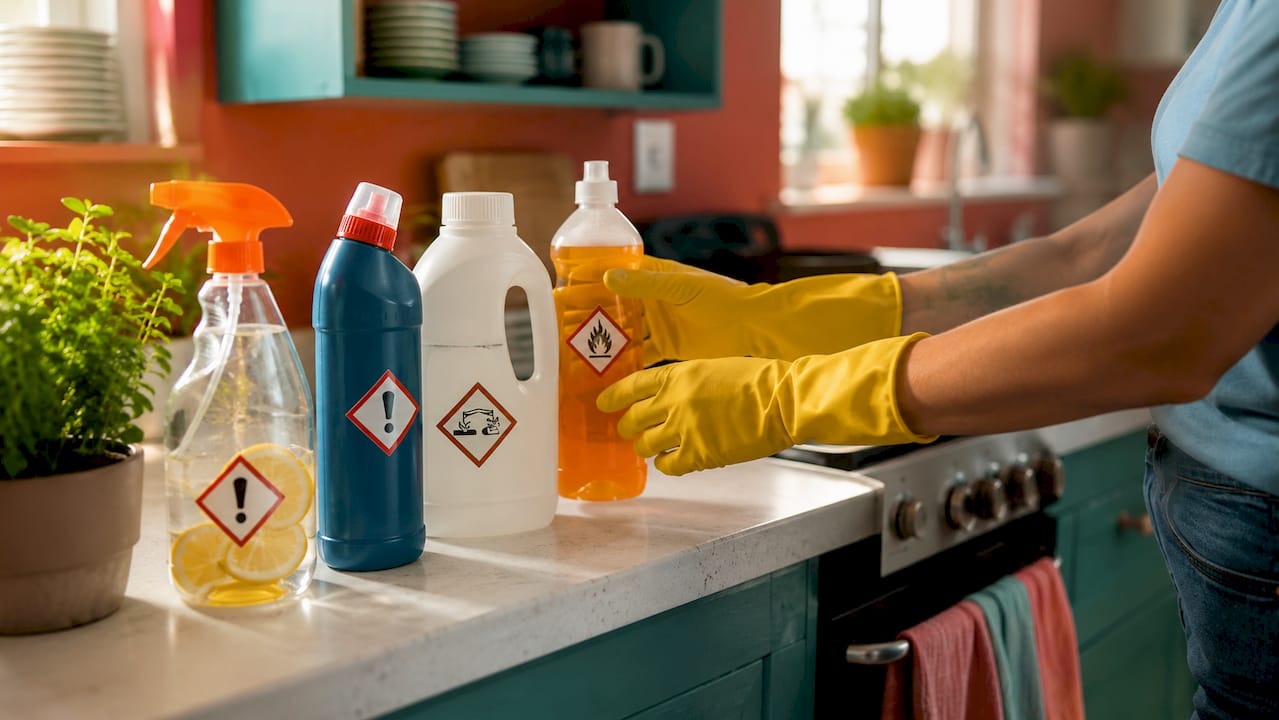
Corrosive agents include bleach (sodium hypochlorite) and oven cleaners. They destroy skin and eye tissue on contact. Irritants include ammonia-based glass cleaners and multi-surface sprays. They cause redness, burning, and respiratory discomfort with repeated exposure. Toxic substances include some descalers and mold removers that release fumes capable of damaging the lungs.
The most underestimated hazard is chemical mixing. Mixing bleach with acidic or ammonia-containing cleaners produces toxic chloramine or chlorine gas. That gas causes severe respiratory damage and, in enclosed spaces, can be fatal. Many families do this accidentally by using a bathroom cleaner after a bleach spray without rinsing the surface first.
- Bleach plus ammonia cleaners: produces chloramine gas
- Bleach plus acidic descalers or vinegar: produces chlorine gas
- Hydrogen peroxide plus vinegar: produces peracetic acid, which irritates the lungs
- Drain cleaner plus any other product: unpredictable and dangerous reactions
Pro Tip: Never combine two cleaning products in the same bucket or on the same surface, even if both are labeled as “safe.” The reaction between them, not the products alone, creates the hazard.
COSHH regulations mandate strict handling protocols for bleach and ammonia, including personal protective equipment (PPE) and ventilation. Those professional standards apply equally well at home.
What key regulatory standards and labeling should families know about?
The OSHA HCS aligns with the GHS to create a standardized system for communicating chemical hazards. Every product label under this system uses three core elements: hazard pictograms, signal words, and safety instructions.
Hazard pictograms are the diamond-shaped symbols on product labels. A skull and crossbones means acute toxicity. A flame means flammable. An exclamation mark means irritant or harmful. Signal words are either “Danger” (for severe hazards) or “Warning” (for moderate hazards). Reading these two elements takes under ten seconds and tells you the most critical information before you open the bottle.
Safety Data Sheets (SDS) go deeper. They list every hazardous ingredient, first aid measures, and disposal instructions. In professional settings, OSHA HCS requires SDS access for every chemical in the workplace. Consumer products are not always required to provide full SDS documents, but most manufacturers publish them online.
| Label element | What it tells you | Where to find it |
|---|---|---|
| Hazard pictogram | Type and severity of hazard | Front label |
| Signal word | Overall danger level (Danger or Warning) | Front label |
| Precautionary statements | How to use, store, and dispose safely | Back label |
| Safety Data Sheet | Full ingredient and emergency information | Manufacturer website |
Detergents Europe developed safe-use icons specifically to help consumers understand handling steps without needing chemical literacy. Icons like “dry hands before handling pods” or “do not tear stuck capsules” communicate critical steps visually. These icons appear on laundry pods and dishwasher tablets and are worth a moment of attention before first use.
How can individuals and families use cleaning supplies safely at home?
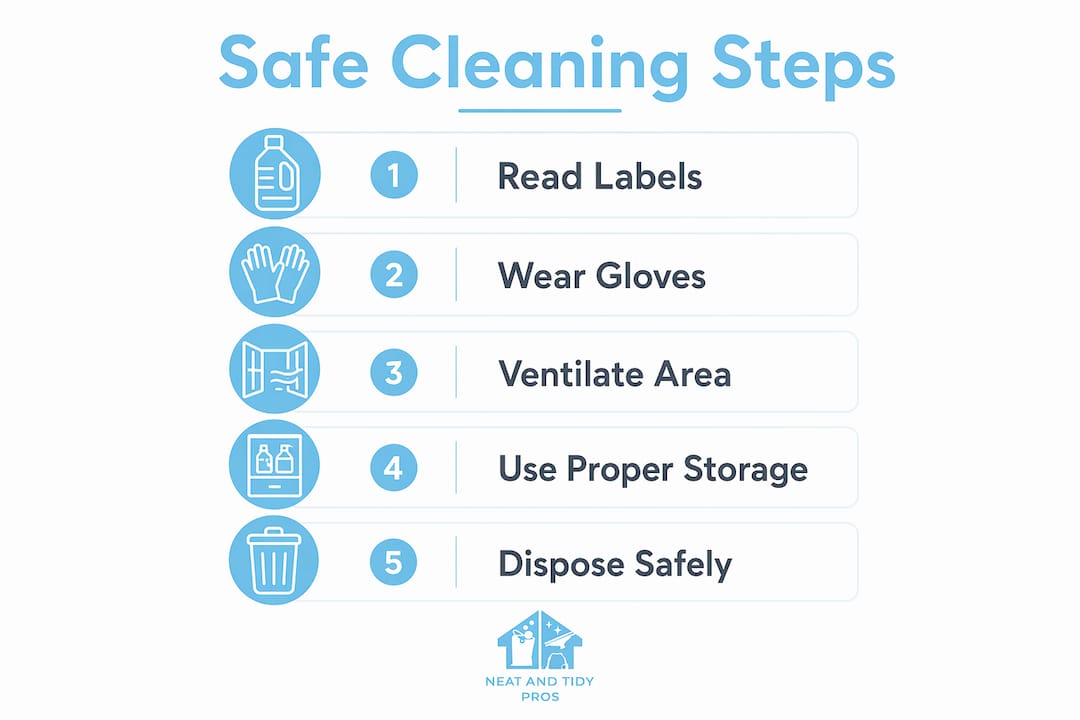
Safe use comes down to six consistent habits. None of them require special equipment or training. They require attention.
- One task, one product. The “one task, one product” rule prevents accidental chemical mixing. Use a single cleaner for each job, rinse the surface before switching products, and never combine cleaners in the same container.
- Keep products in original containers. Labels carry critical safety information. Transferring a cleaner to an unlabeled bottle removes your only reference for first aid and disposal instructions.
- Ventilate every time. Avoid using cleaning products in small, enclosed spaces. Open windows and doors before you start, and keep them open until the smell clears. Bathrooms and closets are the highest-risk rooms.
- Wear PPE. Nitrile gloves protect skin from corrosive and irritant chemicals. Safety glasses protect eyes when using spray products. The right protective equipment costs less than a single urgent care visit.
- Store out of children’s reach. Locked cabinets are the standard. Avoid storing cleaning products near food, in the pantry, or in any location a child can access without a step stool.
- Never reuse food or drink containers. Reusing food containers for chemicals increases accidental poisoning risk even when the container is clearly relabeled. The psychological association with food overrides the label.
Pro Tip: Dispose of leftover or expired cleaning products through your local household hazardous waste (HHW) program. Pouring them down the drain or into the trash creates environmental and plumbing hazards.
What environmental and health impacts do unsafe cleaning practices cause?
Cleaning products release volatile organic compounds (VOCs) into indoor air. VOCs contribute to indoor air pollution, which the American Lung Association identifies as a serious health concern in homes with poor ventilation. Symptoms range from headaches and eye irritation to long-term respiratory damage with repeated exposure.
Overdosing cleaning products is a common and counterproductive habit. Using more product than the label recommends does not improve cleaning results. It increases VOC concentration in the air and raises the risk of chemical burns on surfaces and skin. The label dose is calibrated for effectiveness. Exceeding it adds risk with no benefit.
The environmental impact of improper disposal is equally serious. Chemicals poured down drains enter wastewater systems and can harm aquatic ecosystems if treatment facilities are not equipped to neutralize them. Products with phosphates, chlorine compounds, and synthetic fragrances are the most problematic.
Choosing products with reduced VOCs and fewer irritants lowers both health and environmental risk. The EPA Safer Choice label identifies products that meet strict safety and environmental standards. “Green” or “natural” labels without third-party certification do not carry the same guarantee. A product can be plant-derived and still be an irritant or harmful to aquatic life.
Key Takeaways
Cleaning supply safety requires consistent habits around labeling, storage, ventilation, and chemical mixing to protect both family health and the environment.
| Point | Details |
|---|---|
| GHS hazard categories | The Global Harmonized System organizes 27 chemical hazard categories to guide safe product use. |
| Never mix bleach | Combining bleach with ammonia or acids produces toxic gas that causes serious respiratory harm. |
| Read labels every time | Signal words and pictograms on product labels communicate the most critical safety information in seconds. |
| Ventilate every session | Open windows before and during cleaning to prevent harmful vapor buildup in enclosed spaces. |
| Choose certified safer products | EPA Safer Choice-labeled products meet verified safety and environmental standards; “natural” labels alone do not. |
What I’ve learned from years of cleaning homes safely
Most families treat cleaning supply safety as a one-time lesson. They read the label once when they buy a product, then stop reading it. That habit creates risk over time because product formulations change, storage conditions affect chemical stability, and new products get introduced into the mix.
The insight that changed how I think about this: re-reading labels before every use is not paranoia. It is the same logic as checking a medication dose before you take it. The label is the only document that tells you exactly what is in the bottle and what to do if something goes wrong.
The “natural means safe” myth is the most persistent misconception I encounter. Citrus-based degreasers, essential oil sprays, and vinegar solutions all carry real hazards. Citrus degreasers are flammable. Undiluted essential oils irritate skin. Vinegar mixed with bleach produces chlorine gas. Natural origin does not equal chemical inertness.
The families who handle cleaning safely share one trait: they treat it as a routine, not a reaction. They ventilate before they start. They wear gloves. They use the right amount of product. They store chemicals locked away. None of these steps take extra time. They just require the decision to make them automatic. That decision is worth making.
— Neat
Professional cleaning with safety built in
Families who want thorough cleaning without the chemical risk of managing it themselves have a clear option. Neatandtidypros provides residential cleaning services with trained professionals who follow strict product safety protocols on every job.
Every Neatandtidypros team member is trained on proper ventilation, correct product dosing, PPE use, and chemical compatibility. That training protects your home, your family, and the environment. Whether you need a residential deep clean or regular maintenance cleaning, Neatandtidypros brings the expertise to handle cleaning chemicals correctly every time. You get a clean home without the guesswork of managing hazardous products yourself.
FAQ
What is cleaning supply safety?
Cleaning supply safety is the practice of using, storing, and handling cleaning products to prevent harm to human health and the environment. It includes reading labels, avoiding chemical mixing, ventilating spaces, and storing products away from children.
What happens if you mix bleach and ammonia?
Mixing bleach with ammonia produces toxic chloramine gas, which causes severe respiratory damage and can be fatal in enclosed spaces. Always use one product at a time and rinse surfaces before switching cleaners.
How do I read a cleaning product label correctly?
Start with the signal word (“Danger” or “Warning”) and the hazard pictograms on the front label. Then read the precautionary statements on the back for storage, use, and disposal instructions before opening the product.
Are “natural” or “green” cleaning products always safe?
No. “Natural” or “green” labels without third-party certification do not guarantee safety. The EPA Safer Choice label is the most reliable indicator that a product meets verified health and environmental standards.
How should I store cleaning supplies at home?
Keep all cleaning products in their original, labeled containers in a locked cabinet away from children and food. Never store them in food or drink containers, and keep them in a cool, dry location away from heat sources.