
Deep cleaning is defined as a thorough removal of embedded dirt, allergens, and grime from surfaces and spaces that routine maintenance never reaches. Understanding how deep cleaning differs from regular cleaning helps California homeowners and renters make smarter decisions about their home’s health and upkeep. Regular cleaning maintains surface-level tidiness on a weekly or biweekly schedule, while deep cleaning targets the hidden buildup that accumulates over months. The two approaches serve different purposes, require different tools, and deliver very different results. Neatandtidypros works with both methods daily and sees firsthand how confusing the distinction can be.
How deep cleaning differs from regular cleaning: tasks and areas
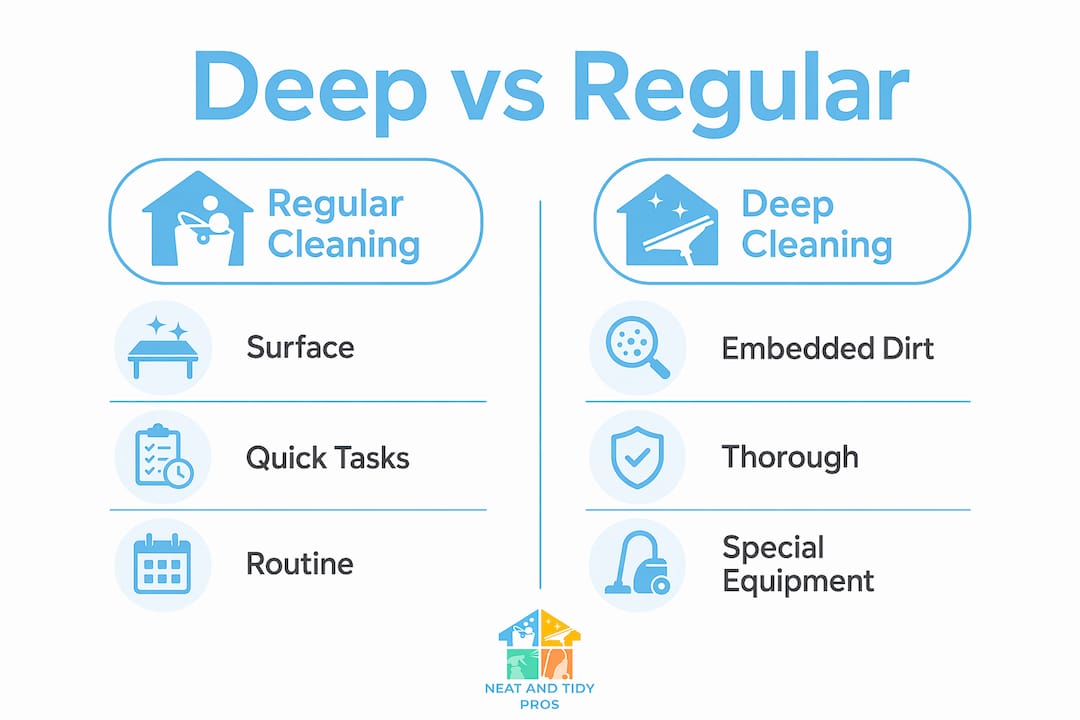
The clearest way to see the difference between a deep clean and regular cleaning is to compare what each one actually covers.
Regular cleaning handles the visible mess. A standard visit covers vacuuming floors, mopping hard surfaces, dusting furniture, wiping down counters, and cleaning toilets and sinks. Regular cleaning costs roughly $120–$250 for a three-bedroom home and takes 2–4 hours per visit. It keeps a home presentable between deeper sessions.
Deep cleaning goes several layers further. It includes pulling out appliances, scrubbing grout lines, cleaning inside cabinets and drawers, washing baseboards, sanitizing trash cans, and wiping ceiling fan blades. A professional deep clean ranges from $200 to $500+ and takes 4–8 hours. That time difference reflects the scope: every neglected surface gets attention, not just the ones you see every day.
| Task | Regular cleaning | Deep cleaning |
|---|---|---|
| Vacuuming floors | ✓ | ✓ |
| Mopping hard floors | ✓ | ✓ |
| Wiping counters and sinks | ✓ | ✓ |
| Cleaning toilets | ✓ | ✓ |
| Scrubbing grout | ✗ | ✓ |
| Cleaning inside oven | ✗ | ✓ |
| Washing baseboards | ✗ | ✓ |
| Sanitizing trash cans | ✗ | ✓ |
| Pulling out and cleaning behind appliances | ✗ | ✓ |
| Cleaning ceiling fan blades | ✗ | ✓ |
| Wiping inside cabinets and drawers | ✗ | ✓ |
| Cleaning interior window tracks | ✗ | ✓ |
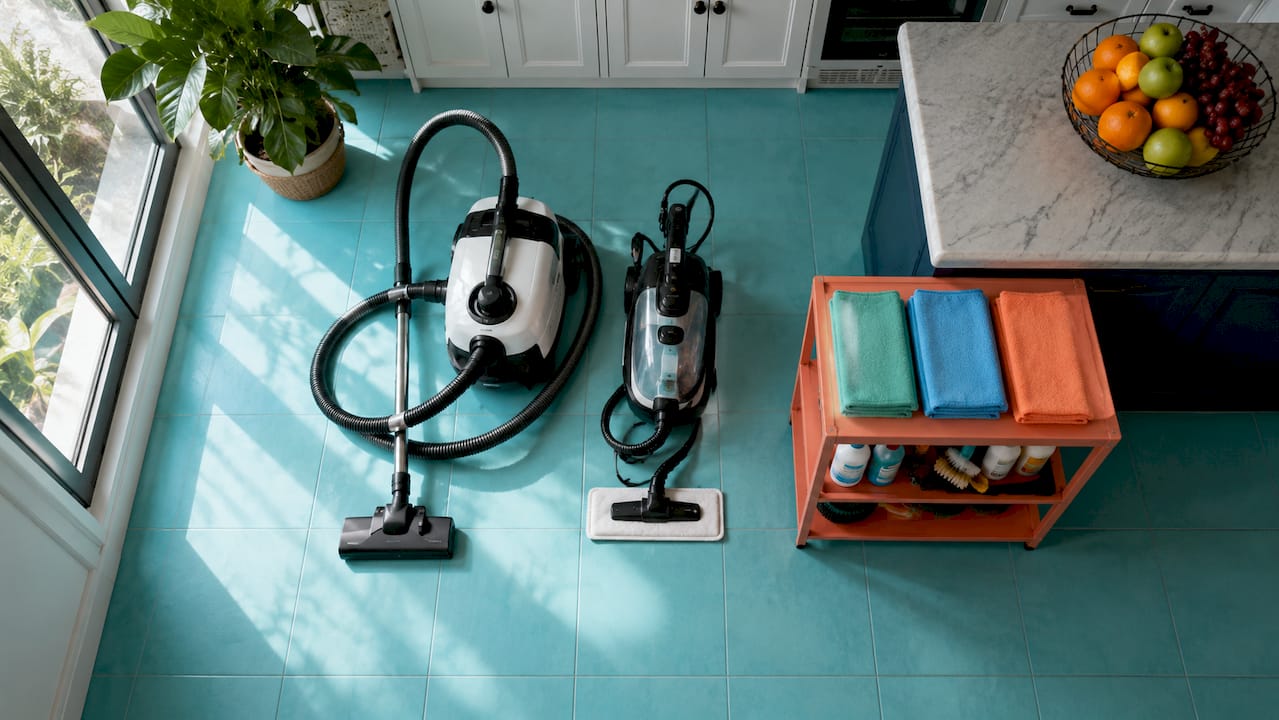
Deep cleaning also uses different equipment. Professional teams bring HEPA-filtered vacuums and steam cleaners that pull contaminants out of carpet fibers and upholstery rather than just moving them around. Commercial extractors have 10–15 times stronger suction than residential vacuums. That power is the reason a deep clean produces results a standard home vacuum simply cannot.
Pro Tip: Before your first professional cleaning visit, do a quick walk-through and note any areas with visible buildup, such as grout lines, the inside of your oven, or the space behind your refrigerator. Share that list with your cleaning team so they can prioritize those spots.
Why deep cleaning benefits your home’s health and longevity
Deep cleaning does more than make a home look better. It removes the contaminants that affect how healthy your home actually is.
Allergens like dust mites, pet dander, and mold spores embed themselves deep inside carpets, upholstery, and mattresses. Regular vacuuming disturbs the surface layer but leaves the bulk of those particles behind. Steam cleaning kills bacteria and allergens on contact by driving high-temperature steam into carpet layers and fabric fibers. That matters most for households with children, elderly residents, or anyone with asthma or allergies.
The health benefits of deep cleaning include:
- Allergen removal: Dust mites and pet dander trapped in carpets and upholstery are physically extracted, not just redistributed.
- Mold prevention: Grout lines, trash cans, and areas under sinks are common mold growth sites. Deep cleaning eliminates the moisture and organic matter that mold feeds on.
- Pest deterrence: Crumbs and sticky spills under stoves and behind refrigerators attract ants and roaches. Removing those food sources cuts off the invitation.
- Better indoor air quality: HEPA filtration and hot water extraction reduce airborne irritants that regular cleaning leaves behind.
- Protection for surfaces: Embedded grime wears down tile grout, hardwood finishes, and appliance seals. Removing that grime extends the life of your flooring and furnishings.
“Health benefits come largely from equipment that removes pollutants physically rather than just displacing them. Most homeowners underestimate how much a standard mop or vacuum leaves behind. Professional deep cleaning extracts contaminants from the source, which is the only way to genuinely improve indoor air quality.”
California homes face specific challenges here. Coastal areas deal with humidity that accelerates mold growth in grout and under sinks. Inland areas with high dust and pollen counts push more particulates into carpet fibers. A deep clean addresses both problems at the root level, not just at the surface.
When to deep clean and how often to schedule it
Frequency is where most homeowners get the deep clean vs regular cleaning decision wrong. The two types of cleaning are not interchangeable. They serve different roles in a cleaning schedule.
Deep cleaning works best on this schedule:
- Before starting regular cleaning visits. Skipping the initial deep clean means regular cleaning visits spend half their time fighting accumulated grime instead of maintaining a clean baseline. Start with a deep clean, then maintain with regular visits.
- Once or twice per year. Most homes benefit from a full deep clean every six months. Homes with pets, young children, or heavy foot traffic may need it quarterly.
- After a move-in or move-out. A new rental or purchased home carries the previous occupant’s buildup. A move-in deep clean resets the home before you settle in.
- After renovations or construction. Post-construction dust penetrates every surface. Standard cleaning tools cannot remove fine particulate from drywall dust or grout haze.
- After extended vacancy. A home that sits empty for months accumulates dust, mold risk, and pest activity in hidden areas.
Regular cleaning, by contrast, suits a weekly or biweekly rhythm once that clean baseline is established. It keeps the home looking good between deep cleans without requiring the same time or cost investment.
Pro Tip: Schedule your first deep clean before the holiday season or before a major life event like a new baby or a move. You get the health reset at the moment it matters most, and your regular cleaning visits stay efficient all year.
Professional vs. DIY: which approach works for each cleaning type
Regular cleaning is something most California homeowners handle well on their own. Vacuuming, wiping counters, and mopping floors require no special equipment or training. A consistent weekly routine keeps a home tidy and prevents surface buildup from getting out of hand.
Deep cleaning is a different calculation. DIY deep cleaning is less effective without professional equipment. Standard household vacuums, mops, and scrub brushes cannot replicate what commercial-grade machines do. Professional chemical treatments also reach contaminants that off-the-shelf products cannot touch.
| Consideration | DIY | Professional |
|---|---|---|
| Equipment quality | Residential grade | Commercial grade, HEPA filtration |
| Time required | Full day or more | 4–8 hours with trained team |
| Hard-to-reach areas | Often missed | Systematically covered |
| Allergen removal | Partial | Deep extraction |
| Cost | Lower upfront | Higher, but more thorough results |
| Consistency | Varies by effort | Standardized process |
The practical case for hiring professionals comes down to two things: equipment and consistency. A professional team brings the right tools for every surface and follows a full room checklist that covers areas most homeowners overlook. DIY efforts tend to focus on visible spots and skip the hidden ones, which is exactly where the health risks accumulate.
For California renters, professional deep cleaning at move-out also protects your security deposit. Landlords inspect for the kind of embedded grime that only a professional clean removes.
Key Takeaways
Deep cleaning and regular cleaning serve distinct roles, and combining both on the right schedule produces the healthiest, longest-lasting results for your home.
| Point | Details |
|---|---|
| Core difference | Deep cleaning removes embedded grime; regular cleaning maintains surface cleanliness. |
| Task scope | Deep cleaning covers grout, appliances, baseboards, and cabinets that regular cleaning skips. |
| Health impact | Steam cleaning and HEPA extraction remove allergens and bacteria that standard tools leave behind. |
| Scheduling rule | Start with a deep clean, then maintain with weekly or biweekly regular cleaning visits. |
| Professional advantage | Commercial-grade equipment extracts contaminants physically, producing results DIY tools cannot match. |
What I’ve learned from years of cleaning California homes
California homes are not all the same, and neither are their cleaning needs. A beachside condo in Huntington Beach deals with salt air and humidity that push mold into grout faster than most homeowners expect. A family home in the Inland Empire collects dust and pollen at a rate that makes biannual deep cleans a genuine health necessity, not a luxury.
The biggest mistake I see is homeowners who skip the initial deep clean and go straight into a regular cleaning schedule. The regular visits then fight accumulated grime every single time, which costs more in the long run and delivers worse results. Starting with a deep clean is not optional if you want regular cleaning to actually work.
The second mistake is treating deep cleaning as a one-time event. A home that gets a deep clean in january and nothing again until the following year will accumulate enough hidden buildup to undo most of the health benefits by mid-year. Two deep cleans per year, combined with consistent regular cleaning in between, is the schedule that actually protects your home and your family.
The hidden areas are where the real problems live. Ceiling fan blades, interior window tracks, the inside of trash bins, and the space behind your refrigerator are not glamorous cleaning targets. They are also where dust mites, mold spores, and pest attractants concentrate. Any cleaning routine that ignores those spots is only solving half the problem.
— Neat
Neatandtidypros cleaning services for California homes
California homeowners and renters deserve a cleaning schedule that actually works, not one that looks good on paper but misses the spots that matter.
Neatandtidypros offers residential cleaning services built around both regular maintenance and professional deep cleaning, with teams trained to cover every surface on a consistent checklist. Whether you need a one-time deep clean to reset your home or a recurring schedule that keeps it there, Neatandtidypros has a service that fits. Explore the full range of deep cleaning options and book the visit that makes sense for your home and your schedule.
FAQ
What is the main difference between deep cleaning and regular cleaning?
Regular cleaning maintains surface cleanliness through tasks like vacuuming, mopping, and wiping counters. Deep cleaning removes embedded dirt, allergens, and grime from areas like grout, inside appliances, and behind furniture that regular cleaning never reaches.
How often should you deep clean your home?
Most homes benefit from a deep clean once or twice per year. Homes with pets, children, or allergy sufferers may need it more frequently, closer to every three to four months.
Can you deep clean your home yourself?
DIY deep cleaning is possible but less effective without professional equipment. Commercial-grade HEPA vacuums and steam cleaners physically extract allergens and bacteria that standard household tools cannot reach.
When should you schedule a deep clean instead of regular cleaning?
Schedule a deep clean before starting a regular cleaning routine, after moving into a new home, following renovations, or after a period of extended vacancy. These situations create buildup that regular cleaning cannot address on its own.
Does deep cleaning improve indoor air quality?
Yes. Hot water extraction and steam cleaning remove dust mites, mold spores, and pet dander embedded in carpets and upholstery, reducing the airborne irritants that affect respiratory health.