
Stop the spread before you start cleaning: seal off the work zone, switch off the HVAC system, put on an N95 respirator, and run a HEPA air scrubber while you work top to bottom. That sequence, not the vacuum you grab first, is what keeps drywall dust from resettling the moment you think you’re done.
In the first 10 to 30 minutes after the crew leaves or the last cut is made, do this:
- Shut off HVAC and close vents so dust doesn’t travel through the ducts.
- Put on your N95 respirator, goggles, and gloves before disturbing anything.
- Seal doorways with plastic sheeting to contain dust to the work area.
- Start a HEPA air purifier or scrubber running immediately.
- Remove large debris by hand before any vacuuming begins.
Everything else, the tools, the room-by-room order, and when it’s time to call in a professional post-construction cleaning crew, comes next.
Key Takeaways
Post-construction dust removal succeeds when containment, PPE, and HEPA filtration come first, followed by a strict top-to-bottom, far-to-near cleaning order that finishes with damp mopping.
| Point | Details |
|---|---|
| Contain before cleaning | Seal doorways, shut off HVAC, and suit up in PPE before disturbing any dust. |
| Sequence matters | Clean ceilings and high surfaces first, floors last, to avoid redoing finished work. |
| HEPA equipment isn’t optional | Standard vacuums redistribute fine drywall dust; HEPA-filtered vacuums capture it. |
| Air purifiers run after cleaning | Keep filtration running 24 to 48 hours post-cleanup to catch resettled particles. |
| Call a pro for scale or risk | Neatandtidypros handles large-scope, HVAC-heavy, or commercial post-construction cleaning with phased HEPA methods. |
Table of Contents
- Prep Work: Containment and Your Materials Checklist
- Why PPE and HEPA Filtration Actually Matter Here
- The Step-By-Step Post Construction Cleaning Checklist
- Handling Drywall Dust Without Wrecking Your Finishes
- HVAC Care and Getting Rid of Contaminated Debris Safely
- When Should You Hire a Professional Cleaning Service?
- Get a Professional Final Clean Without the Guesswork
- Frequently Asked Questions
- Sources
Prep Work: Containment and Your Materials Checklist
Before you touch a vacuum, control the space. Turn off the HVAC system so return vents don’t pull fine particles into the ductwork, then seal doorways with plastic sheeting or a zip wall to keep dust from migrating into finished rooms. Cover floors that won’t be cleaned yet, and move furniture or textiles to a clean, sealed area rather than leaving them exposed.
Gather your supplies before you start, not halfway through:
- Wet/dry shop vacuum with a true HEPA filter (a household vacuum will just redistribute fine drywall dust rather than capture it, according to Homes & Gardens)
- Multiple microfiber cloths and tack cloths
- Damp mop and heavy-duty trash bags
- N95 respirator, gloves, and goggles
- Extension pole for ceilings and high trim
- Disposable cleaning pads for grimy detail work
Stage a clean drop zone near the exit for filled trash bags and used rags so you’re not carrying dust back through rooms you’ve already finished.
Pro Tip: Keep a pair of shoe covers or a sticky floor mat at the containment doorway. Tracking dust on your shoes undoes twenty minutes of careful wiping in about four steps.
Why PPE and HEPA Filtration Actually Matter Here
Construction dust isn’t the same as the dust bunnies under your couch. Drywall and joint compound residue often contains gypsum, crystalline silica, and mica, all of which can irritate your eyes, nose, throat, and lungs with repeated exposure, according to Lowe’s. That’s the whole reason this cleanup calls for real protective gear, not the dust mask left over from your last yard project.
Fit an N95 respirator snugly against your face, not just resting on your nose, and add goggles and gloves for anything beyond light dusting. If you’re dealing with heavy sanding residue or a larger commercial space, step up to a half-face respirator with P100 cartridges.
Filtration matters just as much as what covers your face. A standard household vacuum tends to lose suction and push fine particles right back into the air. Industrial HEPA vacuums, by contrast, capture 99.97% of particles down to 0.3 microns, per industry testing cited by the Construction Cleanup Authority. That gap is why a shop vacuum with a genuine HEPA filter belongs on your materials list, not a bargain-bin household model.
- N95 minimum for drywall dust; P100 half-face for heavy or prolonged exposure.
- Goggles that seal, not open-frame safety glasses.
- HEPA-filtered shop vacuum for any post-construction job larger than a single room.
The Step-By-Step Post Construction Cleaning Checklist
Work top to bottom and far to near. Dust settles as you disturb it, so cleaning ceilings before floors means you’re not redoing work you already finished. This order, recommended across Block Renovation’s cleaning guide, also cuts down on resuspending particles you already captured.
- Remove large debris by hand, bagging scraps and offcuts before any vacuuming starts.
- HEPA vacuum high surfaces first: ceilings, light fixtures, ceiling fans, and crown molding.
- Dry-dust walls and trim with a microfiber cloth, working downward.
- Vacuum horizontal surfaces, countertops, and any soft furnishings left in the space.
- Lightly damp-wipe walls, trim, and fixtures with a rinsed-often microfiber cloth. A microfiber cloth attracts and holds dust far better than a dry rag, which tends to just push particles around, per Block Renovation.
- Vacuum floors slowly with the HEPA vacuum, overlapping passes.
- Damp mop hard floors last, rinsing the mop head frequently to avoid smearing residue.
Room by room, a few spots need extra attention. In kitchens, get inside cabinets and behind appliances, where fine dust settles undisturbed for weeks. In bathrooms, check exhaust vents and grout lines, both of which trap gypsum dust. Bedrooms need closets and curtains checked, since fabric holds dust the same way carpet does. Don’t skip window tracks, they’re dust magnets, and a dedicated window cleaning routine after the main clean catches glass haze the general pass misses. Utility rooms and garages usually get the heaviest buildup and the least attention, so save real time for them.
Before calling it finished, run one more check:
- Shine a flashlight at a low, oblique angle across walls and floors. Dust shows up under raking light that’s invisible under overhead lighting.
- Replace HVAC filters now that heavy work is done.
- Run your air purifier and plan a second light pass after 24 hours, since settled dust often reappears once air currents move again.
Handling Drywall Dust Without Wrecking Your Finishes
Drywall dust is the trickiest part of any post construction cleaning checklist because it’s abrasive, clingy, and easy to smear if you get impatient with water. Here’s the order that actually works:
- Brush or HEPA-vacuum loose dust off panels and trim first, using a soft-bristle brush for textured surfaces.
- Follow with a slightly damp microfiber cloth, never a soaked one, and rinse it in clean water every few passes so you’re not just spreading gray paste.
- For haze or residue that survives the damp wipe, try a dry sanding sponge or a tack cloth before reaching for chemical cleaners.
Wood and laminate floors need a lighter touch than tile or vinyl. Excess water can warp seams or dull finishes, so check your flooring manufacturer’s cleaning guidance before mopping.
Pro Tip: If painting comes next, schedule your final drywall dust cleanup as close to the paint start date as possible. Dust that resettles overnight on a “clean” wall is the number one cause of a gritty, uneven topcoat.
HVAC Care and Getting Rid of Contaminated Debris Safely
Fine dust doesn’t stay on surfaces, it gets pulled into return vents and settles inside ductwork. If you can, keep the HVAC system off during the heaviest sanding or demolition, and seal registers with plastic in the meantime. Once major work wraps up, replace filters immediately and inspect the registers themselves. If you find heavy buildup inside the ducts, that’s a job for a professional duct cleaning service, not a shop vac.
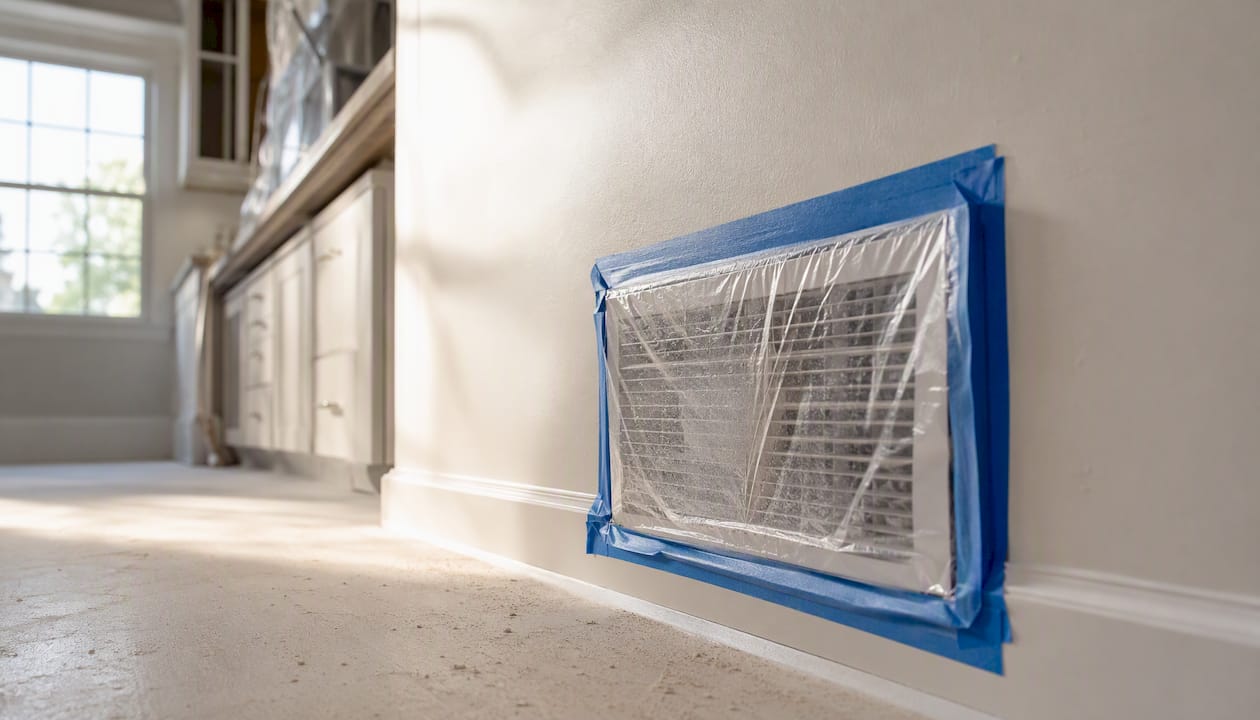
Air purifiers do real work here, but they supplement surface removal rather than replace it. Run one during cleanup and for another 24 to 48 hours afterward to catch particles that get kicked back into the air, a timeline echoed by the Home Air Quality Lab’s construction dust guide. Aim for a spot with good airflow across the room rather than tucked in a corner.
For disposal, double-bag dusty rags, filters, and debris in heavy-duty contractor bags before they leave the site. Check your municipality’s rules on construction waste, since some areas treat drywall debris differently from regular household trash.
- Replace HVAC filters right after cleanup, not days later.
- Run air purifiers 24 to 48 hours post-cleanup for lingering fine particles.
- Double-bag contaminated rags and filters before disposal.
When Should You Hire a Professional Cleaning Service?
DIY works fine for a single remodeled bathroom or a small drywall patch job. It stops working once the scope grows. Hire professionals when the project covers multiple rooms, when you can see dust inside HVAC registers, when the space is a commercial or healthcare environment with stricter air-quality expectations, or when there’s any chance the dust involves older materials that might contain asbestos.
A few red flags mean it’s time to call: a persistent haze that survives more than one full cleaning pass, HVAC filters that clog within days, or a mechanical room coated in visible dust.
If you do bring in a professional post-construction cleaning team, ask these questions before you sign anything:
- Do you use HEPA-filtered vacuums and air scrubbers?
- Is the job scoped in phases (rough, light, and final clean)?
- Do you check work under raking or oblique lighting before calling it done?
- Will you inspect or service HVAC registers as part of the job?
- How is contaminated debris bagged and disposed of, and are you insured?
A legitimate scope should include multiple passes over high-dust surfaces, dedicated HEPA equipment, and a final lighting walk-through before they call the job finished.
Why This Sequence, Not a Shortcut
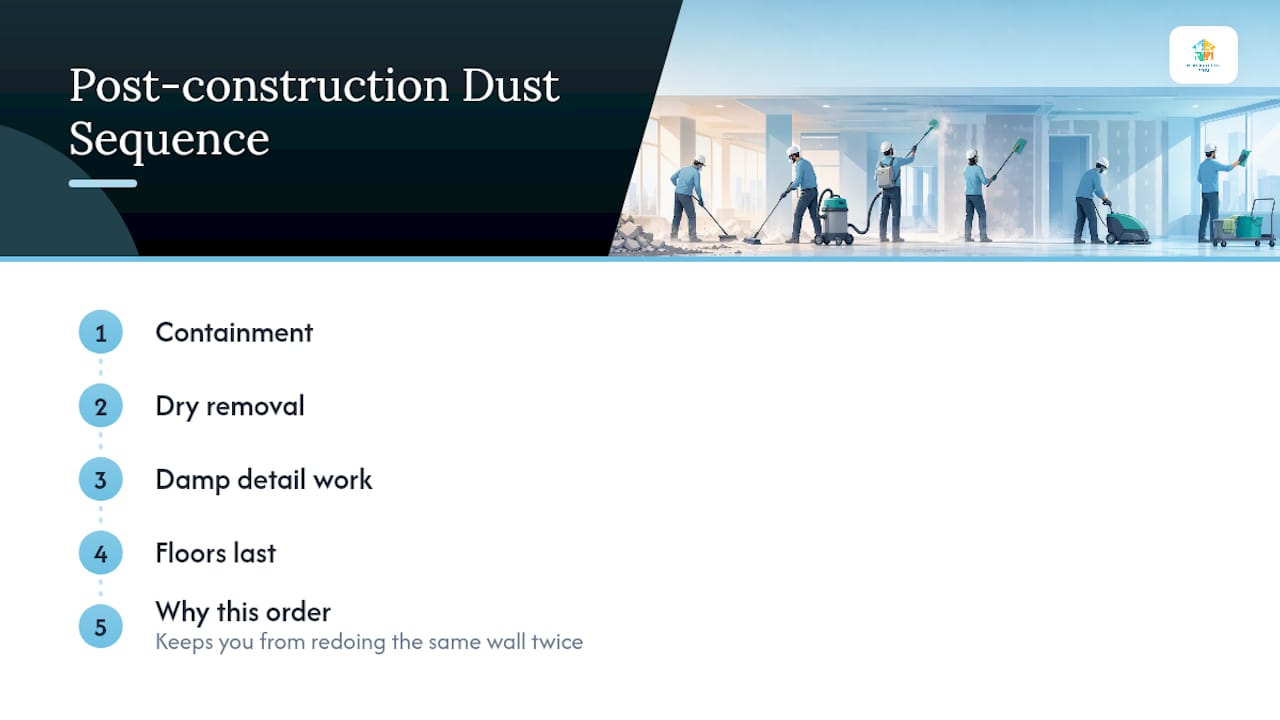
We built this checklist around the same phased structure professional crews use: containment, then dry removal, then damp detail work, then floors last. Following that order isn’t just tidier. It’s what keeps you from redoing the same wall twice.
Get a Professional Final Clean Without the Guesswork
Neatandtidypros handles the exact sequence this guide walks through, minus the respirator fitting and the flashlight test at 9 p.m. Our post-construction cleaning covers HEPA vacuuming, phased passes from rough to final clean, HVAC register checks, and the oblique-lighting inspection that tells you a space is genuinely done, not just swept.

That matters most if you’re on a tight timeline before painters, inspectors, or new tenants show up. We’ve written about the debris and residue side of this too, if you want the fuller picture on removing construction debris from indoor surfaces before your final walkthrough. When you’re ready to skip the vacuum shopping and the second guess, request a quote for construction cleaning and we’ll scope the job based on your space and timeline.
Frequently Asked Questions
How long does construction dust stay airborne after a project ends?
Fine particles can resettle for a day or more after cleanup, which is why a second light pass 24 hours later catches what the first round missed.
Can I use a regular vacuum for post construction dust removal?
Standard household vacuums often lack the filtration to trap fine drywall dust and can blow it back into the air; a HEPA-filtered shop vacuum performs far better.
Do I need to replace my HVAC filter after a renovation?
Yes. Replace it right after major cleanup and inspect the registers for dust buildup, since heavy contamination may call for professional duct cleaning.
Is drywall dust actually dangerous, or just annoying?
It can contain gypsum, silica, and mica, which irritate the eyes, nose, throat, and lungs with repeated exposure, so PPE isn’t overkill for a full room of sanding residue.
Sources
- How to Clean Drywall Dust From Floors & Walls
- How to Clean Up Construction Dust | Block Guides
- Homeairqualitylab