
Run your office cleaning checklist on two axes at once: how often a task happens (daily, weekly, monthly, quarterly) and where it happens (restrooms, kitchen, reception, desks, meeting rooms). Start today by putting a short daily high-touch list in front of whoever cleans, then write it into a formal scope of work. OSHA’s housekeeping standards and WHO’s guidance on high-touch surfaces both back this structure, and similar frameworks are commonly built into commercial cleaning accounts.
TL;DR:
- Daily cleaning should prioritize high-touch surfaces like door handles and shared equipment to ensure efficiency and reduce infection risk.
- Weekly tasks include dusting surfaces, disinfecting phones and keyboards, and fully mopping floors to maintain thorough cleanliness.
- Deep cleaning, such as carpet extraction and vent dusting, should be scheduled quarterly or semi-annually and not part of routine daily work.
- A clear scope of work with measurable standards and inspection procedures is essential for accountability and consistent cleaning quality.
- Professional cleaning services can manage the entire system, including checklists, reporting, and scheduling, saving office managers time and ensuring compliance.
Table of Contents
- Daily, Weekly, and Monthly Office Cleaning Checklist
- What Does “Done” Look Like in Each Area?
- Supplies, Equipment, and Consumables You Need on Hand
- Writing a Cleaning Scope of Work That Actually Gets Followed
- What to Schedule as Deep Cleaning, Not Daily Work
- Small Office? Here’s How to Right-Size the Checklist
- Why Written Checklists Beat Verbal Instructions
- Let Neat and Tidy Pros Run Your Checklist for You
- Sources
- FAQ
Daily, Weekly, and Monthly Office Cleaning Checklist
Most checklists fail because they treat every task as equally urgent. They aren’t. A door handle touched 200 times a day matters more than a baseboard nobody notices for a month. WHO’s guidance on non-health-care settings backs this ranking directly: clean broadly, disinfect high-touch points, and don’t waste product spraying everything indiscriminately.
Here’s how to split the work by frequency:
- Daily: Wipe door handles, light switches, elevator buttons, and shared equipment. Empty trash and recycling. Spot-clean restroom fixtures and restock supplies. Vacuum high-traffic carpet and clean visible spills.
- Weekly: Dust desks, shelves, and window sills. Clean interior glass partitions and disinfect phones and keyboards in shared spaces. Mop hard floors fully, not just spot-mop. Wipe down break room appliances inside and out.
- Monthly: Clean baseboards and vents. Wash interior windows in reception and conference rooms. Deep-clean microwaves and refrigerators, tossing expired food. Polish or condition wood furniture and check for pest activity behind appliances.
- Quarterly: Extract carpets, strip and refinish hard floors if traffic warrants it, dust light fixtures and high shelving, and wipe down blinds or drapes.
Keeping a short daily list is the whole trick. A practical checklist template works best when the daily rounds stay fast enough that staff actually finish them, with the heavier detail work pushed into weekly and monthly passes.
What Does “Done” Look Like in Each Area?
A checklist item like “clean the kitchen” means nothing without a finish standard. Here’s what complete looks like, area by area:
- Restrooms: Toilets, urinals, and sinks disinfected and dry. Mirrors streak-free. Floors mopped, not just swept. Soap, paper towels, and toilet paper stocked, with no visible trash overflow. Budget a short, reasonable amount of time per restroom daily, enough to complete thorough cleaning and restocking.
- Kitchen/break room: Counters and tables wiped and sanitized. Sink empty and scrubbed. Microwave interior wiped after each visible spill, deep-cleaned weekly. Coffee makers and shared appliances cleaned per manufacturer instructions. A break room coffee service guide is worth a look if appliance upkeep keeps sliding.
- Reception: Glass doors and entry mats clean and dry. Furniture dusted, magazines and displays straightened. Floor free of tracked-in debris. This is the first thing a visitor sees, so treat it as a five-minute daily priority, not an afterthought.
- Workstations/cubicles: Desks wiped, keyboards and phones disinfected. Never move personal items, papers, or photos, just clean around them. A detailed cubicle cleaning routine covers exactly how to handle electronics safely.
- Meeting rooms: Tables wiped, chairs pushed in, whiteboards cleaned, and any video equipment dusted, never sprayed directly, following manufacturer cleaning guidance.
- Common areas: Hallways vacuumed or swept, trash emptied, light switches and railings disinfected.
Supplies, Equipment, and Consumables You Need on Hand
Running out of paper towels mid-week isn’t a supply problem, it’s a scheduling problem. Build a reorder cadence before you need one.
Core consumables to stock:
- Toilet paper, paper towels, and hand soap, checked weekly and reordered before you hit half stock
- All-purpose cleaner, glass cleaner, and an EPA-registered disinfectant for high-touch surfaces
- Trash liners sized to every bin in the building, not a one-size guess
- Microfiber cloths, mop heads, and vacuum bags or filters
Essential equipment includes a backpack or upright vacuum for carpet, a microfiber flat mop system for hard floors, and a rolling cart to keep supplies moving room to room without repeat trips. Always follow the product label and safety data sheet, and disinfect only where WHO’s guidance actually calls for it, not on every surface every time.
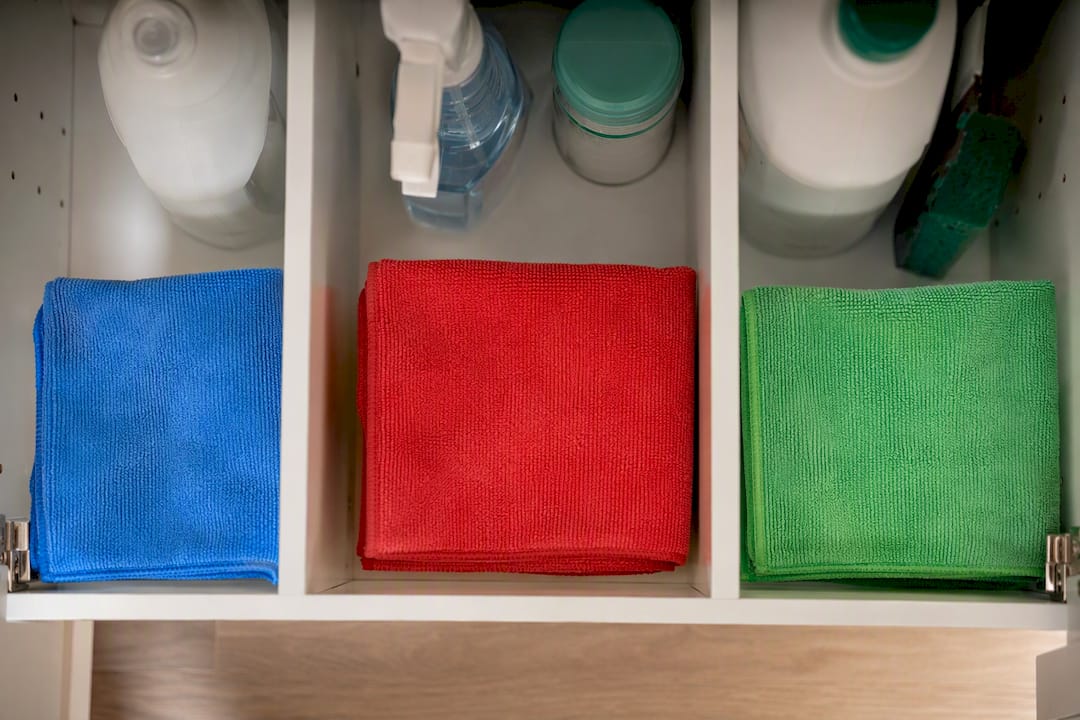
Pro Tip: Color-code your microfiber cloths, blue for glass, red for restrooms, green for kitchen surfaces, to stop cross-contamination between the dirtiest and cleanest areas in the building.
Writing a Cleaning Scope of Work That Actually Gets Followed
A scope of work (SOW) is the document that turns a vague expectation into something you can hold a cleaner or vendor accountable to. Without one, “clean the office” means something different to every person who reads it.
A solid SOW includes:
- Service objectives stated as measurable finish standards, not adjectives like “spotless”
- A task list broken out by area and frequency, mirroring how people actually move through the building: reception, open office, private offices, boardrooms, washrooms, kitchenettes
- Inspection and reporting terms, including how often walkthroughs happen and how issues get logged
- A consumables agreement specifying who supplies toilet paper, soap, and liners
- Insurance and background-check requirements for any vendor staff on site
For inspections, tablet-based check-ins with GPS time stamps and photo logs give you a paper trail instead of a shrug when something gets missed. Pair that with the OSHA housekeeping standards your SOW should reference, and you’ve got a document that actually protects both sides.
What to Schedule as Deep Cleaning, Not Daily Work
Some tasks don’t belong on a weekly rotation. They belong on a calendar with a vendor’s name next to them.
- Carpet extraction: quarterly for most offices, sooner in high-traffic buildings
- Floor machine scrub, buff, and recoat: semi-annually for VCT or similar hard flooring
- High-dusting, vents, and interior window cleaning: quarterly, more often near construction or dusty HVAC systems
- Post-construction or move-out cleaning: book as a standalone service, never folded into a regular contract
A deep clean checklist with time estimates helps you budget these line items instead of discovering them as surprises.
Small Office? Here’s How to Right-Size the Checklist
Small offices sit in an awkward spot: too big to realistically DIY every week, often too small for route-based contractors to prioritize. The fix isn’t a smaller version of the enterprise checklist, it’s a simpler system with the same bones.
- Cut the daily list to five or six high-touch items your team can finish in fifteen minutes
- Outsource anything that requires equipment you don’t own, like carpet extraction or floor buffing
- Watch for three red flags that mean it’s time to hire a pro: persistent odors, streaked glass nobody’s fixing, or a fridge nobody’s tracking
- Offer contractors a flexible small-business schedule and consider a quieter weekday to make your account worth their route
Pro Tip: If your team keeps skipping the daily list, the list is too long, not your staff too lazy.
Why Written Checklists Beat Verbal Instructions
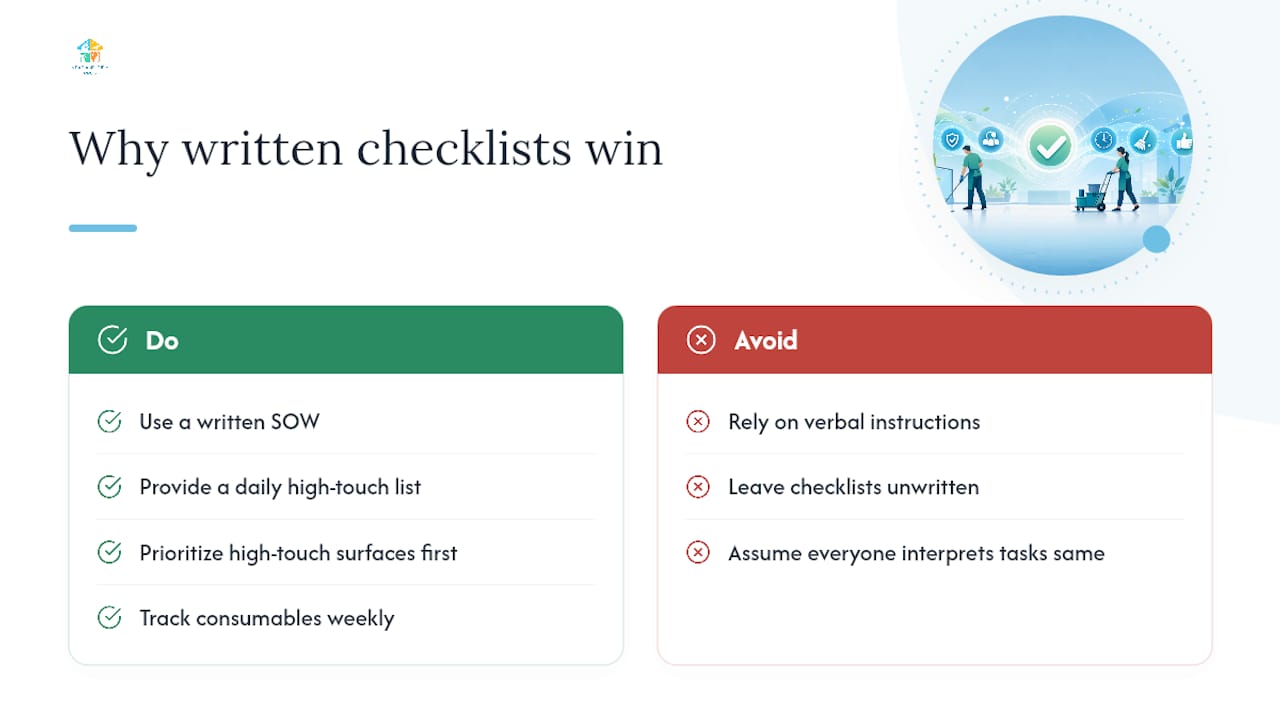
Every recurring cleaning problem we see traces back to the same root cause: nothing was written down. A verbal “wipe the desks” turns into three different interpretations by three different people. A written SOW paired with a daily high-touch list removes the guesswork entirely.
What we prioritize on every commercial account is simple: high-touch surfaces first, consumables tracked so nobody runs out mid-week, and inspections that catch problems before a client has to call about them. Common oversights almost always trace back to a checklist that was never actually written down.
— Neat
Let Neat and Tidy Pros Run Your Checklist for You
Building and enforcing a cleaning checklist takes time most office managers don’t have between vendor calls and everything else on their plate. Professional cleaning services can handle the whole system for you: a written scope of work, daily high-touch checks, and inspection reporting, so you’re not the one chasing down missed tasks.
Our commercial cleaning service covers recurring office accounts of any size, and if your space needs a reset before a regular schedule starts, deep cleaning or basic cleaning can get you there. Request a walkthrough and we’ll build a checklist and SOW around your actual floor plan, not a generic template. Reach out through our services page to get started.
Sources
- OSHA
- WHO: Cleaning and disinfecting surfaces in non-health-care settings
- Best Free Office Cleaning Checklist: Daily, Weekly & Monthly
FAQ
What Is the Checklist for Cleanliness of Offices?
A complete office cleaning checklist splits tasks by frequency, daily, weekly, monthly, and quarterly, and by area, restrooms, kitchen, reception, workstations, and meeting rooms. The daily list should focus on high-touch surfaces like door handles and shared equipment, while deeper tasks like carpet extraction move to quarterly service.
How Do You Professionally Clean an Office?
Professional office cleaning follows a written scope of work that defines finish standards for each area, paired with a set frequency schedule so nothing gets skipped. Companies like Neat and Tidy Pros also use inspection tools like photo logs and time-stamped check-ins to confirm the work actually happened.
What Is the 20 Minute Rule in Cleaning?
There’s no single official rule tied to office cleaning standards; the idea generally refers to keeping daily cleaning rounds short enough that staff can realistically finish them, focusing on high-touch surfaces first. Longer, more detailed tasks belong on the weekly or monthly list instead of the daily one.
What Is Expected of an Office Cleaner?
An office cleaner is expected to complete the tasks and finish standards outlined in the scope of work, restock consumables, and disinfect high-touch points according to WHO guidance. They should also follow OSHA housekeeping expectations and report any maintenance issues found during their rounds.
One Response