
A good car dealership cleaning checklist is organized by what customers touch and see, not by room. It gives every task a frequency, an owner and a finish standard. Below you will find a working list for the showroom, customer lounge, F&I offices, demo vehicles, restrooms, service drive and exterior, plus the California drainage and chemical rules that catch dealerships out.
TL;DR
- Build the list around contact points (door handles, pens, payment tablets, steering wheels), not around rooms.
- Split tasks into daily, weekly and monthly, and name one owner for each zone.
- Clean high-traffic areas and restrooms more than once a day, and check them during business hours.
- In California, treat every floor drain as a possible storm drain until it is marked otherwise. Wash water and degreasers do not go there.
- Hand the periodic work (floors, glass, carpet extraction) to a professional crew so your staff can sell and service cars.
Table of Contents
- Why dealership cleaning is different from office cleaning
- How to set up the checklist before you use it
- Showroom checklist
- Customer lounge and waiting area
- Restrooms
- F&I offices and sales desks
- Demo and display vehicles
- Service drive, bays and parts counter
- California drainage and chemical rules that affect your cleaning plan
- Exterior, lot and entrance
- A sample schedule you can copy
- Who does what: staff, janitorial crew or a cleaning company
- Our perspective on dealership cleaning
- Need a crew for your showroom or offices?
- FAQ
- Sources
Why dealership cleaning is different from office cleaning
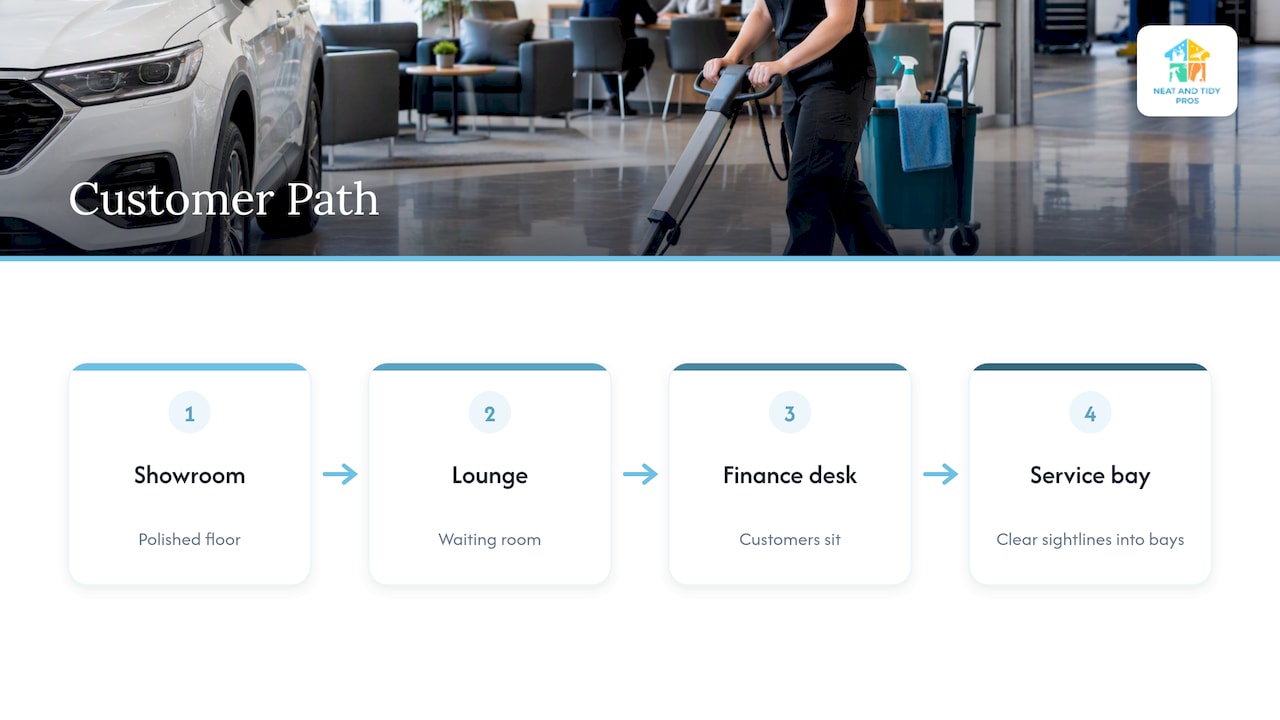
A dealership is part retail store, part waiting room, part workshop. Customers walk from a polished showroom floor to a lounge, then sit at a finance desk, then sometimes look straight into a service bay. Every one of those spaces gets judged within seconds.
That last point matters more than most owners think. Dealership design experts describe the service drive and lounge as features that are increasingly put on display, with clear sightlines into the bays so a tidy, organized workspace builds trust. A cluttered service lane undoes what the showroom spent on.
The other difference is who touches what. One industry guide makes the point that a cleaning plan fails when it lists rooms instead of contact points: customers do not touch “the showroom,” they touch the entry handle, coffee station, display screen, chair arm, pen, tablet, steering wheel and seatbelt. We build every list below on that idea.
How to set up the checklist before you use it
A checklist that lives in a drawer does nothing. Before you print anything, settle four things.
- Zones. Divide the property into showroom, customer lounge, F&I and sales offices, restrooms, demo and display vehicles, service drive and bays, parts counter, and exterior and lot.
- Frequency. Mark each task daily, weekly or monthly. Anything a customer touches goes in the daily column.
- Owner. Name a person or a vendor for each zone. A task owned by “everyone” is owned by no one.
- Finish standard. Write what “done” looks like in one line: floor dry with no streaks, glass free of fingerprints at eye level, restroom stocked to the fill line.
Keep the sheet to one page per zone and have a manager initial it at closing. If you manage several rooftops, use the same sheet in all of them so quality does not depend on who is on shift.
Showroom checklist
The showroom sets the first impression, and glass and floors do most of the work.
Daily
- Dust-mop or vacuum the full floor, then damp-mop compatible hard surfaces.
- Wipe sales desks, counters, display tables and the reception desk.
- Clean the entry door handles, push plates and glass at hand height.
- Wipe screens, kiosks and brochure racks, and remove outdated paperwork.
- Empty bins and replace liners.
- Spot-clean tire marks, salt, or mud tracked in from the lot.
- Wipe the exterior and interior of any vehicle on the showroom floor, including the glass, and check for dust on the hood and roof.
Weekly
- Detail the glass edges, window ledges and baseboards.
- Dust high surfaces: signage, light fixtures within reach, vents, top of displays.
- Clean under and behind furniture and displays.
- Wipe down walls near door frames, where hand marks build up.
Monthly or as needed
- Strip and refinish or deep-clean hard floors, depending on the surface.
- Clean all large glass, inside and out. If you are choosing a vendor for tall showroom windows, our guide to vetting showroom glass cleaning vendors covers what to ask.
- Extract carpet and clean entry mats.
For a shorter version aimed at floor managers, see our showroom cleaning checklist.
Customer lounge and waiting area
The lounge is where customers spend the most time, often an hour or more during a service visit. It is also where germs travel. The CDC advises that you clean high-touch surfaces regularly and other surfaces when visibly dirty, and reserve disinfection for places where people have obviously been ill. That is a useful rule: cleaning is the daily habit, disinfection is the response.
Daily, with a midday pass
- Wipe coffee stations, creamers, lids, handles and the surrounding counter. Restock cups and stirrers.
- Wipe tables, chair arms and armrests, remote controls and kids’ play items.
- Vacuum upholstery and carpet. Spot-treat spills at once.
- Clean TV screens, charging stations and vending machine buttons.
- Wipe pens and clipboards, or swap them for clean ones.
- Empty bins and wipe the lids.
In practice, we recommend at least two passes a day in the lounge and restrooms: one before opening and one around midday, with a quick check mid-afternoon on busy Saturdays. That is our working recommendation for a dealership with steady traffic, not a legal requirement.
Weekly
- Clean under seating and detail the furniture frames.
- Wipe glass partitions, display shelves and décor.
- Clean the inside of beverage machines and drip trays.
Monthly
- Extract carpet and clean fabric seating, or deep-clean leather and vinyl with a product made for it.
Restrooms
Restrooms are the most reported cleanliness complaint in any customer-facing business, so give them a log.
- Clean and sanitize toilets, urinals, sinks, faucets and flush handles.
- Wipe door handles, stall locks, soap dispensers and the baby-changing table.
- Refill soap, towels, tissue and liners. Stock more than you think you need before weekends.
- Clean mirrors and wipe the counter dry.
- Mop the floor, edges and the base of fixtures.
- Check and initial the log at set times through the day.
Weekly, descale faucets and clean vents and partition tops. Monthly, deep-clean grout and floors around the toilet bases.
F&I offices and sales desks
This is where the deal is signed, and a surprising amount of grime collects on the desk edge, the pen, the signature tablet and the chair arms.
- Wipe desk surfaces, edges and drawer pulls daily.
- Clean keyboards, mice, phones, card readers and signature pads with a product safe for electronics.
- Clear the desk of loose paper at the end of the day. A tidy desk is easier to clean and looks professional.
- Vacuum the floor and chair upholstery.
- Empty shred bins on a schedule, and leave sensitive documents to staff, not cleaners.
For offices in general, our office cleaning checklist for managers gives a 15-minute daily list and a scope-of-work template you can adapt to the back-office side of the dealership. The same logic is laid out in our high-touch disinfection checklist.
Demo and display vehicles
The vehicle is the product, and it is the most touched object in the building. Experienced dealership operators prioritize cleaning demo touchpoints right after each handoff: steering wheels, seatbelts, door pulls and touchscreens, because that ties directly to how much care customers perceive.
After every test drive
- Wipe the steering wheel, shifter, door pulls, seatbelt buckles, touchscreen and key fob.
- Check floor mats, cupholders and seat pockets for trash.
- Wipe fingerprints from interior glass and mirrors.
- Reset seats, mirrors and the radio to the display position.
- Remove any odor, then confirm the car smells neutral rather than heavily perfumed.
Daily
- Dust the hood, roof and windshield on showroom and front-line cars.
- Check tires and wheel faces for brake dust.
Weekly
- Vacuum carpets and seats thoroughly, and clean door jambs.
Detailing work on the vehicles themselves belongs with detailers or your reconditioning team. For heavily soiled engine bays on used inventory, a mobile detailer that offers engine bay cleaning can handle what a janitorial crew should not.
Service drive, bays and parts counter
This zone needs a different mindset: safety first, then appearance.
Daily
- Sweep the service lane and write-up area. Keep walkways clear of hoses, cords and tools.
- Clean up drips and spills immediately using dry methods such as absorbents, then dispose of used absorbent properly.
- Wipe the service advisor desks, key drop and check-in tablets.
- Empty trash and recycling, and keep the used-oil and parts waste areas tidy and labeled.
- Clean the parts counter and wipe the glass and shelving.
Weekly
- Degrease bay floors and mats where needed. Scrub and rinse only to a drain that you have confirmed goes to the right place (see the next section).
- Clean the tool storage areas and wash stations.
- Wipe windows into the service lane so customers get a clear view.
Monthly
- Deep-clean bay floors and floor drains.
- Inspect spill kits and restock them.
California drainage and chemical rules that affect your cleaning plan
This is the part generic checklists leave out, and it is where dealerships can run into real penalties.
Know where each drain goes. In California, drains should be marked to show whether they lead to an oil/water separator, the sanitary sewer or the storm drain, as described in a California water board best-practice guide. Never assume a floor drain is safe. Wash water, degreasers and cleaning agents should not enter a storm drain, even if the product is labeled biodegradable. Orange County has its own stormwater program under the county’s municipal permit, so confirm requirements for your city with the local authority before you pressure wash a lot.
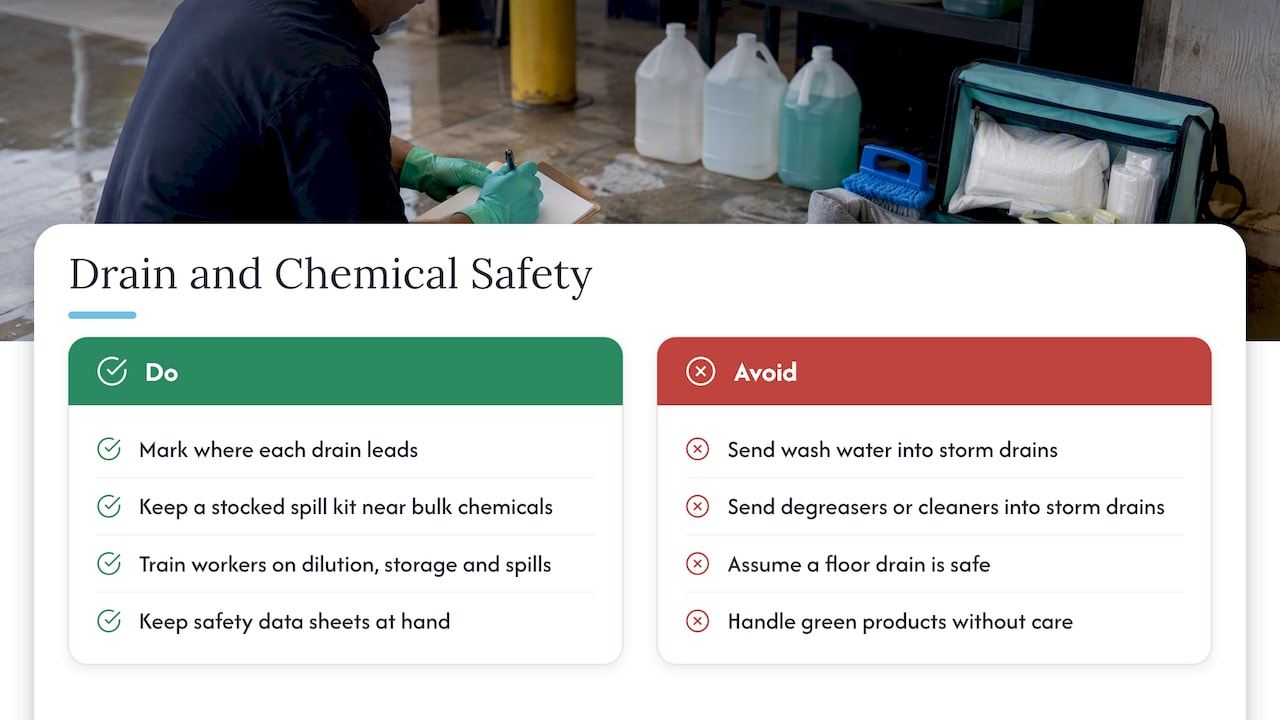
Keep a spill kit near bulk chemicals. Stormwater guidance for car washing operations says to keep a fully stocked spill kit near bulk cleaning agents and notes that the sanitary sewer and the storm system are not the same thing.
Train your people on chemicals. OSHA’s guidance on chemical safety stresses training workers on dilution, storage and spill response, and reminds employers that even “green” products need proper handling and disposal. Keep safety data sheets at hand for every product in the building.
Count the disposal cost. The EPA’s pollution prevention toolkit for auto repair puts waste disposal at roughly $1 to $4 per gallon, depending on whether the waste is classified as hazardous. Using less product and capturing spills with dry methods keeps that bill down.
This is general guidance, not legal advice. For your specific site, ask your city stormwater office or an environmental compliance consultant.
Exterior, lot and entrance
- Pick up litter and empty outdoor bins daily, before opening.
- Sweep the entrance, curb line and customer parking.
- Wipe the exterior door handles and clean the glass at the entrance.
- Check landscaping edges, signage and light fixtures for dirt or burned-out bulbs.
- Weekly, sweep the whole lot and clean the trash enclosure area.
- Monthly, schedule pressure washing of walkways only if wash water is captured or directed correctly, per the drainage rules above.
A sample schedule you can copy
| Zone | Daily | Weekly | Monthly |
|---|---|---|---|
| Showroom | Floors, desks, door handles, screens | Glass edges, baseboards, high dusting | Floor refinishing, full glass, carpet extraction |
| Lounge | Two passes: coffee station, tables, upholstery | Under seating, partitions | Deep upholstery and carpet |
| Restrooms | Two or more passes with a log | Descale, vents | Grout and floor deep clean |
| F&I and sales | Desk edges, devices, chairs | Vacuum under desks | Carpet and chair deep clean |
| Demo vehicles | Touchpoints after each drive | Interior vacuum | Handled by detailer |
| Service drive | Sweep, spills, desks | Degrease, wash stations | Drain checks, spill kits |
| Exterior | Litter, entrance glass | Lot sweep | Walkway washing, trash area |
Who does what: staff, janitorial crew or a cleaning company
Not everything should go to the same people.
- Your staff handle the fast, visible work: wipe a desk, reset a lounge, wipe a demo car after a drive. These tasks happen mid-shift and cannot wait for a night crew.
- A professional cleaning crew handles the scheduled work: nightly floors and restrooms, weekly detail, monthly deep cleaning, glass and carpet.
- Specialists handle car detailing, bay degreasing with wastewater capture and hazardous waste.
If you are comparing options, look for a provider who will write a scope of work by zone, tell you what products they use and show you safety data sheets. Our list of questions to ask a cleaning company is a good starting point. Also ask how they respond when a spill happens at 2 p.m. on a Saturday.
If you manage a rental or make-ready operation alongside the dealership, such as employee housing or leased units, a make-ready checklist with staff turnaround times shows how to put service levels in writing, an idea that works just as well for a janitorial scope.
Our perspective on dealership cleaning
We clean homes, offices and commercial spaces across Orange County and Corona, and the same pattern shows up everywhere: the places that look consistently clean have a written routine, not a heroic cleanup before an event. In a dealership, the cost of inconsistency is higher because the building is also your sales floor.
Our advice is to split the work in two. Let your team own the touchpoints they can reach in 30 seconds, and give the recurring floors, glass, restrooms and deep work to a crew that shows up on a schedule. After 15 years in cleaning, we have learned that a short checklist that is actually followed beats a long one that nobody opens.
We also take chemicals seriously. We use safe, eco-friendly products, and we will tell you what is going on your floors. And remember that eco-friendly does not mean drain-friendly: in a service area the drain rules still apply.
— Neat
Need a crew for your showroom or offices?
If you would rather not run this checklist yourself, our commercial cleaning service covers offices, display centers and specialized commercial properties in Orange County and Corona. We customize the scope to your layout, back it with a customer satisfaction guarantee, and can also handle one-time work such as post-construction cleaning after a remodel or a new-showroom buildout. Tell us about your site and we will build a schedule around your hours.
FAQ
How often should a car dealership be cleaned?
High-touch and high-traffic areas, including the lounge, restrooms and sales desks, need attention at least daily, and in our view more than once a day on busy days. Floors and glass details work well weekly, and deep cleaning of carpet, hard floors and drains works well monthly or quarterly depending on traffic.
What do car dealerships use to clean cars?
On the lot, dealerships generally use high-foaming vehicle wash detergents, and interior work uses upholstery and glass cleaners. Product sellers describe high-foaming fleet cleaners intended to remove road film and light oils from exteriors. In California, wash water must be managed so that it does not reach the storm drain.
Should we disinfect or just clean?
For day-to-day upkeep, regular cleaning of high-touch surfaces is the baseline. The CDC reserves disinfection for surfaces where someone has obviously been ill. If that happens in your lounge or restroom, clean first, then disinfect following the product label.
Who should clean the service drive?
Your technicians and service staff should handle spills and daily tidiness, because they are on site and know the hazards. A cleaning crew can handle the customer-facing parts of the service area, such as advisor desks and windows, while degreasing and waste disposal follow your environmental compliance plan.
Sources
- Canadian Auto Dealer: At Your Service
- WipesBlog: How to Run a Clean Car Dealership
- CDC: When and How to Clean and Disinfect a Facility
- California Water Boards: Best Management Practice Guide
- Sacramento Stormwater: Commercial Auto Washing
- OSHA: Chemical safety guidance (OSHA 3512)
- EPA: Pollution Prevention Toolkit for Auto Repair
- Active Chemicals: High-foaming fleet cleaner