
This page gives you a ready-to-use showroom cleaning checklist covering entrances, floors, displays, glass, restrooms, supplies, and documentation. It breaks tasks into daily, mid-day, and periodic frequencies so your team always knows what to clean, when to clean it, and how to prove the work got done.
TL;DR:
- Assign preopening and closing walkthroughs to opening or closing staff, while floor staff handle immediate spills and targeted midday touchups.
- Clean high touch surfaces at least daily, then disinfect when needed with an EPA List N product and follow its labeled wet contact time.
- Schedule full floor work before opening or after closing, reserve weekly care for fixtures and upholstery, and plan carpet extraction and vent cleaning monthly.
- Use dry or barely damp microfiber on electronics, vacuum textiles with an upholstery attachment, and clean jewelry only with products its manufacturer recommends.
- Keep chemicals labeled and locked, give staff safety data sheets and handling training, and never mix bleach with ammonia under any circumstances.
Table of Contents
- Daily Showroom Cleaning Routine: Pre-Open, Mid-Day, and Close
- Zone-by-Zone Showroom Cleaning Checklist
- High-Touch Surfaces: Cleaning Frequency and Disinfection Steps
- Weekly and Monthly Deep Cleaning Tasks
- Supplies, Equipment, and Chemical Safety Essentials
- Documentation, Walkthroughs, and QA Sign-Off
- Cleaning Delicate Display Materials Without Causing Damage
- Keeping Lighting Fixtures and Vents in Good Condition
- Managing Waste and Recycling in a Showroom
- Cleaning Around Seasonal and Promotional Displays
- Scheduling Cleaning to Avoid Disrupting Customers
- Training Staff to Follow the Checklist Consistently
- Why Disciplined Checklists Change Showroom Outcomes
- How We Help You Run This Checklist Without the Overhead
- FAQ
- Sources
Daily Showroom Cleaning Routine: Pre-Open, Mid-Day, and Close
A showroom lives or dies on first impressions, so the daily routine matters more than any deep clean. Split the day into three clear checkpoints and assign each one to a specific role.
- Pre-opening walkthrough (15 to 20 minutes, floor staff or manager): check the entrance and exterior for debris, straighten mats, test lighting, inspect floor condition for spills or scuffs, and confirm displays are dust-free and correctly placed.
- Mid-day monitoring (ongoing, sales team): respond to spills immediately, wipe high-touch surfaces on a set round, do a quick vacuum or sweep of traffic lanes, and straighten displays that customers have handled.
- Closing checklist (20 to 30 minutes, closing staff): empty trash, restock consumables, mop or vacuum the full floor, secure and cover sensitive displays, and log the shift’s completion.
Pre-open and close belong to whoever opens or locks up; mid-day response should sit with whoever is on the floor, since the fastest reaction to a spill is usually the person standing nearest it. For a ready-built version of this structure, our retail store cleaning checklist lays out five daily actions you can adapt directly for a showroom floor.
Pro Tip: Keep a laminated copy of the three-checkpoint routine taped inside a supply closet door so new hires can follow it without needing a refresher.
Zone-by-Zone Showroom Cleaning Checklist
Breaking the space into zones keeps tasks consistent no matter who is working that day. Each zone has its own rhythm and its own tools.
- Entrance and exterior: sweep walkways, tidy planters, clear signage of fingerprints, and clean door glass on both sides.
- Sales floor and displays: dust display plinths, confirm product placement matches the planogram, and clean edges and corners behind fixtures where dust collects unseen.
- Glass and display cases: use a streak-free technique with microfiber cloths and a glass-specific cleaner, working top to bottom at least once daily.
- Reception and seating: disinfect the point-of-sale counter, straighten brochures, and sanitize demo items between customer uses.
- Restrooms and staff areas: disinfect fixtures, restock soap and paper products, and check drains and vents for odor or buildup.
- Back of house: keep walkways clear of boxes, store chemicals securely, and empty waste receptacles before they overflow.
Standardized checklist templates for showroom and auto-dealership spaces typically organize around these same zones and run 30 to 45 inspection points for a full audit, which is a useful benchmark if you are building your own list from scratch.
High-Touch Surfaces: Cleaning Frequency and Disinfection Steps
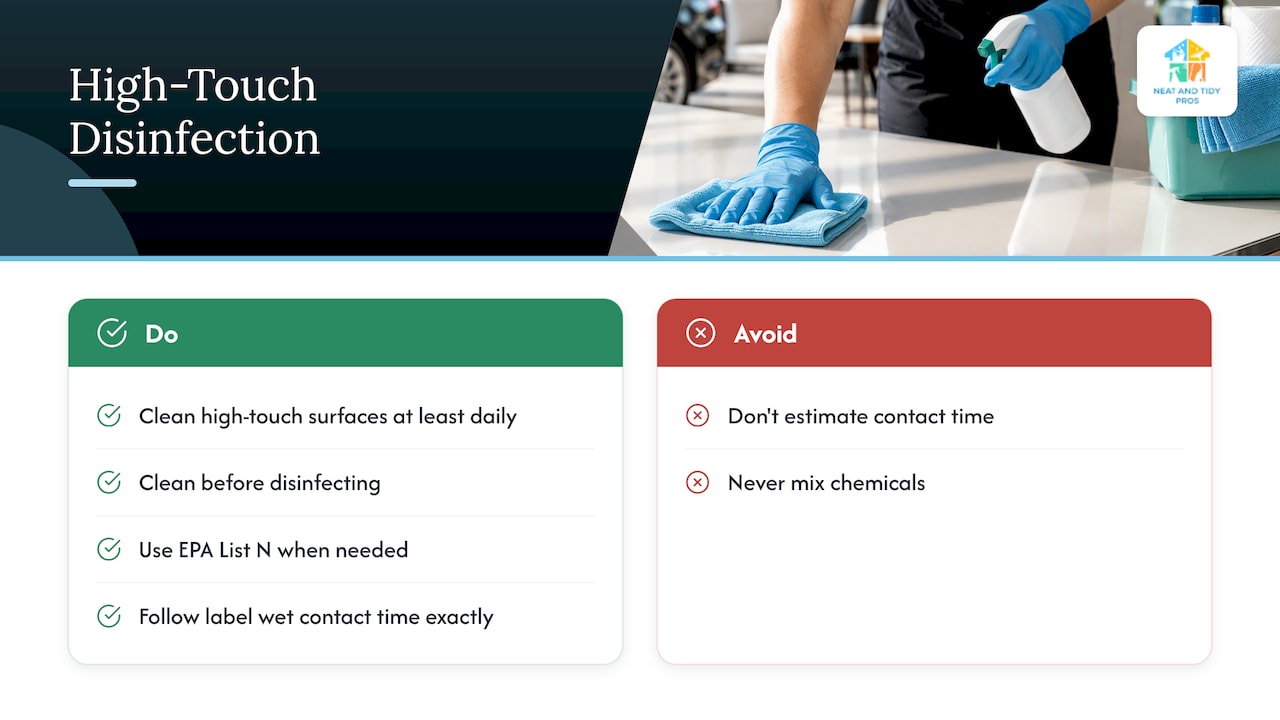
Door handles, counters, touchscreens, demo controls, seating arms, and light switches count as high-touch surfaces because customers and staff contact them constantly. These points carry more germs than the rest of the showroom and need a faster cleaning cycle.
High-touch surfaces should be cleaned at least once a day, with more frequent passes for high-traffic spots, according to CDC facility guidance. A busy demo station or entrance door may need attention several times a shift, especially after a spill, a sick visitor, or a particularly crowded hour.
Clean a surface before disinfecting it: dirt and grime reduce how well a disinfectant works. The CDC recommends using EPA List N products when disinfection is required and following the label’s wet contact time exactly, not estimating it. Staff handling these products need basic PPE such as gloves, adequate ventilation, access to safety data sheets, and a firm rule against mixing chemicals, since combinations like bleach and ammonia produce dangerous fumes.
Weekly and Monthly Deep Cleaning Tasks
Daily upkeep keeps a showroom presentable, but some tasks only need attention on a slower cycle. Plan these around slower business hours so they don’t compete with daily routines.
- Weekly: full floor maintenance beyond daily mopping, upholstery spot checks on seating, and detailed dusting of high shelves and light fixtures.
- Monthly: carpet extraction or a scrub-and-finish pass on hard floors, professional cleaning of exterior windows, and HVAC vent cleaning to keep airflow and air quality steady.
- Call a specialist for stubborn stain removal, tile or grout restoration, and high or hard-to-reach exterior glass that in-house staff can’t safely access.
Our make-ready cleaning checklist is built for exactly this kind of periodic deep clean, and it works well as a planning template when you’re scheduling vendor visits around a showroom’s slower weeks.
Supplies, Equipment, and Chemical Safety Essentials
Every showroom needs a consistent supply list so cleaning quality doesn’t depend on who’s working that day.
- Everyday supplies: color-coded microfiber cloths, squeegees, neutral pH cleaners, low-residue floor solutions, mop systems, and vacuums.
- Equipment: a HEPA-capable vacuum for dusty displays, a mop-bucket system, and tools for controlling dilution ratios.
- Safety basics: PPE for anyone handling chemicals, an accessible SDS binder or digital log, clearly labeled diluted solutions, and a strict no-mixing rule for bleach and ammonia.
- Storage: locked chemical storage, clear labeling on every container, and a defined disposal process for used PPE and absorbents.
OSHA hazard communication guidance treats cleaning chemicals as workplace hazards that require labeled containers, available safety data sheets, and trained staff, so these aren’t optional extras for a retail space that handles solvents and disinfectants daily.
Documentation, Walkthroughs, and QA Sign-Off
A checklist only proves its value when someone can show it was followed. Build documentation around three walkthroughs: pre-open, mid-day, and post-close, each with a short log entry.
- Fields to capture: date and time, area checked, staff initials, pass or fail status, issue notes, corrective action taken, and a photo where relevant.
- Use case: these logs support vendor handovers, help track incidents over time, and demonstrate due diligence during a safety audit.
- Format: keep it minimal. A one-line entry per walkthrough per zone is enough to prove consistency without becoming its own chore.
CDC environmental cleaning procedures recommend exactly this kind of SOP and checklist structure, noting that job aids improve thoroughness because they remove guesswork from repetitive tasks.
Cleaning Delicate Display Materials Without Causing Damage
Electronics, textiles, and jewelry each need a different touch than a standard glass case or floor tile. Treating them all the same way is how showrooms end up with scratched screens or faded fabric.
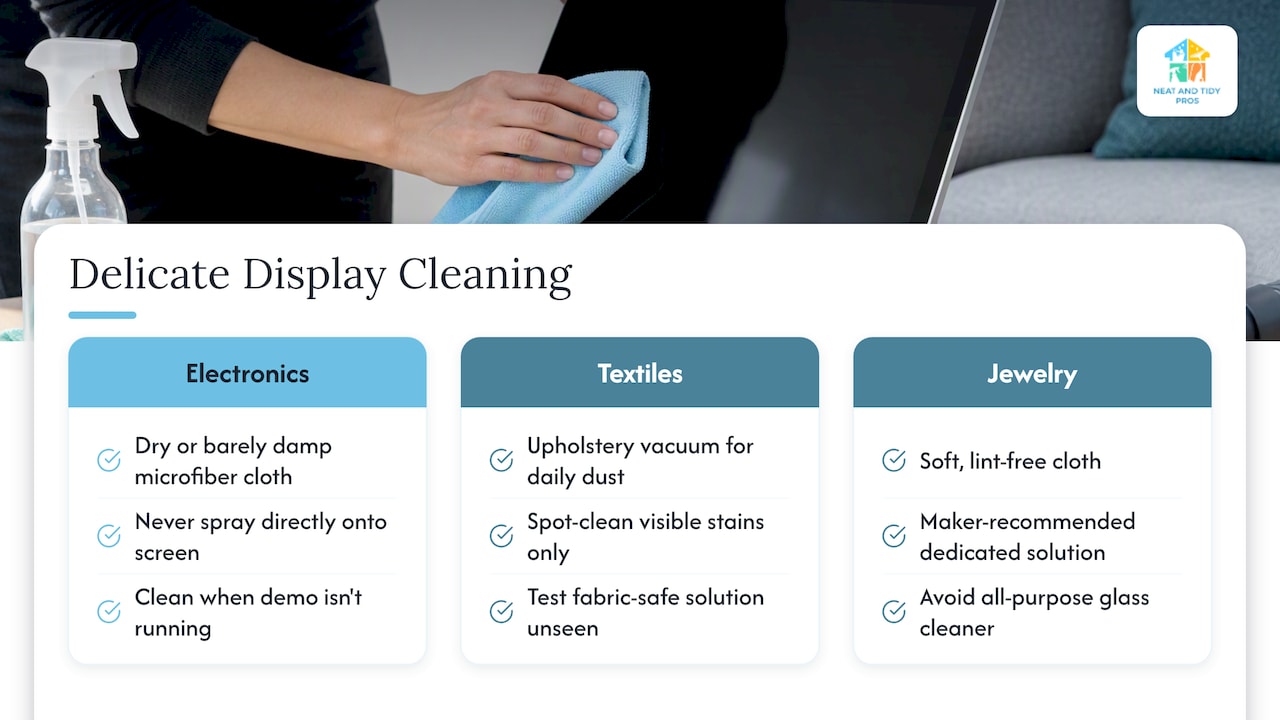
Electronic displays and demo units should be wiped with a dry or barely damp microfiber cloth, never a spray applied directly to the screen, since liquid can seep behind bezels and damage internal components. Powered-down units are safer to clean than active demo stations, so build cleaning into a rotation when a unit isn’t actively running a demo.
Textile displays, including upholstered seating and fabric backdrops, respond best to a vacuum with an upholstery attachment for daily dust removal, with spot-cleaning reserved for visible stains using a fabric-safe solution tested on an unseen area first.
Jewelry and small luxury items need the gentlest handling of all: a soft, lint-free cloth and, where recommended by the manufacturer, a dedicated cleaning solution rather than an all-purpose glass cleaner. Partner guidance on watch display care covers this in more depth, including polishing creams and strap cleaners formulated specifically for luxury timepieces, which is a useful reference if your showroom carries similar high-value items.
Keeping Lighting Fixtures and Vents in Good Condition
Lighting does more work in a showroom than almost any other fixture, and dust buildup dulls it fast. Overhead fixtures, track lighting, and accent spots should get a dry-dust pass weekly using an extendable duster, since grime on a bulb or lens can noticeably dim the light falling on a display.
Vents and HVAC returns need a different schedule. A quick visual check during the weekly walkthrough catches visible dust buildup, while a full vent cleaning belongs on the monthly deep-cleaning list alongside other HVAC maintenance. Dusty vents don’t just look bad, they recirculate particles onto nearby glass and display surfaces, undoing cleaning work elsewhere in the room.
Where lighting fixtures sit above reachable height, a stable ladder and a second staff member for safety are worth the extra few minutes, rather than stretching with a duster on a pole.
Managing Waste and Recycling in a Showroom
Showroom waste looks different from office or retail backroom waste: it includes packaging from new displays, outdated signage, and promotional materials that rotate frequently. A clear separation between general trash, recyclables, and cardboard keeps the back-of-house area from becoming a bottleneck.
Place clearly labeled bins near unpacking and display-setup areas, not just near customer-facing zones, since that’s where most packaging waste actually gets generated. Flatten cardboard immediately rather than letting it pile up, both for space and for fire safety in back-of-house storage.
Customer-facing waste bins, including any near seating or demo areas, need emptying on the same high-touch schedule as other customer zones since they tend to fill with coffee cups, brochures, and packaging from small purchases.
Cleaning Around Seasonal and Promotional Displays
Seasonal setups and promotional displays bring in materials that don’t fit the regular cleaning routine: string lights, fabric bunting, foam props, and temporary signage. These materials often can’t handle the same cleaners used on permanent fixtures.
Dust seasonal props with a dry cloth or soft brush rather than a damp one, since many are made from foam, paper, or painted surfaces that water can warp or discolor. Check string lights and electrical decor for dust buildup around vents and connectors, since this is both a cleanliness issue and a minor fire-safety consideration.
When a promotional display comes down, clean the area it occupied before resetting the permanent display, since props often leave residue or shift dust patterns that standard daily cleaning doesn’t address.
Scheduling Cleaning to Avoid Disrupting Customers
Timing is as important as the tasks themselves. Full floor mopping, vacuuming, and glass cleaning should happen before opening or after closing whenever possible, leaving mid-day cleaning limited to quick, targeted touch-ups.
For showrooms that stay busy all day, schedule short mid-day touch-up rounds focused only on high-traffic areas rather than attempting a full clean during trading hours, an approach that checklist libraries for retail and auto-dealership spaces recommend specifically to avoid disrupting customers. A wet floor sign and a fast, contained response beat a full mid-day mop that blocks half the sales floor.
Deep cleaning tasks like carpet extraction or vent cleaning belong on the slowest day of the week, ideally scheduled with enough notice that sales staff can route customers around the work area.
Training Staff to Follow the Checklist Consistently
A checklist only works if staff actually understand why each step matters, not just that it’s on a list. Short, recurring training sessions build that understanding better than a one-time onboarding document.
A brief weekly toolbox talk on chemical safety, paired with a monthly hands-on demo of proper glass-cleaning technique, helps reduce chemical misuse and keeps results consistent across shifts, a cadence OSHA guidance points to as effective for reducing handling incidents. New hires should shadow a completed walkthrough before running one solo, since watching the pace and order of tasks teaches more than reading a checklist cold.
Rotate zone assignments occasionally so no single staff member becomes the only person who knows how a particular area is supposed to look, which protects consistency when someone calls in sick or leaves the role.
Why Disciplined Checklists Change Showroom Outcomes
Showrooms that run structured pre-open, mid-day, and close walkthroughs tend to see fewer slip-and-fall incidents and a more consistent look from one day to the next, simply because nothing gets left to memory. A checklist removes the guesswork that causes small issues, a missed spill, a dusty case, to pile up unnoticed until a customer finds them first.
— Neat
How We Help You Run This Checklist Without the Overhead
We handle the parts of this checklist that eat the most staff time: full floor care, glass and display detailing, and restroom upkeep, through our commercial cleaning service. Deep cleaning and make-ready work can be arranged when a showroom needs a reset between promotional setups.
Reach out for a quote or to schedule a walkthrough, and we’ll build a cleaning routine around your showroom’s actual traffic patterns.
FAQ
How often should a showroom be cleaned?
Daily cleaning covers floors, glass, and high-touch surfaces, with high-touch points cleaned at least once a day and more often in busy areas, according to CDC guidance. Weekly and monthly tasks handle deeper work like carpet extraction, vent cleaning, and upholstery checks.
What should a daily showroom cleaning checklist include?
A daily checklist should cover a pre-opening walkthrough of the entrance, floors, and displays, mid-day spot response to spills and high-touch surfaces, and a closing routine that includes trash, restocking, and a final floor pass. Assigning each checkpoint to a specific role keeps the routine consistent across shifts.
What PPE is needed for showroom cleaning chemicals?
Basic PPE includes gloves and, depending on the product, eye protection, along with access to safety data sheets for every chemical in use. OSHA hazard communication guidance also requires labeled containers and trained staff for anyone handling cleaning chemicals.
How do you clean display cases without streaks?
Use a microfiber cloth with a glass-specific cleaner and work top to bottom in a consistent direction rather than circular motions, which tend to leave streaks behind. Cleaning glass at least once daily, and immediately after smudges from handling, keeps display cases looking sharp for customers.
Can professional cleaners help maintain a showroom checklist?
Yes, a professional service can take on the floor care, glass detailing, and restroom upkeep portions of a showroom checklist, freeing sales staff to focus on customers. We offer this through our commercial cleaning service for showrooms and similar retail spaces.
Sources
- Cleaning and Disinfecting Your Facility | CDC
- Environmental cleaning procedures | CDC
- Auto Dealership Showroom Cleaning checklist | POPProbe
- Hazard communication and cleaning safety | OSHA