Office cleaning is the systematic execution of scheduled hygiene and maintenance tasks designed to keep workspaces sanitary, safe, and professional. Understanding how office cleaning works gives business owners and office managers the knowledge to oversee programs that protect employee health, satisfy compliance requirements, and project a credible brand image to clients. The process integrates daily, weekly, and monthly task tiers, risk documentation, and specialized workflows. Done correctly, it runs like a controlled operation, not a random wipe-down.
How office cleaning works: core tasks and frequencies
Professional office cleaning procedures divide responsibilities into three tiers: daily, weekly, and monthly. Each tier targets a different level of soil buildup and risk. Office cleaning schedules typically structure tasks this way to address both frequent maintenance and deeper periodic needs.
Daily tasks: the non-negotiables
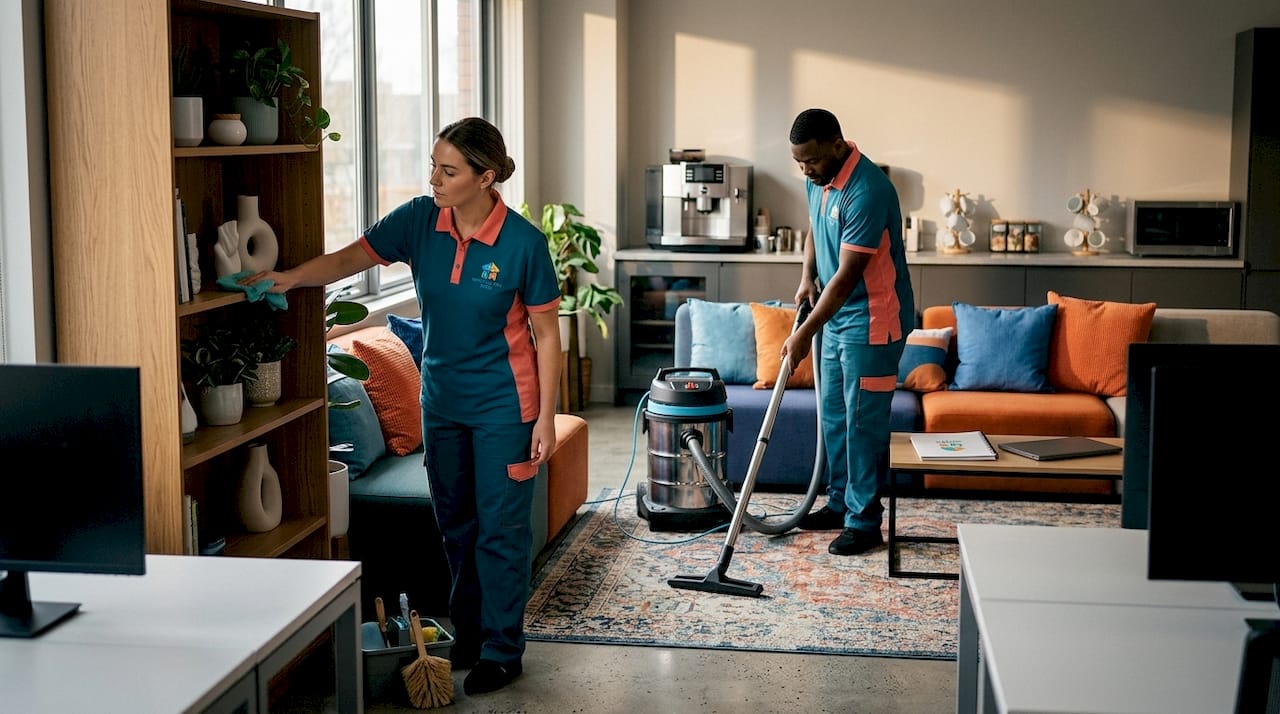
Daily tasks focus on the areas that accumulate contamination fastest. These include:
- Trash removal from all workstations and common areas
- High-touch surface disinfection: doorknobs, light switches, elevator buttons, shared keyboards, and kitchen handles all require daily disinfection to cut germ transmission
- Restroom sanitizing: toilets, sinks, faucets, and dispensers
- Floor care: vacuuming carpets and mopping hard floors in high-traffic zones
- Kitchen and break room wipe-downs: counters, appliance exteriors, and sink areas
Studies show desk surfaces harbor far more bacteria than toilets. That fact alone justifies treating workstation disinfection as a daily, non-negotiable task rather than a weekly afterthought.
Weekly and monthly tasks: going deeper
Weekly tasks include cleaning interior glass, wiping baseboards, and sanitizing shared appliances like microwaves and coffee makers. Monthly tasks go further: vacuuming air vents, cleaning upholstery, descaling faucets, and scrubbing grout in restrooms. These tasks address buildup that daily cleaning misses but that compounds into visible grime and air quality problems over time.
Pro Tip: Build your cleaning checklist for offices around three columns: task, frequency, and responsible party. That single document eliminates the most common complaint office managers have, which is “I thought someone else handled that.”
How do professional cleaners organize workflows and compliance?
Professional commercial cleaning operations do not rely on memory or informal agreements. They use structured documentation to guarantee quality and protect both the client and the cleaning company.
The standard document is called a method statement, often bundled with a risk assessment into a RAMS (Risk Assessment and Method Statement) package. Office cleaning contracts frequently include a method statement that details safe, compliant task execution with supervision and auditing built in. These documents reference COSHH (Control of Substances Hazardous to Health) regulations and Safety Data Sheets (SDS) for every chemical product used on site.
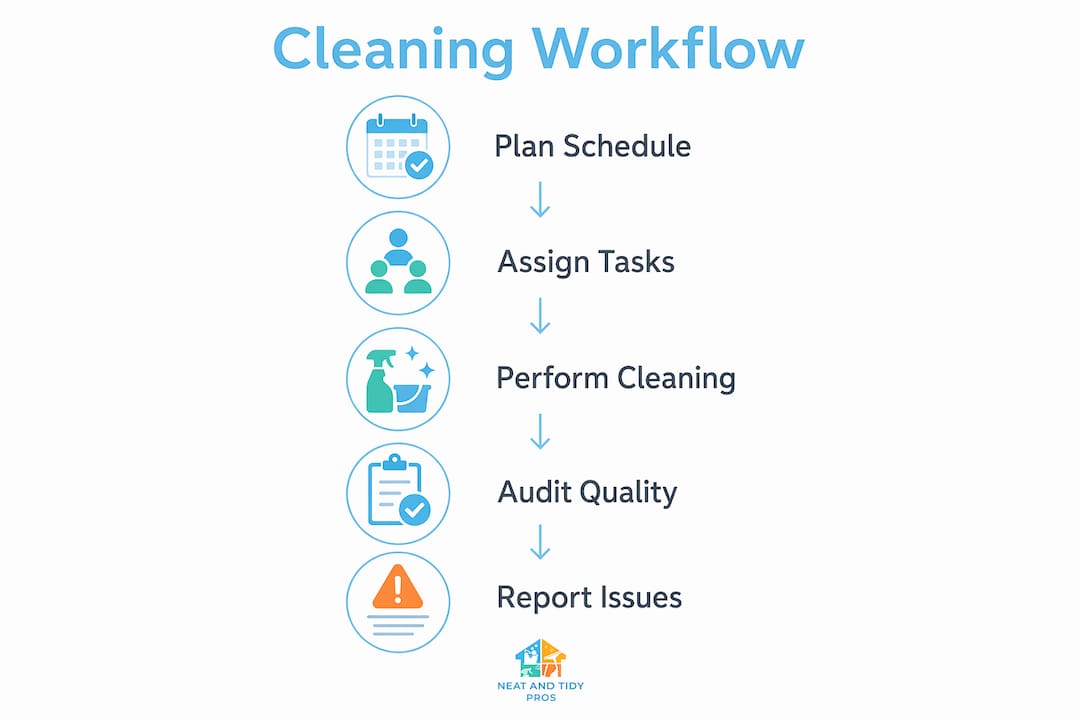
A well-structured compliance workflow looks like this:
- Scope definition: List every area, task, and frequency in writing before work begins.
- Chemical safety documentation: Reference COSHH and SDS sheets for each cleaning product. Store copies on site.
- Supervision assignment: Name a specific supervisor responsible for each shift or zone.
- Audit scheduling: Set a fixed audit frequency, such as weekly spot checks and monthly scored reviews.
- Snag reporting: Log any missed tasks, damage, or complaints immediately with a corrective action deadline.
- Escalation protocol: Define who gets notified if a corrective action is not resolved within the agreed timeframe.
Method statements include supervision plans with named supervisors, audit scorecards, snag reporting, and escalation protocols to maintain quality. This structure gives you, as the office manager, measurable evidence that cleaning standards are being met. It also protects you during health and safety audits.
The key takeaway for business owners: treat office cleaning as a controlled, auditable process with measurable standards. Sporadic wiping does not satisfy compliance requirements and creates liability gaps.
What techniques and sequencing prevent cross-contamination?
The sequence in which cleaning tasks are performed matters as much as the tasks themselves. Skipping sequence logic creates cross-contamination, which means you are spreading bacteria from dirty areas to clean ones.
The two governing principles are top-to-bottom and clean-to-dirty. Effective sequencing improves hygiene and reduces labor hours by preventing rework. Start at ceiling level (dusting vents, light fixtures, shelving tops), work down to surfaces and furniture, and finish with floors. Move from the cleanest zones in an office to the dirtiest, typically ending with restrooms.
Professional crews take this further with color-coded equipment. Color-coded tools and dedicated equipment per cleaning zone stop cross-contamination at the source. A red cloth used in the restroom never touches a kitchen counter. Blue cloths stay in general office areas. This system is simple, visual, and verifiable during audits.
Scheduling also matters. Disruptive tasks like floor vacuuming and restroom scrubbing are best scheduled after hours to avoid operational interruptions and allow access under desks and around fixtures without rush. After-hours cleaning also enables the use of louder equipment like commercial floor scrubbers without affecting staff productivity.
“The difference between a clean office and a compliant office is documentation and sequence. Anyone can wipe a surface. Not everyone can prove it was done correctly.”
Pro Tip: Ask any commercial cleaning provider for their color-coding protocol before signing a contract. If they cannot describe it, their cross-contamination controls are likely informal at best.
How do you tailor cleaning to your office size and industry?
No two offices have identical cleaning needs. The right office cleaning process depends on headcount, foot traffic, industry type, and the specific zones within your space.
| Office Type | Recommended Cleaning Frequency | Key Priority Areas |
|---|---|---|
| Small office (under 20 staff) | Daily basics, deep clean monthly | Restrooms, kitchen, reception |
| Medium office (20–100 staff) | Daily full service, weekly deep zones | High-touch surfaces, floors, common areas |
| Large office (100+ staff) | Daily full service, bi-weekly deep clean | All zones, with dedicated restroom rotations |
| Medical or food-adjacent | Daily full service plus sanitization protocols | All surfaces, air quality, chemical compliance |
Beyond headcount, consider these factors when setting your cleaning schedule:
- Client-facing reception areas require daily attention regardless of office size. First impressions are formed in seconds.
- Kitchens and break rooms generate the highest bacterial load per square foot. They need daily wipe-downs and weekly deep cleans at minimum.
- Open-plan offices with shared desks require individual workstation disinfection every day, not just communal surfaces.
- Post-event or high-visitor days should trigger an additional cleaning pass, not just wait for the next scheduled service.
For basic daily cleaning needs, a structured routine covers the fundamentals. For offices that have gone without professional service for several months, a one-time deep cleaning service resets the baseline before a regular schedule begins.
What tools and products support effective office cleaning?
The right tools make the difference between surface-level tidying and genuine sanitation. Effective office cleaning techniques rely on a specific set of products and equipment matched to each task.
- Microfiber cloths are the standard for surface wiping. They trap particles rather than pushing them around, and they work without heavy chemical use. Microfiber cloths and manufacturer-approved disinfectants prevent damage to sensitive electronics, which are costly and vulnerable to moisture and harsh chemicals.
- Commercial-grade disinfectants with EPA-registered formulas are required for high-touch surface protocols. Consumer products often lack the dwell time and kill claims needed for workplace compliance.
- HEPA-filter vacuums capture fine particles and allergens that standard vacuums recirculate into the air. They are the correct choice for carpeted offices with allergy-sensitive staff.
- Automated floor scrubbers handle large hard-floor areas faster and more consistently than mop-and-bucket methods. They are standard in medium to large commercial spaces.
- Air purifiers with HEPA and activated carbon filters reduce airborne contaminants between cleaning sessions.
Chemical storage and labeling follow COSHH requirements. Every product on site must be labeled, stored in a designated area, and matched to an SDS sheet accessible to all cleaning staff. This is not optional. It is a legal requirement in commercial environments and a liability issue for building owners.
For a detailed breakdown of equipment categories, the guide on professional cleaning tools covers the full spectrum from basic supplies to commercial-grade machinery.
Key takeaways
Effective office cleaning combines tiered task scheduling, documented compliance, and correct sequencing to produce measurable, audit-ready results.
| Point | Details |
|---|---|
| Use three-tier scheduling | Divide tasks into daily, weekly, and monthly to address both routine maintenance and deep cleaning needs. |
| Prioritize high-touch surfaces | Disinfect doorknobs, keyboards, switches, and kitchen handles daily to reduce bacterial and viral spread. |
| Document everything | Method statements, COSHH references, and audit scorecards turn cleaning into a verifiable, compliant process. |
| Follow top-to-bottom sequencing | Always clean from ceiling level down to floors, and from clean zones to dirty zones, to prevent cross-contamination. |
| Match frequency to office size | Adjust cleaning schedules based on headcount, foot traffic, and industry type for cost-effective coverage. |
What i have learned running office cleaning programs
After working with dozens of office environments at Neatandtidypros, the pattern I see most often is this: office managers know cleaning matters, but they underestimate how much sequencing and documentation drive the actual outcome.
The most common failure point is not frequency. It is the absence of a written scope. When tasks are not listed explicitly, they get skipped. Not out of laziness, but because “clean the office” means something different to every person on a crew. A written checklist with frequencies and zone assignments eliminates that ambiguity completely.
The second issue I see regularly is reactive deep cleaning. Offices call for a deep clean when things look bad. The smarter approach is scheduling a deep clean every quarter as a baseline reset, regardless of visible condition. Biofilm, allergen buildup, and grout contamination do not always look dirty. They just accumulate until they become a health or odor problem.
My honest advice to any office manager reading this: do not evaluate a cleaning service by how fast they finish. Evaluate them by whether they can hand you a completed checklist, a signed audit scorecard, and a corrective action log at the end of every month. If they cannot, you have no way to verify what was actually done.
The offices that run the cleanest are the ones where the manager treats cleaning oversight as part of facility management, not a background task. That shift in mindset changes everything.
— Neat
Ready to put a professional cleaning program in place?
Understanding the process is the first step. Executing it consistently, at the right frequency, with the right documentation, is where most in-house efforts fall short.
Neatandtidypros provides commercial office cleaning built around structured schedules, compliance documentation, and trained crews who follow color-coded protocols and verified task checklists. Whether your office needs daily maintenance service or a full reset with a deep clean, Neatandtidypros builds a program around your headcount, layout, and industry requirements. Explore the full range of cleaning services and find the right fit for your workspace.
FAQ
What does office cleaning include on a daily basis?
Daily office cleaning covers trash removal, high-touch surface disinfection, restroom sanitizing, floor care, and kitchen wipe-downs. High-touch surfaces like doorknobs, keyboards, and light switches are disinfected every day to reduce germ transmission.
How often should an office receive a deep clean?
Most offices benefit from a deep clean quarterly, with monthly attention to areas like vents, upholstery, and baseboards. High-traffic offices or those in food-adjacent or medical industries may need deep cleaning more frequently.
What is a method statement in office cleaning?
A method statement is a compliance document that outlines how cleaning tasks will be performed safely, who supervises the work, and how quality is audited. These documents reference COSHH regulations and SDS sheets for all chemicals used on site.
Why does cleaning sequence matter in an office?
Cleaning in the wrong order spreads contamination rather than removing it. The top-to-bottom, clean-to-dirty sequence prevents recontamination and reduces the total labor needed to achieve a genuinely clean result.
When should an office use professional cleaning instead of in-house staff?
Professional cleaning makes sense when compliance documentation, specialized equipment, or consistent quality across multiple zones is required. In-house staff typically lack access to commercial-grade disinfectants, HEPA vacuums, and the audit structures that professional providers deliver as standard.