
A good waiting room cleaning checklist covers key areas, high-touch surfaces, frequency, spill response, and documentation. The CDC recommends cleaning waiting and admission areas at least once per 24 hours, with more frequent attention for high-touch surfaces. Below you get a quick checklist and a zone-by-zone task list ready for shifts.
TL;DR:
- The CDC baseline is one round every 24 hours, but wipe high touch points hourly during peak traffic and adapt other rounds to patient flow.
- Clean visible soil before disinfecting, then keep the surface wet for the full label contact time; routine low risk surfaces often need cleaning alone.
- For blood or vomit, isolate the area, use required protective equipment, follow exposure procedures, and refer regulated waste or patient care contamination to clinical staff.
- Record the disinfectant method and product, full contact time, incidents, and needed repairs in signed logs, then audit adherence and give staff feedback.
Table of Contents
- What does a quick waiting room checklist look like?
- How do you clean each zone of the waiting room?
- How often should a waiting room be cleaned?
- Why clean before you disinfect?
- What should you do about spills, vomit, or blood?
- What supplies and setup make rounds efficient?
- How do you make the checklist stick?
- Why do professional crews work this way?
- Which of our services keep your waiting room inspection-ready?
- FAQ
- Sources
What does a quick waiting room checklist look like?
Print this and keep it on the cleaning cart. It works as a between-rounds reference.
- Inspect the entry and reception area for spills, debris, and hazards.
- Wipe high-touch points: door handles, counters, pens, clipboards, and light switches.
- Sanitize check-in surfaces, including kiosk screens and card readers.
- Vacuum or damp-mop floors, then check under and between chairs.
- Empty waste bins and replace liners.
- Restock hand sanitizer, tissues, and other supplies.
- Record exceptions or repairs needed on the signed log.
Frequency shorthand: give high-touch points more attention during heavy traffic, and set schedules for rounds, floors, waste, dusting, upholstery, and deeper maintenance according to your facility’s risk assessment and SOPs. Always follow product labels and your facility’s SOPs for contact time and approved surfaces.
Pro Tip: Run the checklist in the same order every round so nothing gets skipped when the lobby is busy.
How do you clean each zone of the waiting room?
Work from clean to dirty and from top to bottom, so you never carry soil onto a surface you just finished.
Entry and reception
- Wipe doors, handles, glass, and counters.
- Check walk-off mats and shake out or replace them when they are soiled.
- Clean check-in hardware such as keypads and sign-in tablets.
- Handle spills the moment you see them.
Seating area
- Vacuum upholstery where appropriate and spot-clean spills.
- Wipe chair arms and side tables.
- Remove or replace shared items such as magazines and toys, following clinic policy.
High-touch surfaces
The CDC’s risk-based approach says to give pens, counters, touchpads, and door hardware more frequent attention rather than treating every surface the same. Add phones, light switches, and sanitizer dispensers to your list.
Floors and restrooms
- Vacuum carpets and dry-dust hard floors first.
- Damp-mop hard surfaces and post a wet-floor sign before you start.
- Inspect under and between chairs for crumbs and trash.
- Check restroom soap, hand-drying supplies, fixtures, and waste bins.
- Confirm soap and water are available, because OSHA states that waterless hand cleaner is not a substitute for handwashing facilities.
For a deeper restroom routine, see our restroom cleaning checklist with a signed log. Our high-touch disinfection checklist covers the touchpoints in more detail.
How often should a waiting room be cleaned?
The CDC baseline is once per 24 hours, and that is a floor, not a target. Raise the frequency as patient traffic rises.
- Hourly or during peak traffic: quick wipe of high-touch points.
- Each shift: short round covering seating, counters, and visible debris.
- Daily: floors, waste, and a full reset of the room.
- Weekly: deeper dusting and upholstery vacuuming.
- Monthly: scheduled maintenance, such as carpet care. A professional carpet cleaner’s itemized estimate helps you compare options for high-traffic floors.
Time rounds around patient flow, such as before opening, at midday lulls, and after close, so cleaning never blocks check-in.
Why clean before you disinfect?
Cleaning removes dirt and organic material, and disinfection only works on a surface that is already clean. The CDC’s guidance on when and how to clean and disinfect says the surface must stay wet for the full contact time on the label.
Key point: disinfection depends on correct product use and wet contact time, so your log should record the method and product, not just a checkmark.
Choose an EPA-registered product for the surface, using the EPA’s List N search to confirm surface types and contact times. Cleaning alone is often enough for routine low-risk surfaces. Disinfect after visible contamination, during an outbreak, or on busy high-touch points. Skip the spray-and-wipe shortcut. Physical wiping removes germs along with soil, as the CDC’s environmental services guidance points out. Our guide to the surface disinfection process walks through the sequence.
What should you do about spills, vomit, or blood?
Do not wait for the next routine round. Isolate the area first, then work through these steps:
- Block off the spill and post a safety sign.
- Put on PPE and follow your facility’s exposure procedure.
- Remove visible soil, then apply the approved disinfectant for its full contact time.
- Escalate regulated waste or patient-care contamination to clinical staff.
- Log the incident and actions taken for infection control follow-up.
What supplies and setup make rounds efficient?
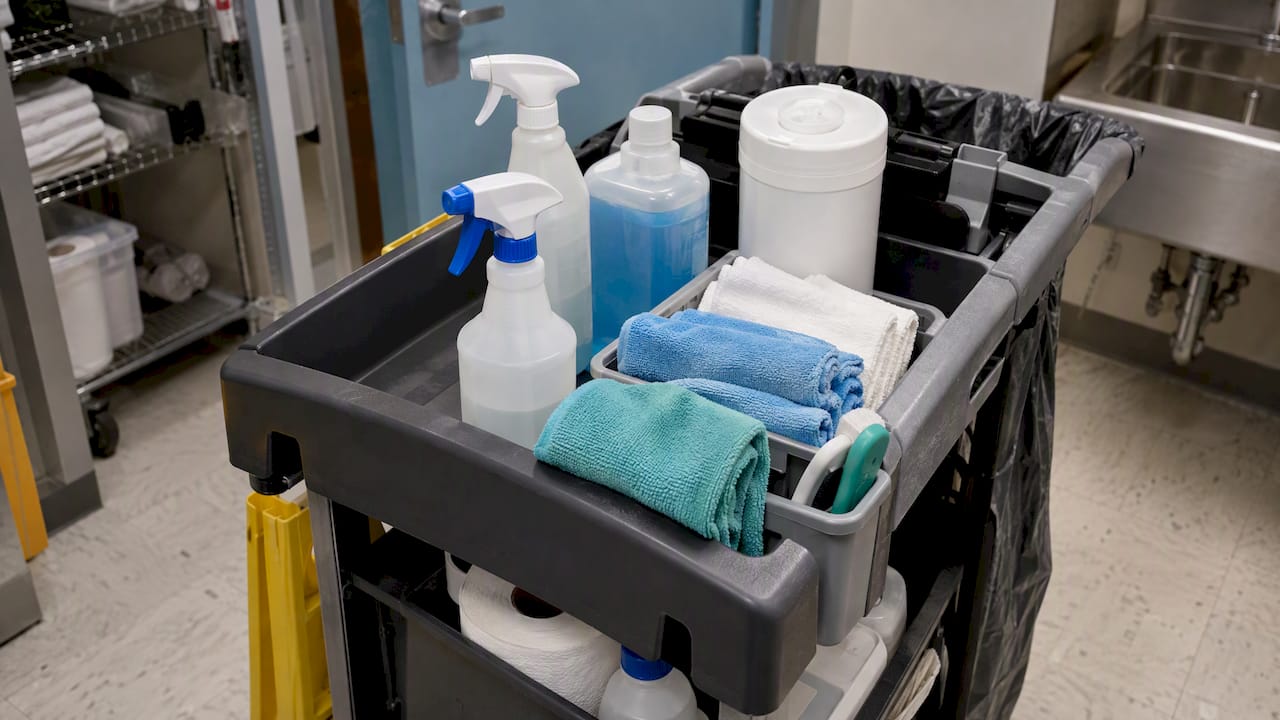
Stage everything on the cart so no one leaves the floor mid-round.
- EPA-registered cleaner or disinfectant
- Disposable microfiber cloths and disposable mop heads
- Gloves and eye protection where required
- Safety signs and sanitizer refills
- Waste bags and spare PPE
A routine cleaning SOP for lobbies and reception areas uses this same cart setup. Change mop heads and solution between high-risk areas to prevent cross-contamination.
Pro Tip: Label each product with its approved surfaces and contact time so new staff do not have to guess.
How do you make the checklist stick?
A checklist only works if people use it and someone checks it. Per the CDC, a clean environment is a managed safety system: train cleaners, standardize protocols, monitor adherence, and give feedback.
- Use signed logs or digital checklists for every round, and note damage or repairs.
- Publish SOPs where staff can reference them.
- Train on contact times, PPE, and safe handling of bodily fluids.
- Set minimal cleaning times so staffing matches the workload, as the CDC’s cleaning procedures recommend.
- Audit regularly and share the results with the team.
Why do professional crews work this way?
Our teams provide residential and commercial cleaning, including Commercial Cleaning, Basic Cleaning, and Deep Cleaning. On routine contracts we apply a checklist like this one, then reset the room with periodic deep cleans. Your own routine should flex with patient volume and facility risk. A busy pediatric lobby needs more rounds than a quiet specialist office. A broader program is laid out in our medical office cleaning checklist.
— Neat
Which of our services keep your waiting room inspection-ready?
Many clinics prefer to hand the routine to a professional crew. Our teams use eco-friendly products and build schedules around your patient flow.
- Commercial Cleaning for routine contract service
- Deep Cleaning for periodic resets
- Basic Cleaning for light recurring visits
Tell us about your waiting room and request a quote through our commercial cleaning page. Current pricing details are available through our commercial cleaning page.
FAQ
What is the 5-5-5 rule for cleaning?
It is a time-boxing habit: a few minutes each on a few quick tasks, often used for home tidying. It is not a clinical standard. For a waiting room, follow the CDC’s frequency guidance and your written SOPs.
What should I include in a waiting room cleaning checklist?
Cover entry and reception, seating, high-touch surfaces, floors, and restrooms. Add spill response, restocking, and a signed log. The CDC’s cleaning procedures call for at least daily cleaning of waiting areas.
How often should waiting room surfaces be disinfected?
Give high-touch surfaces more frequent attention according to patient traffic and facility policy, and respond to visible contamination without waiting for the next routine round. Your infection-prevention policy sets the exact frequency.
What is the correct cleaning order?
Remove waste, clean soil with detergent, then disinfect when indicated. Keep the surface wet for the full label contact time.
One Response