Pressure washing is the use of a high-pressure water spray to remove dirt, mold, loose paint, grime, and debris from hard exterior surfaces. Machines produce pressures that can vary widely, ranging from lower to very high levels suitable for different cleaning tasks, which is what separates them from a standard garden hose. Before you rent a unit or hire someone, three things are worth knowing upfront:
- Pressure washing vs power washing: Power washing uses heated water; pressure washing uses cold. Heat helps dissolve grease and kill biological growth more effectively, but it also raises the cost and risk of surface damage.
- Soft washing is a third method that uses very low pressure (roughly 500 PSI or below) combined with detergents, and it’s the right call for roofs, painted wood, and other fragile surfaces.
- Safety first: The wrong PSI or nozzle can strip paint, etch concrete, or cut skin. Matching pressure to surface is not optional.
Key Takeaways
Pressure washing uses high-pressure cold water to clean hard surfaces, and matching PSI, GPM, and nozzle angle to the specific surface is what separates a clean result from a damaged one.
| Point | Details |
|---|---|
| Definition | Pressure washing uses cold, high-pressure water to remove dirt, mold, and grime from hard surfaces. |
| PSI and nozzle must match the surface | Concrete handles — PSI; painted wood and delicate surfaces need 500 PSI or below with a wide-angle nozzle. |
| Pressure washing vs power washing | Power washing adds heat for grease and heavy biological buildup; soft washing drops to 500 PSI and uses detergents for fragile surfaces. |
| Safety is non-negotiable | Wear eye protection, gloves, and closed-toe shoes; never use a pressure washer on a ladder or direct spray at windows. |
| Know when to hire a pro | Roof cleaning, lead paint, jobs above the first story, and heavy contamination always warrant a licensed professional. |
Table of Contents
- What is pressure washing and how does it work?
- Pressure washing vs power washing vs soft washing: which do you need?
- What surfaces can you pressure wash, and which ones should you avoid?
- What equipment and attachments actually matter?
- Is pressure washing safe? Risks and how to avoid them
- Should you DIY or hire a professional?
- What experts and public health authorities say about pressure washing
- When pressure washing is worth it, from Neat’s perspective
- Sources
What is pressure washing and how does it work?
The cleaning force in a pressure washer comes from two numbers: PSI (pounds per square inch, which measures pressure) and GPM (gallons per minute, which measures flow volume). PSI determines how hard the water hits; GPM determines how much water moves across the surface per minute. You need both. High PSI with low GPM can etch a surface without actually rinsing debris away. High GPM with low PSI moves a lot of water but lacks the force to dislodge stubborn grime.
The machine itself has five core components: a motor or gas engine, a pump, a high-pressure hose, a trigger gun, and a nozzle. Most units also include a detergent injector, either built into the pump (low-pressure downstream injection) or attached at the nozzle. Electric motors drive pumps in the same way gas engines do, but gas units typically produce higher PSI and GPM, making them better suited for large or heavily soiled jobs.
Cold-water pressure washing handles most residential tasks: driveways, siding, patios, and decks. Hot-water units (what most people call power washers) add heat, which breaks down oil, grease, and biological matter faster than cold water alone. Think of it like washing greasy dishes: hot water cuts through faster.
Water efficiency callout: A pressure washer uses significantly less water than an open garden hose for similar cleaning tasks, thanks to higher pressure and efficiency, according to Kärcher’s manufacturer data. That’s a meaningful difference if you’re in a drought-prone region like Southern California.
Pressure washing vs power washing vs soft washing: which do you need?
The three terms get used interchangeably, but they describe genuinely different methods with different risk profiles.
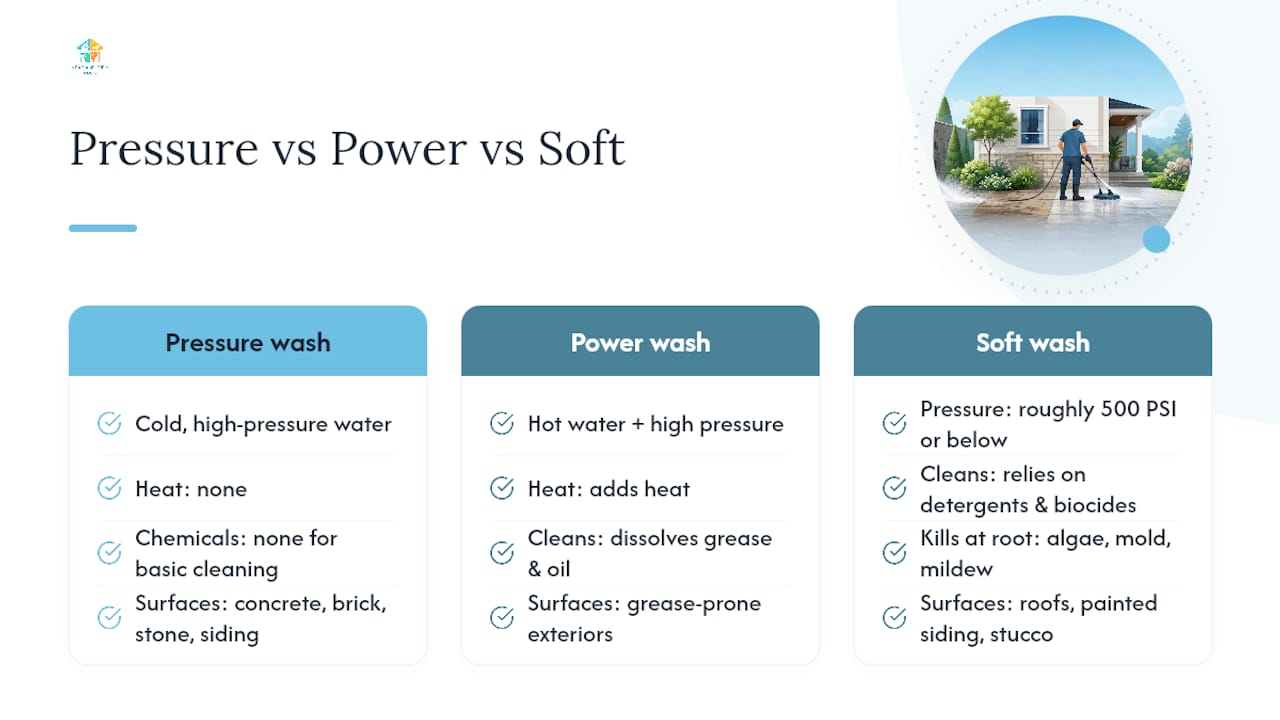
Pressure washing uses cold, high-pressure water. It’s the default for most hard surfaces: concrete, brick, stone, and certain types of siding. No heat, no chemicals required for basic cleaning.
Power washing adds heat to the equation. The hot water dissolves grease, oil stains, and heavy biological buildup faster and more completely than cold water. It’s the better choice for commercial kitchen exteriors, heavily stained driveways, or any surface where cold water alone isn’t cutting it.
Soft washing drops the pressure to roughly 500 PSI or below and relies on detergents and biocides to do the cleaning work. The chemical solution kills algae, mold, and mildew at the root rather than just blasting them off the surface. Soft washing is the standard for roofs, painted wood siding, stucco, and anything that would be damaged by high pressure.
Use pressure washing when you’re cleaning a concrete driveway, a brick patio, or a deck that isn’t painted or stained.
Use power washing when you’re dealing with oil stains in a garage or grease buildup on a commercial surface.
Use soft washing when you’re cleaning a roof, painted siding, older wood, or any surface where high pressure would cause visible damage.
What surfaces can you pressure wash, and which ones should you avoid?
Pressure washing works well on hard, durable surfaces that can handle concentrated water force. It’s a poor choice for anything porous, painted, or structurally fragile.
Suitable surfaces:
- Concrete driveways, sidewalks, and garage floors
- Brick and stone patios
- Vinyl siding (at lower PSI, with the right nozzle angle)
- Wood decks that are unfinished or in good structural condition
- Gutters (exterior face, not interior)
- Fences made of concrete block or brick
- Large flat areas where a surface cleaner attachment speeds the job
Surfaces to avoid or soft-wash instead:
- Painted wood siding (high pressure strips paint and forces water behind boards)
- Older asphalt roof shingles (pressure removes the granule coating that protects against UV)
- Windows (direct high-pressure spray can crack seals and force water into frames)
- Delicate trim, decorative molding, and older caulking
- Any surface with known or suspected lead paint
Mold and algae deserve a specific note. Pressure washing removes the visible growth, but it doesn’t always kill the spores. On porous surfaces like concrete or wood, spores embedded below the surface can regrow within weeks. For lasting results, pair pressure washing with a biocide or mildewcide solution. Removing mold and mildew from home exteriors can reduce allergen sources that affect indoor air quality, particularly for households with allergy or asthma sufferers. Pressure washing also preps surfaces for painting by removing dirt and grease so paint bonds properly, and it often reveals cracks or damage that need repair before any finishing work begins.
What equipment and attachments actually matter?
Electric vs gas units
Electric pressure washers typically produce pressures and flow rates suitable for light to medium residential cleaning tasks. Gas units generally offer higher pressures and flow rates better suited for heavier duty or commercial tasks. Professional-grade gas units push even higher, but consumer access to those is limited.
Nozzle angles: the one thing most people get wrong
Nozzles are color-coded by spray angle, and choosing the wrong one is the most common way DIYers damage surfaces.
- 0° (red): A pinpoint jet. Useful for stripping rust or paint from metal. Dangerous on almost every other surface.
- 15° (yellow): Aggressive cleaning for concrete and brick. Not for wood or siding.
- 25° (green): The general-purpose angle. Works for most hard exterior surfaces.
- 40° (white): A wide, gentle fan. Good for rinsing, vehicles, and delicate surfaces.
- Soap nozzle (black): Low-pressure nozzle that draws detergent from the injector. Always apply soap at low pressure, then rinse with a higher-pressure nozzle.
Useful attachments
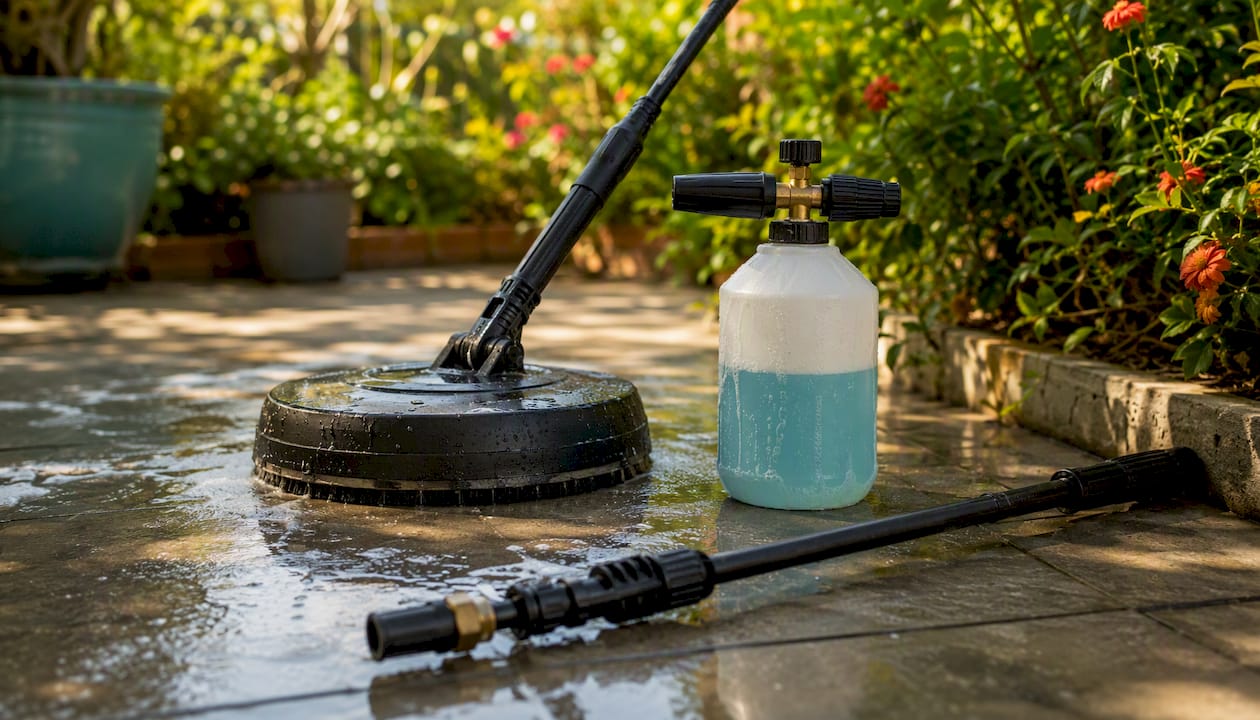
Surface cleaners use a circular housing with rotating jets to clean flat areas evenly and reduce the streaking and splashback you get from a single wand. For a 500-square-foot driveway, a surface cleaner cuts cleaning time significantly compared to sweeping back and forth with a wand. Extension wands let you reach gutters and second-story siding without a ladder. Turbo (rotary) tips spin a 0° jet in a circular pattern, combining the force of a narrow stream with the coverage of a wider angle. Foam cannons apply detergent as a thick foam that dwells on the surface before rinsing.
Basic maintenance
Keep the inlet filter clean, drain the pump after every use in freezing weather, check pump oil on gas units annually, and inspect hose fittings for cracks. A clogged inlet filter is the most common cause of pressure loss that isn’t a nozzle problem. For more on professional cleaning equipment and how it’s maintained, the principles carry over to consumer units.
Pro Tip: Always test a new nozzle on an inconspicuous section of the surface first. A 15° nozzle that’s fine on your neighbor’s concrete driveway can etch yours if the concrete is softer or older.
Is pressure washing safe? Risks and how to avoid them
The CDC recommends specific personal protective equipment and safe operating practices for pressure washer use, and the guidance exists because injuries are real. A pressure washer at 2,000 PSI can lacerate skin, inject water into tissue, and cause serious eye damage.
PPE checklist before you start:
- Safety glasses or goggles (not sunglasses)
- Waterproof gloves
- Closed-toe shoes, preferably rubber-soled
- Hearing protection if using a gas unit (sustained exposure above 85 dB causes hearing damage)
Pressure and nozzle guidance by surface
Always test on a small, hidden area first. These are starting points, not guarantees.
Red-flag activities to avoid:
- Using a pressure washer while standing on a ladder. The recoil from the wand can knock you off balance.
- Directing spray at windows. High pressure can crack seals and force water into wall cavities.
- Pressure washing a roof with a standard wand. It strips granules from asphalt shingles and voids most manufacturer warranties.
- Using a 0° nozzle on wood, siding, or any painted surface.
Lead paint warning: If your home was built before 1978, there’s a real chance some exterior surfaces contain lead paint. Pressure washing lead-painted surfaces creates contaminated runoff and airborne particles. Stop, test the surface with a lead test kit (available at most hardware stores), and consult a certified lead abatement contractor before proceeding.
Should you DIY or hire a professional?
Most homeowners can safely pressure wash a concrete driveway or a ground-level patio. The calculus changes fast when height, surface sensitivity, or contamination type enters the picture.
Work through this checklist before deciding:
- Surface type: Is it concrete, brick, or another hard surface you can test safely? Or is it painted wood, stucco, or a roof?
- Height: Does the job require reaching above the first story? If yes, hire a pro.
- Contamination type: Light dirt and algae are DIY-friendly. Oil stains, heavy mold, or chemical contamination are not.
- Lead paint risk: Any pre-1978 exterior with peeling paint. Always hire a certified professional.
- Access and landscaping: Are there plants, vehicles, or drainage concerns that require containment planning?
- Insurance: Do you have coverage if something goes wrong? A licensed contractor carries liability insurance.
Questions to ask a contractor before hiring:
- Are you licensed and insured in California?
- What method do you use for this specific surface (pressure, power, or soft wash)?
- How do you handle runoff and detergent containment?
- Have you worked on this surface type before?
Ballpark costs vary by region, surface, and contamination level. A single-family home exterior in most U.S. markets runs roughly $150–$400 for a standard pressure wash. Driveways typically run $80–$200. Roof soft washing, which requires specialized equipment and chemicals, generally costs more and should always be done by a professional. These are ranges only; local labor rates and surface conditions shift the number in either direction.
Always hire a pro for: roof cleaning, any surface with lead paint, heavy oil or chemical stains, large commercial areas, and any job that requires working at height.
What experts and public health authorities say about pressure washing
The “more pressure is always better” idea is one of the most persistent and damaging misconceptions in exterior cleaning. Industry experts are clear that PSI and flow rate must be matched to the material, and that nozzle selection and technique determine whether a job goes well or strips a surface.
Beyond aesthetics, there’s a public health dimension worth taking seriously. Removing mold, mildew, and algae from home exteriors reduces allergen sources that can migrate indoors and worsen conditions for people with allergies or asthma. The CDC’s pressure washer safety page covers both injury prevention and the importance of PPE, and it’s worth reading before your first use.
Credible sources for deeper reading:
- Wikipedia: Pressure washing: technical overview of PSI ranges, equipment types, and surface cleaner function
- Kärcher: How does a pressure washer work?: manufacturer-level explanation of pump mechanics and water efficiency
- Angi: Benefits of pressure washing: practical homeowner benefits including health and prep-for-paint applications
- Manufacturer safety pages for your specific unit: always the first reference for operating limits
For households managing allergies, pairing exterior pressure washing with a home allergen-reduction cleaning routine addresses both the outdoor source and the indoor environment.
When pressure washing is worth it, from Neat’s perspective
Pressure washing earns its cost most clearly in three situations: when you’re prepping a surface for paint, when biological growth (mold, algae, mildew) has become a health or curb-appeal concern, or when a surface has accumulated years of grime that routine cleaning won’t touch. Those are the jobs where the results are immediate and the return on the investment is obvious.
That said, the jobs that go wrong are almost always the ones where someone pushed past their comfort zone: working at height, using too much pressure on painted wood, or tackling a surface they hadn’t tested first. For those situations, or for large commercial properties and post-construction cleanups, Neatandtidypros offers professional cleaning services that take the risk off your hands, including construction cleaning for sites where exterior grime is part of a larger cleanup scope.
Sources
- Pressure washing – Wikipedia
- 10 Benefits of Pressure Washing Your Home | Angi
- What Is Pressure Washing? Understanding the Basics and Benefits | Clean Surface Pressure Washing
- How does a pressure washer work? | Kaercher