
Cleaning a new home before your family moves in is the single most effective way to protect your family’s health from day one. The industry term for this practice is pre-move-in deep cleaning, and it goes far beyond wiping counters. Even homes labeled “move-in ready” contain hidden biological debris including hair, pet dander, and bacteria from previous occupants that are invisible during a walkthrough. Neatandtidypros works with families every week who are surprised by what a thorough clean reveals. This guide explains why clean before family moves in matters, what you risk by skipping it, and how to time it right.
Why clean before family moves in: the hidden hazards no one warns you about
Every home has a history. The previous occupants left behind more than memories.
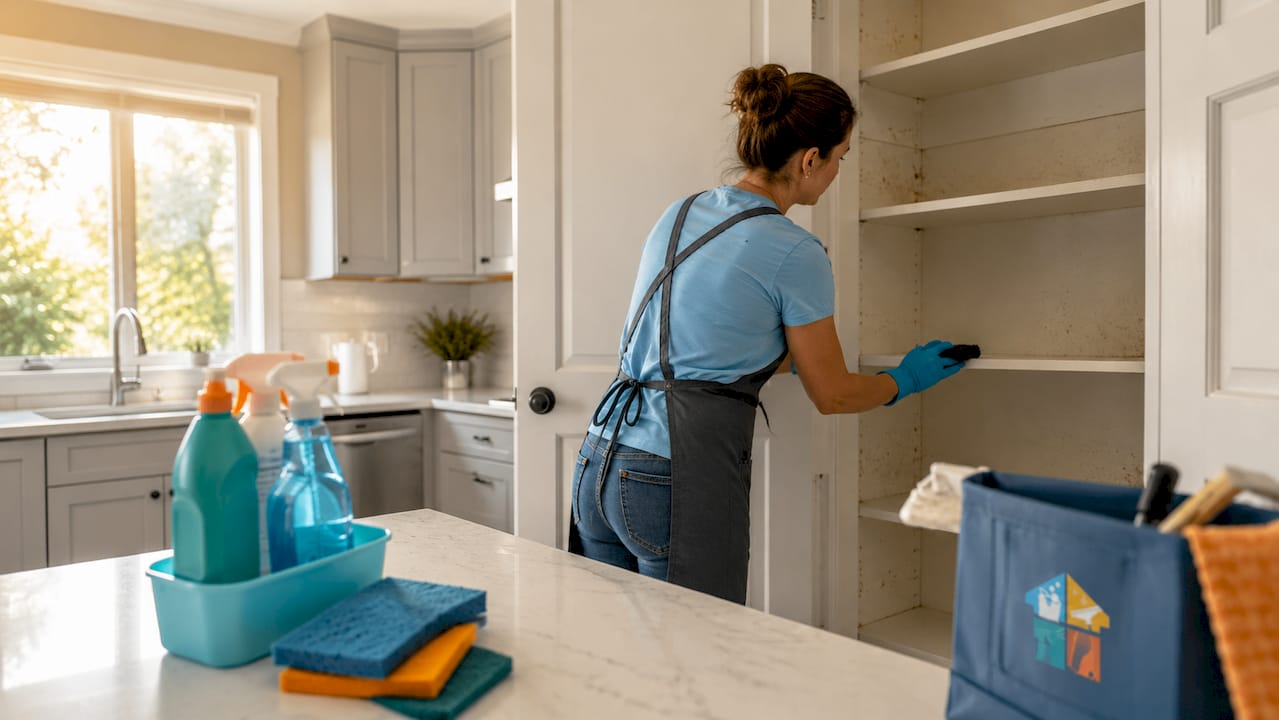
Even “move-in ready” homes contain biological and physical debris that a standard walkthrough never reveals. Hair, pet dander, skin cells, and bacteria settle into vents, appliance gaps, and deep cabinet corners. These are not visible without direct access. They do not disappear on their own.
Brand-new homes are not exempt. Residual construction dust, paint residue, drywall particulate, and adhesive residue remain in newly built or recently renovated homes even after contractors finish. This material directly affects indoor air quality. Families with young children, allergy sufferers, or anyone with respiratory sensitivities feel the impact within days of moving in.
The locations most families overlook include:
- HVAC vents and air filters that circulate debris through every room
- Appliance gaps behind refrigerators and stoves where grease and crumbs accumulate
- Deep cabinet corners that collect dust and residue from previous storage
- Light switches and outlet covers touched constantly but rarely disinfected
- Bathroom grout lines that harbor mold and bacteria between tiles
Treating every new property as having an unknown history is the correct approach. A systematic, top-to-bottom cleaning is the only way to confirm the home is genuinely safe for your family.
Pro Tip: Before cleaning begins, run the HVAC fan for 20 minutes with the windows open. This forces settled dust into the air where your vacuum can capture it, rather than leaving it in ducts.
Why an empty home is the only time to clean it properly
The window between receiving your keys and the arrival of the moving truck is the most valuable cleaning opportunity you will ever have in that home.
Cleaning an empty home reduces cleaning time by up to 300% compared to cleaning around furniture and boxes. A job that takes two hours in an empty home can stretch to six hours once belongings are in place. That is not a minor inconvenience. It is a fundamental shift in what you can actually reach and clean.
An empty home gives you full access to every surface. You can clean behind where the refrigerator will sit, inside every cabinet before dishes go in, and along baseboards before rugs cover them. Once furniture arrives, those surfaces stay dirty for years.
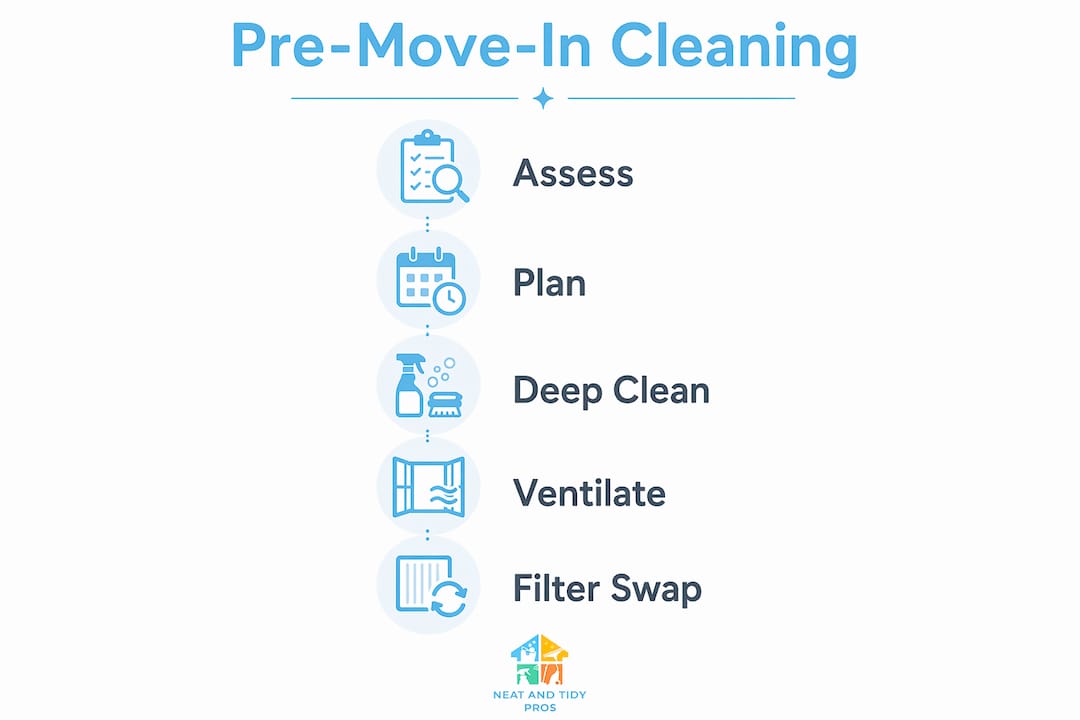
The most efficient approach follows a clear sequence:
- Start with ceilings and light fixtures. Dust and debris fall downward. Clean high surfaces first so nothing lands on areas you have already finished.
- Move to walls, windows, and upper cabinets. Wipe down all vertical surfaces before touching floors.
- Clean appliances and countertops. Disinfect every surface that will contact food or hands.
- Finish with floors. Vacuum, mop, or shampoo carpets last. Working from the farthest room to the front door prevents walking over freshly cleaned surfaces.
Pro Tip: Schedule your professional or DIY cleaning to finish the evening before the moving truck arrives. This gives disinfectants time to fully dry and carpets time to set before heavy foot traffic begins.
Which rooms to prioritize before your family settles in
Not every room carries equal weight on move-in day. Kitchens and bathrooms demand attention first because your family needs them functional within hours of arriving.
Kitchen: the room that cannot wait
Prioritizing kitchens ensures sanitary conditions for your family’s first meals. Wipe the interior of every cabinet before placing dishes or food. Disinfect countertops, paying attention to grout lines and seams where bacteria collect. Clean the inside of the oven, microwave, and refrigerator before any food goes in. Grease and food residue from previous occupants can carry bacteria that contaminate your groceries on contact.
Bathroom: the hygiene baseline
Bathrooms require grout cleaning, tub and shower disinfection, and full sanitization of all high-touch surfaces. Toilet bases, faucet handles, and door knobs transfer bacteria directly to hands. Mold in grout lines is a health risk, not just an aesthetic problem. Scrub grout with a stiff brush and a bleach-based cleaner before your family uses the space.
Bedrooms and living areas
Bedrooms accumulate allergens that directly affect sleep quality. Carpets trap pet dander, dust mites, and pollen from previous occupants. Shampooing carpets before beds are placed removes these allergens at the source. Wipe down closet shelves and window sills, which collect dust that circulates through the room overnight.
High-touch and hidden areas like switches, vents, and appliance gaps affect air quality across every room. Replacing HVAC filters before move-in is one of the highest-impact actions a family can take for immediate air quality improvement.
Pro Tip: Buy new HVAC filters before move-in day and swap them out as the first task after cleaning. Old filters from previous occupants can undo hours of cleaning work by recirculating trapped debris.
How to schedule cleaning around your move-in timeline
Timing is where most families make a costly mistake. They clean after the furniture arrives, or they rely on a quick wipe-down the morning of the move. Neither approach works.
The optimal time to schedule professional move-in cleaning is the day immediately before the moving truck arrives. This 24-hour buffer gives disinfectants time to work, carpets time to dry, and surfaces time to air out before your family walks through the door with boxes.
Here is a practical scheduling sequence:
- Confirm your move-in date. Lock in the date before booking anything else.
- Book professional cleaners for the day before. Booking professionals before the empty house window closes ensures maximum access and cleaning quality.
- Schedule carpet shampooing as part of the same appointment. Wet carpets need 8–12 hours to dry fully.
- Do a final walkthrough the morning of move-in. Check vents, filters, and high-touch surfaces before the truck arrives.
Cleaning after furniture placement is not a viable alternative. The cleaning window between receiving keys and the arrival of movers is critical. Once that window closes, quick tasks become lengthy ones as furniture blocks access and triples labor time. The cost of missing it is months of living with surfaces you could not properly reach.
Pro Tip: If you are coordinating a long-distance move, hire local professional cleaners to complete the pre-move-in clean before you arrive. You walk into a home that is already fresh, not one that needs work before you can unpack.
Key Takeaways
Cleaning before your family moves in is the only time you have full access to every surface, making it the most effective and efficient moment to establish a genuinely hygienic home.
| Point | Details |
|---|---|
| Hidden hazards are real | Even move-in ready homes contain bacteria, dander, and construction residue in vents and cabinet corners. |
| Empty homes clean faster | Cleaning before furniture arrives reduces labor time by up to 300% compared to cleaning around belongings. |
| Kitchens and bathrooms first | Prioritizing these rooms delivers immediate sanitary conditions for meals and daily hygiene needs. |
| Timing is everything | Schedule cleaning the day before the moving truck arrives to allow surfaces and carpets to fully dry. |
| HVAC filters matter most | Replacing filters before move-in prevents old debris from recirculating through a freshly cleaned home. |
What I have learned from watching families skip this step
After working with hundreds of families through Neatandtidypros, I have seen the same pattern repeat. A family moves in, skips the pre-move-in clean because they are exhausted from the process, and then spends the next three months dealing with allergy flare-ups, mystery odors, and the creeping realization that the home never felt truly fresh.
The misconception that “move-in ready” means “deep-cleaned” is one of the most persistent and costly beliefs in residential moving. It does not. “Move-in ready” is a real estate term. It means the home is structurally habitable. It says nothing about the bacteria in the bathroom grout or the pet dander packed into the carpet fibers.
What I tell every family is this: the vacancy period is the only ideal time to deep clean professionally. Once your furniture is in, you are managing the home. You are not resetting it. The deep cleaning process that takes two hours in an empty home becomes a multi-day project around a fully furnished one.
Move fatigue is real. I understand why families want to skip this step. But I have never once spoken to a family who regretted cleaning before they moved in. I have spoken to many who regretted not doing it.
— Neat
Neatandtidypros move-in cleaning: a fresh start for your family
Families who work with Neatandtidypros before move-in day walk into a home that is genuinely clean, not just visually tidy. The Neatandtidypros team specializes in move-in and move-out cleaning tailored to the specific needs of families transitioning into a new space. Every appointment covers the full top-to-bottom sequence: ceilings, fixtures, kitchens, bathrooms, carpets, vents, and all high-touch surfaces.
Scheduling is built around your moving timeline. Neatandtidypros coordinates cleaning for the day before your truck arrives, so surfaces are dry and disinfected when your family walks through the door. For families in California, the residential cleaning services guide explains exactly what to expect from booking through completion. Your family deserves a home that is clean before the first box is unpacked.
FAQ
What does “pre-move-in deep cleaning” actually include?
Pre-move-in deep cleaning covers all surfaces from ceilings to floors, including cabinet interiors, appliances, bathroom grout, vents, filters, and high-touch areas like switches and handles. It goes significantly further than a standard cleaning visit.
Is cleaning before moving in necessary for a brand-new home?
Yes. New homes contain construction dust, drywall particulate, adhesive residue, and paint residue that affect indoor air quality and require removal before occupancy. “New” does not mean clean.
How long before move-in day should I schedule cleaning?
Schedule cleaning to finish the day immediately before the moving truck arrives. This gives disinfectants time to work and carpets 8–12 hours to dry before heavy foot traffic begins.
Why is cleaning harder after furniture is placed?
Furniture blocks access to baseboards, appliance gaps, cabinet backs, and floor surfaces. A job that takes two hours in an empty home can take up to six hours around placed belongings, with lower quality results.
Which room should I clean first in a new home?
Start with the kitchen and bathrooms. These rooms have the biggest immediate impact on your family’s health and daily routine, and they require the most thorough disinfection before use.