
Use this ready-to-run, room-by-room Airbnb turnover checklist to deliver consistently 5-star cleanliness across California listings. A typical 1–2 bedroom property takes between an hour and two hours when cleaners follow a defined sequence. Three things protect your rating above everything else:
- Photo verification: Timestamped photos of every room before guest access, stored in a shared cloud folder
- Restock bin: Pre-staged consumables (toilet paper, soap, trash liners, coffee) treated as operationally equal to the clean itself
- Final walkthrough: A 10–15 minute QA sequence starting at the front door before you mark the unit guest-ready
Skip any one of these and you’re gambling with your reviews. The rest of this guide gives you the full system, room by room.
Table of Contents
- What you need to do before the cleaner arrives
- What supplies and tools every turnover actually needs
- How professional cleaners sequence a turnover (and why it matters)
- Room-by-room turnover checklist for California hosts
- How to run a final walkthrough and verify the clean remotely
- How long turnovers take and what they cost in California
- When to hire a professional cleaner and how to manage them
- The 47-point printable turnover checklist
- Ongoing quality control beyond photo verification
- Key Takeaways
- What California hosts consistently miss during turnovers
- Neatandtidypros handles your California Airbnb turnovers so you don’t have to
- Useful sources for California Airbnb hosts
What you need to do before the cleaner arrives
The cleaner’s clock starts when they walk in. If they spend the first 20 minutes hunting for keys, figuring out the Wi-Fi, or waiting for fresh linens, that time comes out of the actual clean. A little host prep the night before prevents all of it.
Linen staging and collection:
- Strip beds if you’re doing a same-day turnover yourself, or leave a note for the cleaner on where the used linen bag goes
- Stage fresh linen sets in a labeled bin or closet shelf, one set per bed plus one spare
- Pre-sort towels (bath, hand, kitchen) so the cleaner isn’t guessing
Access and building quirks:
- Confirm the door code or key box location the night before, not the morning of
- Note any building-specific issues: parking restrictions, elevator access hours, HOA entry requirements, or gate codes
- For California coastal properties, flag whether the outdoor shower needs draining or the patio furniture needs repositioning after wind
Host prep checklist:
- Leave a filled restock bin with toilet paper, hand soap, dish soap, trash liners, and coffee or tea basics
- Flag anything unusual from the last guest (party, pet, extra occupants) in a text or note
- Confirm the cleaner’s arrival window the night before, not the morning of
Pro Tip: California markets like Los Angeles, San Diego, and the Inland Empire commonly use an 11 AM checkout to 3 PM check-in window. That 4-hour buffer is the minimum you need for cleaning, inspection, laundry, and any unexpected delays. Anything tighter and you’re setting the cleaner up to rush.
What supplies and tools every turnover actually needs
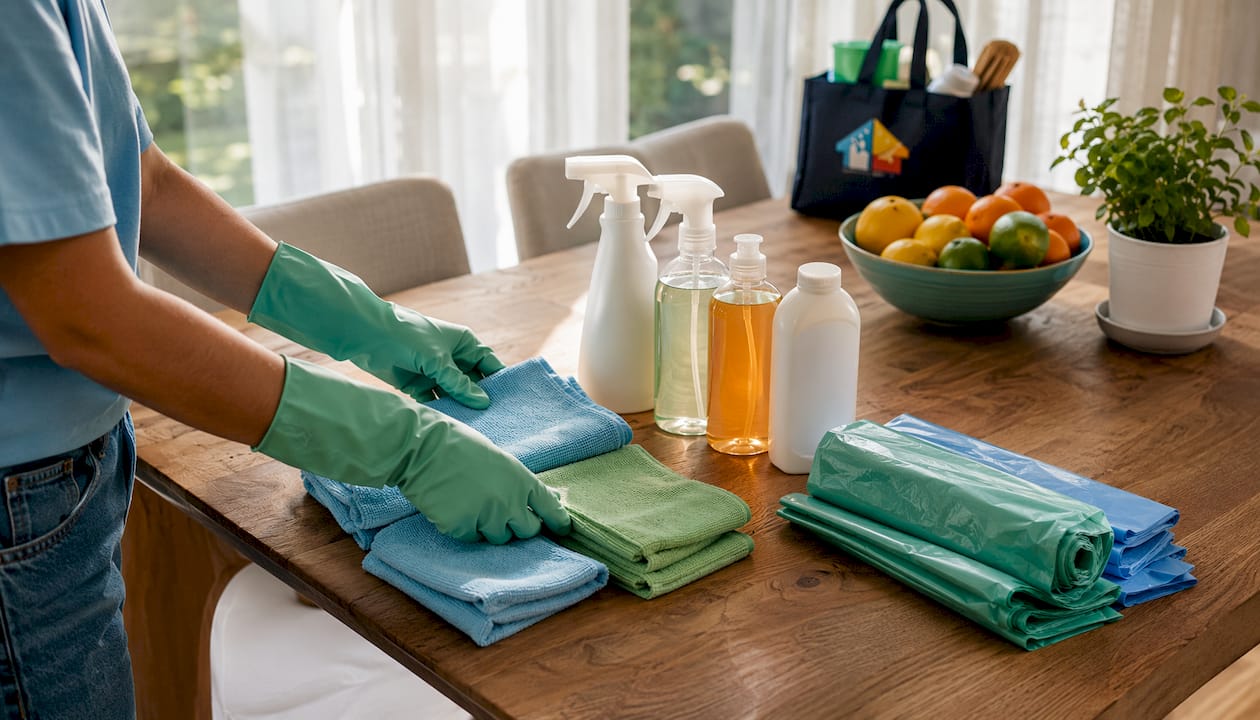
Running out of microfibre cloths mid-clean or discovering there’s no toilet paper to restock are the kinds of problems that cost you a star. The fix is a permanent supply kit staged at the property, plus a portable kit for cleaners who travel between listings.
Core cleaning tools and chemicals:
- Microfibre cloths, color-coded by zone (red for toilets, blue for surfaces, yellow for kitchen, green for glass)
- HEPA vacuum (especially important for coastal California properties where sand and allergens accumulate fast)
- Flat mop with washable pads
- EPA-registered disinfectant spray with a minimum 30-second dwell time
- Degreaser for kitchen surfaces and appliance exteriors
- Glass cleaner and lint-free cloths
- Toilet bowl cleaner and brush
- Scrub brush for grout and tile
Restock bin contents (always pre-staged at the property):
- Toilet paper (2 rolls per bathroom minimum, plus backup stock)
- Hand soap and dish soap
- Trash liners in the right sizes for each bin
- Coffee, tea, and sugar packets
- Spare batteries (AA and AAA for remotes)
- Dishwasher pods if the property has a dishwasher
Quantity guidance by property size:
| Property Size | Microfibre Cloths | Trash Liners | Toilet Paper Rolls |
|---|---|---|---|
| Studio | 6–8 | 4–6 | 4 |
| 1 bedroom | 8–10 | 6–8 | 6 |
| 2–3 bedrooms | 12–16 | 10–14 | 10–12 |
For linen rotation, keep at least two full sets per bed at the property. One set is on the bed; the other is in the wash or staged for the next turnover. Three sets per bed is the standard for high-occupancy listings. Per industry practice, deep cleans every 3–6 turnovers or quarterly keep the property from accumulating the kind of grime a standard turnover won’t touch.
How professional cleaners sequence a turnover (and why it matters)
Order matters more than speed. A cleaner who mops before dusting, or cleans the toilet before the sink, creates more work. The top-down, dry-first, wet-last sequence is the professional standard because it prevents re-soiling and keeps disinfectants working correctly.
The core sequence:
- Strip beds and start laundry first (it runs while you clean)
- Run the dishwasher if dishes are present
- Open windows for ventilation while cleaning (California weather usually cooperates)
- Dry work first: dust ceiling fans, light fixtures, shelves, and surfaces top-to-bottom in every room
- Wipe glass and mirrors
- Wet work last: sinks, toilets, showers, countertops, then floors
Room order for efficiency:
Kitchen → Bathrooms → Bedrooms → Living areas → Entry and high-touch surfaces → Floors (all rooms last)
The kitchen and bathrooms are the heaviest-use areas and need the most dwell time for disinfectants. Starting there means the spray has time to work while you move to bedrooms. Floors come last in every room because sweeping and mopping after everything else collects all the debris that fell during the clean.
Micro-processes that save real time:
- Apply toilet bowl cleaner at the start of each bathroom visit, let it dwell, scrub on the way out
- Use color-coded cloths to avoid cross-contamination between toilet zones and kitchen surfaces
- HEPA vacuum before mopping, especially in coastal properties where sand tracks through every room
Pro Tip: EPA-registered disinfectants need contact time to actually kill pathogens. Most require 30–60 seconds of wet surface contact. Spray, move on, come back. Wiping immediately after spraying is a common shortcut that doesn’t actually disinfect.
Room-by-room turnover checklist for California hosts
This is the checklist you hand to your cleaner. Each section includes a time estimate so you can track whether the turnover is on schedule. Total time for a 1-bedroom is roughly 60–90 minutes; a 2-bedroom runs 90–120 minutes per industry benchmarks.
Kitchen (estimated 20–25 minutes)
- Remove all trash and replace liner
- Empty and reload dishwasher or hand-wash remaining dishes
- Wipe inside microwave (walls, turntable, door seal)
- Clean stovetop grates and burner rings
- Wipe oven exterior and check inside for spills
- Degrease range hood and filter
- Wipe all countertops and backsplash
- Clean sink and faucet; check drain for debris
- Wipe cabinet faces and drawer pulls
- Check fridge: remove all guest food, wipe shelves, check for odors
- Sweep and mop floor, including under appliances where reachable
Each bathroom (estimated 15–20 minutes per bathroom)
- Apply toilet bowl cleaner and let it dwell
- Wipe toilet exterior: tank, base, seat (both sides), and rim
- Scrub toilet bowl and flush
- Clean sink and faucet; check drain for hair
- Scrub shower or tub walls, floor, and fixtures
- Check grout for mold or hard-water buildup; flag if it needs a deep clean
- Clean mirror with glass cleaner
- Wipe all surfaces and shelves
- Replace towels (bath, hand, face cloth) with fresh sets
- Restock toilet paper, hand soap, and any guest toiletries; remove trash and replace liner
Each bedroom (estimated 10–15 minutes per bedroom)
- Strip bed and bag used linens
- Check mattress protector for stains; replace if needed
- Make bed with fresh linens, hospital corners or brand standard
- Wipe nightstands, lamps, and any surfaces
- Check under the bed for forgotten items or dust
- Wipe electronics (TV remote, alarm clock, charging cables)
- Check closet: remove any guest items, straighten hangers
Living areas (estimated 10–15 minutes)
- Vacuum all upholstered surfaces (sofa, chairs, cushions)
- Wipe remotes, light switches, and high-touch surfaces
- Dust shelves, decor, and any media equipment
- Straighten and stage throw pillows and blankets for photos
- Check floors for debris before mopping
- Sweep or vacuum, then mop hard floors
Entry and high-touch surfaces (estimated 5 minutes)
- Wipe door handles (inside and outside)
- Clean keypad or lockbox
- Wipe light switches throughout the property
- Shake or replace welcome mat
- Check entryway for shoes, bags, or items left by previous guests
Outdoor and utility (estimated 10–15 minutes)
- Wipe down patio furniture and check for debris
- Check grill: clean grates, empty drip tray if used
- Confirm trash bins are emptied and positioned correctly for collection
- Check HVAC filter and flag if it needs replacement (California dust and wildfire smoke season make this a real issue)
- Check outdoor lighting and replace any burned-out bulbs
Statistic callout: A 47-point checklist structured by room (11 kitchen, 10 per bathroom, 7 per bedroom, 6 living area) prevents cleaners from skipping low-visibility items like under-bed dust, shower drain hair, and inside-fridge odors.
How to run a final walkthrough and verify the clean remotely
The walkthrough is not optional. A 10–15 minute final check catches the things a cleaner misses when they’re rushing: a hair on the shower floor, a trash liner that wasn’t replaced, a fridge that still smells like the last guest’s leftovers. It also gives you timestamped proof if a guest disputes the condition at check-in.
Walkthrough sequence:
- Smell test at the front door. If it doesn’t smell neutral or fresh, something needs attention before you go further. Ventilate and identify the source.
- Floors. Walk every room and check for visible debris, streaks, or missed spots.
- Kitchen. Open the fridge, microwave, and oven. Check the sink drain. Run a finger along the countertop edge.
- Bathrooms. Check the shower drain, toilet base, mirror, and soap/toilet paper restock.
- Bedrooms. Pull back the duvet corner to check the sheet. Look under the bed. Check the closet.
- Locks and security. Confirm the door locks correctly, the keypad code works, and windows are closed and latched.
Photo verification protocol:
- Kitchen: countertops, open fridge, stovetop
- Each bathroom: toilet, shower/tub, mirror, restocked supplies
- Each bedroom: made bed (full view), under-bed (quick shot), closet
- Living area: staged sofa and pillows, floors
- Entry: keypad, welcome mat, door exterior
Store all photos in a timestamped cloud folder (Google Drive or Dropbox work fine) organized by date and property. This creates a record for dispute resolution and lets you spot patterns in what gets missed.
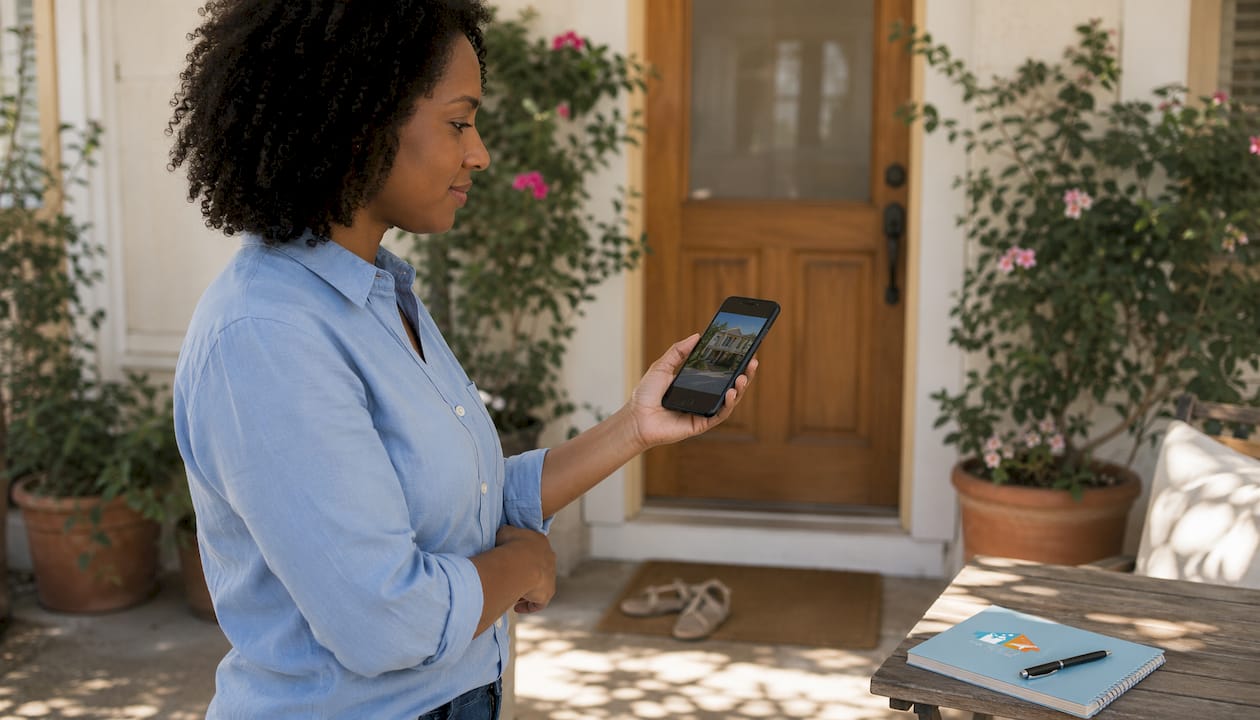
Pro Tip: Require the cleaner to send a completion message with a photo of the front door before you activate guest access. It takes 30 seconds and gives you a hard timestamp. Photo verification is the most reliable remote QA method available to hosts who can’t be on-site for every turnover.
How long turnovers take and what they cost in California
California pricing varies more than most hosts expect. A San Diego 1-bedroom turnover is priced differently than the same unit in Fresno or Palm Springs. Here’s what the numbers actually look like.
Time benchmarks by property size:
| Property Size | Standard Turnover | Deep Clean |
|---|---|---|
| Studio | 45–60 minutes | 2–3 hours |
| 1 bedroom | 60–90 minutes | 3–4 hours |
| 2 bedrooms | 90–120 minutes | 4–5 hours |
| 3+ bedrooms | 2–3 hours | 5–7 hours |
California pricing ranges:
Professional San Diego turnover pricing commonly runs $120–$275 for 1–2 bedroom properties. Coastal markets (Malibu, Santa Barbara, Newport Beach) tend to sit at the higher end of that range or above it. Inland markets like Riverside, Corona, and Fresno typically run lower.
Common surcharge triggers:
- Same-day or back-to-back turnovers (expect a 15–25% premium)
- Laundry included in the service (adds $20–$40 per load depending on provider)
- Long-distance travel for the cleaner (rural or mountain properties)
- Post-party or heavy-use cleanups
- HOA access fees or restricted parking that adds setup time
- Coastal sand cleanup (beach properties in summer generate significantly more debris)
- Wildfire smoke season: properties near affected areas may need extra ventilation and filter changes
Pro Tip: Schedule your quarterly deep clean during a low-occupancy gap, not between back-to-back bookings. A deep clean done under time pressure is rarely thorough.
When to hire a professional cleaner and how to manage them
DIY works for one property with light bookings. Once you’re running two or more listings, managing back-to-back turnovers yourself, or hosting from a distance, the math changes fast. The question isn’t whether to hire; it’s how to hire well.
Decision guide:
- DIY: One property, fewer than 8 bookings per month, you live nearby
- Hire a cleaner: Multiple properties, frequent back-to-back turnovers, or you’re more than 30 minutes away
- Managed service: You want photo verification, restock management, and scheduling handled without your involvement
Onboarding a new cleaner:
- Provide reference photos of how each room should look when finished
- Give them the full written checklist (the 47-point version below)
- Show them the restock bin location and what gets replenished each time
- Walk through building quirks: parking, elevator, HOA rules, trash schedule
- Establish the photo verification standard before the first solo turnover
Performance management:
- Do a spot check in person for the first 2–3 turnovers with a new cleaner
- Schedule confirmation texts the night before every turnover, not the morning of
- Keep the same crew for the same property whenever possible. Repeat crews learn the property’s staging, quirks, and expected photo angles, which makes each subsequent turnover faster and more consistent.
- Document your standards in writing so there’s no ambiguity about what “clean” means
Pro Tip: For same-day or back-to-back turnovers, consider a small bonus ($10–$20) for on-time completion with photos submitted. It costs less than a bad review. You can also reference specialist short-let cleaning services as a benchmark for what fast-turnaround operational standards look like when building your own cleaner expectations.
Sample onboarding message:
The 47-point printable turnover checklist
Copy this list and give it to your cleaner. Check off each item during the walkthrough. For digital use, paste it into Google Sheets and add a “Done” column. For print, add a checkbox column on the left.
How to use this checklist:
- Work through each section in order
- Check off each item as you complete it
- Photograph flagged items (damage, stains, supply shortages) before leaving
- Send the completion message with photos before activating guest access
Kitchen (11 points)
- Remove all trash; replace liner
- Empty and reload or hand-wash all dishes
- Clean inside microwave (walls, turntable, door)
- Clean stovetop grates and burners
- Wipe oven exterior; check inside for spills
- Degrease range hood and filter
- Wipe all countertops and backsplash
- Clean sink and faucet; clear drain
- Wipe cabinet faces and drawer pulls
- Check and clean fridge (remove food, wipe shelves)
- Sweep and mop floor
Each bathroom (10 points)
- Apply toilet bowl cleaner; let dwell
- Wipe toilet exterior (tank, base, seat, rim)
- Scrub bowl; flush
- Clean sink and faucet; clear drain
- Scrub shower/tub walls, floor, fixtures
- Check grout for mold or hard-water buildup
- Clean mirror
- Wipe all surfaces and shelves
- Replace towels (bath, hand, face cloth)
- Restock toilet paper, soap; remove trash; replace liner
Each bedroom (7 points)
- Strip bed; bag used linens
- Check mattress protector; replace if stained
- Make bed with fresh linens
- Wipe nightstands, lamps, surfaces
- Check under bed for items or dust
- Wipe electronics and remotes
- Check closet; remove guest items; straighten hangers
Living area (6 points)
- Vacuum upholstered surfaces
- Wipe remotes, switches, high-touch surfaces
- Dust shelves, decor, media equipment
- Stage pillows and blankets for photos
- Sweep or vacuum floors
- Mop hard floors
Entry and high-touch (4 points)
- Wipe door handles (inside and outside)
- Clean keypad or lockbox
- Wipe light switches throughout
- Shake or replace welcome mat
Outdoor and extras (5 points)
- Wipe patio furniture; clear debris
- Check grill; clean grates; empty drip tray
- Empty and position trash bins
- Check HVAC filter; flag if replacement needed
- Check outdoor lighting; replace burned-out bulbs
For studios: Combine bedroom and living area sections (13 points total for that zone). For 3+ bedrooms: Add a bedroom block for each additional room. Monthly deep clean additions: Include inside oven, window tracks, baseboards, behind appliances, and grout scrubbing. For a full breakdown of what a professional deep clean covers room by room, see what professionals deep clean.
Digital conversion: Paste into Google Sheets with columns for Task, Done (checkbox), and Notes. Share the sheet with your cleaner and require them to mark completion before sending photos.
Ongoing quality control beyond photo verification
Photo verification catches the obvious. What it doesn’t catch is the slow drift: the grout that’s getting darker each month, the mattress protector that’s been stained for three turnovers, the HVAC filter that’s been due for replacement since February. Quality control is a system, not a single step.
Guest feedback integration:
Read every review for cleaning-specific language. Words like “dusty,” “smelled,” “hair,” or “stained” are direct signals about what your checklist is missing or what your cleaner is skipping. When you see a pattern across two or more reviews, that’s a process problem, not a one-off. Update the checklist, add a photo requirement for that specific item, and brief the cleaner directly.
Airbnb’s cleanliness standards require that listings be free of health hazards and meet a high standard of cleanliness between every stay. A guest complaint about mold, pests, or persistent odors can trigger a review removal or listing suspension. Treating guest feedback as a quality audit, not just a reputation metric, keeps you ahead of that risk.
Periodic deep cleans:
A standard turnover doesn’t reach behind appliances, inside window tracks, or deep into grout. Schedule a deep clean every 3–6 turnovers or quarterly, whichever comes first. Beach houses and pet-friendly units need it more often. The difference between a turnover clean and a deep clean is scope: a deep clean resets the baseline so your regular turnovers stay effective.
Spot checks and seasonal reviews:
Walk the property yourself every 4–6 weeks if you’re a remote host. Look at the things photos don’t show: the feel of the mattress, the smell of the HVAC, the condition of the grout. California’s wildfire smoke season (typically late summer through fall) is a good trigger for an extra filter check and ventilation review. HOA properties along the coast often accumulate salt residue on windows and exterior surfaces that needs periodic attention beyond the standard turnover scope.
Checklist audits:
Every 2–3 months, compare your checklist against your recent guest reviews and your cleaner’s photo submissions. Are there rooms that consistently generate complaints? Items that never get photographed? Add them to the checklist and the photo protocol. A checklist that never gets updated is a checklist that slowly stops working.
Key Takeaways
A California Airbnb turnover checklist only protects your rating when it combines a written room-by-room sequence, mandatory photo verification, and a 10–15 minute final walkthrough before every guest check-in.
| Point | Details |
|---|---|
| Three non-negotiables | Written checklist, timestamped photo verification, and a 10–15 minute final walkthrough before every check-in. |
| Buffer window | Schedule a minimum 4-hour gap between checkout and check-in in California markets to allow for cleaning, laundry, and delays. |
| 47-point checklist | Use the room-by-room structure (11 kitchen, 10 per bathroom, 7 per bedroom, 6 living area) as your repeatable standard. |
| Deep clean cadence | Schedule a deep clean every 3–6 turnovers or quarterly; beach and pet-friendly properties need it more often. |
| Neatandtidypros | Offers Airbnb turnover cleans, deep cleans, and same-day turnover support across California, with photo verification and repeat crew scheduling. |
What California hosts consistently miss during turnovers
The items that generate the most guest complaints are almost never the ones hosts worry about. Nobody leaves a bad review because the sofa cushions weren’t perfectly aligned. They leave it because the shower drain had someone else’s hair in it, the fridge smelled like last week’s takeout, or the toilet paper ran out on day two.
The three spots worth double-checking on every single turnover are the shower drain, the inside of the fridge, and the area under the bed, as these low-visibility zones are often skipped when cleaners are rushed and are what guests notice first. California coastal properties also require attention to sand tracking in these areas. It tracks in from feet, bags, and beach gear and ends up in corners, under furniture, and in bathroom grout. A HEPA vacuum and a flat mop get it; a standard upright vacuum often doesn’t.
Regional quirks matter here. During wildfire smoke season, properties near affected areas need extra ventilation and a filter check that isn’t on a standard turnover checklist. HOA-managed buildings along the coast sometimes have restricted cleaning hours or elevator access rules that add 15–20 minutes to a turnover if the cleaner doesn’t know about them in advance. The same crew returning to the same property learns all of this over time. That’s the real argument for repeat crew scheduling: it’s not just about speed, it’s about institutional knowledge that a new cleaner doesn’t have on day one.
Neatandtidypros handles your California Airbnb turnovers so you don’t have to
Keeping a 5-star rating across multiple turnovers is a logistics problem as much as a cleaning one. Neatandtidypros offers Airbnb turnover cleans, deep cleaning services, move-in/move-out resets, and same-day turnover support across California, including the Inland Empire, Orange County, and surrounding areas.
Every turnover includes photo verification submitted before guest access is activated, restock confirmation, and the option to keep the same crew on your property for scheduling consistency. For hosts who want the 47-point standard enforced without managing it themselves, Neatandtidypros handles the checklist, the photos, and the cleaner coordination. View the full service options or request a quote to get started. For hosts who need a deeper reset between booking cycles, the residential cleaning guide explains exactly what to expect from each service type.
Useful sources for California Airbnb hosts
The recommendations in this guide draw from the following sources. Each is worth bookmarking if you’re building or refining your turnover system.
- Airbnb’s cleanliness standards: The platform’s official requirements for listing cleanliness, health hazards, and guest turnover expectations. Start here to understand what Airbnb actually enforces.
- Airbnb’s cleaning resource center: Practical guidance on building a cleaning strategy, scheduling between bookings, and what a thorough clean covers. Useful for hosts setting up their first system.
- 47-point turnover checklist (Damian’s Hosting Hub): The source for the room-by-room point structure used throughout this guide. Includes Central Valley-specific notes.
- West Coast Homestays turnover standards (San Diego): Professional sequencing guidance and pricing context for Southern California markets.
- Nurture Stays turnover guide: Time benchmarks, buffer window standards, and photo verification protocols.
- GleamSync deep clean cadence guide: Deep clean frequency recommendations by property type and occupancy level.
- Neatandtidypros blog: California-focused cleaning guides for Airbnb hosts, including deep clean scheduling, rental property standards, and Orange County rental cleaning specifics.
- How deep cleaning differs from regular cleaning: A clear breakdown of scope differences, useful for hosts deciding when a standard turnover isn’t enough.