An effective hotel common area cleaning program runs on three things: zone-based checklists with time-bound tasks, hourly visible checks on the lobby and restrooms, and a documented inspection log that catches problems before guests do. Start today by adding an hourly lobby walk, an hourly restroom check, and visible high-touch disinfection to every shift. Properties that formalize this get fewer cleanliness complaints and a lobby that looks tended, not just tidied once a day.
TL;DR:
- High-touch areas like elevator buttons and front-desk counters require hourly disinfectant contact time, not just quick wipes, to effectively kill germs.
- Zone-based checklists with clearly assigned frequencies, such as wiping glass doors twice daily or vacuuming lobby lanes every two hours, are essential for consistent cleanliness.
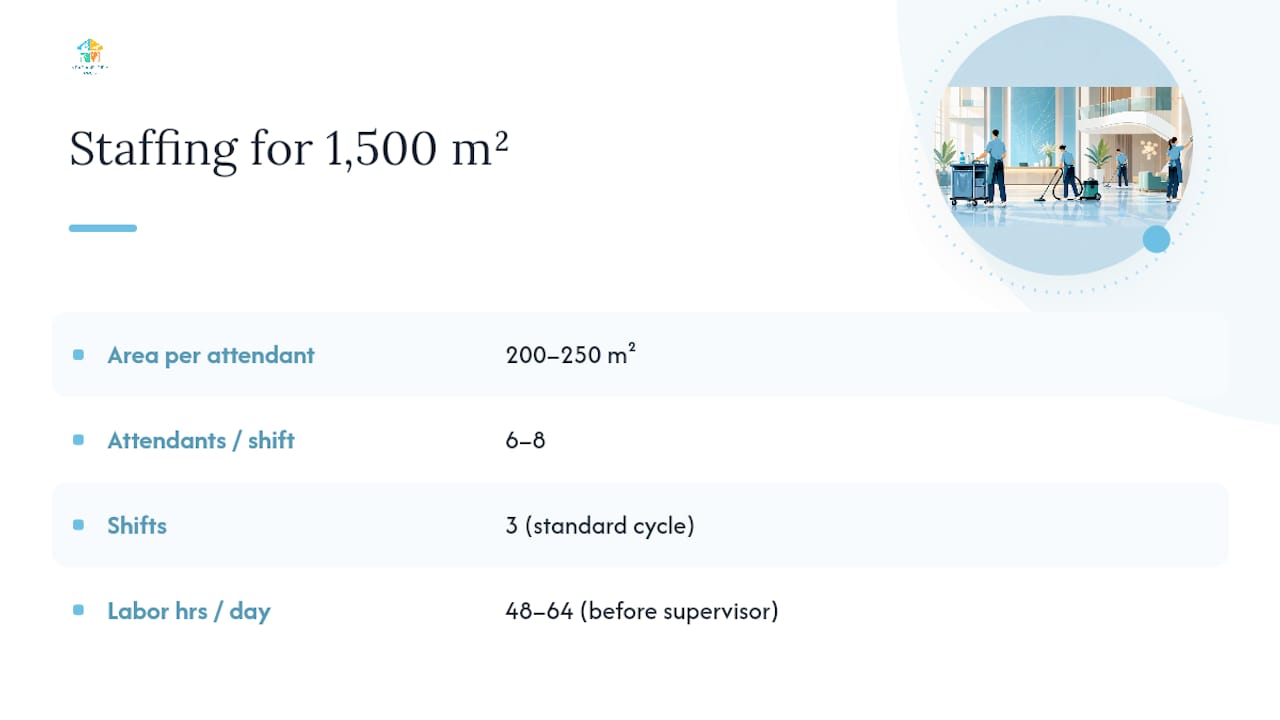
- Staffing roughly one attendant per 200 to 250 square meters ensures routine checks, with additional staff during high occupancy or special events to prevent shortfalls.
- Implementing hourly lobby walks with photo logs and a supervisor audit can significantly reduce guest complaints and improve overall impression.
- Using eco-friendly products, dedicated supplies per zone, and staff training on proper dilution and high-touch disinfection enhances sustainability and cleaning effectiveness.
Table of Contents
- Zone-By-Zone Hotel Lobby Cleaning Checklist
- How Often Should Common Areas Be Cleaned?
- What Cleaning Supplies and Methods Work Best by Surface?
- Staffing and Time Estimates for Public-Area Attendants
- Quality Control, Inspections, and Corrective Action
- What Does Hotel Common Area Cleaning Cost to Staff?
- Neat and Tidy Pros’ Approach to Public-Area Standards
- Keeping High-Touch Surfaces From Spreading Germs
- Waste and Recycling Management in Shared Spaces
- Training and Certification for Public-Area Cleaning Staff
- Eco-Friendly Products and Sustainable Cleaning Practices
- The One Change That Moves Guest Perception Fastest
- Let Neat and Tidy Pros Handle the Heavy Lifting
- Templates and Guides Worth Bookmarking
- Sources
- FAQ
Zone-By-Zone Hotel Lobby Cleaning Checklist
Guests judge a property quickly, and most of that judgment happens in five zones: entrance, lobby and front desk, elevators, corridors, and restrooms. A checklist only works if it assigns a frequency to every line item, so nobody has to guess whether “clean the doors” means once a shift or once a week.
Glass entrance doors need wiping at least twice daily at shift changes, and entrance steps should be swept clean of debris before the first guest arrives each morning, according to maintenance guidance from Oxmaint. Entrance mats deserve their own line item too. Public-area cleaning is a discipline distinct from guest-room housekeeping, with its own equipment and mat rotation strategy built around weather and foot traffic, as the operator’s guide from AM Facility Maintenance lays out.
Here’s a starting template by zone:
- Entrance and doors: Sweep steps and mats (before first arrival, daily); wipe glass doors and handles (every shift change); check mat wear and moisture (hourly during rain).
- Lobby and front desk: Dust and disinfect counters (hourly); vacuum or sweep visible traffic lanes (every 2 hours); straighten furniture and remove clutter (hourly); empty trash and check for odor sources (every 2 hours).
- Elevators: Wipe buttons, rails, and doors (hourly); vacuum or mop floor tracks (daily); polish interior panels (weekly).
- Corridors: Spot vacuum carpet runners (daily); wipe wall scuffs and light fixtures (weekly); check lighting and signage (weekly).
- Public restrooms: Full inspection and restock (hourly); disinfect all touchpoints (hourly); deep clean grout and drains (weekly).
- Fitness room and lounge: Wipe equipment and surfaces (every 2 hours during peak hours); vacuum or mop floors (daily); launder towels and clean mirrors (daily).
- Meeting and banquet space: Reset furniture and vacuum (after each event); spot clean walls and glass (daily when in use); deep clean carpets (monthly or post-event).
- Exterior and entryway: Sweep walkways and check for hazards (start of shift); empty exterior ash urns and trash (every 2 hours); pressure wash entry surfaces (monthly).
That last column, the frequency marker, is what turns a wish list into a real hotel lobby cleaning checklist your team can execute without a supervisor standing over them.
How Often Should Common Areas Be Cleaned?
The honest answer is that frequency depends on traffic, not the clock. High-touch, high-visibility zones like the lobby and restrooms need standing hourly attention, while corridors and meeting rooms can run on a daily or weekly rhythm unless an event changes the math.
A workable structure looks like this:
- Hourly: Restroom checks and restocking, lobby high-touch wipe-downs, elevator button sanitizing, trash and ashtray checks.
- Start of shift: Entrance sweep, glass door wipe, furniture reset, signage check.
- End of shift: Full lobby vacuum or mop, restock supply carts, log any deferred items for the next shift.
- Daily: Corridor spot vacuuming, fitness equipment deep wipe, elevator floor cleaning.
- Weekly: Restroom grout and drain deep clean, corridor wall and light fixture wipe, upholstery spot treatment.
- Monthly: Carpet extraction in low-traffic zones, exterior pressure washing, deep polish of stone and metal surfaces.
Nighttime windows, when foot traffic drops, are the right time for the tasks that require space or noise, like shampooing upholstered furniture or polishing high fixtures, according to Fsm. Daytime crews should stay focused on quick, visible touch-ups instead.
Quick-reference adjustment table:
| If this happens | Then adjust to |
|---|---|
| High occupancy | Add one extra lobby round per shift |
| A conference or banquet is booked | Reset and inspect meeting space after every session, not just at day’s end |
| Rainy or snowy weather | Check entrance mats and floors every 30 minutes |
| A cleanliness complaint is logged | Trigger an immediate re-inspection of the named zone |
What Cleaning Supplies and Methods Work Best by Surface?
Matching the product to the material matters more than most checklists admit, and using the wrong one is how a marble lobby floor ends up etched or a leather sofa cracks a year early.
Natural stone floors and countertops need a neutral pH cleaner. Anything acidic or highly alkaline can etch polished marble or travertine over time. Glass surfaces do best with a streak-free glass cleaner and microfiber cloths rather than paper towels, which leave lint on high-visibility entrance doors. Upholstered furniture in lobbies and lounges usually needs either shampooing or low-moisture encapsulation cleaning, and encapsulation is generally the faster option when furniture can’t be taken out of service for long. Carpet in corridors and meeting rooms benefits from the same logic: encapsulation for quick turnaround, hot water extraction for a deeper periodic clean. Stainless steel elevator panels and handrails need a dedicated stainless cleaner applied with the metal’s grain, not a general all-purpose spray that leaves streaks under lobby lighting. Restroom grout is one of the biggest hidden odor sources in a hotel, and it needs a dedicated weekly scrub with an enzymatic or oxygenated cleaner rather than a quick daily wipe.
On equipment, commercial autoscrubbers earn their keep on large lobby floors, microfiber systems reduce cross-contamination risk compared to cotton mops, and extension tools matter for chandeliers and high sconces that otherwise get skipped for months. A guide to professional cleaning tool types breaks down which equipment fits which job, and commercial carpet and upholstery specialists are worth calling in for periodic deep extraction that in-house crews can’t match on a daily schedule.
Pro Tip: Keep one dispenser and supply cart per zone rather than a shared central cart. Attendants waste real time walking back and forth, and a dedicated cart makes it obvious the moment a product runs low.
Staffing and Time Estimates for Public-Area Attendants
A workable staffing rule of thumb: one attendant can reasonably cover roughly 200 to 250 square meters of public area per shift, including routine checks and light maintenance tasks, per Hospitality. That number assumes a mix of hourly checks and scheduled deeper tasks, not constant deep cleaning.
To turn that into an actual roster:
- Measure total public-area square footage across all zones (lobby, corridors, restrooms, elevators, meeting space).
- Divide by 200 to 250 to get your baseline attendant count per shift.
- Assign time-bound tasks per the checklist. For example, vacuuming a 500 square meter lobby typically takes 20 to 25 minutes, a benchmark drawn from Lumiform’s housekeeping checklist templates.
- Build in a 10 to 15 minute buffer per hour for restroom checks, which interrupt the main task list but can’t be skipped.
- Add one supervisor audit slot per shift, separate from attendant task time.
Shift handoffs are where programs quietly fall apart. The outgoing attendant should log any deferred task (a stain that needs a second pass, a fixture that needs maintenance) directly into the shared log, not verbally, because verbal handoffs get lost the moment someone calls in sick. The most common scheduling mistake is staffing for average occupancy instead of peak occupancy, which leaves the lobby understaffed during exactly the hours it matters most.
Quality Control, Inspections, and Corrective Action
Checklists only work if someone verifies they were actually followed, which is why quality control needs its own cadence separate from the cleaning schedule itself. Hourly checks should log a simple pass or fail per zone. Daily checks should include a supervisor walkthrough with photo documentation of any deficiency. Weekly checks should compare completion rates against the schedule to spot patterns, like a restroom that keeps failing inspection at 3 PM every day.
Track a small set of KPIs rather than a sprawling dashboard:
- Checklist completion rate per shift
- Guest-facing cleanliness score (from surveys or review mentions)
- Average time per square meter against your staffing baseline
- Repeat issues in the same zone within a rolling 30-day window
Digital scheduling tools, ranging from a shared Google Sheet to dedicated facility apps, make this loop far easier to run than paper logs, and they let front desk staff flag a guest complaint directly into the same system housekeeping uses, closing the gap between what a guest reports and what gets fixed, as Hospitality.Institute notes. When a zone fails inspection twice in a week, that’s the trigger for remedial coaching, not a formal write-up. Photo evidence attached to the log makes that conversation concrete instead of accusatory.
What Does Hotel Common Area Cleaning Cost to Staff?
For a mid-sized property running, say, 1,500 square meters of public area, the 200 to 250 square meter per attendant rule puts you at roughly six to eight attendants per shift, translating to somewhere between 48 and 64 labor hours per day across a standard three-shift cycle, before supervisor time.
Consumables follow their own rhythm. Entrance mats typically need replacement or deep cleaning weekly, paper products and dispenser refills run on a daily restock cycle, and chemical concentrates usually get reordered monthly for a property this size, though usage climbs fast during high-occupancy stretches. Build a small buffer into that monthly order rather than reordering reactively.
Peak events change the math quickly. A banquet or conference typically adds one to two temporary attendants for same-day turnover and an extra deep-clean pass on meeting space the following morning. Budgeting for that surcharge ahead of a known event is far cheaper than scrambling to reassign staff from other zones and leaving the lobby short-handed during checkout rush.
Neat and Tidy Pros’ Approach to Public-Area Standards
Neat and Tidy Pros builds commercial cleaning programs around the same discipline this guide describes: time-bound tasks, not vague daily rounds. Its 28-minute room turnover checklist shows how tightly a task list can be timed once it’s broken into measurable steps, a method that transfers directly to lobby and corridor scheduling. The daily lobby cleaning steps template is a practical starting point for any manager building this out today.
Keeping High-Touch Surfaces From Spreading Germs
Door handles, elevator buttons, handrails, and front-desk counters get touched by hundreds of hands a day, and they’re the surfaces most likely to carry germs from one guest to the next. Treat them as a separate task category from general surface cleaning, not a line item buried inside “wipe down lobby.”
The fix is disinfectant contact time, not just wiping. A disinfectant needs to stay wet on the surface for the manufacturer’s stated contact time, often several minutes, to actually kill pathogens rather than just relocate them. A quick spray-and-wipe in three seconds looks clean but accomplishes almost nothing chemically. Color-coded microfiber cloths matter here too: one color for restroom fixtures, a different color for lobby counters and elevator panels, so a cloth used on a restroom sink never touches a surface a guest’s hand will land on next. Attendants should sanitize hands and change gloves between zones, not just between shifts.
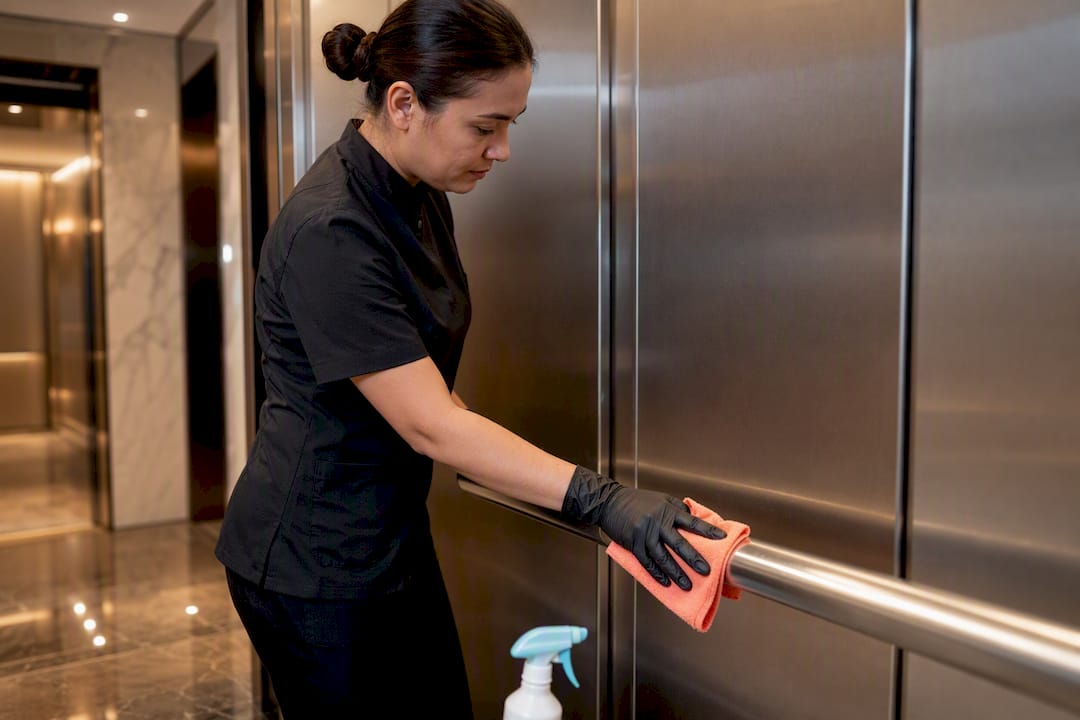
Elevator buttons and handrails deserve their own hourly pass separate from the general elevator cleaning task, since they see far more contact per hour than the floor or walls. Front-desk counters should get the same treatment, especially the section where guests sign or hand over a card. None of this requires new products, mostly a habit shift: treat high-touch points as their own checklist line with their own frequency, not an afterthought folded into a broader wipe-down.
Waste and Recycling Management in Shared Spaces
Trash is one of the fastest ways a lobby stops smelling and looking clean, which is why waste checks belong on the same hourly cycle as restroom inspections, not a once-a-shift task. A bin that’s visibly full or has anything spilling over the rim needs to be emptied immediately, not queued for the next round.
Recycling adds a layer most properties still handle inconsistently. Clearly labeled, separate bins for recyclables in lobbies, fitness centers, and meeting spaces reduce contamination in the recycling stream and signal to guests that the property takes sustainability seriously. Meeting and banquet spaces generate a disproportionate amount of waste after events, mostly food packaging and paper, so post-event cleanup should include an immediate waste sweep rather than waiting for the standard end-of-day pass.
Ashtrays and exterior receptacles near entrances need checking every couple of hours regardless of visible fill level, since cigarette waste and odor build up faster than the container looks. Back-of-house waste staging areas also matter for guest perception. Overflowing dumpsters or open waste corrals near a side entrance undo a spotless lobby in one glance if a guest wanders past on the way to parking. Assign someone specific responsibility for waste and recycling checks, separate from general surface cleaning, so it doesn’t fall through the cracks between shift changes.
Training and Certification for Public-Area Cleaning Staff
New attendants need structured onboarding before they’re handed a checklist and turned loose, and that training should cover more than “how to mop.” It needs to include chemical handling and dilution ratios, PPE use (gloves, eye protection when handling concentrates, and non-slip footwear for wet floor conditions), bloodborne pathogen basics for anyone who might encounter bodily fluids in a public restroom, and the property’s own documented SOPs for each zone.
Refresher training on a quarterly basis keeps standards from drifting, especially as new products or equipment get introduced. Many properties also pursue third-party certification through organizations like ISSA’s Cleaning Industry Management Standard (CIMS), which gives supervisors an external benchmark to train against rather than relying purely on internal habit. Documented SOPs matter as much as the training itself. A written, zone-specific procedure that a new hire can follow on day one closes the gap between what an experienced attendant knows intuitively and what actually gets written down.
Cross-training attendants across zones also builds real scheduling flexibility. Someone trained only on restrooms can’t cover a lobby shortfall during a call-out, but someone trained across the full zone list can.
Eco-Friendly Products and Sustainable Cleaning Practices
Green-certified cleaning products, often bearing a Green Seal or EPA Safer Choice label, now perform close to traditional chemicals on most common surfaces, and switching reduces both chemical exposure for staff and runoff concerns for the property. Concentrated products that get diluted on-site also cut packaging waste significantly compared to pre-mixed bottles shipped and disposed of constantly.
Microfiber systems support sustainability goals too, since they need less water and less chemical volume per task than older cotton mop-and-bucket methods, while also reducing cross-contamination risk. Refillable dispenser systems for hand soap and surface cleaners in restrooms and lobbies cut single-use plastic waste meaningfully over a year of daily hotel traffic.
Sustainable practice extends past the product bottle. Scheduling deep-clean tasks efficiently, so a crew isn’t running an autoscrubber twice when once would do, saves both water and labor hours. Training staff on correct dilution ratios prevents the common habit of over-pouring concentrate “to be safe,” which wastes product and adds unnecessary chemical load to wastewater. None of this requires sacrificing cleaning performance. It mostly requires choosing products deliberately and training staff to use them at the right concentration instead of guessing.
The One Change That Moves Guest Perception Fastest
If you implement one thing from this guide, make it hourly lobby walks with photo logging and a daily supervisor audit. It’s the single change that catches problems while they’re still small, before a guest notices or a review mentions them. Pilot it for one week in your busiest zone before rolling it property-wide, and track your completion rate against your cleanliness complaint log. The trade-off is real: it adds supervisor time and requires a simple logging habit, but the payoff shows up fast in fewer repeat issues and a lobby that consistently looks tended rather than periodically cleaned.
— Neat
Let Neat and Tidy Pros Handle the Heavy Lifting
Running this program with an already-stretched housekeeping team is where most properties fall short, not because the checklist is wrong but because nobody has the hours to execute it consistently. Neat and Tidy Pros offers commercial cleaning services built for exactly this gap: eco-friendly products, documented task-level checklists, and crews trained to work around guest traffic instead of interrupting it.
Whether you need daily lobby maintenance layered on top of your existing team or a full deep-clean pass before a peak season, the services page outlines what’s included and how scheduling works. Request a consultation through Neat and Tidy Pros’ services page to get a checklist template built around your property’s actual square footage and traffic patterns, not a generic one pulled from a binder.
Templates and Guides Worth Bookmarking
For deeper reference beyond this guide, the Hospitality.Institute scheduling framework covers staffing math in more depth, Lumiform’s checklist template offers a downloadable starting point, and the AM Facility Maintenance operator guide explains entrance-mat and nighttime scheduling strategy in more detail than most operators bother to document.
Sources
- Hospitality
- Hotel Lobby and Common Area Maintenance Checklist for Cleanliness Safety and Guest Experience Optimization
FAQ
What Is the 15/5 Rule in Hotels?
The 15/5 rule asks staff to acknowledge a guest within 15 feet with eye contact and a smile, and to greet them verbally within 5 feet. It’s a guest-service standard, not a cleaning protocol, but well-run properties train lobby attendants on it too, since attendants are often the closest staff member to guests during peak lobby hours.
What Is the 5-5-5 Rule for Cleaning?
There’s no single standardized “5-5-5 rule” in professional cleaning; the phrase gets used inconsistently across different operator guides. If you encounter it in training materials, verify the specific definition with that source rather than assuming a universal meaning.
How Much Should I Tip Housekeeping on a $300 a Night Room?
A common guideline is $5 to $10 per night regardless of room rate, left daily rather than at checkout so the attendant who actually cleaned that day receives it. This applies to guest-room housekeeping tipping, separate from the public-area cleaning staff this guide covers.
Which Department Handles Guest Rooms and Public Areas?
Housekeeping typically owns guest-room cleaning, while a separate public-area or environmental services team, sometimes under the same housekeeping department, sometimes its own unit, handles lobbies, corridors, and shared spaces. The distinction matters because public-area work runs on a different schedule and equipment set than room turnover, as noted in the AM Facility Maintenance guide.
How Often Should Hotel Public Restrooms Be Checked?
Public restrooms need inspection and restocking on an hourly basis, with a deeper weekly clean of drains and grout to control odor sources, per Oxmaint’s maintenance checklist guidance.