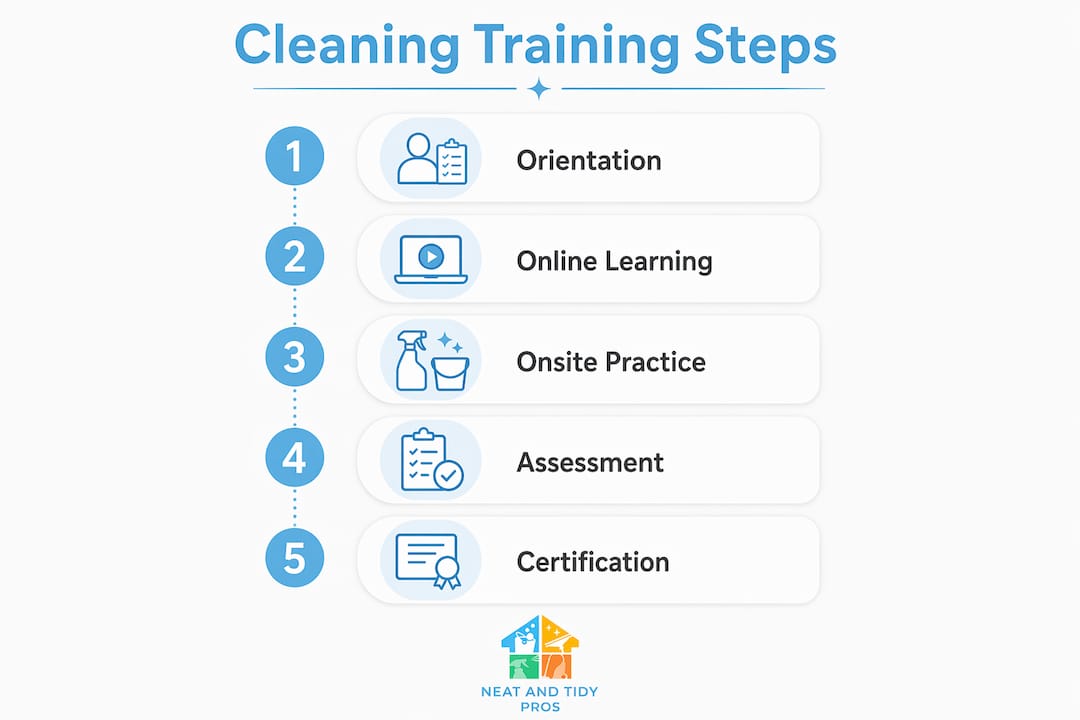
Professional cleaners in the United States go through structured training that covers far more than mopping floors and wiping counters. The process typically combines onboarding, hands-on technique development, equipment handling, chemical safety, and formal certification assessments. Here is what that training actually looks like:
- Onboarding and orientation introduce company standards, safety rules, and basic procedures
- Core technique training covers dusting, sanitizing, disinfection, and surface-specific methods
- Equipment handling includes floor scrubbers, HEPA vacuums, and chemical dispensing systems
- Safety and compliance training addresses OSHA standards and bloodborne pathogen protocols
- Certification programs such as the IICRC House Cleaning Technician (HCT) and ISSA Professional House Cleaning (PHC) validate skills through knowledge checks and practical assessments
- Ongoing development through refresher courses, audits, and recertification keeps skills current
The goal across all of these programs is consistency. A well-trained cleaner does not just complete tasks. They evaluate cleanliness levels, catch what others miss, and adapt to different environments without supervision.
What types of cleaning training programs are available?
Training for professional cleaners comes in several formats, and most companies use more than one.
Online and virtual learning gives cleaners the flexibility to study on their own schedule. The IJCSA Training & Certifications Program, developed over a decade ago, delivers all course materials, tests, and study guides through a phone or computer. Courses range from one hour for customer service basics to 40 hours for medical or biohazard cleaning. That range reflects how seriously the industry takes specialized knowledge.
Onsite instructor-led training is where real competency gets built. Supervised sessions with real-time feedback accelerate skill development in ways that video alone cannot replicate. Watching a trainer demonstrate the correct dilution ratio for a disinfectant, then doing it yourself under observation, locks in the technique far better than reading about it.
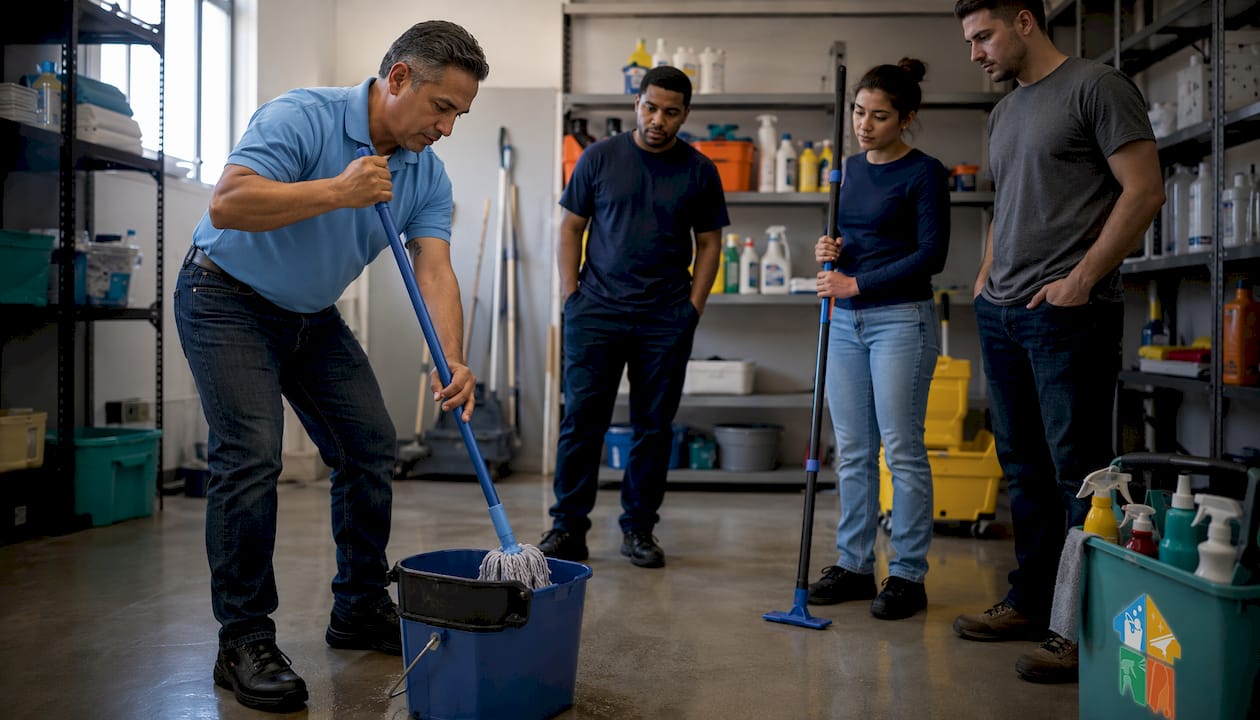
Train-the-trainer programs take a different approach. Instead of training every cleaner individually from the top, these programs equip supervisors to coach their own teams. The result is consistent, site-level reinforcement rather than a one-time orientation that fades within weeks.
Specialized residential training focuses on home environments, covering surface-specific care, client communication, and the particular expectations homeowners bring. Commercial cleaning training shifts the focus to business environments, where standards for restrooms, lobbies, and high-traffic areas follow stricter protocols and often require documented compliance.
What do cleaners actually learn in training programs?
The skills covered in professional cleaning education go well beyond the basics most people assume.
- Surface-specific techniques for dusting, mopping, scrubbing, and sanitizing different materials without causing damage
- Equipment operation and maintenance, including HEPA vacuums, floor scrubbers, and pressure washers. Knowing how to use cleaning tools correctly extends their life and improves results
- Chemical safety and dilution ratios, covered through Standard Operating Procedures (SOPs) that reduce hazards and errors in daily operations, per OSHA cleaning industry standards
- Disinfection protocols, distinguishing between cleaning, sanitizing, and disinfecting, and knowing when each is required
- Soft skills, including customer service and communication. ISSA training programs treat client communication as a dedicated component, not an afterthought
- Environmental and sustainable practices, such as green cleaning methods that reduce chemical exposure for both cleaners and occupants
- Time management and quality control, teaching cleaners to work efficiently without cutting corners
- Safety compliance, including cleaning supply safety and bloodborne pathogen awareness, which OSHA requires for anyone at risk of exposure
Pro Tip: SOPs that spell out exact task sequences and dilution ratios do more than protect cleaners. They make quality repeatable across every shift and every team member.
One skill that separates trained cleaners from untrained ones is the ability to evaluate soiling rather than just react to it. Standards like INSTA800 teach cleaners to measure cleanliness against agreed benchmarks, which shifts the work from task execution to active quality management.
Which certification programs set the industry standard?
Several nationally recognized programs define what qualified cleaning looks like in the United States.
IICRC House Cleaning Technician (HCT) covers interior residential cleaning, disinfection, sanitizing, and routine maintenance. The HCT certification requires no prerequisites and is delivered in person, making it accessible to new cleaners and experienced professionals alike. It signals expertise in health-conscious residential cleaning practices.
ISSA Professional House Cleaning (PHC) takes approximately 8 hours to complete and emphasizes the science behind cleaning methods, including health-centric disinfection and customer service. It is designed for residential specialists who want to demonstrate technical depth.
Cleaning Management Institute (CMI) certifications cover both basic and advanced levels. Passing scores are set at 80% or higher, and CMI requires recertification every two years to reflect updates in best practices and chemical safety protocols.
IJCSA certifications span a wide range of specialties, from the Residential Cleaning Specialist (RCS), which requires roughly 26 hours of study, to the Master Certification (IMC), which includes over 250 questions and a verbal oral exam averaging four hours. The Green Cleaning Certification (GCC) and Chemical Hazards Certification (CHC) address the growing demand for environmentally responsible and safety-conscious service.
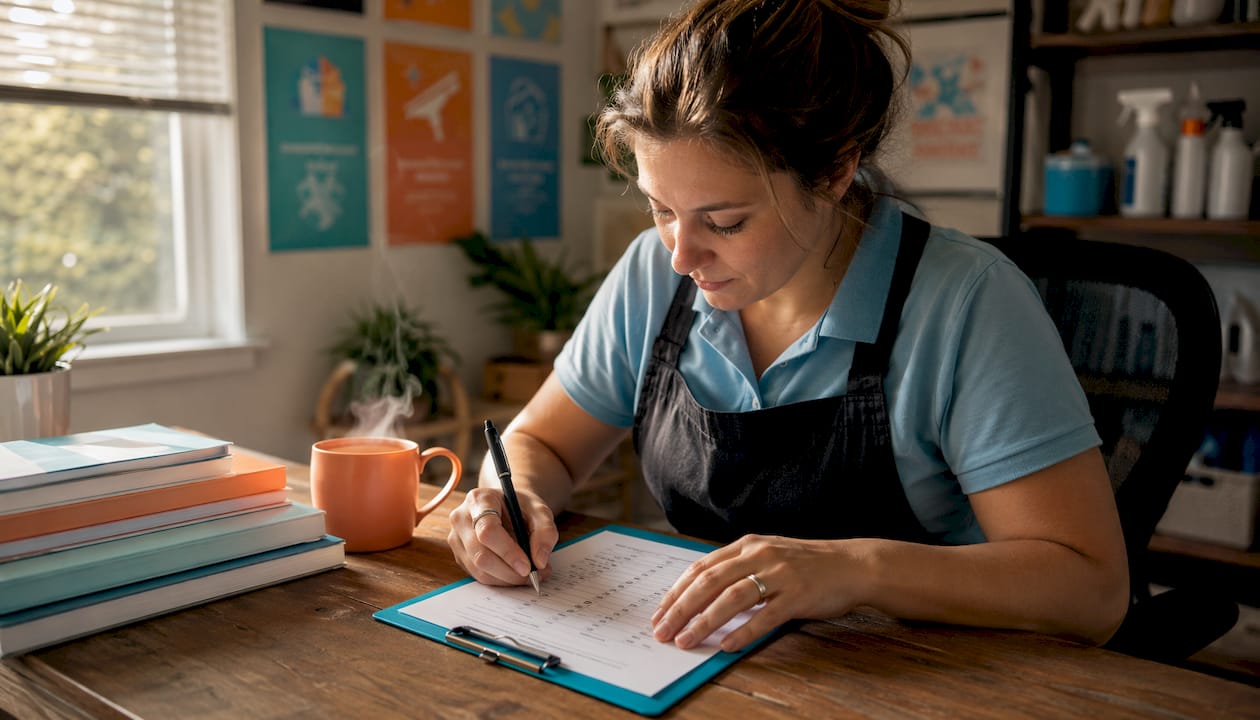
Assessment across these programs typically combines knowledge checks, practical evaluations, and audit-based feedback. Certification is not handed out for attendance. Cleaners must demonstrate competence before they earn credentials.
Why structured training makes a real difference
Training is not just a compliance checkbox. It shapes how a cleaning business performs, retains staff, and earns client trust.
Consistent service quality across multiple sites is one of the clearest benefits. When every team member follows the same SOPs and has passed the same assessments, the result a client gets on Tuesday matches what they got last month. That predictability is hard to achieve without a formal program behind it.
Employee retention improves with structured training too. Cleaners who receive mentorship, ongoing coaching, and clear development pathways feel more invested in their work. The train-the-trainer model sustains that investment by making coaching a continuous part of operations rather than a one-time event. Short, frequent safety discussions, sometimes called toolbox talks, combined with audit feedback, reinforce skills far more effectively than orientation alone.
Certification also functions as a business differentiator. Clients choosing between cleaning services will often favor a company whose staff holds recognized credentials. It removes doubt about whether the team knows what they are doing.
Ongoing education matters because the industry keeps moving. New disinfection technologies, updated OSHA regulations, and evolving green cleaning standards mean that a credential earned three years ago may not reflect current best practices. Recertification requirements exist precisely to close that gap.
See trained professionals at work
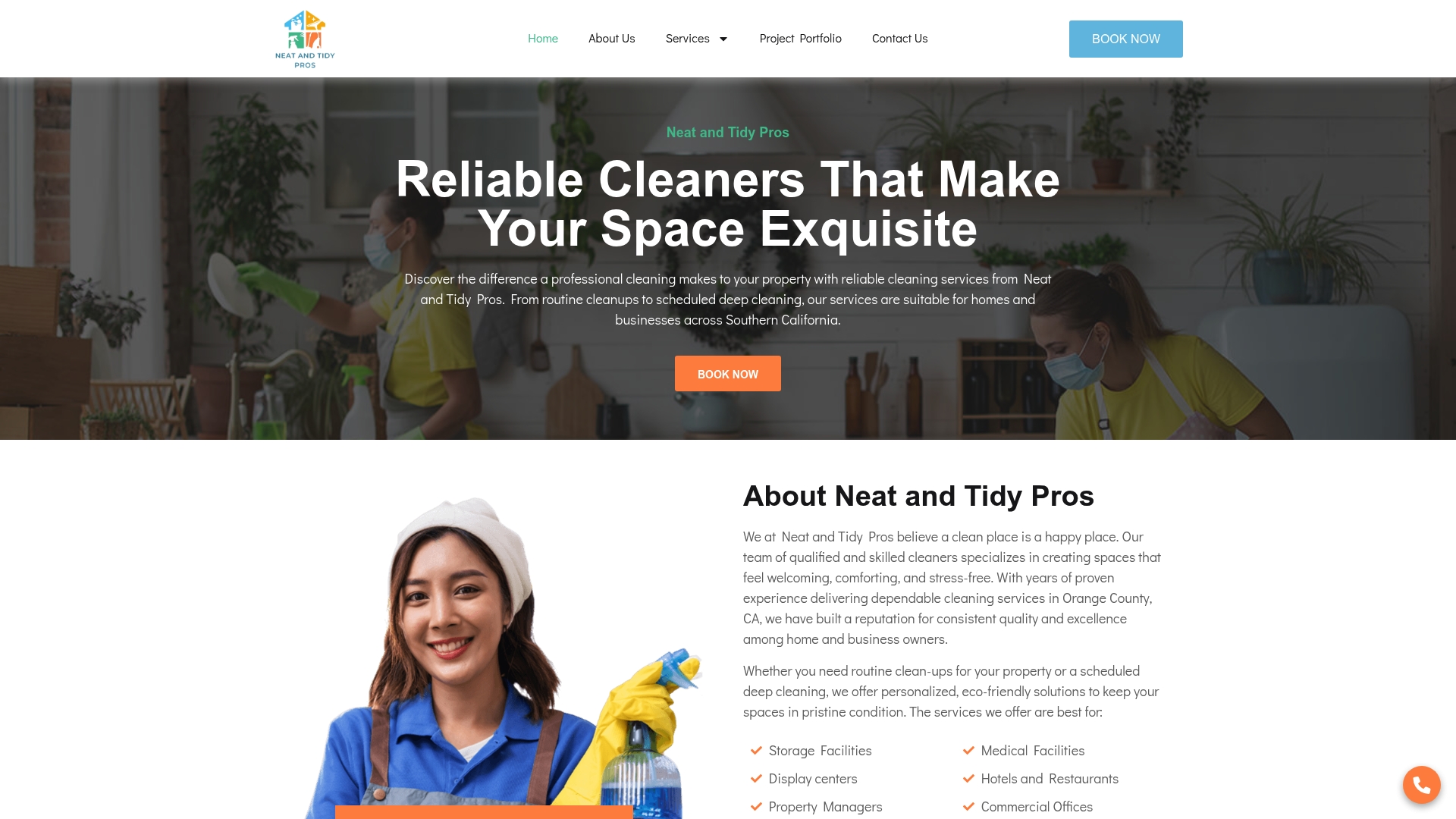
Neatandtidypros puts every one of these training principles into practice. Our team is trained in residential and commercial cleaning techniques, safety protocols, and quality standards so you get consistent results every time. Whether you need a deep clean for your home or ongoing commercial cleaning services, you can trust that the people walking through your door know exactly what they are doing.
Key Takeaways
Structured training programs that combine hands-on skill development, safety compliance, and recognized certification are the foundation of professional cleaning quality in the United States.
| Point | Details |
|---|---|
| Certification sets the bar | Programs like IICRC HCT, ISSA PHC, and CMI require passing scores set at 80% or higher on certification exams before credentialing cleaners. |
| PHC requires several hours to complete | The ISSA Professional House Cleaning program covers health-centric methods and customer service in approximately 8 hours. |
| Recertification is required | CMI mandates periodic recertification to keep pace with updated best practices and chemical safety standards. |
| Train-the-trainer sustains quality | Empowering supervisors to coach and audit their teams prevents skill loss after initial orientation. |
| SOPs reduce errors | Written task sequences and dilution ratios improve safety and consistency across every shift, per OSHA cleaning standards. |