
Oven deep cleaning is defined as the thorough removal of built-up grease, baked-on food residue, and carbonized grime from all interior surfaces of an oven, including the walls, floor, ceiling, door glass, and racks. This process goes well beyond a quick wipe-down. The Good Housekeeping Institute recommends deep cleaning 2–3 times per year, with lighter monthly maintenance in between. Skipping it creates real risks: grease buildup ignites at high temperatures, residue burns off as toxic smoke, and food absorbs off-flavors from carbonized deposits. Understanding what oven deep cleaning involves is the first step to doing it right.
What does oven deep cleaning involve?
Oven deep cleaning, known in professional circles as a full appliance clean, covers every surface inside the oven cavity that accumulates grease and food residue. A standard surface wipe addresses only visible spills. A true deep clean targets the baked-on layers that form over months of cooking.
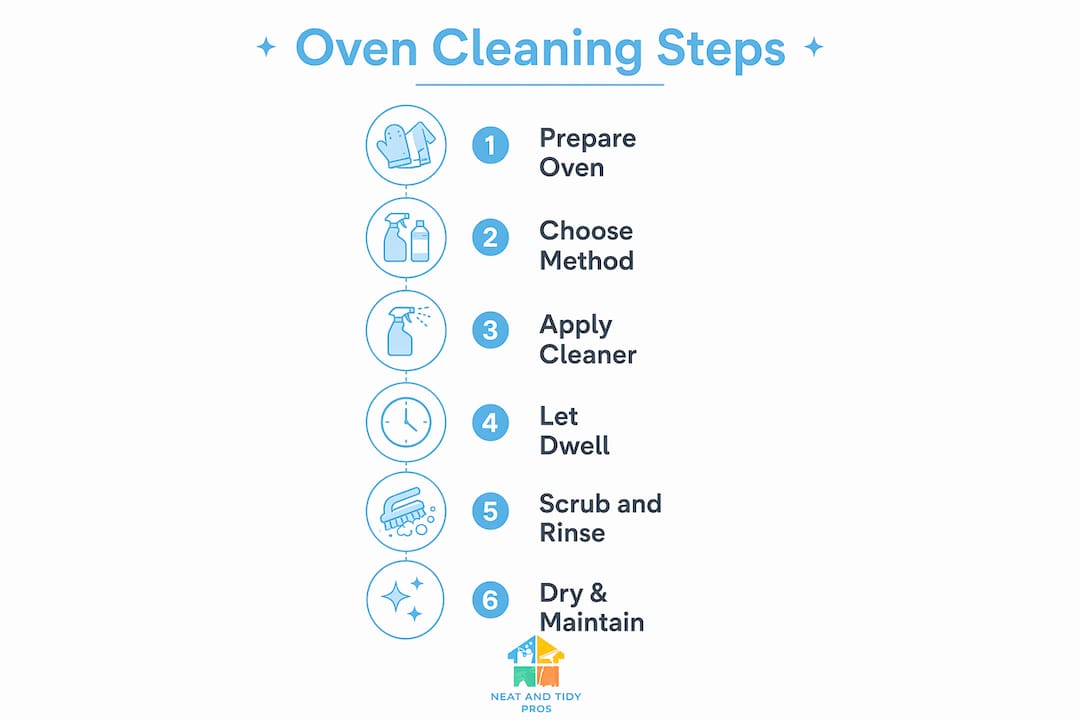
The process follows a clear sequence:
- Remove the oven racks. Racks must come out before any cleaning method begins. Under extreme heat, they warp and discolor. During manual cleaning, they block access to the oven floor and walls.
- Apply your chosen cleaning agent. This could be a commercial spray, a baking soda paste, or a steam setup. The agent needs time to penetrate and loosen baked-on deposits.
- Let it dwell. Dwell time is the period the cleaner sits on the surface. Short dwell times mean more scrubbing. Longer dwell times do the work for you.
- Wipe down all interior surfaces. Use a damp cloth or non-scratch sponge to remove loosened grime from the walls, floor, and ceiling of the oven cavity.
- Clean the door glass. The interior glass surface collects grease splatter. Clean it with a paste or spray, but never disassemble the glass layers. That is a technician’s job and doing it yourself voids most warranties.
- Reassemble and run a short heat cycle. A brief 10-minute warm-up after cleaning burns off any remaining cleaner residue and confirms the oven is ready to use.
Pro Tip: Lay old towels on the floor in front of the oven before you start. Cleaning agents drip, and protecting your floor saves a second cleanup job.
Understanding how deep cleaning differs from regular cleaning helps set the right expectations before you begin.
What are the main oven cleaning methods?
Three primary methods exist for deep cleaning an oven: the self-cleaning cycle, steam cleaning, and manual cleaning. Each has a different effort level, safety profile, and suitability depending on your oven type and how much buildup you are dealing with.
Self-cleaning cycle
The self-cleaning cycle heats the oven to up to 900°F to incinerate food residue into ash. You wipe out the ash once the oven cools. It requires almost no physical effort, but it produces significant smoke and fumes. Always open windows and run your range hood during the cycle. Keep children and pets out of the kitchen. The cycle runs 2–4 hours and puts mechanical stress on the oven’s locking mechanism and heating elements over time.
Steam cleaning
Steam cleaning uses water to soften grime so it wipes away easily. You pour water into the oven bottom or a designated tray, run a low-heat steam cycle (typically around 250°F), and wipe the loosened residue after 20–30 minutes. Steam is the preferred method in commercial kitchens because it sanitizes without harsh chemical fumes. It works best on light to moderate buildup.
Manual cleaning
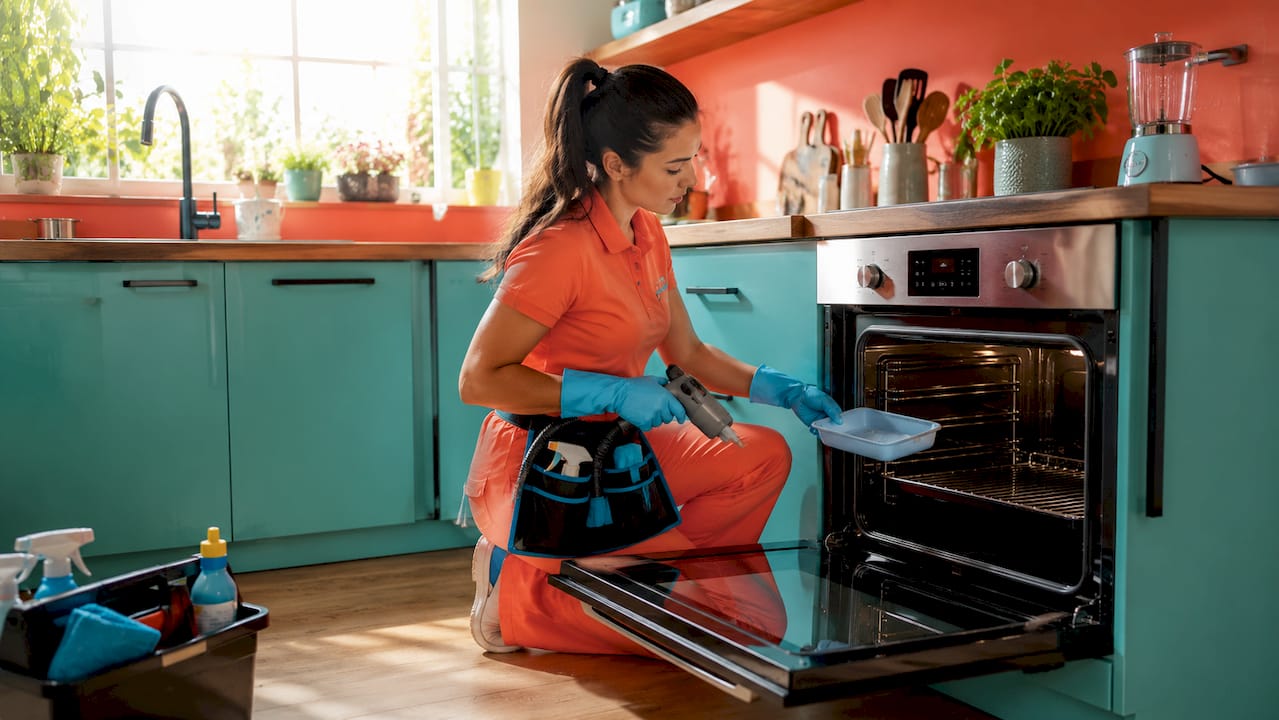
Manual cleaning uses either commercial oven cleaners or natural solutions like baking soda and white vinegar. Commercial cleaners work faster on heavy grease. Modern formulas are now fume-free or low-fume, which addresses the biggest historical complaint about chemical cleaners. Natural solutions take longer but produce no chemical exposure.
| Method | Effort | Safety | Cost | Time | Best for |
|---|---|---|---|---|---|
| Self-cleaning cycle | Low | Moderate (fumes, heat) | Free | 2–4 hours | Heavy buildup |
| Steam cleaning | Low | High (no chemicals) | Free | 30–60 minutes | Light to moderate buildup |
| Manual (commercial) | Moderate | Moderate (ventilate) | Low | 1–3 hours | Heavy grease |
| Manual (natural) | Moderate | High | Very low | 4–12 hours | Moderate buildup |
Pro Tip: If your oven has a built-in steam clean setting, use it monthly for maintenance. Reserve the self-cleaning cycle for heavy buildup only, no more than twice a year, to protect the oven’s components.
How to deep clean your oven step by step
The baking soda paste method is the safest and most effective natural approach for most homeowners. It requires no special equipment and works on standard gas and electric ovens.
Baking soda paste method
- Prepare the paste. Mix 1 cup of baking soda with 2 tablespoons of water to form a thick paste. Adjust water slightly if needed to reach a spreadable consistency.
- Remove and soak the racks. Place racks in a bathtub or large sink with hot water and a few drops of dish soap. Let them soak while you clean the oven interior.
- Coat the interior. Spread the paste across the oven walls, floor, and ceiling. Avoid the heating elements. The paste will turn brown as it contacts grease.
- Wait. Overnight application is ideal for stubborn baked-on grime. A minimum of one hour works for lighter buildup.
- Spray with white vinegar. After the dwell time, spray white vinegar over the paste. It reacts with the baking soda and foams, which helps lift the loosened grime further.
- Wipe clean. Use a damp cloth or non-scratch sponge to remove all residue. Rinse the cloth frequently.
- Scrub and dry the racks. Use a scrub brush on the soaked racks, rinse thoroughly, and dry before reinserting.
Using commercial oven cleaners
Spray the cleaner evenly across the interior surfaces. Follow the product’s dwell time instructions, typically 20 minutes to several hours. Wear rubber gloves and open windows. Wipe all surfaces clean with a damp cloth, then rinse with clean water to remove all chemical residue before using the oven.
Self-cleaning cycle best practices
High-heat cycles require ventilation throughout the entire cycle. Open windows, run the range hood on high, and stay out of the kitchen as much as possible. Do not leave the house during the cycle. Once the oven cools completely, wipe out the ash with a damp cloth.
Cleaning oven racks separately
Separate rack cleaning prevents damage from high heat and gets better results than leaving them inside during any cleaning method. Soaking in hot soapy water for at least 30 minutes loosens most grease. A paste of baking soda applied to stubborn spots and left for an hour handles the rest.
Pro Tip: Line the oven floor with aluminum foil before the baking soda paste sits overnight. It catches drips and makes the final wipe-down faster. Remove the foil before running the oven.
What maintenance habits reduce the need for deep cleaning?
Regular maintenance extends the time between full deep cleans significantly. Preventive habits like oven liners and prompt spill cleanup reduce the buildup that makes deep cleaning labor-intensive.
- Wipe the interior monthly. A quick wipe with a damp cloth after the oven cools removes fresh grease before it bakes on. This takes five minutes and prevents months of buildup.
- Use baking sheets on the lower rack. Placing a sheet pan below your cooking dish catches drips and spills before they hit the oven floor. This single habit cuts cleaning time dramatically.
- Neutralize spills immediately. Sprinkle salt on a fresh spill while the oven is still warm. Salt absorbs the liquid and makes it easier to wipe away once the oven cools.
- Avoid abrasive scrubbers. Steel wool and harsh scrub pads scratch oven surfaces and create micro-grooves where grease embeds more deeply. Use non-scratch sponges or microfiber cloths.
- Ventilate while cooking. Running the range hood during cooking pulls grease-laden steam out of the kitchen before it settles on oven surfaces and nearby walls.
Pro Tip: Set a monthly calendar reminder to do a five-minute oven wipe. Pairing it with another monthly task, like changing your HVAC filter, makes it easier to remember.
Homeowners who want a broader picture of what regular versus deep cleaning covers can review what deep cleaning means for a full breakdown.
Key Takeaways
Oven deep cleaning requires the right method, adequate dwell time, and consistent maintenance habits to protect appliance performance and reduce fire risk.
| Point | Details |
|---|---|
| Deep clean frequency | Clean your oven thoroughly 2–3 times per year with monthly light maintenance. |
| Method selection | Match the method to your buildup level: steam for light, manual or self-clean for heavy. |
| Rack removal is non-negotiable | Always remove racks before any cleaning method to prevent warping and ensure full access. |
| Dwell time beats scrubbing | Letting cleaners sit overnight reduces physical effort and protects oven surfaces. |
| Prevention cuts labor | Oven liners, monthly wipes, and immediate spill treatment reduce deep cleaning frequency. |
What I’ve learned from years of cleaning ovens the wrong way first
The biggest mistake I see homeowners make is reaching for the scrub brush too fast. Aggressive scrubbing on a dry, baked-on surface does two things: it scratches the enamel coating and it exhausts you before the oven is actually clean. Softening grime through steam or soak times is not a shortcut. It is the correct technique.
Self-cleaning cycles get overused. I understand the appeal. You press a button and walk away. But running a 900°F cycle every month stresses the oven’s door latch, heating elements, and thermal fuse. Reserve it for the twice-a-year heavy clean and use steam or baking soda for everything else.
The shift toward reduced-fume commercial cleaners has genuinely changed the manual cleaning experience. The products available now are far less unpleasant than what existed a decade ago. If you have avoided commercial cleaners because of the smell, it is worth trying a current formula.
My honest recommendation: schedule two deep cleans per year on your calendar, do a five-minute wipe monthly, and use an oven liner. That combination keeps most ovens in good condition without ever needing a professional clean. For ovens that have been neglected for a year or more, a professional service is the faster and safer starting point.
— Neat
Professional oven and home deep cleaning from Neatandtidypros
Some ovens need more than a DIY session can deliver, especially after heavy use or years without a proper clean. Neatandtidypros provides residential deep cleaning services that cover kitchen appliances, including ovens, as part of a thorough whole-home clean.

Whether you are a homeowner preparing for guests, a renter getting ready for a move-out inspection, or someone who simply wants a professionally cleaned kitchen, Neatandtidypros handles the work with trained staff and proven methods. Learn more about how residential cleaning works and what to expect from a professional service, or browse the full list of available services to find the right fit for your home.
FAQ
What is oven deep cleaning exactly?
Oven deep cleaning is the thorough removal of grease, baked-on food, and carbonized residue from all interior oven surfaces, including walls, floor, door glass, and racks. It goes beyond surface wiping to address buildup that affects cooking performance and safety.
How often should you deep clean your oven?
The Good Housekeeping Institute recommends deep cleaning your oven 2–3 times per year, with lighter monthly maintenance wipes in between to prevent heavy buildup.
Is the self-cleaning cycle safe to use?
The self-cleaning cycle is safe when used with proper ventilation. Open windows, run the range hood, remove oven racks beforehand, and stay near the kitchen throughout the 2–4 hour cycle to monitor for excessive smoke.
What is the best natural method for deep cleaning an oven?
A baking soda paste made from 1 cup of baking soda and 2 tablespoons of water, applied overnight and followed by a white vinegar spray, is the most effective natural method for removing stubborn baked-on grime.
Can you deep clean an oven without harsh chemicals?
Yes. Steam cleaning and baking soda paste methods both clean effectively without chemical exposure. Steam is particularly effective for light to moderate buildup and is the preferred method in commercial kitchen settings.