
Carpet shampooing is a cleaning method that applies detergent-based foam to carpet fibers, agitates it mechanically to suspend dirt and oils, then removes the residue by vacuuming or rinsing. It is not the same as hot-water extraction, which is the method most professionals actually mean when they say “steam cleaning.” Hot-water extraction injects hot water deep into the pile and immediately vacuums it back out; shampooing relies on surfactant chemistry and scrubbing, not water pressure and suction. The IICRC classifies them as separate systems, and the Carpet and Rug Institute (CRI) provides distinct guidance for each. Neatandtidypros follows both standards when recommending the right method for a job.
Table of Contents
- What is carpet shampooing and how does the chemistry work?
- What equipment does carpet shampooing actually require?
- How to shampoo a carpet step by step
- How does shampooing compare to other carpet cleaning methods?
- Pros, cons, and the right use cases for carpet shampooing
- When should you DIY, and when should you call a pro?
- What do IICRC and CRI standards say about carpet cleaning frequency?
- Key Takeaways
- The case for getting the method right the first time
- Neatandtidypros handles the method decision for you
- Useful sources and standards
What is carpet shampooing and how does the chemistry work?
The cleaning action starts with surfactants — molecules that have one water-attracting end and one oil-attracting end. When mixed with water and agitated into foam, they wrap around grease, soil particles, and allergens, pulling them away from the fiber surface and suspending them in the foam matrix.
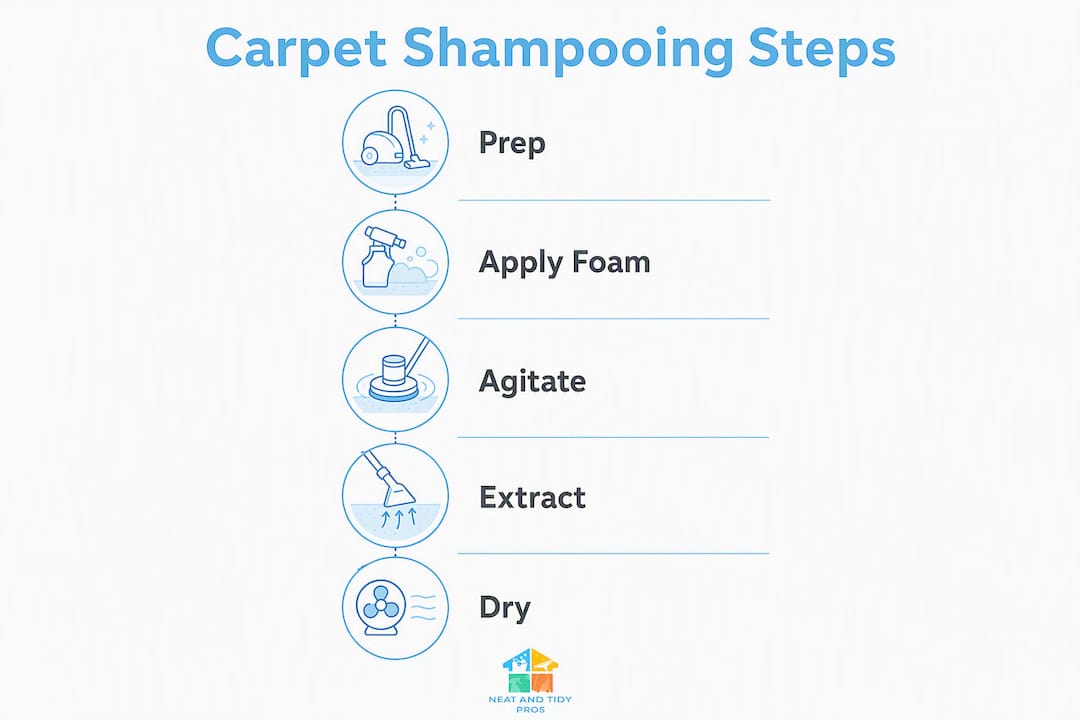
The physical sequence looks like this:
- Pre-treat: Apply a pre-spray or spot treatment to heavily soiled areas and stains before the main clean.
- Apply shampoo/foam: Distribute the diluted shampoo solution across the carpet, either through the machine’s spray head or manually.
- Agitate: A rotary brush machine works the foam into the pile, loosening embedded soil.
- Suspend: Surfactants hold the dislodged particles in the foam so they don’t resettle into the fibers.
- Extract or dry-vacuum: Either wet-vacuum the foam immediately or allow it to crystallize and vacuum it up once dry.
The residue problem comes from skipping or rushing that last step. Shampoo left in the fibers is hygroscopic, meaning it absorbs moisture from the air. That sticky film acts like a magnet for new dirt, which is why a poorly rinsed carpet can look worse within weeks of cleaning than it did before. Older ionic detergent formulations were especially prone to this, but even modern formulas cause rapid resoiling when extraction is incomplete.
Pro Tip: If you run your fingers across a dried, freshly shampooed carpet and it feels tacky or stiff, there’s residual soap in the fibers. Run a clean water extraction pass before calling the job done.
What equipment does carpet shampooing actually require?
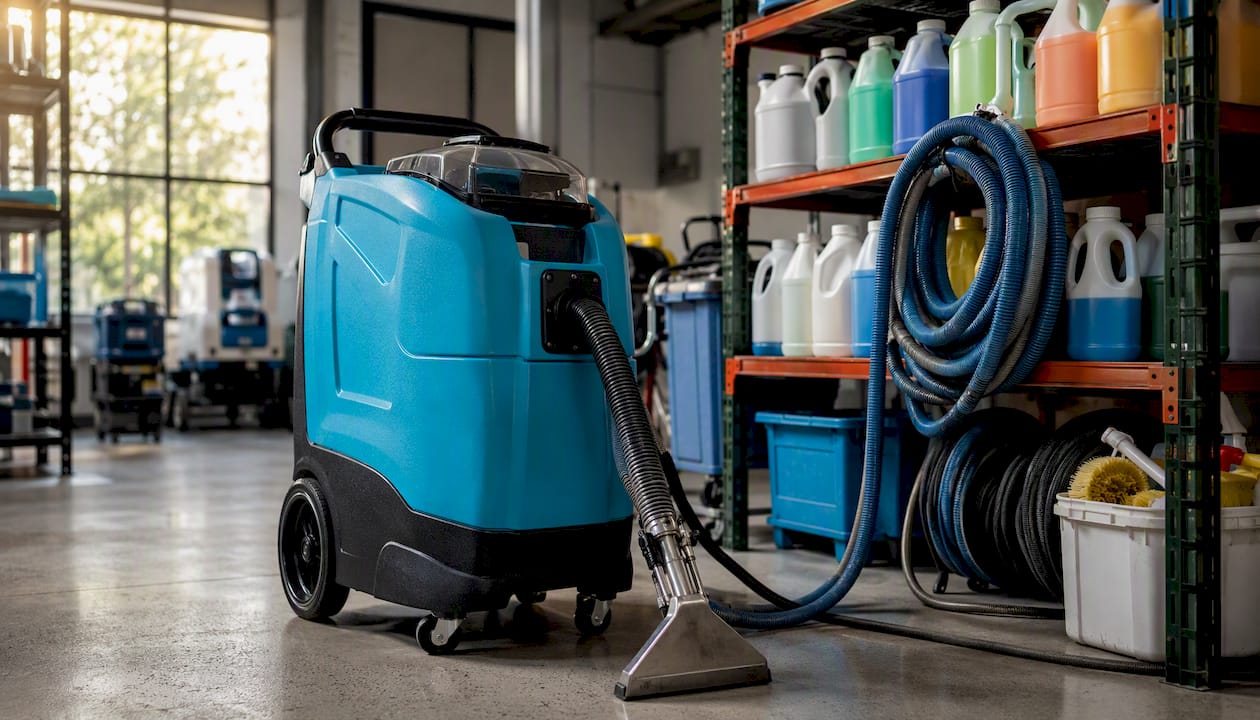
A standard shampooing setup has a few key components, each with a specific job:
- Solution tank: Holds the diluted shampoo mixture; size determines how long you can work before refilling.
- Pump: Pushes solution from the tank to the spray head or foam applicator.
- Rotary brush/rotor: The working head that agitates the foam into the pile, typically spinning at 100–300 RPM.
- Foam head: Generates and distributes foam evenly across the carpet surface.
- Vacuum recovery tank: Collects extracted dirty water and foam; a larger tank means fewer trips to empty.
- Hoses and wands: Connect the machine to the carpet surface and allow you to reach corners and edges.
Rental machines from hardware stores cover the basics, but they run at lower suction power than professional truck-mounted systems. A truck-mounted unit delivers higher water flow and significantly stronger vacuum pull, which means more soil removed and less moisture left behind. That translates directly to shorter drying times and lower mold risk. You can read more about how professional cleaning tools differ from consumer-grade rentals.
Pro Tip: Rent a machine for a lightly soiled, low-pile carpet in a well-ventilated room. For deep-pile, heavily trafficked, or moisture-sensitive areas, the suction gap between a rental and a truck-mounted system is large enough to matter.
How to shampoo a carpet step by step
Follow this sequence to get a clean result without leaving behind the residue that causes resoiling.
- Vacuum thoroughly. Remove all loose debris before introducing any moisture. Shampooing over dry soil just turns it into muddy paste.
- Pre-treat stains. Apply a targeted stain remover to spots and let it dwell for the time the product specifies.
- Test in a hidden area. Apply diluted shampoo to a small patch in a closet or under furniture. Check for color bleeding or fiber distortion after it dries.
- Mix and dilute correctly. Follow the manufacturer’s ratio exactly. More shampoo does not mean a deeper clean.
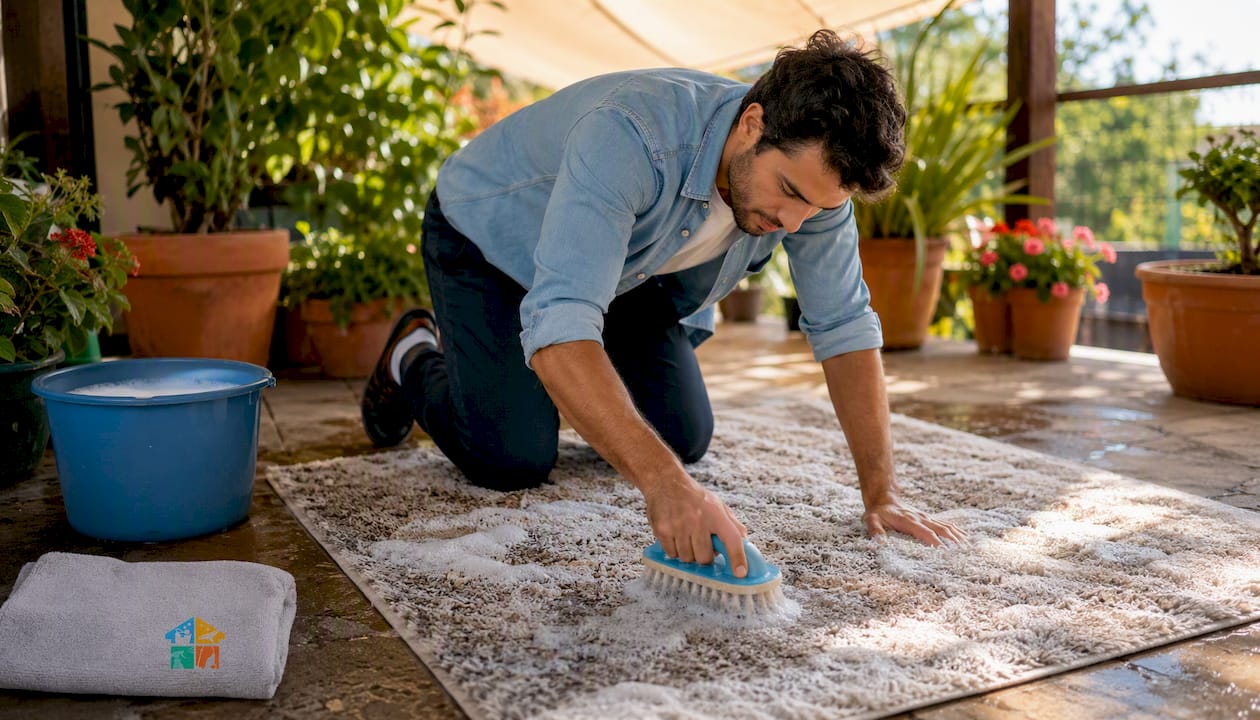
- Apply and agitate. Work in overlapping passes, moving slowly enough for the brush to penetrate the pile. Spray intermittently rather than flooding the carpet continuously.
- Extract until the recovery water runs clear. This is the step most DIYers cut short. Keep making wet-vacuum passes until the water coming back is no longer brown or foamy.
- Make a final dry suction pass. After extraction, run the machine with the spray off to pull out as much remaining moisture as possible.
- Speed drying. Open windows, run ceiling fans, and use a dehumidifier or box fan aimed at the carpet. Drying times vary widely depending on pile depth and ventilation.
Dos and don’ts:
- Do dilute shampoo to the manufacturer’s spec — never free-pour.
- Do move furniture off the carpet or place plastic or foil tabs under legs to prevent rust stains.
- Do make multiple dry extraction passes after the wash.
- Don’t use dish soap, laundry detergent, or any product not rated for carpet; the foaming agents are wrong and residue will be severe.
- Don’t walk on the carpet until it’s fully dry.
Pro Tip: The final extraction pass is the most important step in the whole process. Rushing it is the single biggest reason carpets resoil fast after a DIY clean.
How does shampooing compare to other carpet cleaning methods?
| Method | Cleaning depth | Residue risk | Drying time | Equipment needed | Best use-case |
|---|---|---|---|---|---|
| Shampooing | Surface to mid-pile | High if not rinsed | 2–24 hours | Rotary machine, wet-vac | Interim maintenance, light commercial refresh |
| Hot-water extraction | Deep pile and backing | Low (chemistry rinsed out) | 4–12 hours | Truck-mount or portable extractor | Restorative deep clean, heavily soiled carpet |
| Encapsulation | Surface to mid-pile | Very low (crystallizes) | 30–60 minutes | Rotary or cylindrical machine | High-traffic commercial, quick-turnaround spaces |
| Bonnet cleaning | Surface only | Moderate | 30–60 minutes | Rotary with absorbent pad | Appearance maintenance between deep cleans |
| Dry-cleaning | Surface to mid-pile | Low | Near-zero | Dry compound spreader, brush | Moisture-sensitive areas, wool carpets |
Shampooing made sense as the dominant professional method before hot-water extraction became standard. Industry practice shifted toward extraction and encapsulation largely because of the residue and resoiling problems shampooing causes when rinsing is incomplete. Today, shampooing is most relevant for interim surface refreshes in commercial settings where quick turnaround matters more than deep soil removal.
The “steam cleaning” label causes persistent confusion. What most people call steam is hot-water extraction. True steam cleaning is a separate, less common process. Shampooing uses no steam and minimal heat.
Pros, cons, and the right use cases for carpet shampooing
Pros:
- Effective at lifting surface-level and mid-pile soil when done correctly.
- Good for odor reduction when combined with proper rinsing and extraction.
- Equipment is widely available for rent, making it accessible for interim home maintenance.
- Works well in large commercial spaces where a quick refresh between deep cleans is the goal.
Cons:
- High residue risk if shampoo is not fully extracted, leading to rapid resoiling.
- Longer drying times than encapsulation or bonnet methods.
- Risk of over-wetting, which can damage carpet backing and promote mold growth in the underlay.
- Not suited for heavily soiled carpets or matrix-level stains that need restorative extraction.
For a home with pets or kids, shampooing can handle routine maintenance between professional deep cleans. For a carpet that hasn’t been professionally cleaned in years, or one with deep staining, hot-water extraction will outperform it. Commercial carpet maintenance in high-traffic corridors is one area where shampooing still earns its place as a scheduled interim method.
When should you DIY, and when should you call a pro?
The honest answer: DIY shampooing works for lightly soiled, low-pile residential carpet in a well-ventilated space. The risk goes up fast with deep pile, heavy traffic, pet contamination, or any moisture-sensitive subfloor.
Cost factors for a professional quote typically include room size, soil load, pile type, stain treatment needs, and whether the company uses truck-mounted or portable equipment. Truck-mounted systems remove more moisture, which shortens drying time and reduces the chance of mold in the backing. The benefits of professional carpet cleaning go beyond equipment power — a trained technician also adjusts chemistry and dwell time to the fiber type.
The most common DIY errors professionals flag:
- Using too much detergent (the sticky residue it leaves shortens the time until the next clean).
- Skipping the final rinse or extraction passes.
- Flooding the carpet by holding the spray trigger continuously.
- Not drying fast enough, leaving moisture in the backing for 24+ hours.
If you’re vetting a pro, check for IICRC training, ask whether they use truck-mounted extraction, and request references for similar carpet types. An IICRC-certified technician has been trained on the specific chemistry and mechanical differences between shampooing, extraction, and encapsulation.
Drying time reality check: Carpet drying after shampooing can take from a few hours in ideal conditions to a day or longer for deep-pile carpet in poorly ventilated spaces. Plan accordingly before booking furniture back in.
What do IICRC and CRI standards say about carpet cleaning frequency?
The Carpet and Rug Institute’s CRI 205 standard recommends deep cleaning at least twice a year for most residential settings. The IICRC classifies shampooing and hot-water extraction as distinct systems with different chemistry, equipment, and outcomes — a distinction that matters when choosing a method or evaluating a contractor’s claim.
Recommended deep-cleaning frequency by household type:
| Household type | Recommended frequency |
|---|---|
| Low-traffic home, no pets | Once or twice per year |
| Household with pets or allergies | Every 3–4 months |
| High-traffic residential (kids, multiple occupants) | Every 3–6 months |
| Commercial or office space | Every 1–3 months depending on traffic |
Best-practice reminders from industry guidance:
- Always rinse or extract after shampooing; leaving chemistry in the fibers defeats the purpose of cleaning.
- Use the manufacturer’s dilution ratio. Excess detergent is a more common problem than too little.
- Place furniture coasters or foil tabs under legs immediately after cleaning to prevent rust transfer.
- Vacuum the carpet 24–48 hours after a dry-crystallization shampoo method to remove the encapsulated soil.
Key Takeaways
Carpet shampooing uses surfactant foam and mechanical agitation to lift soil, but its effectiveness depends entirely on proper rinsing and extraction to prevent sticky residue and rapid resoiling.
| Point | Details |
|---|---|
| Shampooing vs. extraction | Shampooing uses foam and scrubbing; hot-water extraction injects water and vacuums it out immediately. |
| Residue is the main risk | Incomplete rinsing leaves hygroscopic residue that attracts new dirt and shortens carpet life. |
| Drying time varies widely | Expect 2–24 hours depending on pile depth and ventilation; deep pile in poor conditions takes longest. |
| CRI 205 frequency guidance | Deep cleaning at least twice a year is the CRI 205 benchmark for most residential carpets. |
| Neatandtidypros recommendation | For restorative jobs, Neatandtidypros uses hot-water extraction; shampooing suits interim refreshes when done correctly. |
The case for getting the method right the first time
Most carpet cleaning mistakes aren’t about choosing the wrong product. They’re about underestimating the rinse step. The carpet industry spent decades moving away from shampooing as the default professional method precisely because residue and resoiling were so predictable when extraction was rushed or skipped.
That said, dismissing shampooing entirely misses the point. For a commercial corridor that needs a quick refresh between scheduled deep cleans, or a lightly soiled residential room where a rental machine and careful technique are applied, it does the job. The problem is when homeowners treat it as a substitute for restorative cleaning on a carpet that actually needs hot-water extraction. The foam looks like it’s working. The carpet smells better immediately. Then six weeks later it looks worse than before, and the assumption is that carpet cleaning doesn’t work — when the real issue was method mismatch and a skipped rinse pass.
The IICRC and CRI don’t classify these methods separately to be pedantic. The distinction has real consequences for fiber health, indoor air quality, and how long a carpet stays clean after the job is done.
Neatandtidypros handles the method decision for you
Choosing between shampooing, hot-water extraction, and encapsulation shouldn’t fall on the homeowner. Neatandtidypros serves Orange County and Corona, California with residential and commercial cleaning services built around the right method for each job — not a one-size approach.
For carpets that need a genuine deep clean, Neatandtidypros uses professional-grade extraction equipment that removes far more moisture and soil than a rental machine. Services cover residential deep cleaning, move-in/move-out cleaning, Airbnb turnover, office and commercial spaces, and post-construction cleanup. All cleaning options include eco-friendly products. Pricing depends on room count, soil load, and service type. Book online or request a free estimate to get a quote matched to your specific space.
Useful sources and standards
- CRI 205 — Residential Carpet Maintenance: The Carpet and Rug Institute’s benchmark document for residential cleaning frequency and method guidance.
- IICRC — Carpet Shampooing Method: Industry classification separating shampooing from hot-water extraction, with notes on chemistry and equipment.
- Carpet Cleaning Methods Compared: Side-by-side overview of shampooing, extraction, encapsulation, bonnet, and dry methods with historical context.
- How to Use Carpet Shampoo — Robot Vacuum: Practical step-by-step guide covering dilution, technique, drying times, and common errors.
- Carpet Shampooing Glossary — Carpet Advisors: Technical definitions of rotary machine speeds, foam chemistry, and residue formation.
- How to Clean Carpets Step-by-Step — Bissell: Manufacturer guidance on over-wetting prevention, detergent ratios, and final extraction technique.
- Carpet Cleaning — Wikipedia: Historical overview of cleaning method evolution from rotary shampoo to modern extraction systems.