Professional cleaning reduces occupant exposure to pathogens, allergens, and harmful dust that drive illness and lost productivity. The Cleaning Industry Research Institute (CIRI) frames cleaning as environmental management, not just aesthetics. Here is what that means in practice:
- Fewer sick days and medical visits for building occupants
- Lower allergen loads from dust mites, dander, and mold spores
- Reduced pest harborage and the disease risks that come with it
- Improved indoor air quality by removing particulate and VOC reservoirs
- A safer physical environment with fewer slip, trip, and fall hazards
The ISSA white paper on cleaning value and CIRI both position professional cleaning programs as measurable public health tools, not optional amenities.
Table of Contents
- How professional cleaning targets the health risks in your building
- What professional cleaning methods actually produce health outcomes
- What reduced absenteeism is actually worth to a commercial owner
- How to specify a “Cleaning for Health” program with a contractor
- Keeping cleaning products safe for occupants and staff
- When should you hire professional cleaners?
- How to measure whether cleaning is actually improving health
- Key Takeaways
- The operational reality most owners never see
- Neatandtidypros can build your Cleaning for Health program
- Useful sources and further reading
How professional cleaning targets the health risks in your building
CIRI draws a precise line between two concepts most people blur: clean condition (the state of a surface free of unwanted matter) and cleaning (the systematic process used to reach that state). That distinction matters because a surface can look clean and still carry a pathogen load that affects occupant health.
The contaminant categories professional cleaning targets, and what each one does to occupants:
- Biological pathogens (bacteria, viruses, fungi): spread respiratory illness, skin infections, and gastrointestinal disease through contact with contaminated surfaces
- Allergenic dust and dander: dust mite allergens are a leading asthma and allergy trigger; regular vacuuming with HEPA filtration keeps concentrations low
- Lead-contaminated household dust: homes built before 1978 frequently contain lead paint residues tracked indoors, a serious exposure risk for children
- VOCs: off-gassing from building materials, furnishings, and cleaning products themselves; accumulate in poorly ventilated spaces
- Pest residues: rodent and insect feces in household dust are potent allergens and disease vectors
CCOHS confirms that effective housekeeping also reduces slip and trip hazards and pest infestations. The key phrase from their guidance: good housekeeping is maintained, not achieved. One thorough clean does not hold. Hazards return as soon as occupancy resumes.
What professional cleaning methods actually produce health outcomes
The two-stage sequence
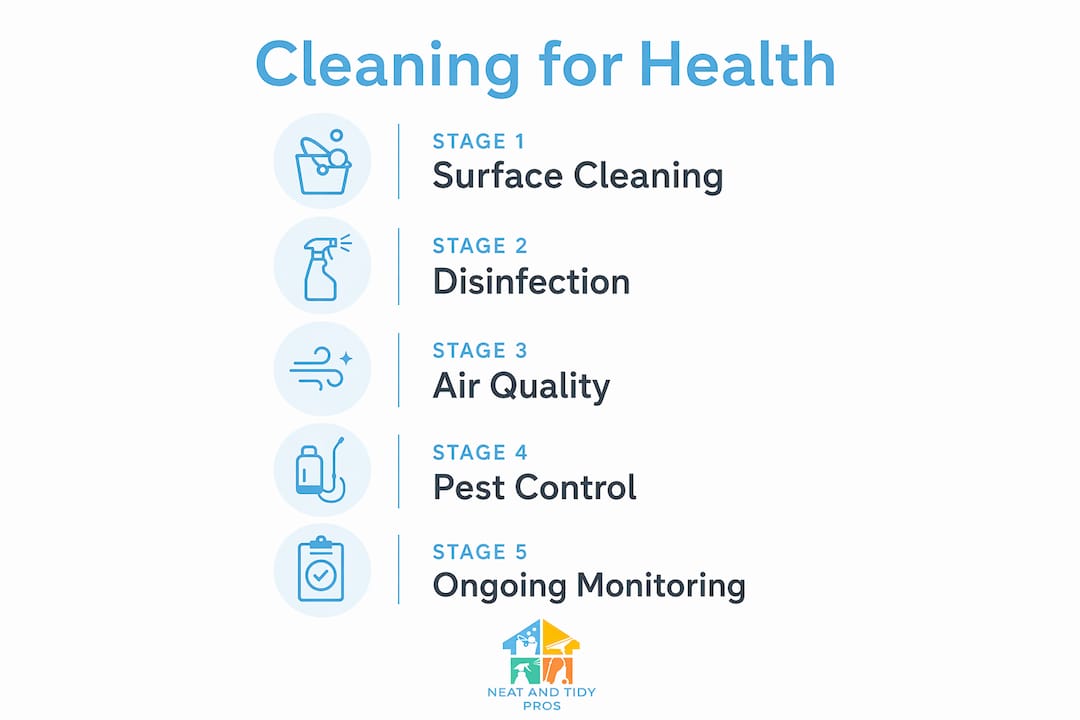
Disinfection without prior cleaning is ineffective. New York State Department of Health guidance is explicit: cleaning removes soils first, then disinfection (when the situation warrants it) can reach and kill pathogens on a visibly clean surface. Skipping stage one wastes disinfectant and leaves the contamination intact.
Core tools and methods
- Microfiber cloths and mops: trap and remove particles rather than redistributing them across surfaces
- HEPA vacuums: capture fine particulate that standard vacuums exhaust back into the air
- Agitation and friction: mechanical action, not chemical volume, does most of the actual soil removal
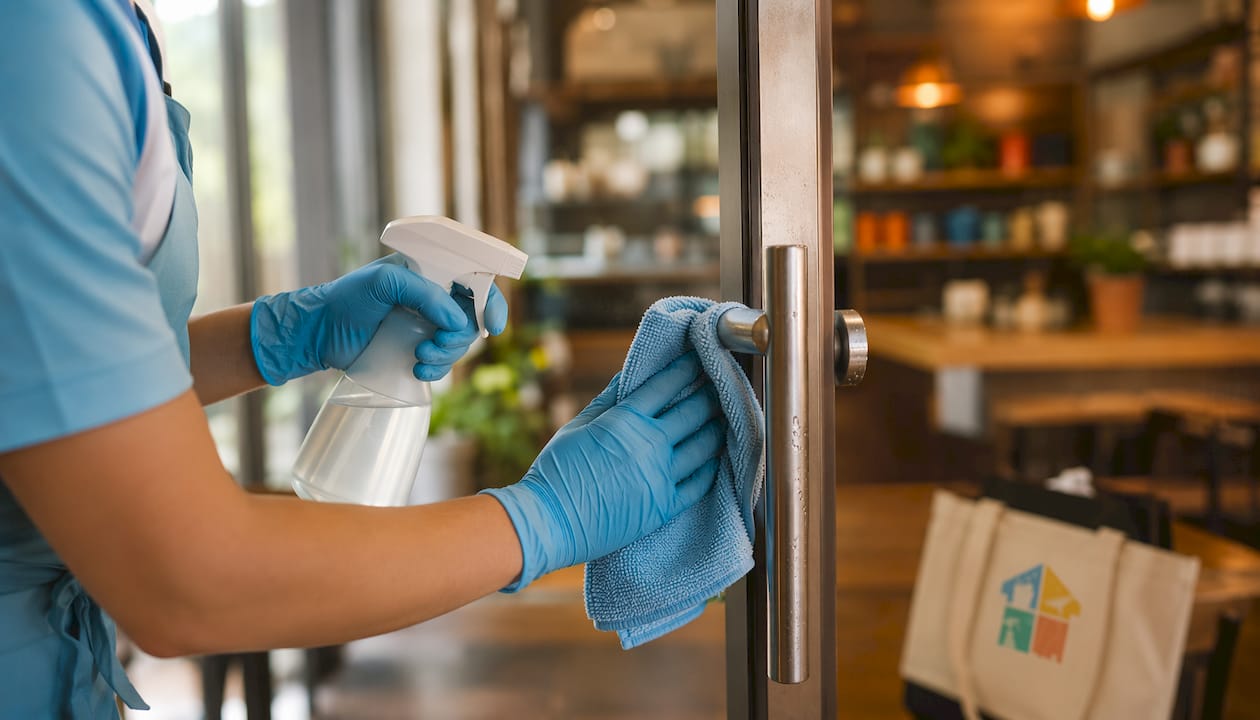
- EPA-registered disinfectants: applied after cleaning, with correct dwell time, for targeted pathogen kill
- Color-coded equipment: prevents cross-contamination between bathroom, kitchen, and general areas
Service types mapped to health goals
Different services address different risk profiles. Understanding how deep cleaning differs from routine maintenance helps owners choose the right scope.
- Basic/recurring cleaning: controls ongoing allergen and pathogen accumulation
- Deep cleaning: reaches grout, baseboards, appliance interiors, and other reservoirs that routine visits miss; see the full room-by-room scope
- Post-construction cleaning: removes silica dust, VOC-heavy adhesives, and construction debris that linger after renovation
- Move-in/move-out cleaning: eliminates prior-occupant biological residues before new occupants arrive
- Office/commercial cleaning: targets high-touch surfaces and shared equipment that drive workplace transmission
Pro Tip: Schedule a deep clean at the start of each allergy season and increase high-touch surface frequency during any illness outbreak in the building. Those two timing decisions deliver most of the health benefit.
What reduced absenteeism is actually worth to a commercial owner
The ISSA Cleaning for Health white paper links programmatic cleaning to lower absenteeism, reduced presenteeism, and measurable cost savings. A peer-reviewed study published in Scientific Research found that implementing regulated professional cleaning protocols produced a 30–40% reduction in health-related complaints among building occupants.
A simple illustration of what that translates to for a 20-person office:
- Baseline: assume each employee averages sick days per year tied to workplace-acquired illness
- Cost per sick day: salary, lost output, and coverage costs typically run in the mid-range per employee per day
- Total baseline cost: the product of employees, days, and cost yields a substantial annual amount
- After a cleaning program: a conservative reduction in illness-related absences can save thousands per year
- Compare that to cleaning costs: a professional commercial cleaning program for a small office typically costs far less than that savings figure
The same research found operational efficiency gains when standardized protocols replaced ad hoc cleaning, and notable client cost savings on facility service expenditures.
How to specify a “Cleaning for Health” program with a contractor
What the program must include
- Written cleaning protocols with surface-specific methods and product lists
- Frequency schedules covering both routine and high-touch surfaces
- PPE requirements and waste-handling procedures for cleaning staff
- Staff training records and documented onboarding procedures
- Verification plan: audit schedule, corrective action timelines, and KPI targets
- Certification alignment: ISSA CIMS or equivalent quality management standard
PMC research on cleaning workforce dynamics shows that high turnover in cleaning teams directly undermines consistency. Requiring documented training and career pathway investment from a contractor is not a nice-to-have; it is a program integrity requirement.
Questions to ask every bidder
- What written protocols do you use for high-touch surfaces, and how often are they updated?
- How do you train new staff, and what records do you keep?
- What KPIs do you track, and how do you report them to clients?
- Which EPA-registered disinfectants are on your product list, and do you carry SDS sheets?
- Can you provide verifiable references from comparable properties?
Sample contract clause to request
“Contractor shall maintain written cleaning protocols, conduct monthly internal audits, and provide the owner with audit results within five business days. Corrective actions for any failed audit item shall be completed within 48 hours.”
Keeping cleaning products safe for occupants and staff
Cleaning and disinfecting are not the same thing, and CDC guidance is clear: in most residential situations, cleaning alone removes most harmful viruses and bacteria. Disinfection is warranted when someone in the building is sick or immunocompromised, not as a default for every visit.
Safe product selection and use checklist:
- Use EPA-registered disinfectants only when the situation requires them, not routinely
- Follow label dilution rates exactly; concentrated product does not clean better, it just increases exposure
- Observe dwell time: a disinfectant wiped off immediately has not had time to kill anything
- Require staff to wear appropriate PPE (gloves, eye protection) when handling concentrated products
- Store products in original labeled containers, away from food and children
Pro Tip: To cut occupant VOC exposure, choose lower-VOC or fragrance-free products and ventilate the space during and for at least 30 minutes after application. For a full guide to safer product choices, the family-safe cleaning products guide is a practical starting point.
Pairing a strong cleaning program with good indoor air quality management amplifies the health benefit, especially in tightly sealed buildings where VOCs and particulate have nowhere to go.
When should you hire professional cleaners?
| Scenario | Recommended service | Primary health concern addressed |
|---|---|---|
| Ongoing occupancy | Recurring basic cleaning | Pathogen and allergen accumulation |
| Allergy season or illness spike | Deep cleaning | Dust mite, mold, and pathogen reservoirs |
| After renovation or construction | Post-construction cleaning | Silica dust, VOCs, adhesive residues |
| New tenant or new home move-in | Move-in cleaning | Prior-occupant biological residues |
| Tenant departure | Move-out cleaning | Accumulated soils, pest evidence |
| High-occupancy commercial space | Office/commercial cleaning | High-touch surface transmission risk |
Frequency drivers that push schedules higher: elevated occupant density, young children or elderly residents, pets, anyone with a compromised immune system, and HVAC systems that have not been serviced recently. For move-in situations specifically, the case for cleaning before your family arrives covers the timing and scope decisions in detail.
Reducing dust buildup between professional visits also extends the effectiveness of each cleaning cycle.
How to measure whether cleaning is actually improving health
Recommended measurement flow
- Establish a baseline: record current sick-day counts, occupant complaints, and any existing audit scores before the program starts
- Implement the cleaning program: document protocols, frequency, and product list from day one
- 30-day check: run a cleaning audit and collect occupant feedback; look for complaint trends
- 90-day review: compare sick-day data to baseline; conduct ATP spot checks on high-touch surfaces as a monitoring tool, not a pass/fail measure
- Adjust scope: increase frequency or add service types where KPIs show persistent issues
KPI and testing options
| Metric | What it tells you | Limitation |
|---|---|---|
| Sick days / absenteeism | Direct health outcome | Influenced by factors outside cleaning |
| Occupant complaints | Perceived cleanliness and comfort | Subjective |
| Cleaning audit scores | Protocol adherence | Does not confirm pathogen removal |
| ATP spot checks | Surface soil load as a proxy | Does not reliably indicate specific pathogen levels |
| Microbiological sampling | Actual pathogen presence | Expensive; warranted for high-risk settings |
ATP testing is useful for trending and staff accountability, but the PLOS One research is unambiguous: ATP readings do not consistently correlate with MRSA or C. difficile concentrations. Use it alongside audit scores and health outcome data, never as the sole indicator of safety.
Key Takeaways
Professional cleaning is environmental management that measurably reduces pathogen exposure, allergen loads, and absenteeism when programs are specified with written protocols, trained staff, and verified outcomes.
| Point | Details |
|---|---|
| Clean before you disinfect | Disinfectants fail on soiled surfaces; the two-stage sequence is non-negotiable for health outcomes. |
| Housekeeping is ongoing | Hazards return with occupancy; recurring schedules outperform one-time deep cleans every time. |
| Measure with multiple KPIs | Pair ATP spot checks with audit scores and sick-day tracking; no single metric tells the full story. |
| Require written protocols | Ask every contractor for documented procedures, training records, and audit rights before signing. |
| Neatandtidypros covers the full scope | From basic recurring visits to post-construction and office cleaning, Neatandtidypros aligns services to health-focused program requirements. |
The operational reality most owners never see
Running a cleaning program that actually moves health metrics requires more than a mop and a schedule. The daily priorities are training consistency, checklist adherence, and verification. A new team member who skips the two-stage sequence on a restroom fixture can undo a week of protocol work in one visit. That is why the contractor’s training infrastructure matters as much as their product list.
For owners onboarding a new contractor, the smoothest transitions happen when you run a joint audit in the first two weeks. Walk the property together, agree on what “done” looks like for each surface category, and set a 30-day check-in before the contract terms lock in. Clear KPIs from day one prevent the slow drift toward lower standards that happens when expectations stay verbal.
Neatandtidypros can build your Cleaning for Health program
Skipping the guesswork on contractor selection is exactly where Neatandtidypros delivers. The service lineup covers every scenario in this article: Basic Cleaning for ongoing allergen control, Deep Cleaning for seasonal or post-illness remediation, Move-In/Move-Out Cleaning to eliminate prior-occupant residues, Post-Construction Cleaning for renovation debris and VOC-heavy dust, and Office/Commercial Cleaning for high-touch workplace environments.
A sample scope request to get started: ask for written protocols by surface type, a high-touch frequency schedule, staff training documentation, and a 30-day audit check-in. Neatandtidypros builds programs around those elements. Whether you need a residential deep clean or a recurring commercial cleaning contract, the next step is a quote. Visit the services page to request an on-site estimate.
Useful sources and further reading
The claims in this article draw from the following authorities. Each is worth bookmarking if you are specifying a cleaning program or briefing a contractor.
- CIRI: Effective Cleaning and Health — defines clean condition vs. cleaning and frames cleaning as environmental management; the conceptual foundation for any health-focused program.
- ISSA: The Value of Cleaning — white paper linking Cleaning for Health programs to reduced absenteeism, productivity gains, and ROI; includes healthcare case studies.
- CCOHS: Workplace Housekeeping — authoritative source on the ongoing nature of housekeeping and its role in hazard control.
- CDC: When and How to Clean and Disinfect Your Home — practical guidance on cleaning vs. disinfecting and when each is warranted.
- PLOS One: ATP Testing and Pathogen Correlation — peer-reviewed caution on over-relying on ATP as a safety measure.
- Scientific Research: Prevention of Infections Through Regulated Professional Cleaning — empirical data on efficiency gains and health-complaint reductions from standardized protocols.
- NC State Extension: Creating a Healthy Home — accessible breakdown of allergen, lead, and pest control through cleaning.
For operational detail on tools and service scopes, the professional cleaning tools guide and the reasons to hire professional cleaners are practical next reads.